Audio and Video Collection
Diaghilev Symposium: Myth in Motion—Decoration, Dance, and Sources of Russian Modernism, Part 3
Alison Hilton, Wright Family Professor of Art History, Georgetown University. This symposium and panel discussion recorded on June 1, 2013 at the National Gallery of Art honored the exhibit Diaghilev and the Ballets Russes, 1909–1929: When Art Danced with Music, on view from May 12 to September 2, 2013. Adapted from the exhibition conceived by and first shown at the Victoria and Albert Museum (V&A) in 2010, the presentation in Washington draws upon that rich survey, including some 80 works from the V&A’s renowned collection of dance artifacts, and adds about 50 objects generously offered by more than 20 lenders, private and public. The Ballets Russes combined Russian and Western traditions with a healthy dose of modernism, thrilling and shocking audiences with its powerful fusion of choreography, music, and design. In this third lecture, Alison Hilton, Wright Family Professor of Art History at Georgetown University, discusses modernism and its connection to the Ballet Russes.
Recent Additions

Audio
Conversations with Artists: Kerry James MarshallKerry James Marshall in conversation with James Meyer, associate curator of modern art, National Gallery of Art. Kerry James Marshall has exhibited widely in both the United States and abroad and is the recipient of a MacArthur Fellowship, among other honors. His work often explores the experiences of African Americans and narratives of American history that have historically excluded black people. Drawing upon the artist’s prodigious knowledge of art history and African diasporic culture, his paintings combine figurative and abstract styles and multiple allusions. In Marshall’s art, the past is never truly past: history exerts a constant, often unconscious pressure on the living. In this program recorded on June 26, 2013, Marshall discusses the works and themes of his exhibition In the Tower: Kerry James Marshall, on view at the Gallery from June 28 to December 7, 2013.

Audio
Diaghilev Symposium: The Ballets Russes and Russia, Part 4Tim Scholl, professor of Russian and comparative literature, Oberlin College, and docent, department of theatre research, Helsinki University. This symposium and panel discussion recorded on June 1, 2013 at the National Gallery of Art honored the exhibit Diaghilev and the Ballets Russes, 1909–1929: When Art Danced with Music, on view from May 12 to September 2, 2013. Adapted from the exhibition conceived by and first shown at the Victoria and Albert Museum (V&A) in 2010, the presentation in Washington draws upon that rich survey, including some 80 works from the V&A’s renowned collection of dance artifacts, and adds about 50 objects generously offered by more than 20 lenders, private and public. The Ballets Russes combined Russian and Western traditions with a healthy dose of modernism, thrilling and shocking audiences with its powerful fusion of choreography, music, and design. In this fourth lecture, Tim Scholl, professor of Russian and comparative literature at Oberlin College and docent in the department of theatre research at Helsinki University, discusses the Ballets Russes and Russia.

Audio
Diaghilev Symposium: Myth in Motion—Decoration, Dance, and Sources of Russian Modernism, Part 3Alison Hilton, Wright Family Professor of Art History, Georgetown University. This symposium and panel discussion recorded on June 1, 2013 at the National Gallery of Art honored the exhibit Diaghilev and the Ballets Russes, 1909–1929: When Art Danced with Music, on view from May 12 to September 2, 2013. Adapted from the exhibition conceived by and first shown at the Victoria and Albert Museum (V&A) in 2010, the presentation in Washington draws upon that rich survey, including some 80 works from the V&A’s renowned collection of dance artifacts, and adds about 50 objects generously offered by more than 20 lenders, private and public. The Ballets Russes combined Russian and Western traditions with a healthy dose of modernism, thrilling and shocking audiences with its powerful fusion of choreography, music, and design. In this third lecture, Alison Hilton, Wright Family Professor of Art History at Georgetown University, discusses modernism and its connection to the Ballet Russes.

Audio
When Art Danced with Music (and What it Wore)Sarah Kennel, associate curator, department of photographs, National Gallery of Art, and Jane Pritchard, curator of dance, Victoria and Albert Museum. The Ballets Russes was the most innovative dance company of the 20th century. Founded by Russian impresario Serge Diaghilev (1872–1929) in Paris in 1909, the company propelled the performing arts to new heights through groundbreaking collaborations between artists, composers, choreographers, dancers, and fashion designers. The National Gallery of Art’s exhibition, Diaghilev and the Ballets Russes, 1909–1929: When Art Danced with Music, on view from May 12 to September 02, 2013, showcases more than 150 original costumes, set designs, paintings, sculptures, prints and drawings, photographs, posters, and incorporates film clips in a theatrical multimedia installation. The exhibition was adapted from one conceived by and first shown at the Victoria and Albert Museum (V&A) in 2010. The Gallery’s Sarah Kennel provides an overview of the exhibition, followed by V&A’s Jane Pritchard, who discusses the history and artistry of the Ballets Russes costumes in a joint lecture recorded on June 2, 2013.

Audio
Diaghilev Symposium: Worlds of Art: Diaghilev and the Ballets Russes: Diaghilev and the Courts: Culture Clashes and Lawsuits during the First American Tour of the Ballets Russes, Part 2Anna Winestein, executive director, Ballets Russes Cultural Partnership.
This symposium and panel discussion recorded on June 1, 2013 at the National Gallery of Art honored the exhibit Diaghilev and the Ballets Russes, 1909–1929: When Art Danced with Music, on view from May 12 to September 2, 2013. Adapted from the exhibition conceived by and first shown at the Victoria and Albert Museum (V&A) in 2010, the presentation in Washington draws upon that rich survey, including some 80 works from the V&A’s renowned collection of dance artifacts, and adds about 50 objects generously offered by more than 20 lenders, private and public. The Ballets Russes combined Russian and Western traditions with a healthy dose of modernism, thrilling and shocking audiences with its powerful fusion of choreography, music, and design. In this second lecture, Anna Winestein, executive director of the Ballets Russes Cultural Partnership, discusses the first American tour of the Ballets Russes.

Audio
Diaghilev Symposium: Worlds of Art: Diaghilev and the Ballets Russes: Diaghilev, a Russian Nationalist in the West, Part 1Sjeng Scheijen, postdoctoral researcher, Veni Laureate, Leiden University. This symposium and panel discussion recorded on June 1, 2013 at the National Gallery of Art honored the exhibit Diaghilev and the Ballets Russes, 1909–1929: When Art Danced with Music, on view from May 12 to September 2, 2013. Adapted from the exhibition conceived by and first shown at the Victoria and Albert Museum (V&A) in 2010, the presentation in Washington draws upon that rich survey, including some 80 works from the V&A’s renowned collection of dance artifacts, and adds about 50 objects generously offered by more than 20 lenders, private and public. The Ballets Russes combined Russian and Western traditions with a healthy dose of modernism, thrilling and shocking audiences with its powerful fusion of choreography, music, and design. Sarah Kennel, associate curator in the department of photographs at the National Gallery of Art, provides a welcome and introduces the first speaker, Sjeng Scheijen, a postdoctoral researcher at Leiden University.

Audio
Elson Lecture 2007: Sean Scully, Persistence and StyleSean Scully, artist. In this podcast recorded on March 8, 2007, at the National Gallery of Art as part of the Elson Lecture Series, Sean Scully, an artist of international acclaim, discusses his work in the modern tradition of abstraction. Imbuing his paintings, drawings, prints, and photographs with the poetic potential of geometry, light, and color, Scully has created nuanced blocks of color for more than 30 years that evoke distinct, personal moods, from exuberant to somber, all within a disciplined abstract vocabulary. He has also enriched understanding of the art of our time through his many important writings.

Audio
Bernini's BelovedSarah McPhee, Winship Distinguished Research Professor, Emory University. Costanza Piccolomini was Gianlorenzo Bernini’s beloved. His passion for this woman was so strong it inspired the sculptor to preserve her beauty in one of his most captivating portrait busts and to commission a violent crime against her. But until now, little has been known about the woman herself. In this lecture recorded at the National Gallery of Art on March 10, 2013, Sarah McPhee draws from the revelations of her new book, Bernini's Beloved: A Portrait of Costanza Piccolomini, to discuss the nature of Bernini’s artistry and the surprising life of this remarkable woman who forged a career as an art collector and dealer in the wake of their tempestuous affair.

Audio
Useful and Beautiful: William Morris and His BooksMark Samuels Lasner, senior research fellow, University of Delaware Library, in conversation with Diane Waggoner, associate curator, department of photographs, National Gallery of Art. William Morris (1834-1896) gained fame as a designer, poet, socialist, founder of the arts and crafts movement, and maker of beautiful books at his Kelmscott Press, founded in 1891. In this conversation recorded on May 6, 2013 at the National Gallery of Art, Mark Samuels Lasner and Diane Waggoner explore Morris's lifelong, multifaceted engagement with print—as a reader, author, collector, calligrapher, typographer, printer, and publisher—that culminated with the publication of the great Kelmscott Chaucer just before his death. Samuels Lasner will also discuss his own collecting of the works of Morris and his circle. Selections from the Mark Samuels Lasner Collection, on loan to the University of Delaware Library, are included in two concurrent exhibitions at the National Gallery of Art: Pre-Raphaelites: Victorian Art and Design, 1848-1900 (February 17-May 19, 2013) and Pre-Raphaelites and the Book (February 9-August 4, 2013).

Audio
Saving Italy: The Monuments Men, Nazis, and WarRobert Edsel, author and founder and president, Monuments Men Foundation for the Preservation of Art.
In August 1943, on the eve of the Allied invasion of Italy, Allied bombs threatened Michelangelo's David and nearly destroyed Leonardo da Vinci's The Last Supper. In this lecture, recorded on May 19, 2013 at the National Gallery of Art, best-selling author of The Monuments Men Robert M. Edsel tells the blockbuster story of the race to save the world's greatest masterpieces. Edsel's new book, Saving Italy: The Race to Rescue a Nation's Treasures from the Nazis, follows Monuments officers as they search for the location of billions of dollars of missing artwork taken from the great museums in Florence and Naples.

Audio
Conversations with Collectors: Dorothy and Herbert VogelDorothy and Herbert Vogel, collectors, in conversation with Ruth Fine, curator of modern prints and drawings, National Gallery of Art; and Mark Rosenthal, curator of twentieth-century art, National Gallery of Art. New York collectors Herbert and Dorothy Vogel trace the development of their vast art collection in this podcast recorded on June 12, 1994 at the National Gallery of Art in honor of the exhibition From Minimal to Conceptual: Works from The Dorothy and Herbert Vogel Collection. The Vogels began collecting art in the 1960s, a time that saw a new generation of artists respond to the abstract expressionist movement. These artists questioned the entire practice of art making, the nature of the art object, and how art functioned within society. By forming close personal relationships with the artists, a process that the Vogels describe as invaluable, they assembled one of the country's greatest and most extensive collections of conceptual, minimal, and post-minimal art with limited financial means. From Minimal to Conceptual was the first major showing of their collection at the National Gallery of Art and was on view from May 29 through November 27, 1994.

Video
The Sixty-Second A. W. Mellon Lectures in the Fine Arts: Out of Site in Plain View: A History of Exhibiting Architecture since 1750: Architecture and the Rise of the Event Economy, Part 6Barry Bergdoll, The Philip Johnson Chief Curator of Architecture and Design, The Museum of Modern Art, and professor, Columbia University
In the sixth and final lecture, originally delivered at the National Gallery of Art on May 12, 2013, architectural historian Barry Bergdoll presents a hopeful manifesto of the possibilities of architectural exhibitions, including a look at MoMA's innovative introduction of public laboratories and workshops in which designers, historians, and critics project new futures and new problems in architecture.

Audio
Inside Photography: The Role of Art in DiplomacyTina Barney, artist; Sarah Greenough, senior curator and head of the department of photographs, National Gallery of Art; Sarah Lewis, art historian, author and curator; Clifford Ross, artist; and Robert Storr, dean of the Yale School of Art, chairman of FAPE’s Professional Fine Arts Advisors, and consulting curator of modern and contemporary art at the Philadelphia Museum of Art.
In collaboration with the Foundation for Art and Preservation in Embassies (FAPE), the National Gallery of Art hosted a panel discussion on the role of art in diplomacy on April 30, 2013. The panelists—Sarah Greenough, Sarah Lewis, and Robert Storr—present an overview of FAPE’s photography collection in American embassies around the world. Tina Barney discusses her recent gift to FAPE, and Clifford Ross reviews the photographs acquired by FAPE for display at the US Mission to the United Nations in New York as well as recent projects in China.

Video
The Sixty-Second A. W. Mellon Lectures in the Fine Arts: Out of Site in Plain View: A History of Exhibiting Architecture since 1750: Conflicting Visions: Commerce, Diplomacy, and Persuasion, Part 5Barry Bergdoll, The Philip Johnson Chief Curator of Architecture and Design, The Museum of Modern Art, and professor, Columbia University
In the fifth lecture, originally delivered at the National Gallery of Art on May 5, 2013, architectural historian Barry Bergdoll discusses the establishment, by the 1920s, of exhibitions as a culture of architecture in which one exhibition served as a critique of another, and the exploitation of the propaganda capacity of the exhibition by political agencies, corporations, and the ongoing politics of diplomacy.

Audio
Pre-Raphaelitism and International Modernisms Symposium: Seduction or Salvation: Aesthetic Immersion in the Work of Edward Burne-JonesAndrea Wolk Rager, assistant professor of art history, Case Western Reserve University. Held in conjunction with the exhibition Pre-Raphaelites: Victorian Art and Design, 1848–1900, this symposium explored Britain's first avant-garde art movement in the context of other international modernisms. The young members of the Pre-Raphaelite Brotherhood (formed in 1848) shook the art world of mid-19th-century Britain by rejecting traditional approaches to painting. Academics and curators consider modern art and craft movements in these lectures recorded on March 8 and 9, 2013. This program was coordinated with and supported by the Department of the History of Art, Yale University.

Video
The Sixty-Second A. W. Mellon Lectures in the Fine Arts: Out of Site in Plain View: A History of Exhibiting Architecture since 1750: Better Futures: Exhibitions between Reform and Avant-Garde, Part 4Barry Bergdoll, The Philip Johnson Chief Curator of Architecture and Design, The Museum of Modern Art, and professor, Columbia University
In the fourth lecture, originally delivered at the National Gallery of Art on April 28, 2013, architectural historian Barry Bergdoll considers the role of the exhibition as an instrument for reform in the movement for better housing for the working classes, in the institution of city planning as a modern discipline, and in the emergence of the artistic avant-garde in the years around 1900, all cases of projecting alternative futures.

Video
Jazz in the GardenThe Jazz in the Garden Series begins its 13th season May 24. The free concert series features an array of jazz artists performing a wide variety of styles—including salsa, blusion, xylophone, and Afrofunk—every Friday evening from 5:00 to 8:30 at the National Gallery of Art Sculpture Garden.
Guests may purchase food and beverages from the Pavilion Café and its carts located around the Garden or bring their own picnics. Alcoholic beverages may not be brought to the premises from outside and are subject to confiscation. Security officers reserve the right to inspect all items brought into the Sculpture Garden. For the safety of visitors and works of art, access to the Sculpture Garden will be limited if the space becomes too crowded.
Concerts may be cancelled due to excessive heat or inclement weather.
To learn more about Jazz in the Garden concerts and performers, please call (202) 289-3360.

Video
The Sixty-Second A. W. Mellon Lectures in the Fine Arts: Out of Site in Plain View: A History of Exhibiting Architecture since 1750: Not at Home: Architecture on Display from World's Fairs to Williamsburg, Part 3Barry Bergdoll, The Philip Johnson Chief Curator of Architecture and Design, The Museum of Modern Art, and professor, Columbia University
In the third lecture, originally delivered at the National Gallery of Art on April 21, 2013, architectural historian Barry Bergdoll explores the idea of export architecture and outdoor exhibitions and the development of temporary exhibition pavilions from the world's fair to the open-air museum, including Colonial Williamsburg. The 19th-century debate on national identity as expressed in architectural style is shown to have been advanced by the changing valence of high-style pavilions and redeployed vernacular structures.

Video
The Sixty-Second A. W. Mellon Lectures in the Fine Arts: Out of Site in Plain View: A History of Exhibiting Architecture since 1750: In and Out of Time: Curating Architecture's History, Part 2Barry Bergdoll, The Philip Johnson Chief Curator of Architecture and Design, The Museum of Modern Art, and professor, Columbia University
In the second lecture, originally delivered at the National Gallery of Art on April 14, 2013, architectural historian Barry Bergdoll describes the rise of the architectural curator and the history of the museum of architecture assayed, born, and grown, if not always thriving. The history of architecture in the spaces of the architecture museum—represented in building fragments or in cork models—is shown to have been in dialogue with the emergence of the textual history of architecture.

Video
The Sixty-Second A. W. Mellon Lectures in the Fine Arts: Out of Site in Plain View: A History of Exhibiting Architecture since 1750: Framed and Hung: Architecture in Public from the Salon to the French Revolution, Part 1Barry Bergdoll, The Philip Johnson Chief Curator of Architecture and Design, The Museum of Modern Art, and professor, Columbia University
In first lecture, originally delivered at the National Gallery of Art on April 7, 2013, architectural historian Barry Bergdoll, presents diverse techniques of architectural display developed since the mid-18th century. Far from being poor substitutes for the real experience of architecture as a spatial art in situ, these techniques have been integral to architecture's stake in the evolving discourses of modernity. This lecture considers the entry of architects into the exhibition venues of the mid-18th century and radical new ideas for architecture under the French Revolution.

Audio
Pre-Raphaelitism and International Modernisms Symposium: The Craftsman's Dream: The Pre-Raphaelites and the Arts and Crafts MovementMorna O’Neill, assistant professor of 18th- and 19th-century European art, Wake Forest University. Held in conjunction with the exhibition Pre-Raphaelites: Victorian Art and Design, 1848–1900, this symposium explored Britain's first avant-garde art movement in the context of other international modernisms. The young members of the Pre-Raphaelite Brotherhood (formed in 1848) shook the art world of mid-19th-century Britain by rejecting traditional approaches to painting. Academics and curators consider modern art and craft movements in these lectures recorded on March 8 and 9, 2013. This program was coordinated with and supported by the Department of the History of Art, Yale University.

Audio
Pre-Raphaelitism and International Modernisms Symposium: Tirra Lirra in a Mirror: Rhyming Visual and Verbal FormElizabeth Helsinger, John Matthews Manly Distinguished Service Professor, departments of English, art history, and visual arts, University of Chicago. Held in conjunction with the exhibition Pre-Raphaelites: Victorian Art and Design, 1848–1900, this symposium explored Britain's first avant-garde art movement in the context of other international modernisms. The young members of the Pre-Raphaelite Brotherhood (formed in 1848) shook the art world of mid-19th-century Britain by rejecting traditional approaches to painting. Academics and curators consider modern art and craft movements in these lectures recorded on March 8 and 9, 2013. This program was coordinated with and supported by the Department of the History of Art, Yale University.

Audio
Engaging with American Furniture: Looking Back, Moving Forward Symposium: Lafayette River to the Potomac: The Kaufman Collection at the National Gallery of ArtMark Leithauser, senior curator and chief of design, National Gallery of Art. This symposium honored the newly unveiled installation Masterpieces of American Furniture from the Kaufman Collection, 1700–1830, the first major presentation of early American furniture and related decorative arts on permanent public view in the nation’s capital. The installation highlights nearly one-hundred examples from the distinguished collection of George M. and Linda H. Kaufman, acquired over the course of five decades and promised to the National Gallery of Art. Academics and curators discuss the fine art of American furniture and decorative arts and its future study in these lectures recorded on March 22 and 23, 2013.

Audio
Pre-Raphaelitism and International Modernisms Symposium: Introduction: Pre-Raphaelites: Victorian Avant-Garde and Can Sculpture Be Pre-Raphaelite?Tim Barringer, Paul Mellon Professor of the History of Art and director of graduate studies, Yale University, Michael Hatt, professor of the history of art, University of Warwick. Held in conjunction with the exhibition Pre-Raphaelites: Victorian Art and Design, 1848–1900, this symposium explored Britain's first avant-garde art movement in the context of other international modernisms. The young members of the Pre-Raphaelite Brotherhood (formed in 1848) shook the art world of mid-19th-century Britain by rejecting traditional approaches to painting. Academics and curators consider modern art and craft movements in these lectures recorded on March 8 and 9, 2013. This program was coordinated with and supported by the Department of the History of Art, Yale University.

Audio
Engaging with American Furniture: Looking Back, Moving Forward Symposium: Research for the Future: Revisiting “…things you have long taken for granted”Wendy A. Cooper, Lois F. and Henry S. McNeil Senior Curator of Furniture, Winterthur Museum. This symposium honored the newly unveiled installation Masterpieces of American Furniture from the Kaufman Collection, 1700–1830, the first major presentation of early American furniture and related decorative arts on permanent public view in the nation’s capital. The installation highlights nearly one-hundred examples from the distinguished collection of George M. and Linda H. Kaufman, acquired over the course of five decades and promised to the National Gallery of Art. Academics and curators discuss the fine art of American furniture and decorative arts and its future study in these lectures recorded on March 22 and 23, 2013.

Audio
Pre-Raphaelitism and International Modernisms Symposium: Day One Q & A, Part 4Diane Waggoner, associate curator, department of photographs, National Gallery of Art, Jason Rosenfeld, distinguished chair and professor of art history, Marymount Manhattan College, Scott Allan, associate curator of paintings, J. Paul Getty Museum, Linda S. Ferber, vice president and senior art historian, New-York Historical Society, Cordula Grewe, associate professor of art history, Columbia University. Held in conjunction with the exhibition Pre-Raphaelites: Victorian Art and Design, 1848–1900, this symposium explored Britain's first avant-garde art movement in the context of other international modernisms. The young members of the Pre-Raphaelite Brotherhood (formed in 1848) shook the art world of mid-19th-century Britain by rejecting traditional approaches to painting. Academics and curators consider modern art and craft movements in these lectures recorded on March 8 and 9, 2013. This program was coordinated with and supported by the Department of the History of Art, Yale University.

Audio
Engaging with American Furniture: Looking Back, Moving Forward Symposium: From Appreciation to Interpretation: Academic Engagement with American FurnitureEdward Cooke, chair and Charles F. Montgomery Professor of American Decorative Arts, Yale University. This symposium honored the newly unveiled installation Masterpieces of American Furniture from the Kaufman Collection, 1700–1830, the first major presentation of early American furniture and related decorative arts on permanent public view in the nation’s capital. The installation highlights nearly one-hundred examples from the distinguished collection of George M. and Linda H. Kaufman, acquired over the course of five decades and promised to the National Gallery of Art. Academics and curators discuss the fine art of American furniture and decorative arts and its future study in these lectures recorded on March 22 and 23, 2013.

Video
Ames-Haskell Azalea CollectionOn view in the early spring of each year, the Gallery's Ames-Haskell Azalea Collection can be seen in the rotunda of the West Building. This beautiful collection of living art includes a wide variety of specimens that bloom colorfully for several weeks.

Audio
Pre-Raphaelitism and International Modernisms Symposium: Avant-Garde MattersCordula Grewe, associate professor of art history, Columbia University. Held in conjunction with the exhibition Pre-Raphaelites: Victorian Art and Design, 1848–1900, this symposium explored Britain's first avant-garde art movement in the context of other international modernisms. The young members of the Pre-Raphaelite Brotherhood (formed in 1848) shook the art world of mid-19th-century Britain by rejecting traditional approaches to painting. Academics and curators consider modern art and craft movements in these lectures recorded on March 8 and 9, 2013. This program was coordinated with and supported by the Department of the History of Art, Yale University.

Audio
Pre-Raphaelitism and International Modernisms Symposium: Ripe for Revolution? Reconsidering “The New Path” and the American Pre-RaphaelitesLinda S. Ferber, vice president and senior art historian, New-York Historical Society. Held in conjunction with the exhibition Pre-Raphaelites: Victorian Art and Design, 1848–1900, this symposium explored Britain's first avant-garde art movement in the context of other international modernisms. The young members of the Pre-Raphaelite Brotherhood (formed in 1848) shook the art world of mid-19th-century Britain by rejecting traditional approaches to painting. Academics and curators consider modern art and craft movements in these lectures recorded on March 8 and 9, 2013. This program was coordinated with and supported by the Department of the History of Art, Yale University.

Audio
Engaging with American Furniture: Looking Back, Moving Forward Symposium: Dust, Grain, and Soften: The Fine Art of Decorative PaintingWendy Bellion, associate professor and director of undergraduate studies, University of Delaware. This symposium honored the newly unveiled installation Masterpieces of American Furniture from the Kaufman Collection, 1700–1830, the first major presentation of early American furniture and related decorative arts on permanent public view in the nation’s capital. The installation highlights nearly one-hundred examples from the distinguished collection of George M. and Linda H. Kaufman, acquired over the course of five decades and promised to the National Gallery of Art. Academics and curators discuss the fine art of American furniture and decorative arts and its future study in these lectures recorded on March 22 and 23, 2013.

Audio
Introduction to the Exhibition:"Albrecht Dürer: Master Drawings, Watercolors, and Prints from the Albertina"Andrew Robison, A.W. Mellon Senior Curator of Prints and Drawings, National Gallery of Art. To celebrate the exhibition opening of Albrecht Dürer: Master Drawings, Watercolors, and Prints from the Albertina on March 24, 2013, Andrew Robison shares that, while the artist's paintings were prized, his most influential works were executed on paper. Albrecht Dürer (1471–1528) has long been considered the greatest German artist, uniquely combining the status held in Italian art by Michelangelo in the 16th century, by Raphael in the 18th and 19th centuries, and by Leonardo da Vinci in our own day. The finest collection of Dürer's drawings and watercolors is that of the Albertina in Vienna, Austria. One of the largest in the world, it is distinguished by many of the artist's most stunning masterpieces: watercolors such as The Great Piece of Turf, a sublime nature study of the Renaissance; chiaroscuro drawings such as The Praying Hands, surely the most famous drawing in the world; and the amazingly precocious silverpoint Self-Portrait at Thirteen, perhaps the earliest self-portrait drawing by any artist. On view through June 9, 2013, this groundbreaking exhibition presents 91 of the superb Dürer watercolors and drawings from the Albertina and 27 of the museum’s best related engravings and woodcuts. It also includes 19 closely related drawings and prints from the Gallery’s own collection.

Audio
Pre-Raphaelitism and International Modernisms Symposium: Pre-Raphaelite Landscape Painting and the Barbizon School, or, The English Beef with the FrenchScott Allan, associate curator of paintings, J. Paul Getty Museum. Held in conjunction with the exhibition Pre-Raphaelites: Victorian Art and Design, 1848–1900, this symposium explored Britain's first avant-garde art movement in the context of other international modernisms. The young members of the Pre-Raphaelite Brotherhood (formed in 1848) shook the art world of mid-19th-century Britain by rejecting traditional approaches to painting. Academics and curators consider modern art and craft movements in these lectures recorded on March 8 and 9, 2013. This program was coordinated with and supported by the Department of the History of Art, Yale University.

Audio
Elson Lecture 2013: A Conversation with Glenn LigonGlenn Ligon, artist, with Molly Donovan and James Meyer, associate curators of modern art, National Gallery of Art. Glenn Ligon’s intertextual works examine cultural and social identity—often through found sources such as literature, Afro-centric coloring books, and photographs—to reveal the ways in which slavery, the civil rights movement, and identity politics inform our understanding of American society. In 2012, the Gallery acquired its first painting by Ligon, Untitled (I Am a Man) (1988). In honor of this acquisition, Ligon presented the 20th annual Elson Lecture on March 14, 2013. Untitled (I Am a Man) is a reinterpretation of the signs carried by 1,300 striking African American sanitation workers in Memphis in 1968 and made famous in Ernest Withers' photographs of the march. Proclaiming "I Am a Man," the signs evoke Ralph Ellison's famous line—"I am an invisible man." Approximating the size of these signs, Ligon’s roughly made painting combines layers of history, meaning, and physical material in a dense, resonant object. As the first painting in which the artist appropriated text, itis a breakthrough. In subsequent works he would transform texts into fields of semilegible and masked meanings. The Gallery owns sixteen works by Ligon, including a suite of etchings and a print portfolio.

Audio
Pre-Raphaelitism and International Modernisms Symposium: Welcome and Introduction: Pre-Raphaelitism and International ModernismsDiane Waggoner, associate curator, department of photographs, National Gallery of Art, Jason Rosenfeld, distinguished chair and professor of art history, Marymount Manhattan College. Held in conjunction with the exhibition Pre-Raphaelites: Victorian Art and Design, 1848–1900, this symposium explored Britain's first avant-garde art movement in the context of other international modernisms. The young members of the Pre-Raphaelite Brotherhood (formed in 1848) shook the art world of mid-19th-century Britain by rejecting traditional approaches to painting. Academics and curators consider modern art and craft movements in these lectures recorded on March 8 and 9, 2013. This program was coordinated with and supported by the Department of the History of Art, Yale University.

Audio
Truth, Lies, and PhotographsMia Fineman, assistant curator, department of photographs, Metropolitan Museum of Art. The urge to modify camera images is as old as photography itself—only the methods have changed. Faking It: Manipulated Photography before Photoshop is the first major exhibition devoted to the history of manipulated photographs before the digital age. The exhibition, on view at the National Gallery of Art from February 17 to May 5, 2013, offers a provocative new perspective on the history of photography. In this lecture recorded on February 24, 2013, exhibition curator Mia Fineman traces photographic manipulation from the 1840s through the 1980s and shows that photography is—and always has been—a medium of fabricated truths and artful lies.

Audio
Pre-Raphaelites: Victorian Avant-GardeTim Barringer, Paul Mellon Professor of the History of Art and director of graduate studies, Yale University; Jason Rosenfeld, distinguished chair and professor of art history, Marymount Manhattan College; and Diane Waggoner, associate curator, department of photographs, National Gallery of Art. In this podcast recorded on February 17, 2013, at the National Gallery of Art, Tim Barringer, Jason Rosenfeld, and Diane Waggoner celebrate the opening of the exhibition Pre-Raphaelites: Victorian Art and Design, 1848–1900, the first major survey of Pre-Raphaelite art to be shown in the United States. The Pre-Raphaelites were a group of young artists who sought to overturn established traditions of painting and made art that looked to the past for inspiration, but also engaged directly with the bustling modern world of Victorian Britain. The exhibition features some 130 paintings, sculptures, photography, works on paper, and decorative art objects that reflect the ideals of Britain's first modern art movement. Pre-Raphaelites: Victorian Art and Design, 1848–1900 is on display through May 19, 2013.

Audio
Conversations with Collectors: Robert and Jane MeyerhoffRobert and Jane Meyerhoff, collectors, in conversation with Irving Blum, collector and co-founder of the Ferus Gallery, Los Angeles. To celebrate the exhibition opening of The Robert and Jane Meyerhoff Collection: 1945-1995 at the National Gallery of Art on March 31, 1996, the Meyerhoffs joined Irving Blum to discuss the history and practice of their collecting. On view through July 21, 1996, the exhibition presented 194 works, almost their entire collection of post-World War II art. The Meyerhoffs' acquisitions have been based wholly on their belief in the quality of individual works and not on any preconceived theory or plan. If they were passionate about an artist, they collected his or her work in depth. Their private residence has a room dedicated to each of the following artists: Jasper Johns, Ellsworth Kelly, Roy Lichtenstein, Robert Rauschenberg, and Frank Stella. The collection is both a tribute to the extraordinarily high level of accomplishment by these artists and to the Meyerhoffs' intuition.

Audio
Colorforms: Ellsworth Kelly and the Colored Paper ImagesCharles Ritchie, associate curator of modern prints and drawings, National Gallery of Art. While Ellsworth Kelly is best known for crafting pristine, monochrome shapes, he has periodically employed chance as a strategy in composing works. The series of 23 paper-pulp works featured in the exhibition Ellsworth Kelly: Colored Paper Images, on view at the National Gallery of Art from December 16, 2012, through December 1, 2013, is a dramatic example of this approach. Wet colored paper pulps were pressed into freshly made sheets of paper, resulting in color bleeds that eroded the precision of his designs. In this lecture recorded on February 10, 2013, Charles Ritchie investigates factors contributing to the success of this project—from Kelly’s improvisation on earlier motifs to print publisher Ken Tyler’s study of pigmentation in order to create strongly colored, lightfast paper pulps. Ritchie also discusses the expertise of veteran papermakers John and Kathleen Koller, who developed the paper for this project.

Audio
Of Times and Spaces: On Looking at Thomas Struth and Candida HöferCharles W. Haxthausen, Robert Sterling Clark Professor of Art History, Williams College. “My work,” the German photo artist Candida Höfer has said, “is about making images of spaces.” Yet both she and fellow photographer Thomas Struth are equally interested in the dimension of time andthe evidence of layers of history in the spaces they photograph. Although Struth’s and Höfer’s photographs are inevitably the products of a single exposure, of a unique, fugitive moment, their images manifest a temporal complexity and transparency. Recorded on January 13, 2013, at the National Gallery of Art, the lecture by Professor Haxthausen explores the ways in which these artists’ work complicates how we think about the relationship of photography to time.

Audio
Artists in Residence: Henry O. Tanner in the Holy LandGwendolyn H. Everett, lecturer, National Gallery of Art. As part of the Artist in Residence lecture series, Gwendolyn H. Everett focused on Henry Ossawa Tanner’s (1859-1937) visits to the Holy Land, and how this travel affected the later religious paintings for which he achieved international recognition. In this podcast recorded on August 9, 1987, Everett explains the formative influence of Tanner’s upbringing in an educated, religious family in post-Civil War Philadelphia. Tanner’s father was a minister and, later, a bishop in the African Methodist Episcopal Church, and his mother administered a Methodist school. Tanner enrolled in the Pennsylvania Academy of Fine Arts as the only African American student in 1879, graduating in 1885. His professor, the artist Thomas Eakins, encouraged a progressive method of study from live models instead of plaster casts, which profoundly affected Tanner. after 1891 Tanner resided primarily in France; by 1895 his paintings were mostly of biblical themes, and in 1897 he made his first trip to the Holy Land, where his firsthand experience led to mastery of religious subject matter. He visited the region several times to explore mosques and biblical sites, and to complete character studies of the local population, as he had learned from Eakins. Tanner invigorated religious painting with modernism and with his deeply rooted faith, achieving renown in the international art world.

Audio
Social Art, Social Cooperation: A Conversation with Tania Bruguera, Tom Finkelpearl, and Mierle Laderman UkelesTania Bruguera, artist; Tom Finkelpearl, executive director, Queens Museum of Art; and Mierle Laderman Ukeles, artist. Socially cooperative art is a field not well understood by many, indeed even in the art world. Why is it art? Where does art end and social action begin? Who is the author of a cooperative project? In this lecture recorded on February 3, 2013, at the National Gallery of Art, Tom Finkelpearl celebrates his latest publication, What We Made: Conversations on Art and Social Cooperation, by providing an overview of socially cooperative art—where it comes from, what its artistic roots are, and why it can be considered valuable. Tania Bruguera and Mierle Laderman Ukeles, two of the most important artists working in America today in this field, then describe their work, focusing on a single project. Bruguera, Finkelpearl, and Ukeles take a careful look at how art can intersect with life and how artists are reimagining this intersection in the new avant-garde of participatory, activist, community-inclusive art.

Audio
William H. JohnsonGwendolyn H. Everett, assistant professor, department of art, Howard University. Gwendolyn H. Everett, scholar and author of the award-winning children's book Li'L Sis and Uncle Willie: A Story Based on the Life and Paintings of William H. Johnson, provides an overview of William Henry Johnson's (1901-1970) career as part of the Five African American Artists lecture series recorded on August 3, 2003. Everett traces Johnson's determination to become an artist, despite a humble upbringing in South Carolina, to his years at a segregated elementary school where art was not part of the formal curriculum. In 1918, during the first Great Migration, Johnson moved to New York to pursue artistic training unavailable in the South. While living in Harlem and working several jobs to support himself, he was accepted into the prestigious National Academy of Design. Noted watercolorist Charles Webster Hawthorne provided critical mentorship at the academy, hired Johnson to work at the Cape Cod School of Art, and sponsored his further training in Europe. Johnson supplemented this sponsorship with prizes awarded by the academy and funds earned working for Ashcan School painter George Luks. In 1920s Paris, Johnson lived in the former studio of James McNeill Whistler and became acquainted with Henry O. Tanner, an African American expatriate artist who had achieved international acclaim and who would become a pivotal figure in Johnson's rise to prominence. Follow along as Everett illustrates Johnson's journey—marked by determination, strengthened by hard work, and bolstered by the support of influential artists—that led him to become one of the greatest American artists of the 20th century.

Audio
Roy Lichtenstein's Kyoto Prize Lecture of 1995Harry Cooper, curator and head, department of modern art, National Gallery of Art, with original slides courtesy of the Roy Lichtenstein Foundation © Estate of Roy Lichtenstein. On November 11, 1995, Roy Lichtenstein was in Japan to receive the Kyoto Prize from the Inamori Foundation. In accepting the award, he delivered a lecture on the evolution of his work since his Pop breakthrough of 1961. Thanks to the generosity of the artist's estate and foundation, Harry Cooper, the National Gallery of Art's curator of modern art, presented this lecture at the Gallery, with the original slides, on January 9, 2013—in honor of Roy Lichtenstein: A Retrospective, the first major exhibition of the artist's work since his death in 1997. The exhibition was on view at the Gallery from October 14, 2012, to January 13, 2013.

Audio
Oil and Water: De Kooning in His StudioRichard Shiff, Effie Marie Cain Regents Chair in Art and professor of history of art, University of Texas at Austin. The exhibition Willem de Kooning: Paintings, on view at the National Gallery of Art from May 8 to September 5, 1994, was presented in honor of the artist’s 90th birthday. The exhibition included 76 paintings that spanned de Kooning’s career from the 1930s to the mid-1980s. In this lecture recorded on May 29, 1994, catalogue author Richard Shiff highlights four aspects of the artist’s career. First, Shiff explores de Kooning’s involvement with change: he thought of himself as always evolving, and his work could not be classified under a single style. Second, Shiff describes the physicality of de Kooning’s work: the artist became involved with materials of real substance and engaged his body with these materials by pushing, pulling, and physically manipulating them. Third, Shiff shares how to look at and think about de Kooning’s figures and representations, which initially might not be recognizable. Fourth, de Kooning resisted any description of himself more elaborate than painter: here Shiff addresses de Kooning’s objections to abstract art—even though he made abstract work, he did not consider himself an abstractionist.

Audio
Michelangelo's David-Apollo: An Offer He Couldn't RefuseAlison Luchs, curator of early European sculpture, National Gallery of Art. Michelangelo created the statue now known as David-Apollo around 1530 to please the tyrannical governor of Florence, Baccio Valori. The double name of this unfinished work, which is on loan to the National Gallery of Art from the Museo Nazionale del Bargello in Florence, reflects contradictory evidence—both visual and documentary—concerning the subject. The graceful figure, its surface still veiled in chisel marks, embodies ambiguities and conflicts in Michelangelo’s own life. This lecture, recorded on January 27, 2013, at the National Gallery of Art, explores the mysteries surrounding the statue, the significance of its unfinished condition, and responses to it from later artists. The loan of David-Apollo opened the nationwide celebration 2013―The Year of Italian Culture.The sculpture is on view from December 13, 2012, to March 2, 2013.

Audio
Historical Perspectives: African American ArtDavid C. Driskell, artist, curator, and professor of art, University of Maryland, College Park. On January 11, 1990, the National Gallery of Art announced an initiative to address the underrepresentation of minorities—particularly African Americans, Hispanic Americans, and Native Americans—in the museum profession. In response, David Driskell presented a lecture at the Gallery on February 11, 1990, on multi-cultural representation in art museum collections and exhibitions and among staff and visitors. Unresolved issues in our cultural history raise questions about why the arts have been divided along racial lines—if, as Driskell observes, all art emanates from the salient desire to express the inner urges of the human spirit. This quality we all possess is colorless, classless, and uncluttered by feelings of racial superiority. The insistence on dividing art in the United States along racial lines demonstrates a response different in both thought and action than that seen in older cultures and ancient societies. Driskell hopes that these impending initiatives allow us to enter the 21st century with a more holistic view of our history and the cultural pluralism that is the privilege of this nation.

Audio
A Conversation with Calvin Tomkins: "Duchamp: A Biography"Ruth Fine, curator of modern prints and drawings, National Gallery of Art, and Calvin Tomkins, author and staff writer, The New Yorker. In this conversation with Ruth Fine recorded on March 17, 1997, Calvin Tomkins shares the history of his relationship with Marcel Duchamp and the process of writing a biography on this enigmatic artist. As a foreign news writer for Newsweek with hardly any knowledge of Duchamp or modern art, Tomkins was assigned to interview him in 1959. The interview was so fascinating that it led to Tomkins’ first interest in modern art. After joining The New Yorker as a staff writer in 1960, one of Tomkins’ early profiles was on Duchamp; two years later he was asked by the Time Life series to write its book on the artist. Eventually, Tomkins approached Duchamp’s widow about the idea of writing a proper biography on the artist. Alexina "Teeny" Duchamp asked why he would want to do that, but granted permission as long as he did not write anything too personal. Tomkins relied on hours of recorded conversations between himself and Duchamp, as well as interviews with his contemporaries and letters from Duchamp saved by others. Duchamp saved nothing, traveling light all his life. In this biography, Tomkins demonstrates that Duchamp was agnostic about art, believing that life was more important.

Audio
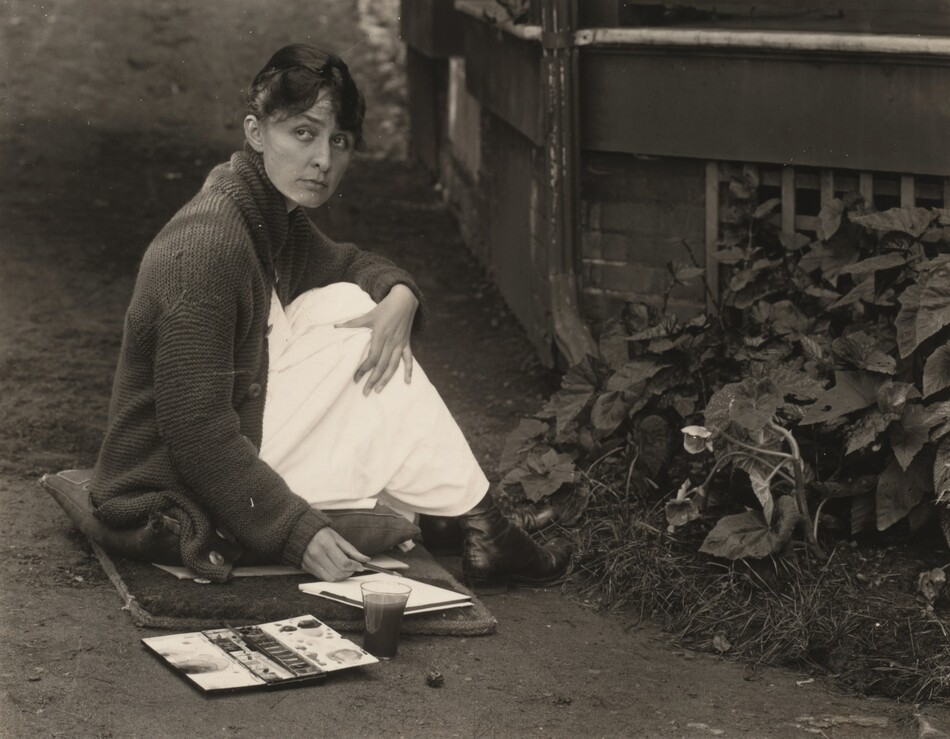
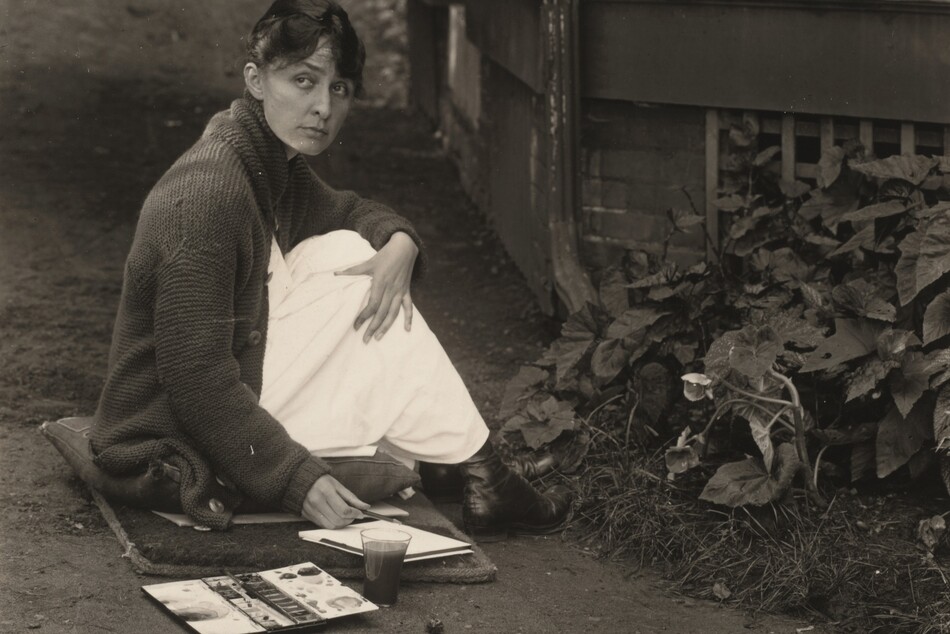
Concerning America, and Alfred Stieglitz, and Myself
Audio
Art and Espionage: Michael Straight's Giorgione
Audio
Picasso and the Concept of the Masterpiece
Audio
A Sculptor Looks at Rodin's Work
Video
"Roy Lichtenstein: A Retrospective" at the National Gallery of Art, Washington
Video
Wyeth Lecture in American Art: Friends and Rivals: Copley, West, Peale, Trumbull, and Stuart
Video
The Art of Boxing—George Bellows at the National Gallery of Art, Washington
Video
Ann Hamilton