Glenn Ligon, artist, with Molly Donovan and James Meyer, associate curators of modern art, National Gallery of Art. Glenn Ligon’s intertextual works examine cultural and social identity—often through found sources such as literature, Afro-centric coloring books, and photographs—to reveal the ways in which slavery, the civil rights movement, and identity politics inform our understanding of American society. In 2012, the Gallery acquired its first painting by Ligon, Untitled (I Am a Man) (1988). In honor of this acquisition, Ligon presented the 20th annual Elson Lecture on March 14, 2013. Untitled (I Am a Man) is a reinterpretation of the signs carried by 1,300 striking African American sanitation workers in Memphis in 1968 and made famous in Ernest Withers' photographs of the march. Proclaiming "I Am a Man," the signs evoke Ralph Ellison's famous line—"I am an invisible man." Approximating the size of these signs, Ligon’s roughly made painting combines layers of history, meaning, and physical material in a dense, resonant object. As the first painting in which the artist appropriated text, itis a breakthrough. In subsequent works he would transform texts into fields of semilegible and masked meanings. The Gallery owns sixteen works by Ligon, including a suite of etchings and a print portfolio.
Collection
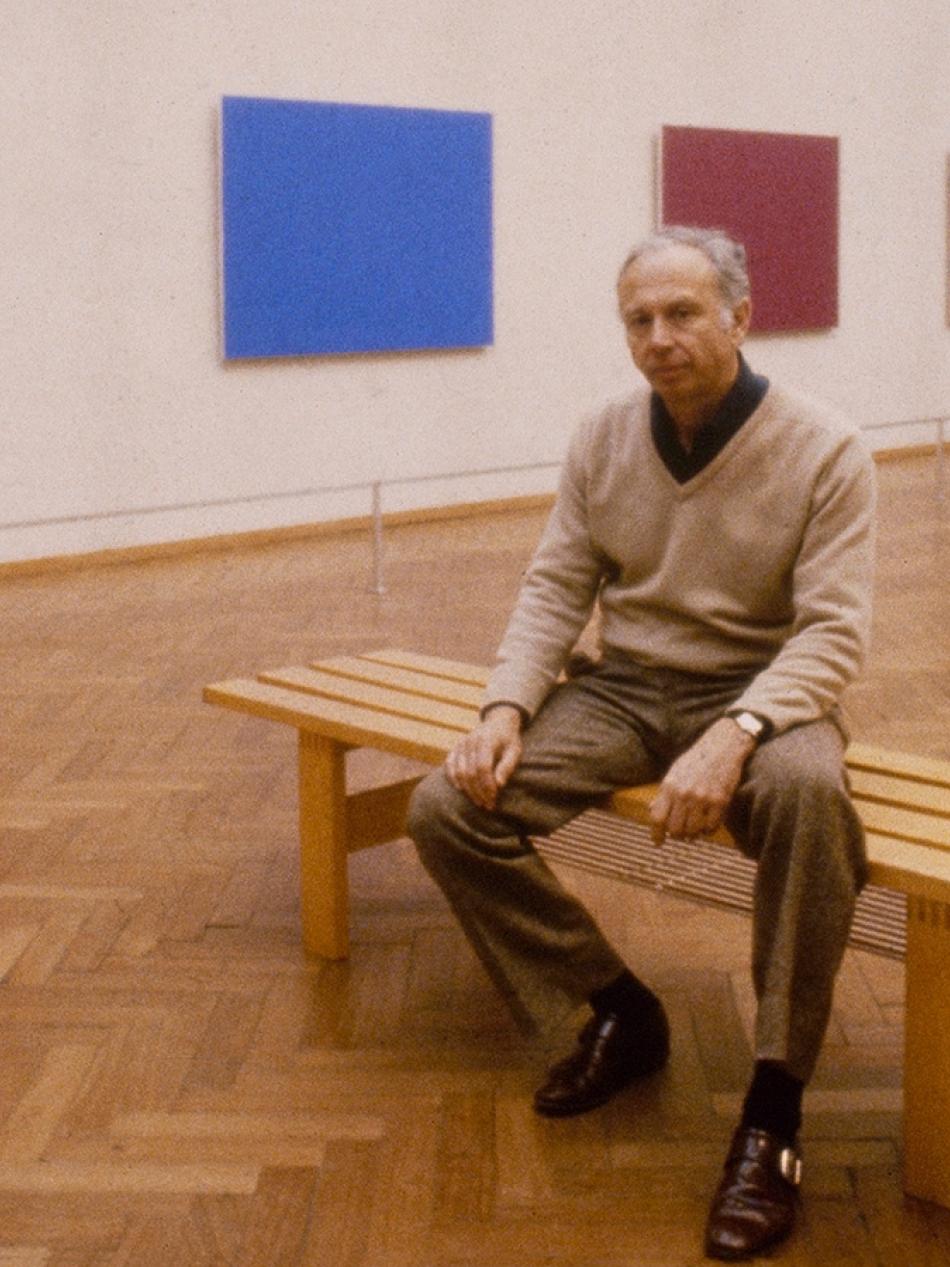
Robert and Jane Meyerhoff, collectors, in conversation with Irving Blum, collector and co-founder of the Ferus Gallery, Los Angeles. To celebrate the exhibition opening of The Robert and Jane Meyerhoff Collection: 1945-1995 at the National Gallery of Art on March 31, 1996, the Meyerhoffs joined Irving Blum to discuss the history and practice of their collecting. On view through July 21, 1996, the exhibition presented 194 works, almost their entire collection of post-World War II art. The Meyerhoffs' acquisitions have been based wholly on their belief in the quality of individual works and not on any preconceived theory or plan. If they were passionate about an artist, they collected his or her work in depth. Their private residence has a room dedicated to each of the following artists: Jasper Johns, Ellsworth Kelly, Roy Lichtenstein, Robert Rauschenberg, and Frank Stella. The collection is both a tribute to the extraordinarily high level of accomplishment by these artists and to the Meyerhoffs' intuition.
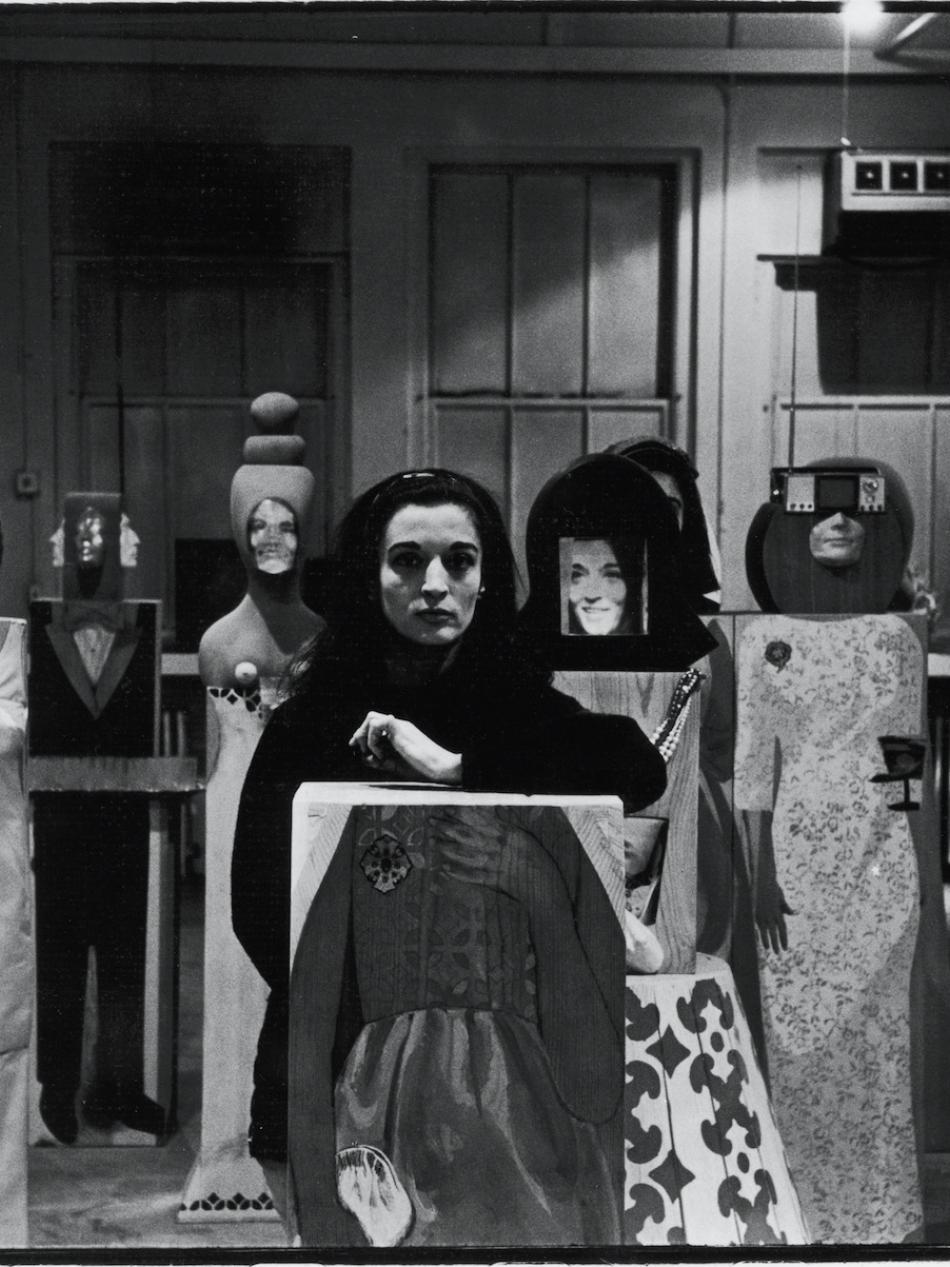
Gwendolyn H. Everett, assistant professor, department of art, Howard University. Gwendolyn H. Everett, scholar and author of the award-winning children's book Li'L Sis and Uncle Willie: A Story Based on the Life and Paintings of William H. Johnson, provides an overview of William Henry Johnson's (1901-1970) career as part of the Five African American Artists lecture series recorded on August 3, 2003. Everett traces Johnson's determination to become an artist, despite a humble upbringing in South Carolina, to his years at a segregated elementary school where art was not part of the formal curriculum. In 1918, during the first Great Migration, Johnson moved to New York to pursue artistic training unavailable in the South. While living in Harlem and working several jobs to support himself, he was accepted into the prestigious National Academy of Design. Noted watercolorist Charles Webster Hawthorne provided critical mentorship at the academy, hired Johnson to work at the Cape Cod School of Art, and sponsored his further training in Europe. Johnson supplemented this sponsorship with prizes awarded by the academy and funds earned working for Ashcan School painter George Luks. In 1920s Paris, Johnson lived in the former studio of James McNeill Whistler and became acquainted with Henry O. Tanner, an African American expatriate artist who had achieved international acclaim and who would become a pivotal figure in Johnson's rise to prominence. Follow along as Everett illustrates Johnson's journey—marked by determination, strengthened by hard work, and bolstered by the support of influential artists—that led him to become one of the greatest American artists of the 20th century.
Gwendolyn H. Everett, lecturer, National Gallery of Art. As part of the Artist in Residence lecture series, Gwendolyn H. Everett focused on Henry Ossawa Tanner’s (1859-1937) visits to the Holy Land, and how this travel affected the later religious paintings for which he achieved international recognition. In this podcast recorded on August 9, 1987, Everett explains the formative influence of Tanner’s upbringing in an educated, religious family in post-Civil War Philadelphia. Tanner’s father was a minister and, later, a bishop in the African Methodist Episcopal Church, and his mother administered a Methodist school. Tanner enrolled in the Pennsylvania Academy of Fine Arts as the only African American student in 1879, graduating in 1885. His professor, the artist Thomas Eakins, encouraged a progressive method of study from live models instead of plaster casts, which profoundly affected Tanner. after 1891 Tanner resided primarily in France; by 1895 his paintings were mostly of biblical themes, and in 1897 he made his first trip to the Holy Land, where his firsthand experience led to mastery of religious subject matter. He visited the region several times to explore mosques and biblical sites, and to complete character studies of the local population, as he had learned from Eakins. Tanner invigorated religious painting with modernism and with his deeply rooted faith, achieving renown in the international art world.
Charles W. Haxthausen, Robert Sterling Clark Professor of Art History, Williams College. “My work,” the German photo artist Candida Höfer has said, “is about making images of spaces.” Yet both she and fellow photographer Thomas Struth are equally interested in the dimension of time andthe evidence of layers of history in the spaces they photograph. Although Struth’s and Höfer’s photographs are inevitably the products of a single exposure, of a unique, fugitive moment, their images manifest a temporal complexity and transparency. Recorded on January 13, 2013, at the National Gallery of Art, the lecture by Professor Haxthausen explores the ways in which these artists’ work complicates how we think about the relationship of photography to time.
Kerry James Marshall, artist. Kerry James Marshall is a master of the human figure. His imposing, radiant paintings and installations draw equally upon African American history and the history of Western art. Born in 1955 in Birmingham, Alabama, he moved with his family to the town of Watts in 1963, shortly before the race riots began. At Otis Art Institute in Los Angeles he studied with social realist painter Charles White. Marshall's mature career can be dated to 1980, when, inspired by Ralph Ellison's Invisible Man, he developed his signature motif of a dark, near-silhouetted figure. This figure of "extreme blackness," as he puts it, has been important for younger artists including Glenn Ligon and Kara Walker. In honor of the Gallery's acquisition of its first painting, Great America (1994), by the artist last year, Marshall presented the 19th annual Elson Lecture, titled The Importance of Being Figurative, on March 22, 2012.
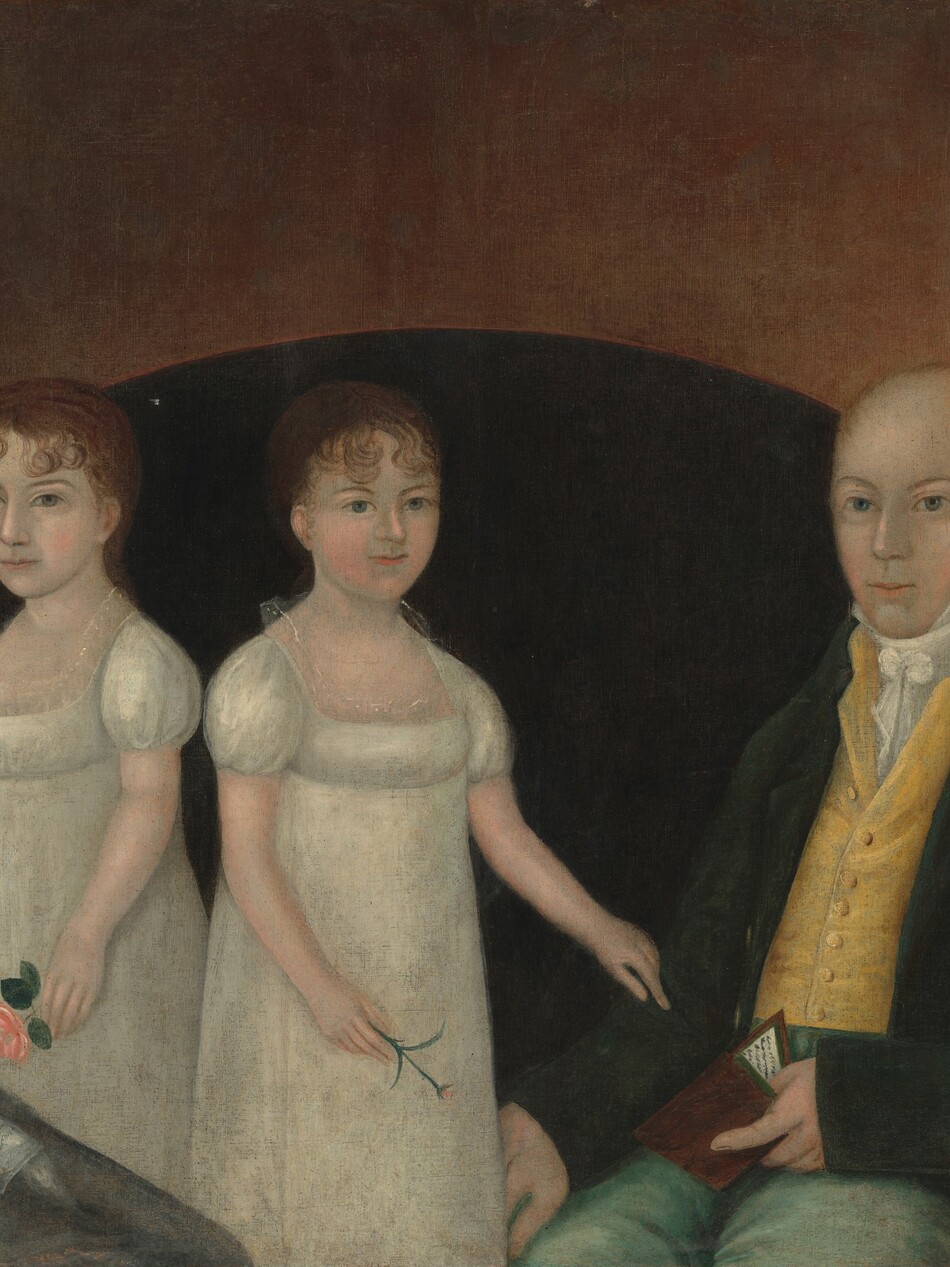
David Cannadine, director and professor, Institute of Historical Research, University of London To celebrate the landmark publication Mellon: An American Life, David Cannadine inaugurated and concluded his U.S. book tour at the National Gallery of Art with lectures on the founding benefactor of the Gallery, Andrew W. Mellon (1855-1937). In this second lecture recorded on December 9, 2006, Cannadine concentrates on Mellon's art collecting as his only nonprofessional gratification, and his great gift of the Gallery to the nation. His son Paul Mellon commissioned this biography in the mid-1990s to document the magnitude and range of his father's contributions to American history. Preeminent in the diverse fields of business, politics, art collecting, and philanthropy, Mellon was one of the greatest art collectors and philanthropists of his generation. According to Cannadine, the Gallery remains Mellon's culminating and most tangible legacy, although he did not live to see its completion and dedication on March 17, 1941.
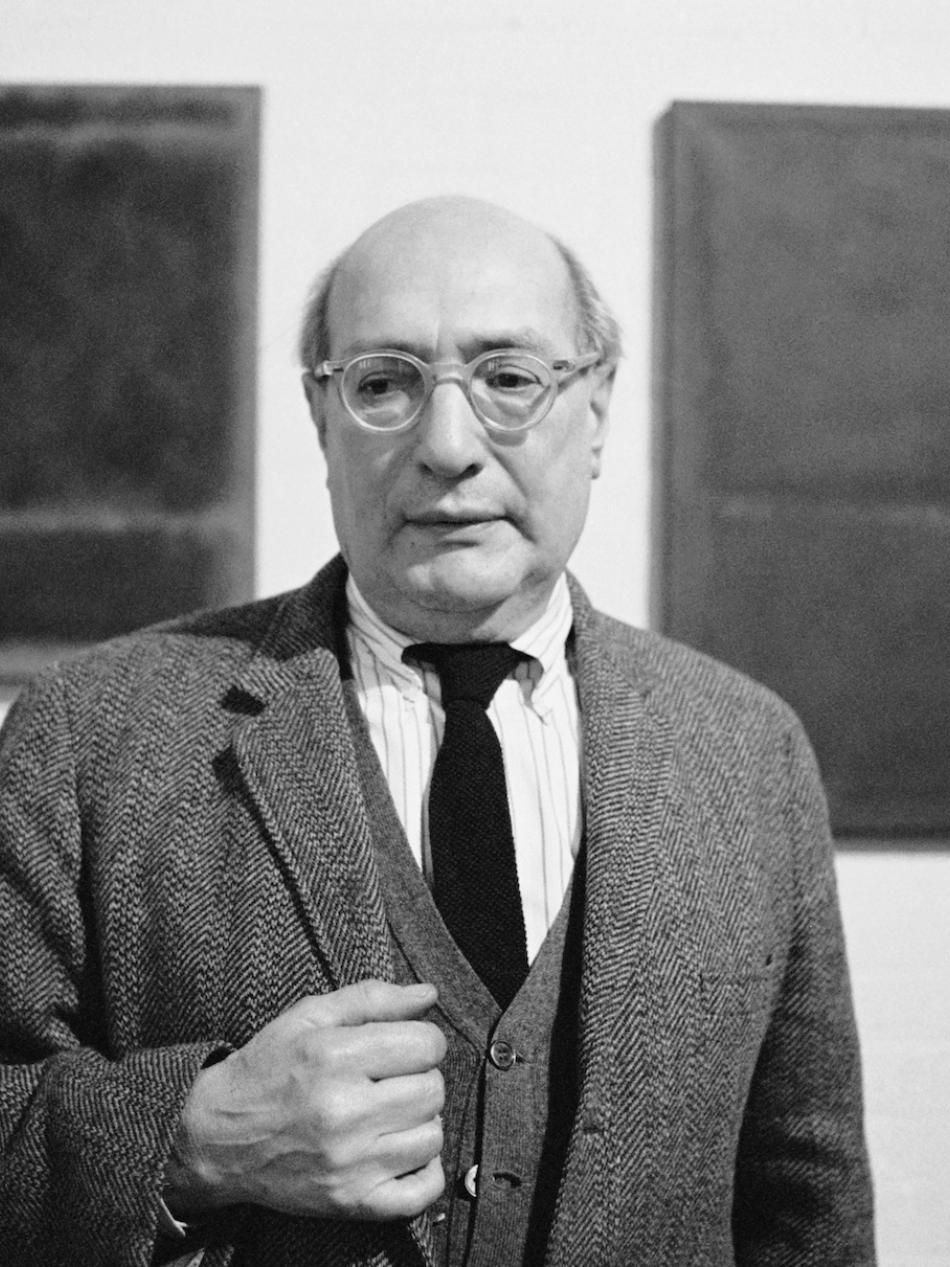
Terry Winters, artist. A prodigious painter, draftsman, and printmaker, Terry Winters has pushed the boundaries of modern art while he has maintained a keen sense of its history and craft. In this podcast recorded on April 14, 2011, for the Elson Lecture Series at the National Gallery of Art, Winters explains his use of the "low-tech, shape-shifting capabilities" of paint, as he puts it, to engage the complex experience of a high-tech world. The Gallery owns two important paintings by Winters: Bitumen (1986) and Composition (1991).
Claes Oldenburg and Coosje van Bruggen, artists. Working in collaboration since 1976, husband and wife artists Claes Oldenburg and Coosje van Bruggen (1942-2009) redefined the nature of outdoor sculpture in public spaces. In this podcast recorded on October 12, 1995, at the National Gallery of Art, Oldenburg and Van Bruggen discuss the design and installation of their larger-than-life sculptures. These works have been installed all over the world and have become iconic images of large-scale public art. This program was presented in conjunction with the traveling exhibition Claes Oldenburg: An Anthology, which was on view at the Gallery from February 12 to May 7, 1995.
Robert Gober, artist, in conversation with Harry Cooper, curator and head of modern and contemporary art, National Gallery of Art. For 25 years the sculptural and pictorial installations of American artist Robert Gober have proved difficult to ignore, assimilate, or forget. In this podcast, recorded on March 27, 2008, at the National Gallery of Art, Gober speaks with Harry Cooper. They discuss Gober's life as an artist and the consistently unpredictable and affecting nature of his oeuvre, which has had singular importance for contemporary art.
Leo Villareal, artist, in conversation with Molly Donovan, associate curator of modern and contemporary art, National Gallery of Art. In this podcast recorded on September 7, 2008, at the National Gallery of Art, American artist Leo Villareal and curator Molly Donovan discuss Villareal's Multiverse installation, which occupies the Concourse walkway between the East and West Buildings of the National Gallery of Art. Installed between September and December of 2008, Multiverse is one of the largest and most complex light sculptures created by the artist, featuring approximately 41,000 computer-programmed LED (light-emitting diode) nodes that run through channels along the 200-foot-long space.
Subscribe to our feeds in iTunes