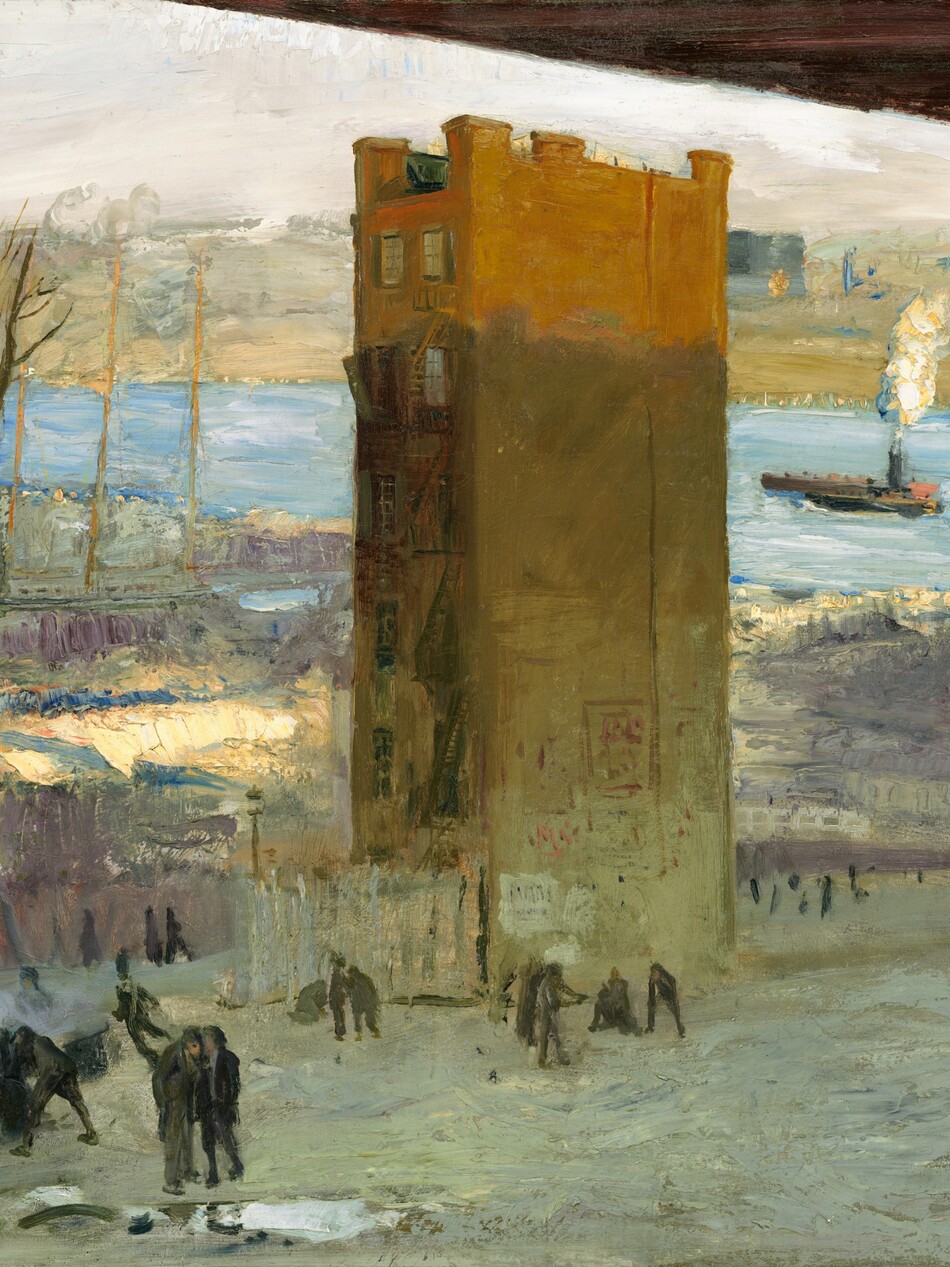
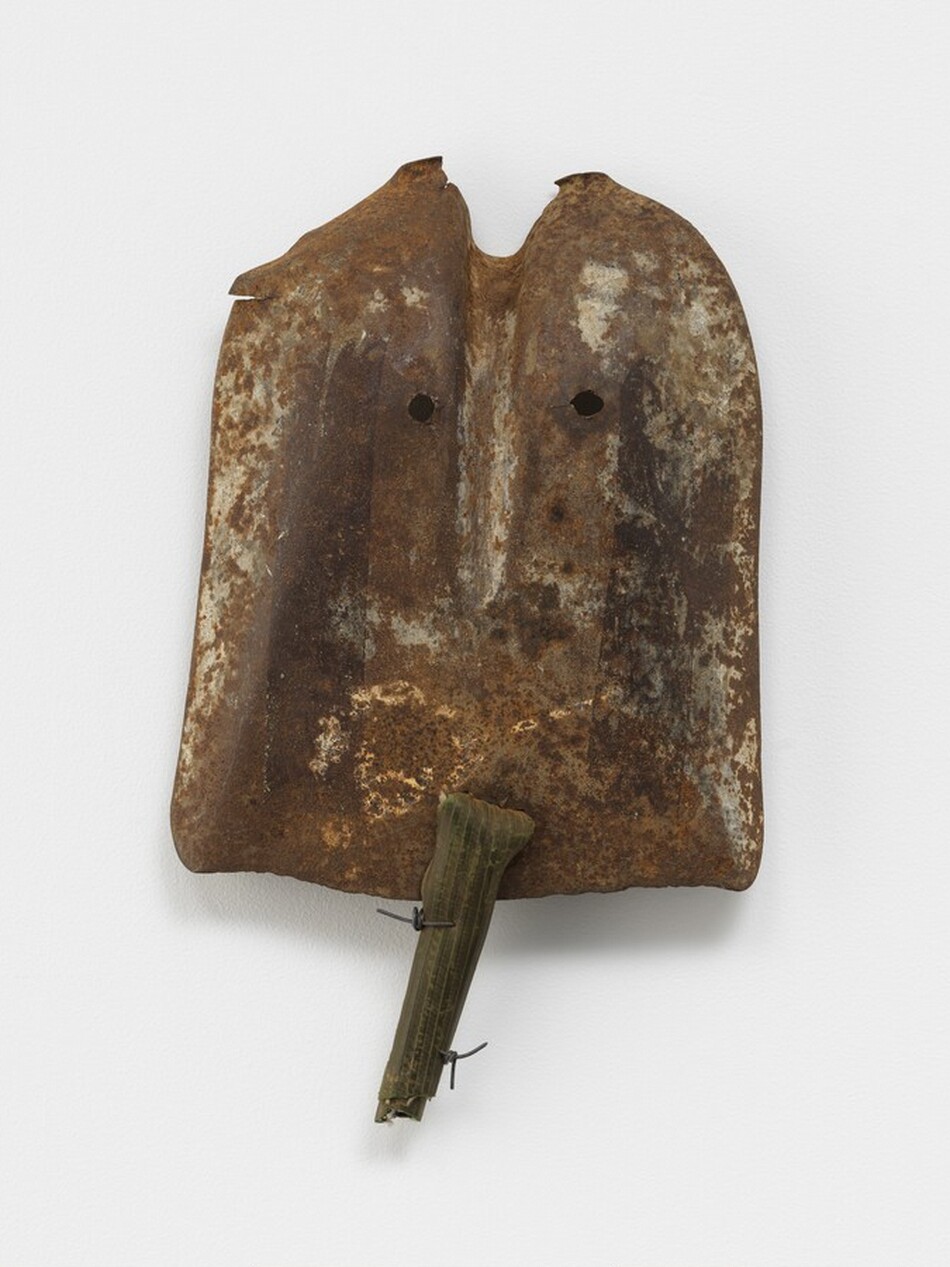
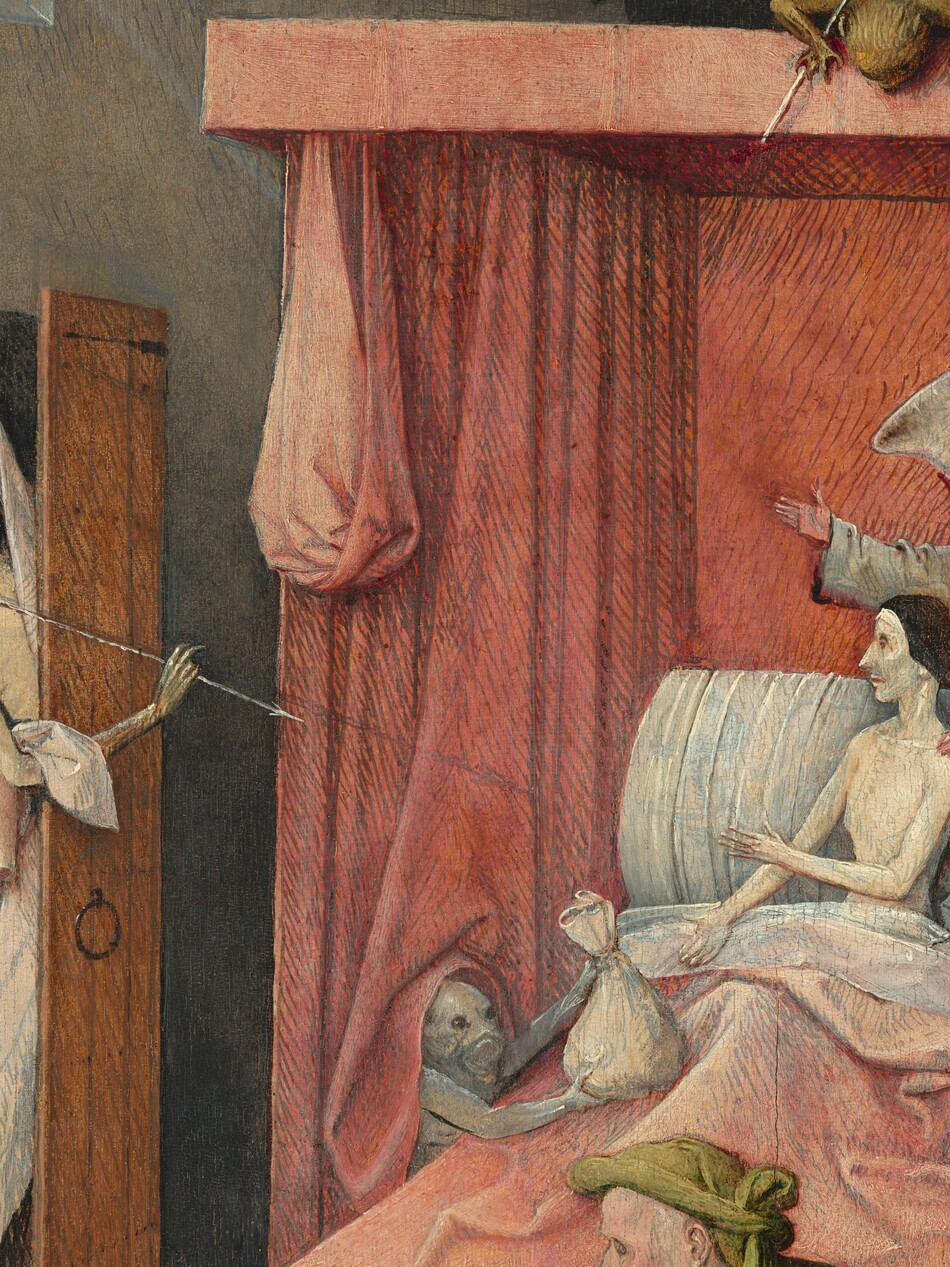
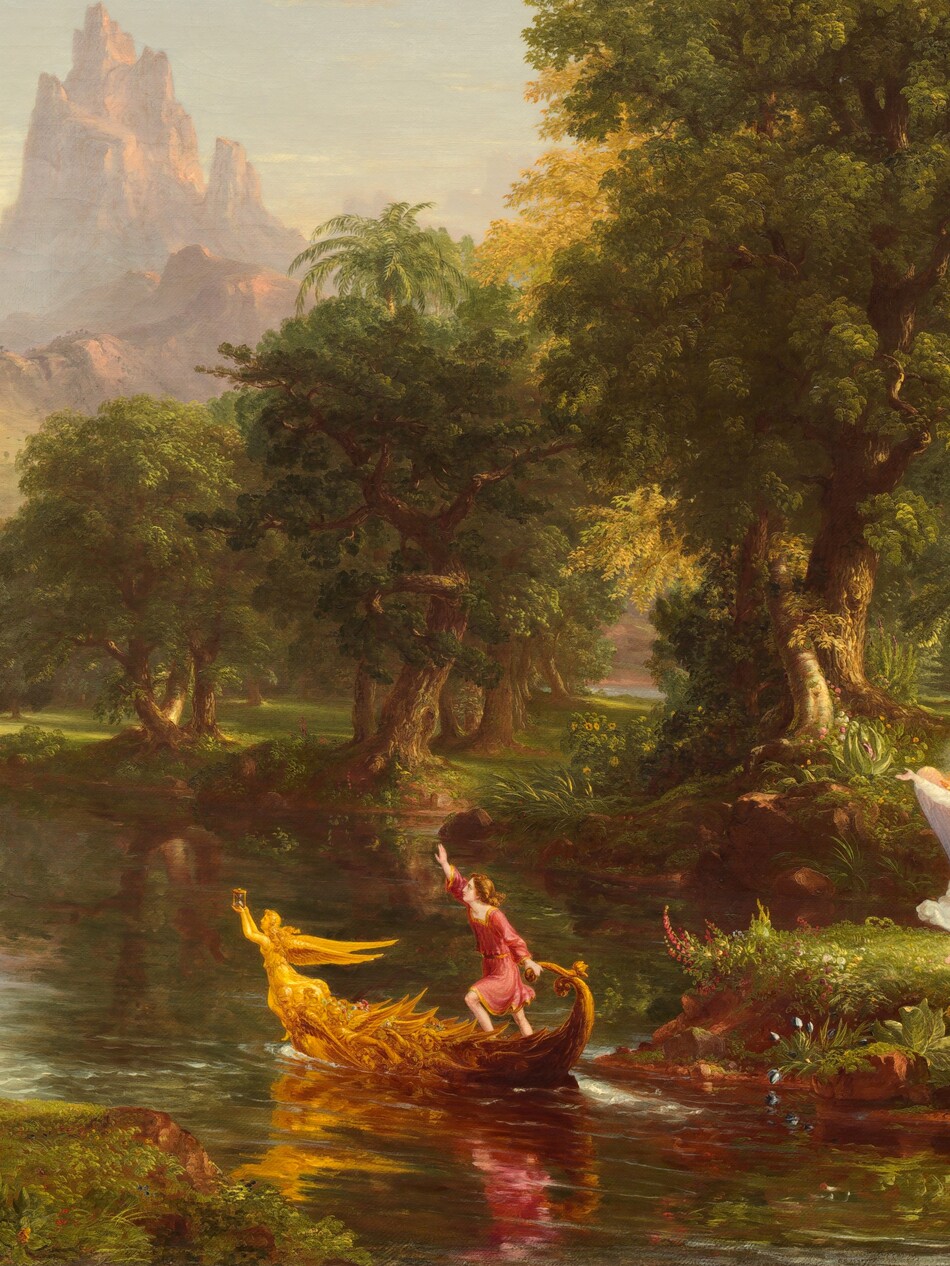
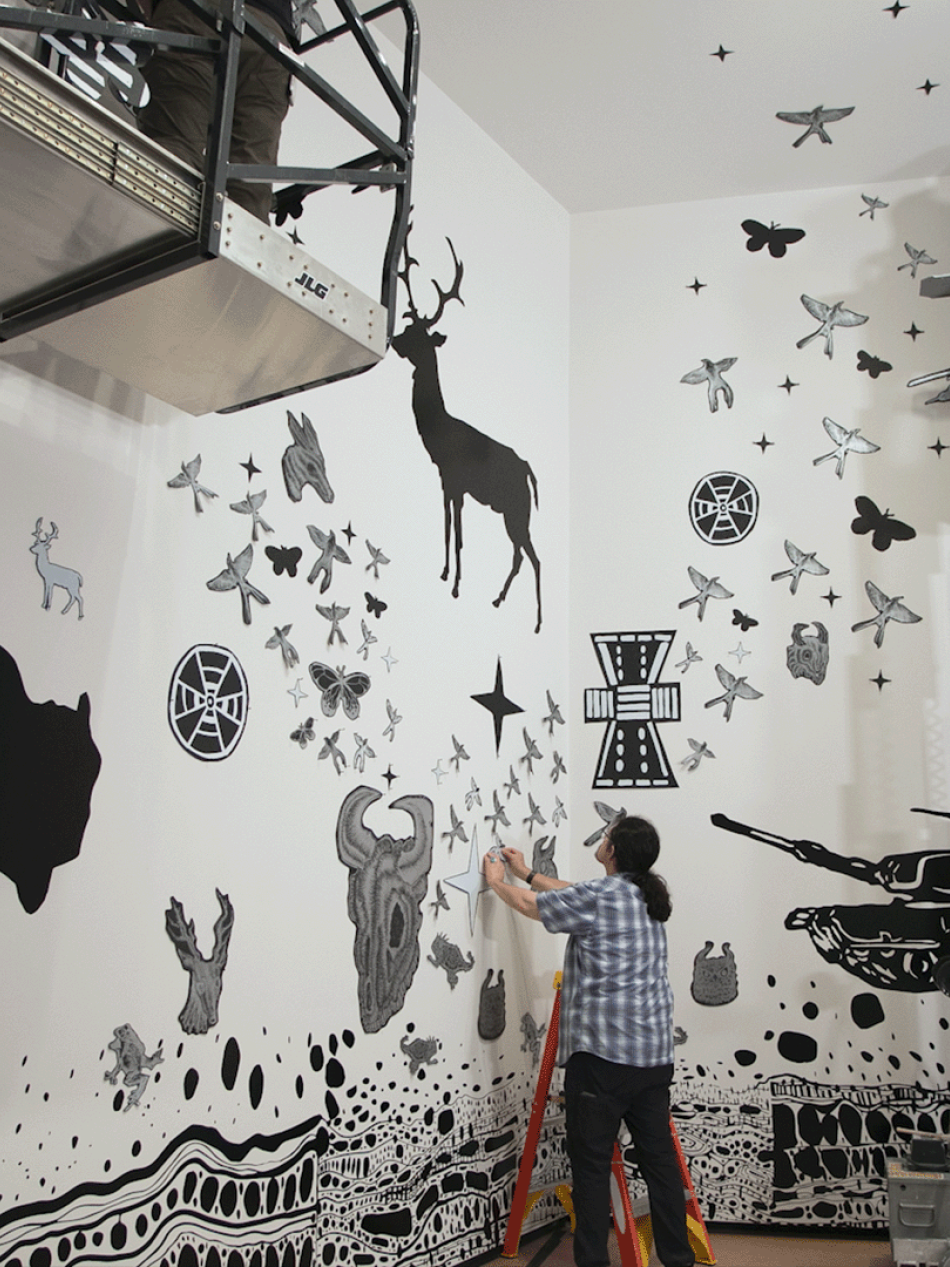
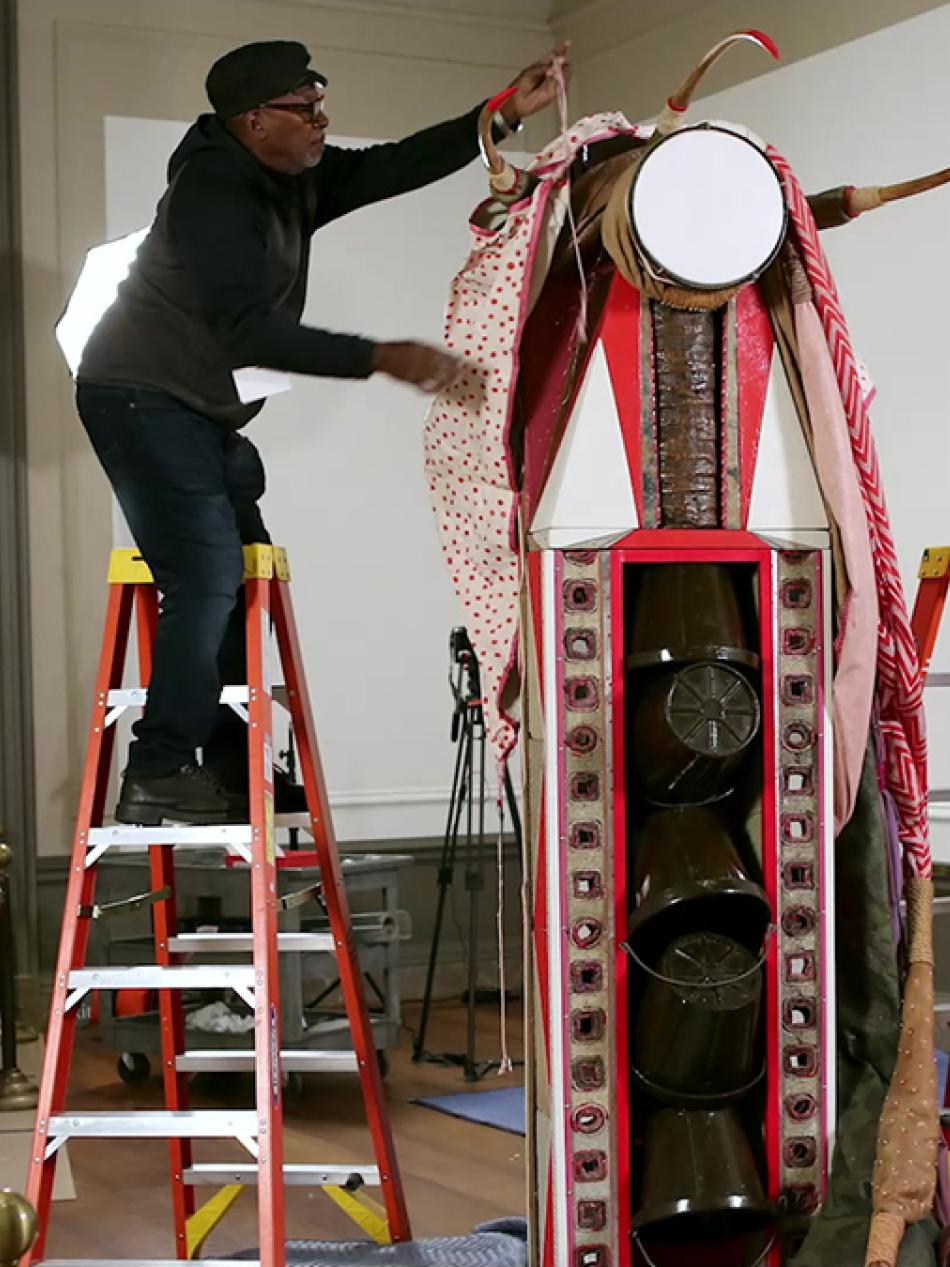
Kerry James Marshall in conversation with James Meyer, associate curator of modern art, National Gallery of Art. Kerry James Marshall has exhibited widely in both the United States and abroad and is the recipient of a MacArthur Fellowship, among other honors. His work often explores the experiences of African Americans and narratives of American history that have historically excluded black people. Drawing upon the artist’s prodigious knowledge of art history and African diasporic culture, his paintings combine figurative and abstract styles and multiple allusions. In Marshall’s art, the past is never truly past: history exerts a constant, often unconscious pressure on the living. In this program recorded on June 26, 2013, Marshall discusses the works and themes of his exhibition In the Tower: Kerry James Marshall, on view at the Gallery from June 28 to December 7, 2013.
Curators
Andrew Robison, A.W. Mellon Senior Curator of Prints and Drawings, National Gallery of Art. To celebrate the exhibition opening of Albrecht Dürer: Master Drawings, Watercolors, and Prints from the Albertina on March 24, 2013, Andrew Robison shares that, while the artist's paintings were prized, his most influential works were executed on paper. Albrecht Dürer (1471–1528) has long been considered the greatest German artist, uniquely combining the status held in Italian art by Michelangelo in the 16th century, by Raphael in the 18th and 19th centuries, and by Leonardo da Vinci in our own day. The finest collection of Dürer's drawings and watercolors is that of the Albertina in Vienna, Austria. One of the largest in the world, it is distinguished by many of the artist's most stunning masterpieces: watercolors such as The Great Piece of Turf, a sublime nature study of the Renaissance; chiaroscuro drawings such as The Praying Hands, surely the most famous drawing in the world; and the amazingly precocious silverpoint Self-Portrait at Thirteen, perhaps the earliest self-portrait drawing by any artist. On view through June 9, 2013, this groundbreaking exhibition presents 91 of the superb Dürer watercolors and drawings from the Albertina and 27 of the museum’s best related engravings and woodcuts. It also includes 19 closely related drawings and prints from the Gallery’s own collection.
Diane Waggoner, associate curator, department of photographs, National Gallery of Art, Jason Rosenfeld, distinguished chair and professor of art history, Marymount Manhattan College. Held in conjunction with the exhibition Pre-Raphaelites: Victorian Art and Design, 1848–1900, this symposium explored Britain's first avant-garde art movement in the context of other international modernisms. The young members of the Pre-Raphaelite Brotherhood (formed in 1848) shook the art world of mid-19th-century Britain by rejecting traditional approaches to painting. Academics and curators consider modern art and craft movements in these lectures recorded on March 8 and 9, 2013. This program was coordinated with and supported by the Department of the History of Art, Yale University.
Scott Allan, associate curator of paintings, J. Paul Getty Museum. Held in conjunction with the exhibition Pre-Raphaelites: Victorian Art and Design, 1848–1900, this symposium explored Britain's first avant-garde art movement in the context of other international modernisms. The young members of the Pre-Raphaelite Brotherhood (formed in 1848) shook the art world of mid-19th-century Britain by rejecting traditional approaches to painting. Academics and curators consider modern art and craft movements in these lectures recorded on March 8 and 9, 2013. This program was coordinated with and supported by the Department of the History of Art, Yale University.
Diane Waggoner, associate curator, department of photographs, National Gallery of Art, Jason Rosenfeld, distinguished chair and professor of art history, Marymount Manhattan College, Scott Allan, associate curator of paintings, J. Paul Getty Museum, Linda S. Ferber, vice president and senior art historian, New-York Historical Society, Cordula Grewe, associate professor of art history, Columbia University. Held in conjunction with the exhibition Pre-Raphaelites: Victorian Art and Design, 1848–1900, this symposium explored Britain's first avant-garde art movement in the context of other international modernisms. The young members of the Pre-Raphaelite Brotherhood (formed in 1848) shook the art world of mid-19th-century Britain by rejecting traditional approaches to painting. Academics and curators consider modern art and craft movements in these lectures recorded on March 8 and 9, 2013. This program was coordinated with and supported by the Department of the History of Art, Yale University.
Tim Barringer, Paul Mellon Professor of the History of Art and director of graduate studies, Yale University, Michael Hatt, professor of the history of art, University of Warwick. Held in conjunction with the exhibition Pre-Raphaelites: Victorian Art and Design, 1848–1900, this symposium explored Britain's first avant-garde art movement in the context of other international modernisms. The young members of the Pre-Raphaelite Brotherhood (formed in 1848) shook the art world of mid-19th-century Britain by rejecting traditional approaches to painting. Academics and curators consider modern art and craft movements in these lectures recorded on March 8 and 9, 2013. This program was coordinated with and supported by the Department of the History of Art, Yale University.
Glenn Ligon, artist, with Molly Donovan and James Meyer, associate curators of modern art, National Gallery of Art. Glenn Ligon’s intertextual works examine cultural and social identity—often through found sources such as literature, Afro-centric coloring books, and photographs—to reveal the ways in which slavery, the civil rights movement, and identity politics inform our understanding of American society. In 2012, the Gallery acquired its first painting by Ligon, Untitled (I Am a Man) (1988). In honor of this acquisition, Ligon presented the 20th annual Elson Lecture on March 14, 2013. Untitled (I Am a Man) is a reinterpretation of the signs carried by 1,300 striking African American sanitation workers in Memphis in 1968 and made famous in Ernest Withers' photographs of the march. Proclaiming "I Am a Man," the signs evoke Ralph Ellison's famous line—"I am an invisible man." Approximating the size of these signs, Ligon’s roughly made painting combines layers of history, meaning, and physical material in a dense, resonant object. As the first painting in which the artist appropriated text, itis a breakthrough. In subsequent works he would transform texts into fields of semilegible and masked meanings. The Gallery owns sixteen works by Ligon, including a suite of etchings and a print portfolio.
Tim Barringer, Paul Mellon Professor of the History of Art and director of graduate studies, Yale University; Jason Rosenfeld, distinguished chair and professor of art history, Marymount Manhattan College; and Diane Waggoner, associate curator, department of photographs, National Gallery of Art. In this podcast recorded on February 17, 2013, at the National Gallery of Art, Tim Barringer, Jason Rosenfeld, and Diane Waggoner celebrate the opening of the exhibition Pre-Raphaelites: Victorian Art and Design, 1848–1900, the first major survey of Pre-Raphaelite art to be shown in the United States. The Pre-Raphaelites were a group of young artists who sought to overturn established traditions of painting and made art that looked to the past for inspiration, but also engaged directly with the bustling modern world of Victorian Britain. The exhibition features some 130 paintings, sculptures, photography, works on paper, and decorative art objects that reflect the ideals of Britain's first modern art movement. Pre-Raphaelites: Victorian Art and Design, 1848–1900 is on display through May 19, 2013.
Mia Fineman, assistant curator, department of photographs, Metropolitan Museum of Art. The urge to modify camera images is as old as photography itself—only the methods have changed. Faking It: Manipulated Photography before Photoshop is the first major exhibition devoted to the history of manipulated photographs before the digital age. The exhibition, on view at the National Gallery of Art from February 17 to May 5, 2013, offers a provocative new perspective on the history of photography. In this lecture recorded on February 24, 2013, exhibition curator Mia Fineman traces photographic manipulation from the 1840s through the 1980s and shows that photography is—and always has been—a medium of fabricated truths and artful lies.
Charles Ritchie, associate curator of modern prints and drawings, National Gallery of Art. While Ellsworth Kelly is best known for crafting pristine, monochrome shapes, he has periodically employed chance as a strategy in composing works. The series of 23 paper-pulp works featured in the exhibition Ellsworth Kelly: Colored Paper Images, on view at the National Gallery of Art from December 16, 2012, through December 1, 2013, is a dramatic example of this approach. Wet colored paper pulps were pressed into freshly made sheets of paper, resulting in color bleeds that eroded the precision of his designs. In this lecture recorded on February 10, 2013, Charles Ritchie investigates factors contributing to the success of this project—from Kelly’s improvisation on earlier motifs to print publisher Ken Tyler’s study of pigmentation in order to create strongly colored, lightfast paper pulps. Ritchie also discusses the expertise of veteran papermakers John and Kathleen Koller, who developed the paper for this project.
Alison Luchs, curator of early European sculpture, National Gallery of Art. Michelangelo created the statue now known as David-Apollo around 1530 to please the tyrannical governor of Florence, Baccio Valori. The double name of this unfinished work, which is on loan to the National Gallery of Art from the Museo Nazionale del Bargello in Florence, reflects contradictory evidence—both visual and documentary—concerning the subject. The graceful figure, its surface still veiled in chisel marks, embodies ambiguities and conflicts in Michelangelo’s own life. This lecture, recorded on January 27, 2013, at the National Gallery of Art, explores the mysteries surrounding the statue, the significance of its unfinished condition, and responses to it from later artists. The loan of David-Apollo opened the nationwide celebration 2013―The Year of Italian Culture.The sculpture is on view from December 13, 2012, to March 2, 2013.
David C. Driskell, artist, curator, and professor of art, University of Maryland, College Park. On January 11, 1990, the National Gallery of Art announced an initiative to address the underrepresentation of minorities—particularly African Americans, Hispanic Americans, and Native Americans—in the museum profession. In response, David Driskell presented a lecture at the Gallery on February 11, 1990, on multi-cultural representation in art museum collections and exhibitions and among staff and visitors. Unresolved issues in our cultural history raise questions about why the arts have been divided along racial lines—if, as Driskell observes, all art emanates from the salient desire to express the inner urges of the human spirit. This quality we all possess is colorless, classless, and uncluttered by feelings of racial superiority. The insistence on dividing art in the United States along racial lines demonstrates a response different in both thought and action than that seen in older cultures and ancient societies. Driskell hopes that these impending initiatives allow us to enter the 21st century with a more holistic view of our history and the cultural pluralism that is the privilege of this nation.
Harry Cooper, curator and head, department of modern art, National Gallery of Art, with original slides courtesy of the Roy Lichtenstein Foundation © Estate of Roy Lichtenstein. On November 11, 1995, Roy Lichtenstein was in Japan to receive the Kyoto Prize from the Inamori Foundation. In accepting the award, he delivered a lecture on the evolution of his work since his Pop breakthrough of 1961. Thanks to the generosity of the artist's estate and foundation, Harry Cooper, the National Gallery of Art's curator of modern art, presented this lecture at the Gallery, with the original slides, on January 9, 2013—in honor of Roy Lichtenstein: A Retrospective, the first major exhibition of the artist's work since his death in 1997. The exhibition was on view at the Gallery from October 14, 2012, to January 13, 2013.
Sydney J. Freedberg, Arthur Kingsley Porter Professor of Fine Arts, and acting director, Fogg Art Museum, Harvard University. At the time of the exhibition Prints and Related Drawings by the Carracci Family, on view from March 18 to May 20, 1979, at the National Gallery of Art, Sydney J. Freedberg presented his observations on Lodovico Carracci (1555-1619), the oldest of the family of Bolognese artists that included cousins Agostino (1557-1602) and Annibale (1560-1609). Together the Carracci profoundly altered the course of Italian art in the later years of the 16th century and laid the basis for the baroque style that would dominate the century to come. In this lecture recorded on April 8, 1979, Freedberg opposes the perception of Lodovico as a flawed artist outdistanced by his younger cousins. Providing a more comprehensive account, Freedberg argues that the artist's expressive capacity- seen in his sensuous handling of paint, powerful evocations of form, and innovative chiaroscuro- was both his strength and defect.
Ellen G. Miles, curator of painting and sculpture, National Portrait Gallery. Gilbert Stuart (1755-1828) was the most successful portraitist of early America. Known for his renderings of the most famous American men and women of the era, including George Washington and John Adams, Stuart painted nearly 1,000 portraits over the course of his 50-year career. In this lecture recorded on April 3, 2005, Ellen G. Miles, cocurator of the exhibition Gilbert Stuart, illustrates the artist's career through documents of his sitters and business partners. The exhibition, which was on view from March 27 to July 31, 2005, presented 91 exceptional works that showcase Stuart's mastery of 18th-century English portraiture, revealing the paintings' elegant, refined beauty and historical importance. Of the Gallery's unequaled collection of 43 paintings by Stuart, 16 were conserved in 2012 through a Bank of America Art Conservation Project Grant.
Maria Luisa Lax, curator and head of collections, Fundació Pilar i Joan Miró a Mallorca. Catalan painter Joan Miró (1893-1983), celebrated as one of the greatest modern artists, combined abstract art with surrealist fantasy to create his lithographs, murals, tapestries, and sculptures for public spaces. Held on June 1 and 2, 2012, at the National Gallery of Art, this public symposium explored Joan Miró- his personal life, politics, art, and the impact that he had on other artists. This program was held in conjunction with the exhibition Joan Miró: The Ladder of Escape on view at the Gallery from May 6 to August 12, 2012, and was coordinated with and supported by the Institut Ramon Llull.
Carl Brandon Strehlke, adjunct curator, John G. Johnson Collection, Philadelphia Museum of Art. In 1895 Bernard Berenson (1865-1959), American art historian and connoisseur, published a long-awaited monograph on Renaissance painter Lorenzo Lotto; it was Berenson's first statement about the then relatively new science of connoisseurship. Toward the end of his life Berenson remembered that since writing that book, in which he had tried to regulate every knowable mood of an artist, he had almost never again "taken creative interest in the private, biological, and sociological lives of painters." As part of the Sydney J. Freedberg Lecture on Italian Art series, recorded on November 13, 2011, at the National Gallery of Art, Carl Brandon Strehlke explores why Berenson selected Lotto as an artist and as a subject for a study that he described as "an essay in constructive art criticism."
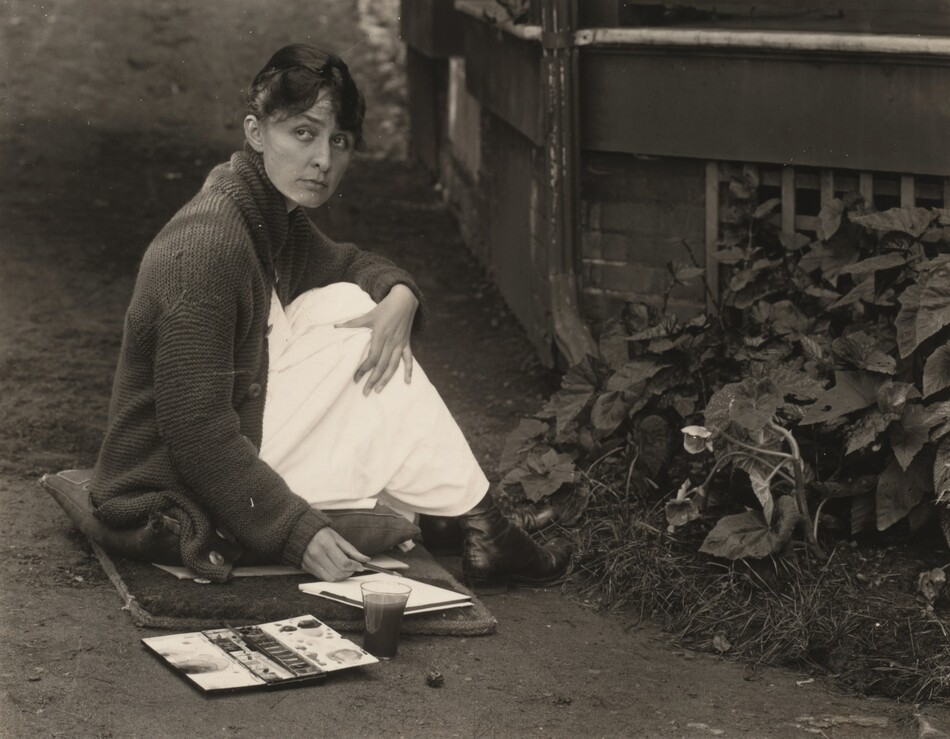
Sarah Greenough, senior curator and head of the department of photographs, National Gallery of Art. Sarah Greenough talks about her new book on the letters of Georgia O'Keeffe and Alfred Stieglitz, My Faraway One: Selected Letters of Georgia O'Keeffe and Alfred Stieglitz, Volume One, 1915-1933, in this podcast recorded on September 18, 2011, at the National Gallery of Art. Greenough notes the insights provided by the correspondence on their art, their friendships with many key figures of early twentieth-century American art and culture, and, most especially, their relationship with each other.
Robert Gober, artist, in conversation with Harry Cooper, curator and head of modern and contemporary art, National Gallery of Art. For 25 years the sculptural and pictorial installations of American artist Robert Gober have proved difficult to ignore, assimilate, or forget. In this podcast, recorded on March 27, 2008, at the National Gallery of Art, Gober speaks with Harry Cooper. They discuss Gober's life as an artist and the consistently unpredictable and affecting nature of his oeuvre, which has had singular importance for contemporary art.
David Brown, curator, Italian and Spanish paintings, National Gallery of Art, and Sylvia Ferino-Pagden, curator, Italian Renaissance painting, Kunsthistorisches Museum, Vienna. Sixteen examples of the composite heads painted by the Italian Renaissance master Giuseppe Arcimboldo, bizarre but with scientifically accurate components, are on view together for the first time in the United States at the National Gallery of Art, Washington. On the occasion of the exhibition Arcimboldo, 1526-1593: Nature and Fantasy, David Brown and Sylvia Ferino-Pagden unravel the mysteries behind his work.
Leo Villareal, artist, in conversation with Molly Donovan, associate curator of modern and contemporary art, National Gallery of Art. In this podcast recorded on September 7, 2008, at the National Gallery of Art, American artist Leo Villareal and curator Molly Donovan discuss Villareal's Multiverse installation, which occupies the Concourse walkway between the East and West Buildings of the National Gallery of Art. Installed between September and December of 2008, Multiverse is one of the largest and most complex light sculptures created by the artist, featuring approximately 41,000 computer-programmed LED (light-emitting diode) nodes that run through channels along the 200-foot-long space.
Xavier Bray, assistant curator, European paintings, National Gallery, London, and Mary Levkoff, curator of sculpture and decorative arts, National Gallery of Art, Washington. In 17th-century Spain, a new kind of realism in art emerged. In order to revitalize the Catholic Church, painters and sculptors worked together in an attempt to make the sacred as realistic and accessible as possible. In the first of this two-part podcast series, produced on the occasion of the exhibition, Mary Levkoff talks with curator Xavier Bray about the history, uses, and techniques of polychromed sculpture.
Ruth Fine, curator of special projects in modern art, National Gallery of Art, and Juliette Bethea, collector. In this event recorded on February 15, 2009, as part of the National Gallery of Art lecture series The Collecting of African American Art, Ruth Fine speaks with Washington, DC-based collector Juliette Bethea about her life–long passion for learning and what inspired her to begin acquiring art nearly 40 years ago. Bethea discusses how moving to Washington in 1967 after years of traveling abroad marked a turning point in her engagement with the arts. Through the strong community of artists connected to the Howard University community, Bethea developed a connection with the local art scene.
Subscribe to our feeds in iTunes