


Sarah Gould
Painting with Steam, 1780–1850
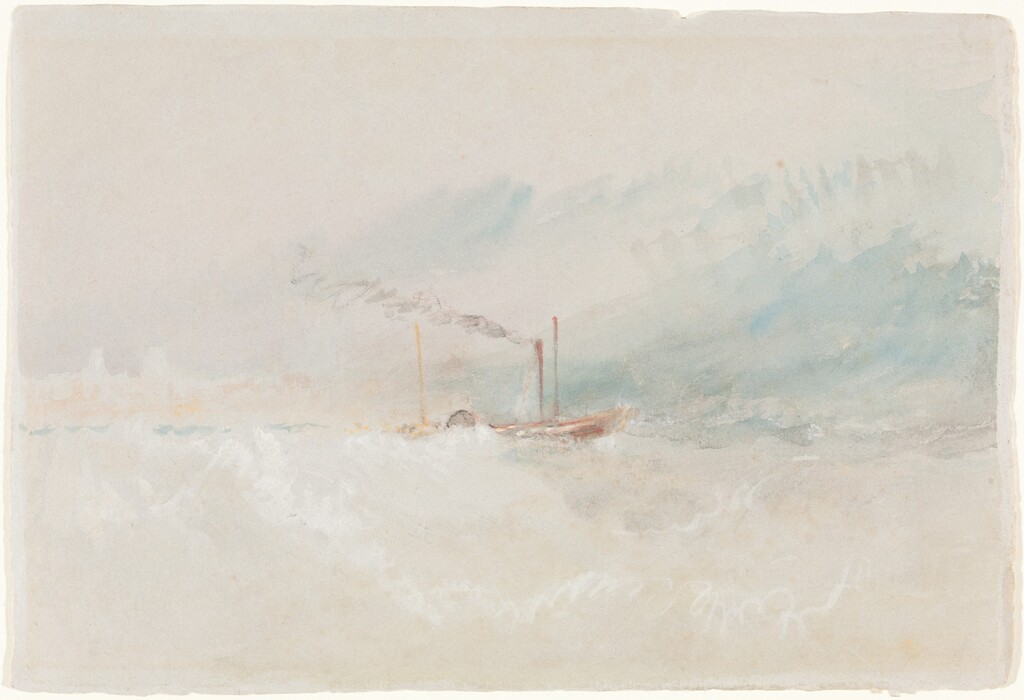
Every revolution has its icons. These images function to make the complex welter of historical causality snap into view as an event. As a form of representation, an icon does not merely represent an absent object, nor does it work through presence alone. It acts. When it comes to the iconic images of the Industrial Revolutions, it was 19th-century British landscape painting that first made visible the rise of the “dark Satanic mills.” But these paintings, I argue, were not simply representations. “Painting with Steam,” the book I have been working on at the Center, looks at how the causal relationships between air pollution, visuality, and painting came to be diagramed from the 1780s to the 1850s. Painting, that is, not just as a document or illustration, but as an agent and mediator of environmental change. Here, I look at how pollution shaped artistic production, representation, collecting, and exhibition, while at the same time considering how painting and the visual arts participated in making pollution legible, giving it form, and thereby contributing to the very processes through which it was conceptualized and (de)regulated.
During my nine months in residence, I drafted more than half of the manuscript. Generative conversations with colleagues led to a decisive reorientation of the project’s chronology, narrowing its scope from around 1780 to 1850. The book therefore concludes in 1850, deliberately shifting its chronological framework away from the established focus on later 19th-century aestheticizations of pollution—before Claude Monet’s travels to London to paint sites along the Thames, before James McNeill Whistler fashions himself as the painter of fog, and before John Ruskin’s formulation of the “Storm-Cloud.” It stops, in other words, just at the very moment when air pollution (as we understand and define it today) emerges as an explicit subject of artistic representation, when pollution is sought out and transfigured into a consumable visual form. By ending in the 1850s, the book attends instead to an earlier moment, when contaminated air had not yet fully crystallized as an ambiguous object of aesthetic desire, yet in which its pervasive presence was structurally embedded in processes of image-making and collecting.
Research in the National Gallery’s rare books collection led me to establish Julius Caesar Ibbetson’s technical handbook, An Accidence, or Gamut, of Painting in Oils and Water Colours (1803), in which he recommends that artists move away from the smoke of London, as a primary case study for the first chapter. Regular visits to the National Gallery’s collection of British art, together with work in the Department of Prints and Drawings, helped me consolidate my second chapter on Joseph Mallord William Turner’s late work. In this chapter, I aim to qualify and complicate formalist accounts that yoke together the representation of polluted atmospheres and the proto-abstract, by exploring how the notion of pollution itself was formulated by chemists and industrialists as something profoundly nebulous, thereby dissimulating the responsibility of polluters both in Britain and its colonies. These visits were complemented by research in collections along the East Coast, including the Yale Center for British Art, which informed the conception of a fourth chapter devoted to the motif of the steamship within the colonial picturesque. Progress on the third chapter, which examines pollution within the museum, and more specifically the 1850 National Gallery of London Select Committee and the role of Michael Faraday, benefited immensely from discussions with conservators. Access to certain databases and interlibrary loans, which are unavailable to me in France, also played a crucial role in the advancement of the project.
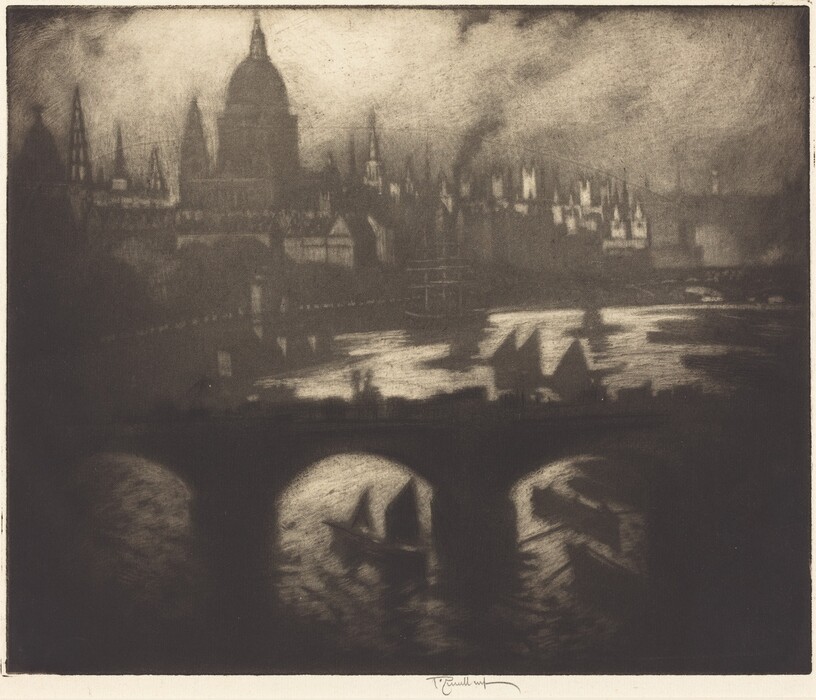
During my fellowship, I further began work on an article devoted to Joseph Pennell’s prints of atmospheric London, drawing on holdings at the National Gallery and the Library of Congress. I will present this research in a virtual, lunchtime talk at the Smithsonian American Art Museum in fall 2026.
The history of pollution is one of accommodating, naturalizing, and abstracting—three actions that also have to do with form. Visual art, I argue, at once participated in the official discourse of a triumphant industrial capitalism and resisted strategies that sought to redirect attention away from the authors of environmental degradation.
Université Paris 1 Panthéon-Sorbonne
William C. Seitz Senior Fellow, 2025–2026
Sarah Gould will return to her position as associate professor at Université Paris 1 Panthéon-Sorbonne.