Carl Marcus Tuscher

German, 1705 - 1751

Explore selected works

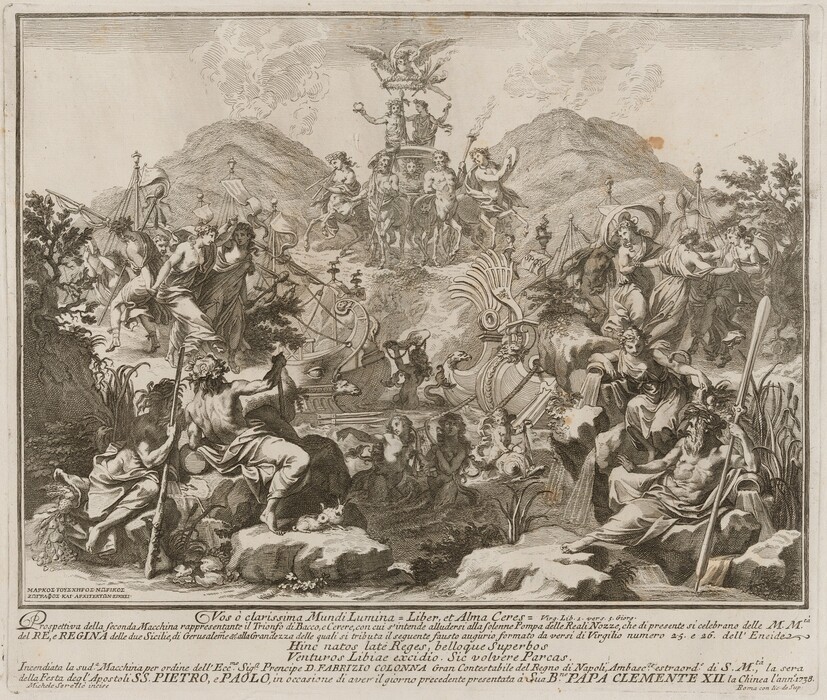
This is an engraving of various figures engaged in a grand vignette. The scene is rich with characters and symbols. There is a central figure on a chariot surrounded by others engaged in activity. The image features a densely packed composition with figures in classical garments, some holding instruments or weapons. In the lower central area and sides, there are figures with water-themed elements. This is in the style of an allegorical or mythological engraving typical of the late Baroque period.
Miguel de Sorellò, The Seconda Macchina for the Chinea of 1738: The Triumph of Bacchus and Ceres, 1738, etching, Gift of Vincent Buonanno in Honor of Andrew Robison, 2016.121.4
The artwork is a detailed etching depicting a scene. It features Bacchus and Ceres at the center, surrounded by an entourage. Bacchus is seated on a chariot adorned with figures and pulled by creatures. Ceres is nearby, accompanied by symbols of agriculture. The scene includes multiple figures in classical attire engaging in various actions, some holding staffs or musical instruments. The background shows a hilly landscape with smoke rising. The composition includes intricate details, with elaborate costumes and dynamic postures, all set within a rectangular frame with a decorative border.
Miguel de Sorellò, The Seconda Macchina for the Chinea of 1738: The Triumph of Bacchus and Ceres, 1738, etching, Gift of Vincent Buonanno in Honor of Andrew Robison, 2016.121.67.26