The image shows a classical-style building with a large dome and columns, depicted from a perspective view. The structure resembles the National Gallery in Washington, D.C. The building is centered in the composition, with the sky taking up a significant portion of the scene. Detailed pencil work with shading highlights the grandeur and symmetry of the architecture. The color scheme is mainly gray and beige, giving a timeless feel. Trees and small figures are subtly included in the landscape, enhancing the depth and scale.
John Russell Pope, Otto R. Eggers, National Gallery, South Facade, 1937, yellow watercolor, white gouache, and graphite, Acquired from Eggers and Higgins, Architects, 1984.44.26

Architecture

Artists often depict the built environment. We can visit some of the world’s most magnificent buildings and architectural innovations through artworks.
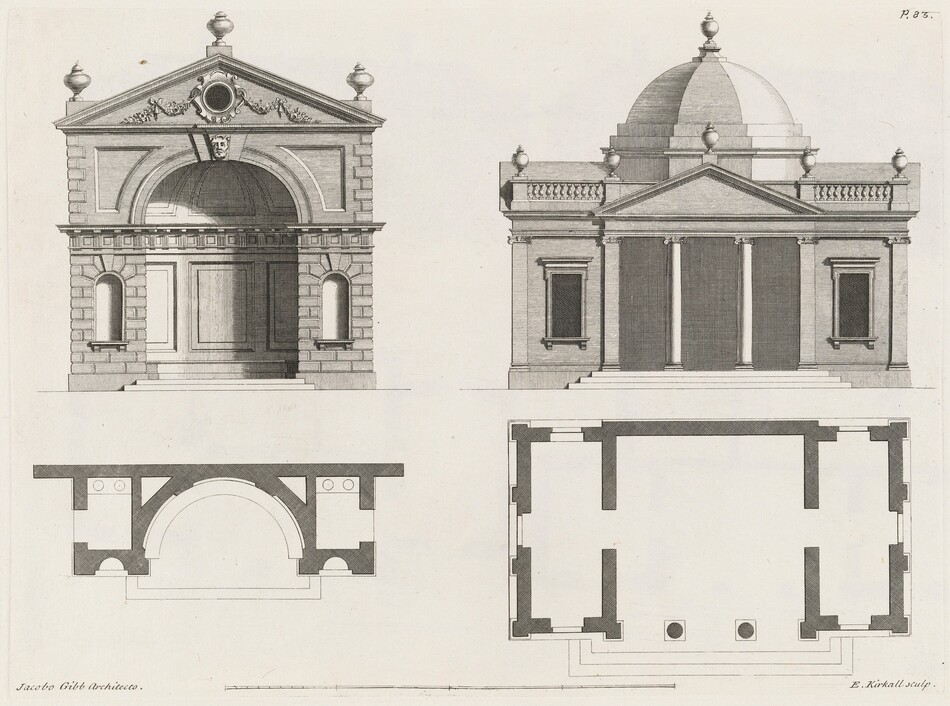
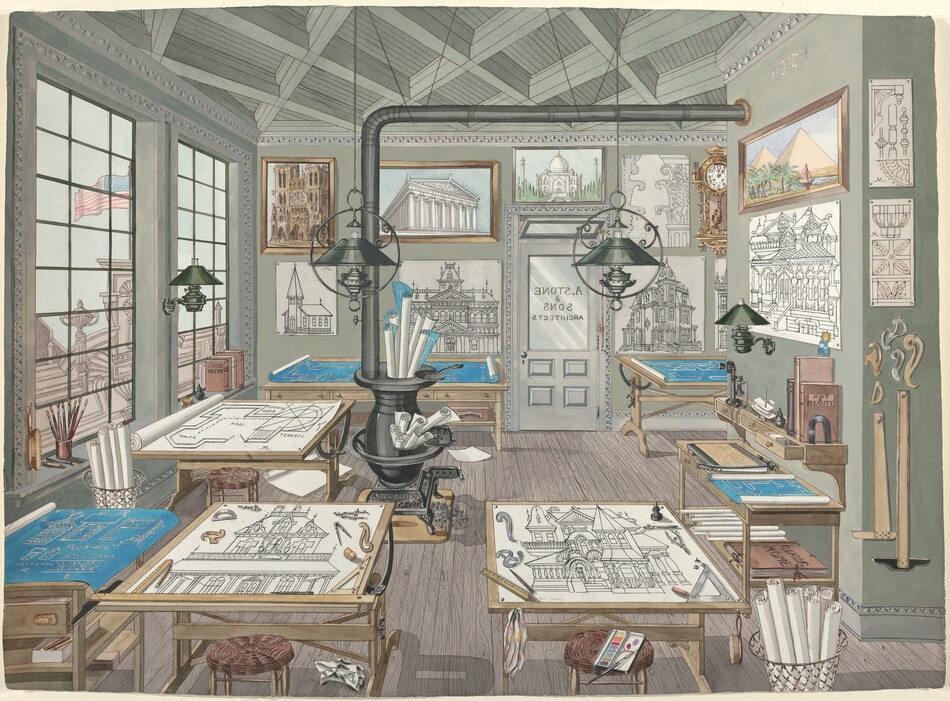
  • This is a drawing of architectural designs for a building. The image showcases two elevations and two floor plans of a structure. One elevation depicts a building with columns supporting a triangular pediment. The other elevation shows an entrance with an arched doorway flanked by windows, topped with a pediment. The floor plans reveal the spatial arrangement and construction details. The drawing suggests an emphasis on balance, symmetry, and classical proportions.
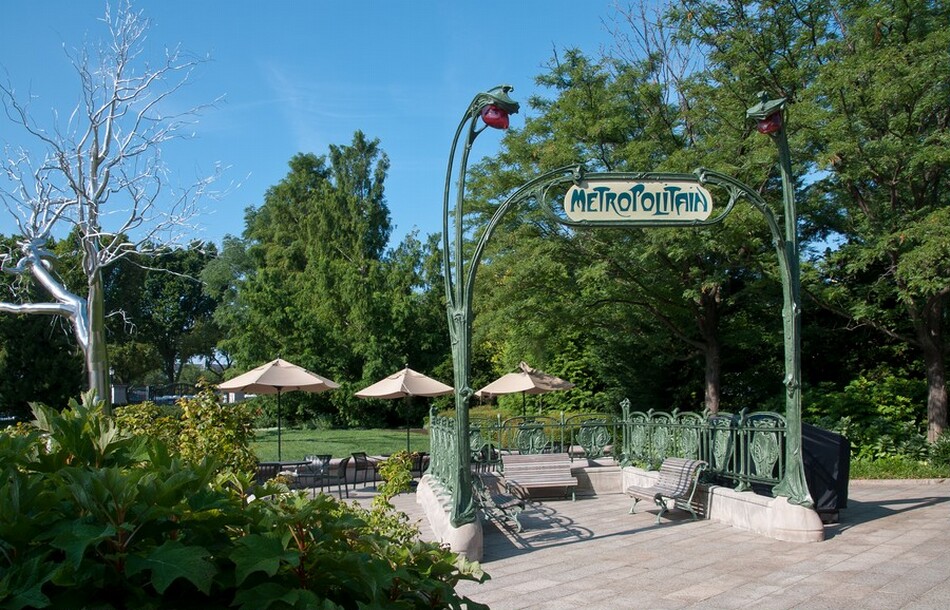
  • Set in an outdoor garden, a sculpture with two tall metal arms curve up like stylized tree branches to hold a sign between them, which reads, “METROPOLITAIN.” In this photograph, the sign faces us and fence-like rows of panels extend back from the posts, and across the back to enclose three sides. The panels, posts, and the framework holding the sign are all painted sage green. Each panel has a rounded top with a two-lobed, medallion-like center. The arms of the posts reach above the sign, and each curves up and over a burgundy-red light that hangs down like a flower bud. Three wooden benches sit within the enclosure. The sculpture is set within a garden with tall trees, a grassy lawn, and umbrella-covered café tables and chairs. A silver, metal tree rises in the near distance to our left.
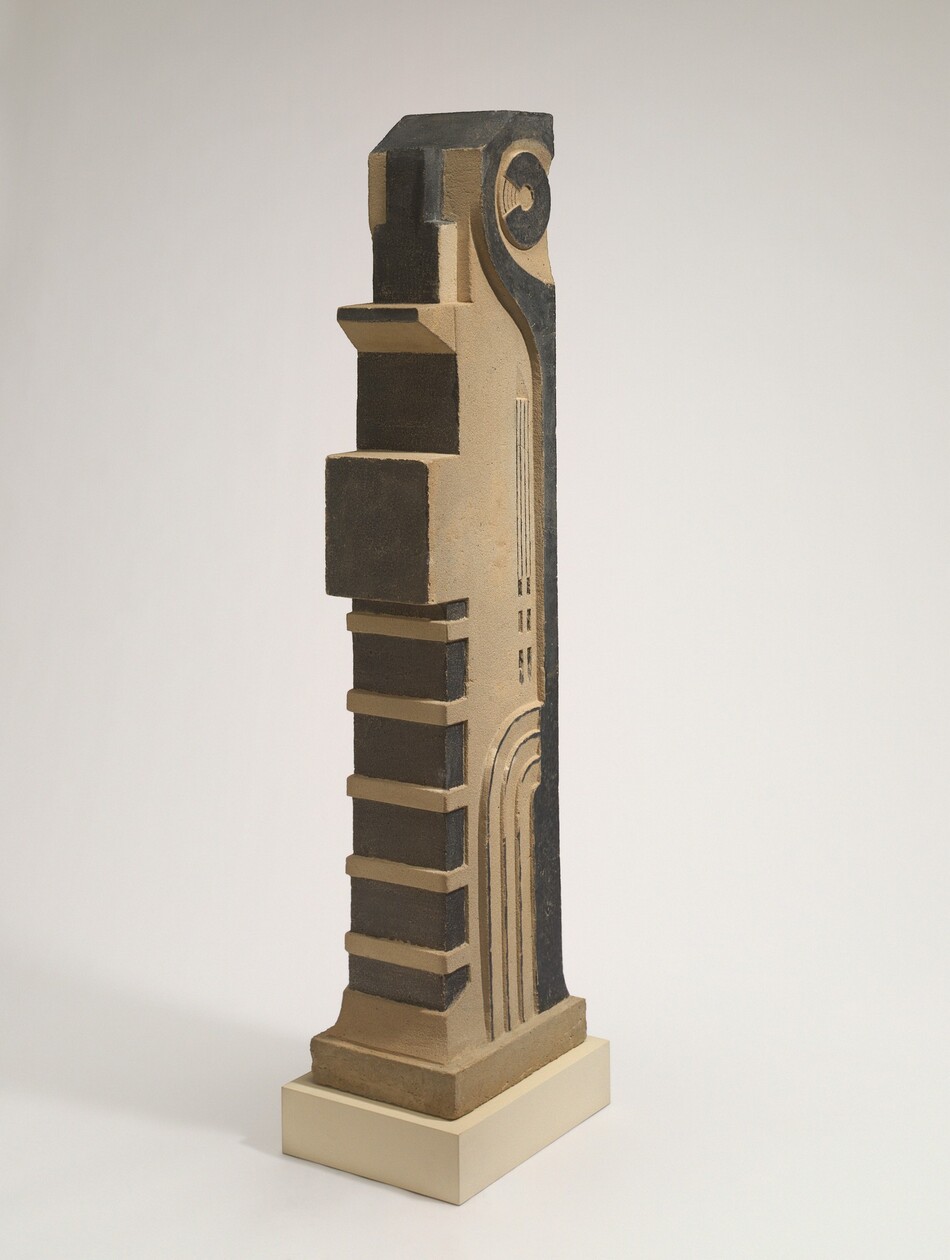
  • The sculpture is an abstract form resembling a tall, architectural structure or column. It features a series of rectangular and linear geometric projections, with a spiral design at the top. The sculpture is primarily composed of two main colors: a tan or beige base color with black accents that emphasize the sculptural details and contours. The material appears to be a solid, possibly stone-like substance. The design elements, such as the stepped protrusions and vertical lines, give the sculpture a modern, structured appearance. The sculpture is positioned upright on a rectangular base that matches the tan color of the main sculpture.
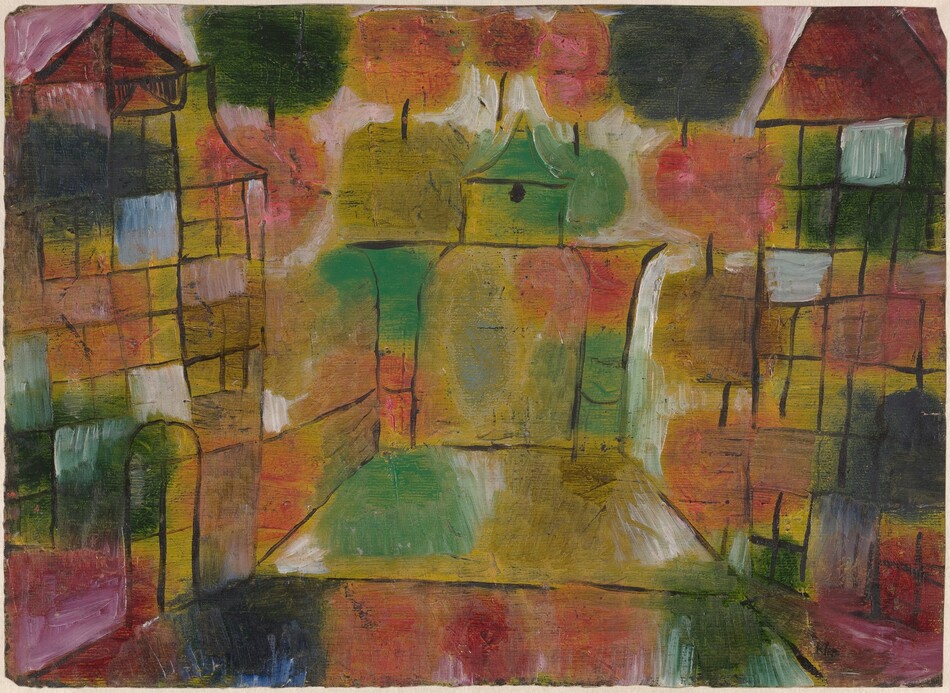
  • This painting displays intersecting lines and block shapes creating an abstract scene. Rectangular grids and curved lines evoke buildings or architectural structures, with two tall shapes on the left and right appearing like tall towers or walls with pointed roofs, and a shape in the center looking like an arch or an opening across a pathway or bridge. These shapes have been painted with black outlines, but within those outlines and overlapping with them are circles of bright green, yellow, pink, red, and dark blue, with some white between the circles. The paint has been applied thickly, with wide, visible brushstrokes.
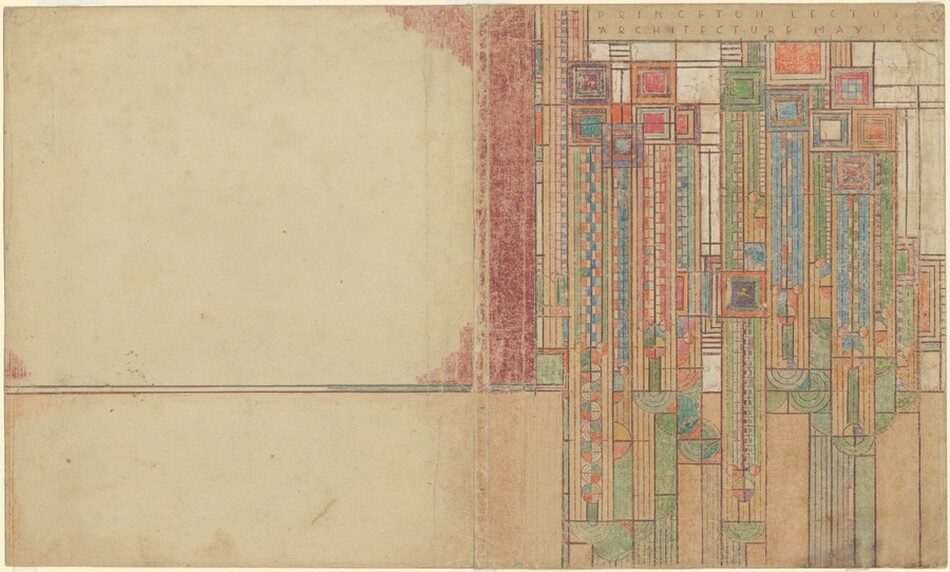
  • The image depicts a design of rectangular and square shapes intersected by straight and vertical lines, forming a grid-like pattern. The shapes are filled with alternating colors, resembling stained glass windows or mosaic tiles. The composition evokes a well-organized garden or a city map filled with buildings. The left side of the image is largely blank, highlighting the complexity of the abstract structure on the right.
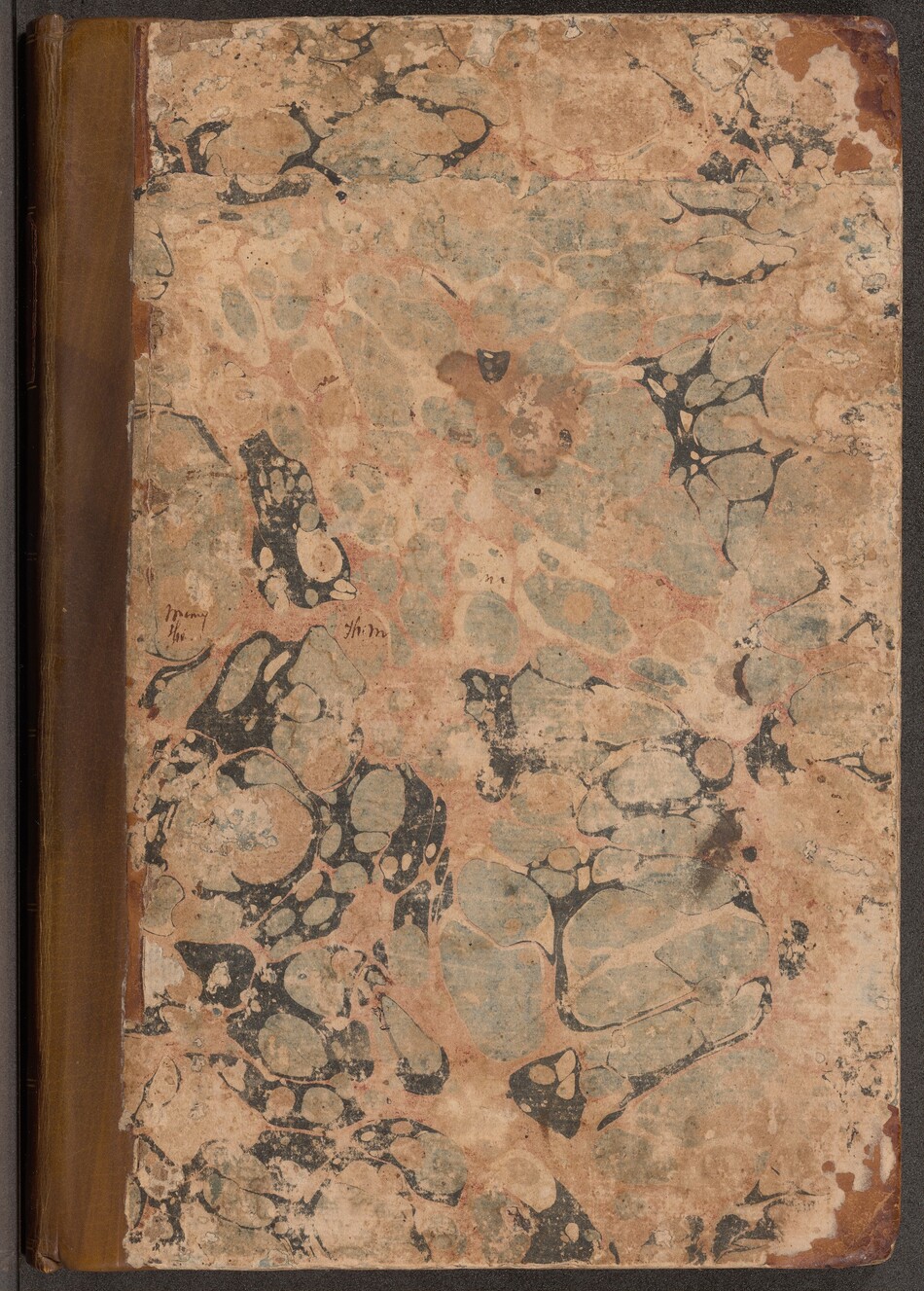
  • The image consists of swirling shapes and lines forming an abstract pattern. The design features organic forms resembling irregular stones or islands. The colors used are muted, including shades of blue, brown, and black. The overall effect is reminiscent of a weathered and artistic book cover.
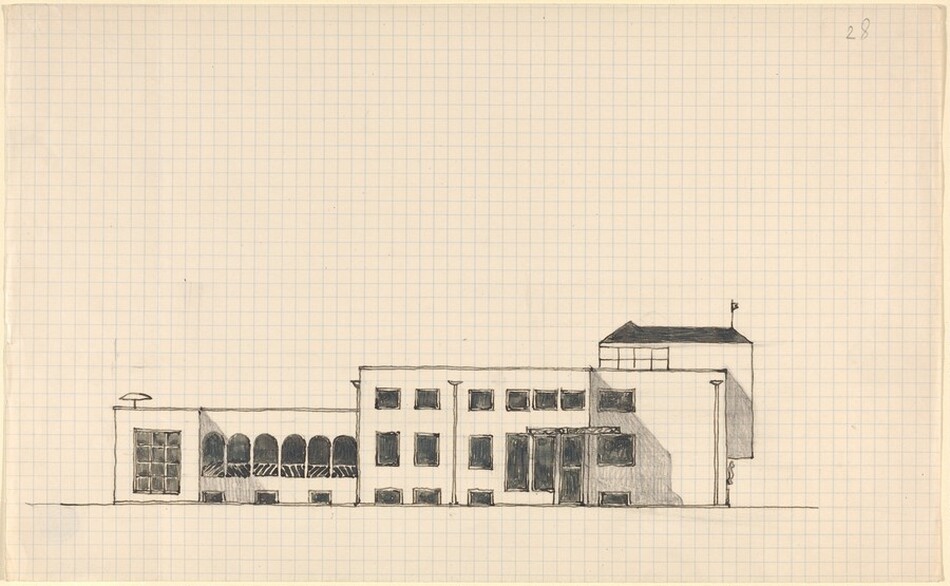
  • A landscape oriented paper with blue grided lines host an architectural elevation in the lower half of the page. The drawing stretches from about an inch margin on the left side to an inch and a half margin on the right. The building is split up into 6 sections, going from left to right, the first section is a rectangular section, with a grid of 12 windows shaded together. On the top of this first section, is an umbrella. The next section directly to the right is a rectangle that is stretched horizontally, in the middle of the second section is a group of arched shaded boxes, 6 arches across with an indication of a balcony going through them. In the same rectangle, on the bottom 3 boxes indicating windows touch the ground of the drawing. The third section is a taller more vertical style rectangle with a group of 6 windows in pairs of 2 stretching the height of the rectangle. The windows on the bottom and top are square and the middle pair is rectangular. A gutter separates the next section, where the same window style as previously is observed, while also adding a door to this section of the drawing. The fifth section, pushed back from the past sections, as a shadow is shaded on to the next section to reflect a change in lighting, this section contains 3 windows on the left most side of the section, and a gutter on the right most part of the selection. The sixth and final section is lifted slightly above the fifth section and attached to the corner, top, and right hand side of the fifth section, the part connected on top has a grid drawn into it, and a roof covers the sixth section. With a small flag on the roof of the sixth section.  Below the sixth section, a scale figure of a man shows the scale of which this drawing is done. Text in the upper left corner reads numerically 28.
  • There is an exterior fountain with a wide, shallow basin on a decorative base. The basin has embossed patterns and the base has sculpted lion heads on each side. The drawing is in pencil, resembling a stone material. A sketched figure of a man is included to show scale.
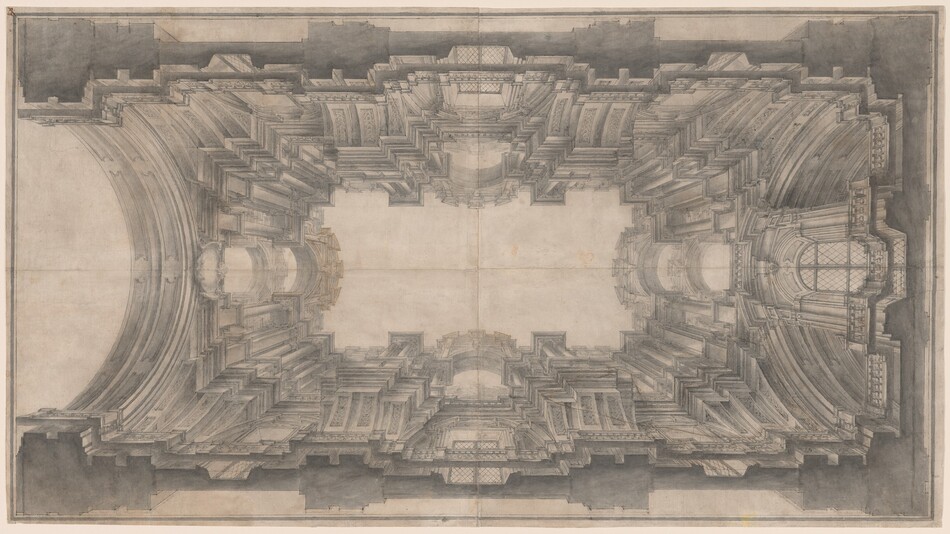
  • This is a drawing of an architectural ceiling or dome structure, viewed from below. The design includes geometric patterns, arches, and detailed embellishments. The use of perspective enhances the three-dimensionality of the structure. The shading delineates the angles and surfaces of the architectural elements.
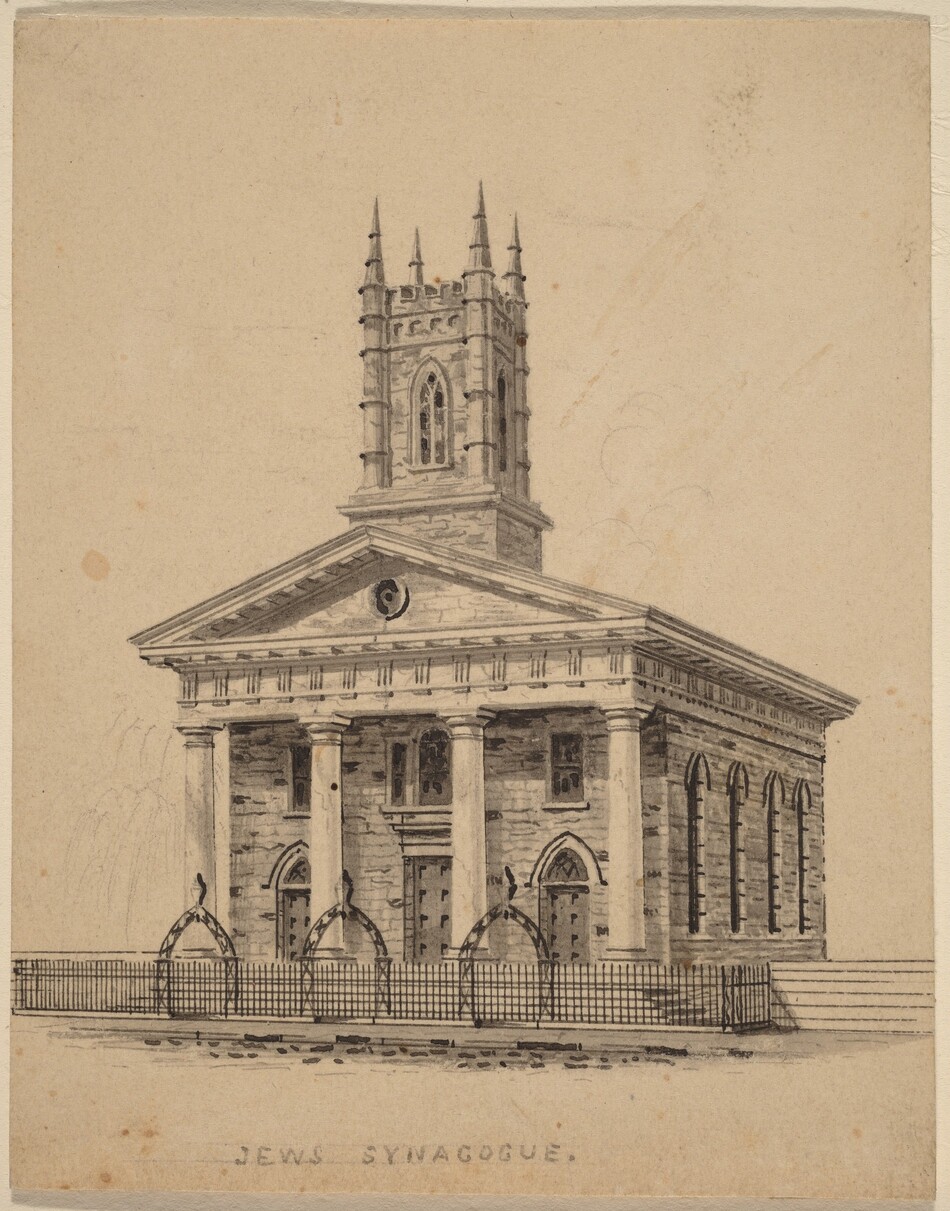
  • The image shows a frontal view of a building labeled as "Jews Synagogue." The viewpoint is at street level, showing detailed architectural elements. The building's features, such as columns and a spire, are emphasized with linear brushstrokes. Shading and texture are depicted with softer lines. The color scheme is monochromatic, using shades of grey and black against a light background. In the foreground, an iron fence with decorative arches frames the entrance. Symmetrically aligned doors and pilasters are visible, leading to a tower with gothic-style pinnacles above the entrance. The drawing focuses on the neoclassical architecture's elegance, balance, and symmetry.
  • The image shows a classical-style building with a large dome and columns, depicted from a perspective view. The structure resembles the National Gallery in Washington, D.C. The building is centered in the composition, with the sky taking up a significant portion of the scene. Detailed pencil work with shading highlights the grandeur and symmetry of the architecture. The color scheme is mainly gray and beige, giving a timeless feel. Trees and small figures are subtly included in the landscape, enhancing the depth and scale.
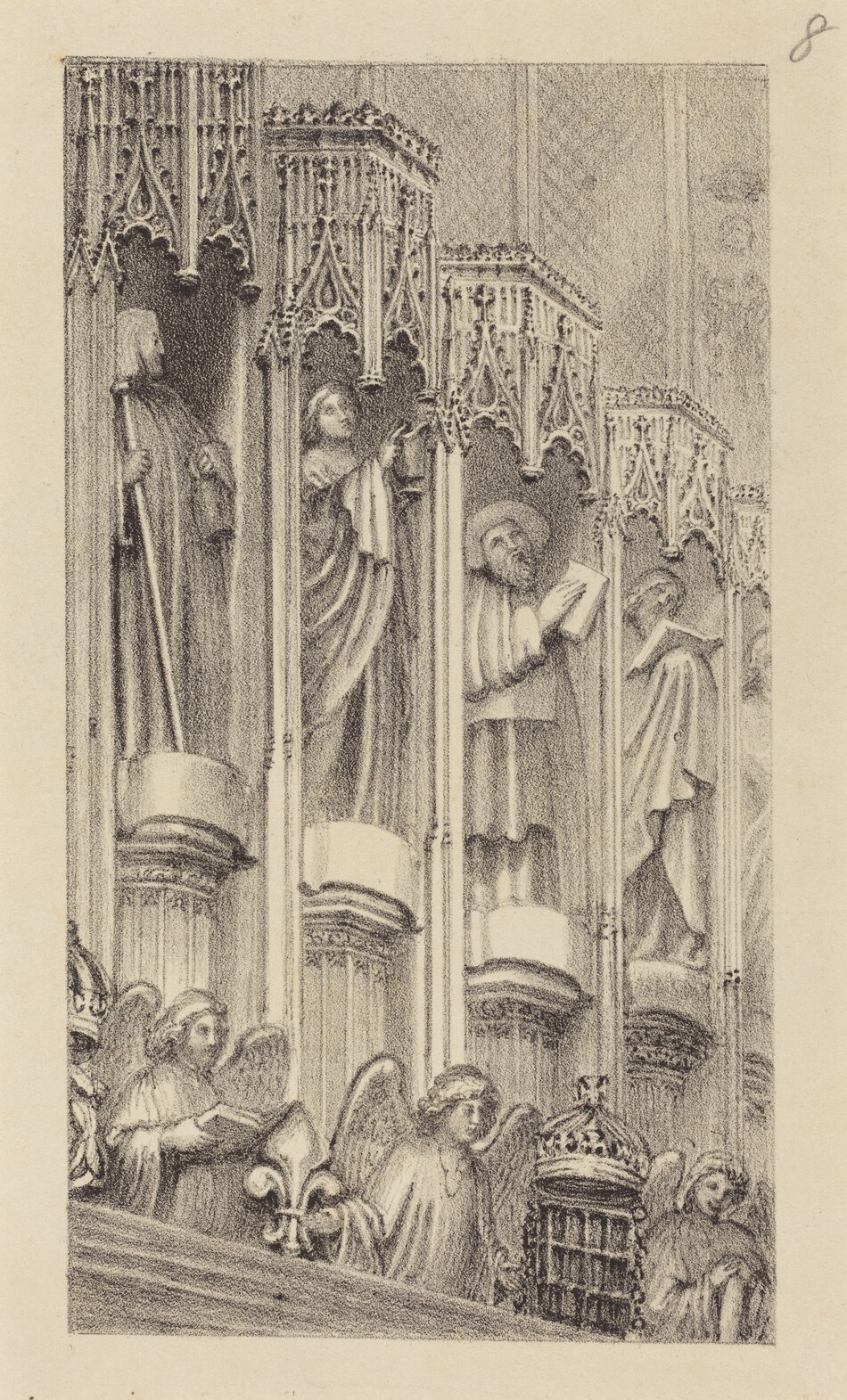
  • The sculpture features religious figures within ornate Gothic canopies. The figures, possibly saints or clergymen, wear robes and some have halos or head coverings. They are posed differently, with some holding objects like books or staffs. Below them are sculptures of angels on a ledge, with one holding a fleur-de-lis symbol. The angels have wings and robes. The sculpture appears to be made of stone or a similar material, showing gray shading. The figures in the sculpture are elevated, giving the impression of looking up at a religious structure, typical in cathedral settings.
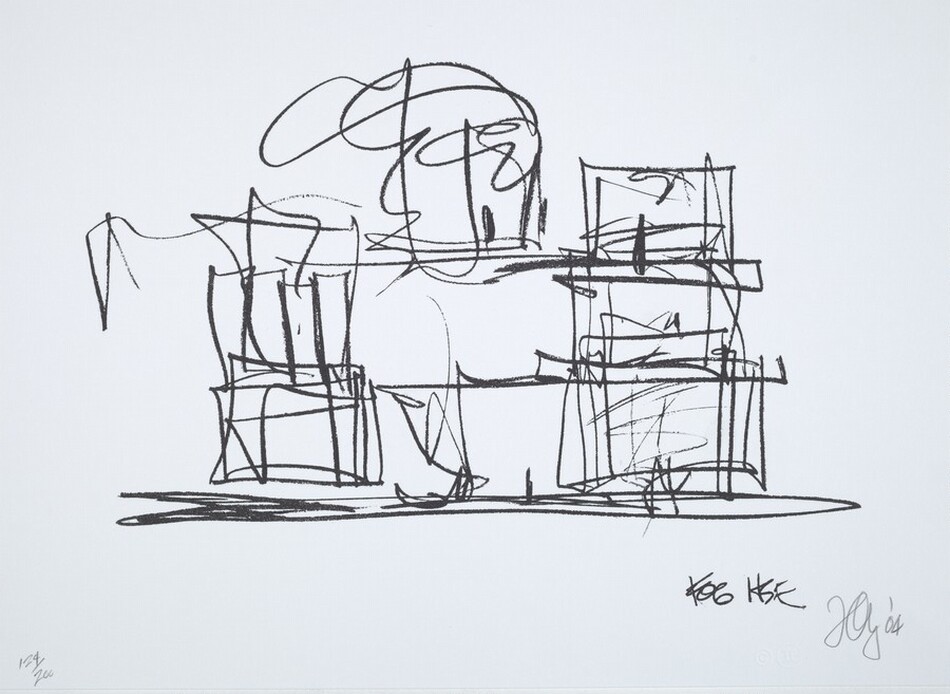
  • The image displays intersecting black lines and shapes on a white background in an abstract composition. Some elements resemble rectangles or squares, stacked and overlapping in a complex pattern. The lines are both curved and angular, with some looping freely, creating a structured appearance that hints at buildings or machinery.

Explore more

Video:  America’s Architecture of Freedom and Unfreedom

The A. W. Mellon Lectures in the Fine Arts presented by Mabel O. Wilson (2025)
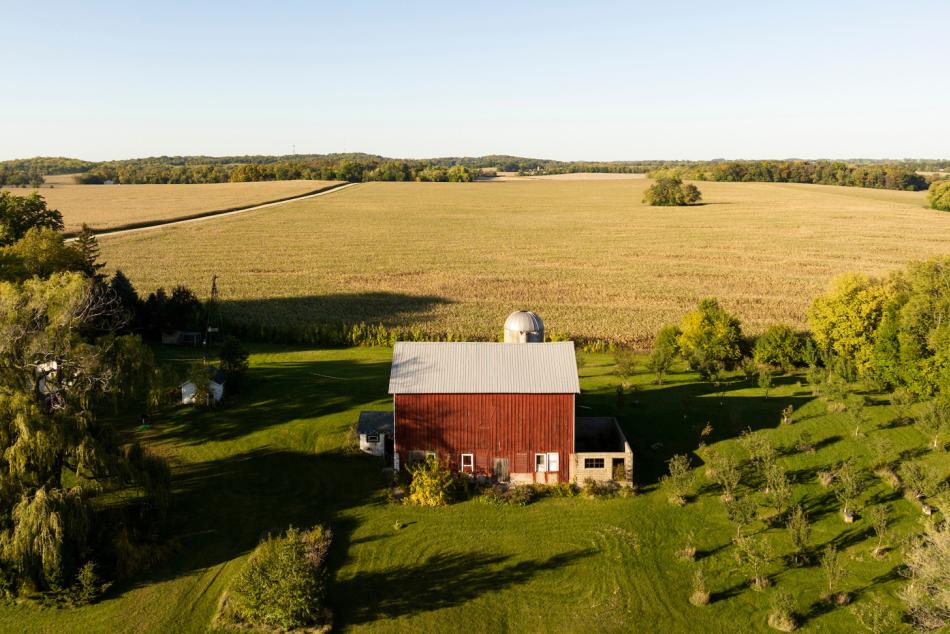
Article:  Modernist Barns and Modern Farmers

How Grant Wood, Georgia O’Keeffe, and Thomas Hart Benton depicted the humble structures—and how they mask the struggles of farmers today.
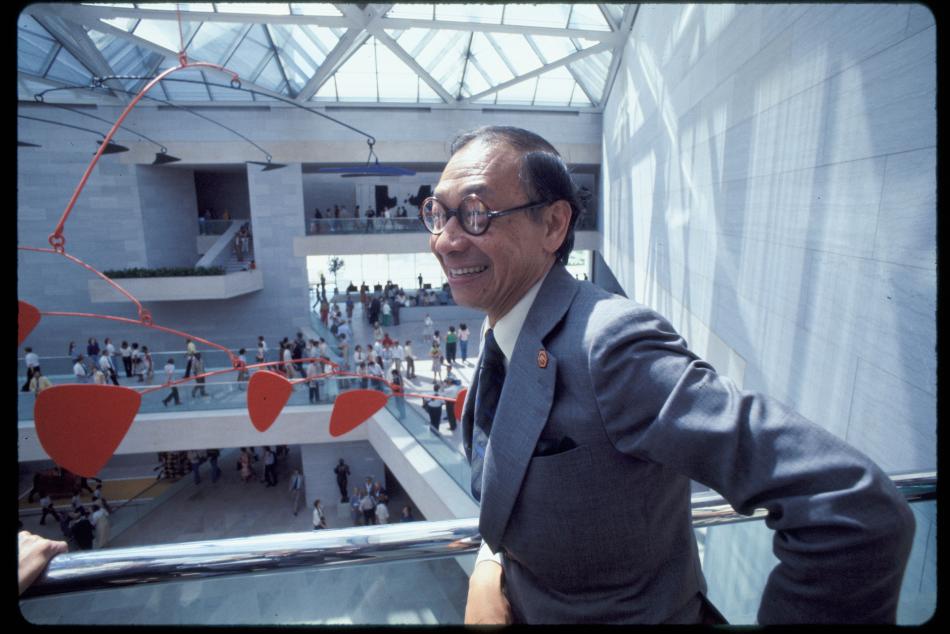
Article:  Who Is I. M. Pei? 10 Things to Know

Learn about the architect behind our iconic East Building.
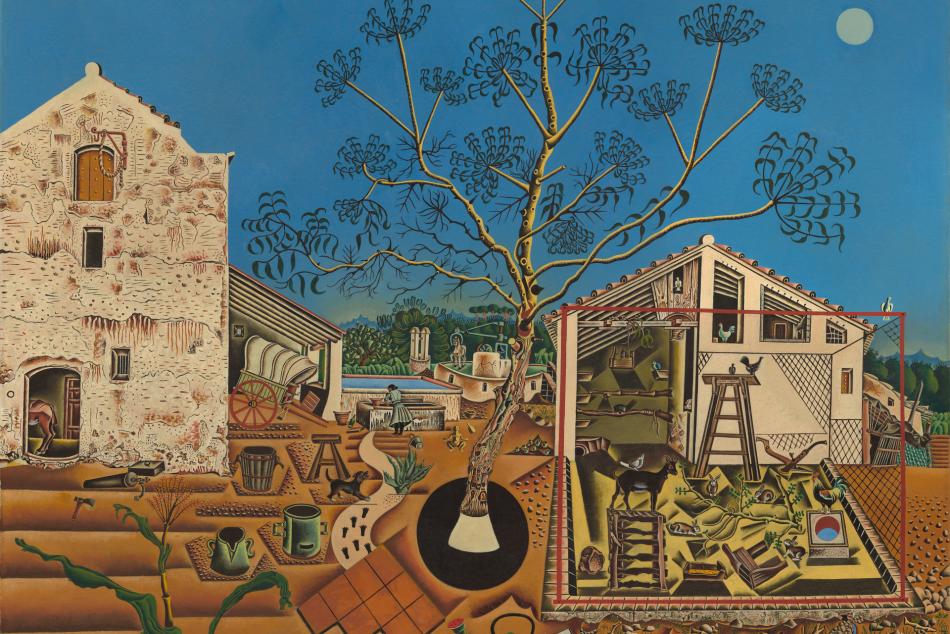
Video:  Miró's "The Farm," 100 Years Later

To celebrate, curator Harry Cooper and Joan Punyet Miró, Joan Miró's grandson, get together to tell the tale ofThe Farm from their perches at the National Gallery of Art in Washington, D.C., and Miró's farm in Mont-roig del Camp, Spain.
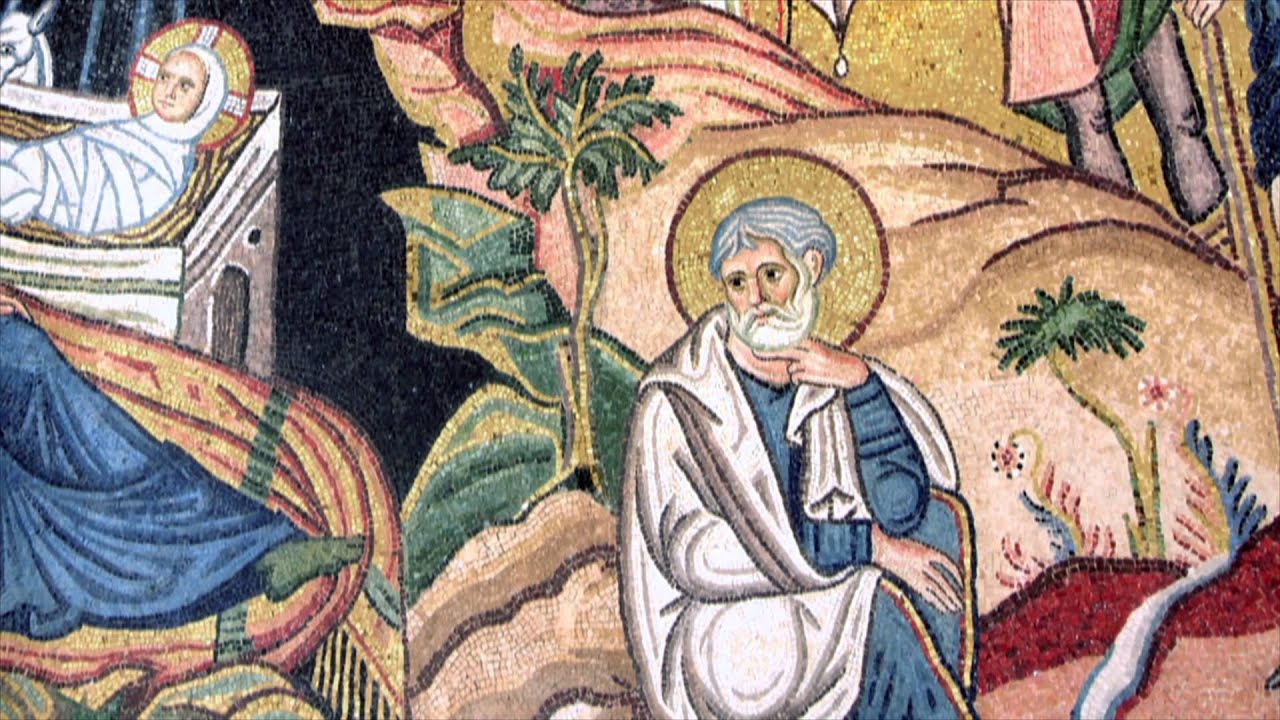
Video:  Five Byzantine Churches

Set to the music of Byzantine hymns and chants, the film evokes the original context of many works of art in the exhibition Heaven and Earth: Art of Byzantium from Greek Collections at the National Gallery of Art, on view from October 6, 2013, to March 2, 2014.
Video:  Empire of the Eye: The Magic of Illusion: Introduction, Part 1

Al Roker guides us on a journey into the secrets of illusion, utilizing special effects to illustrate the artistic and visionary discoveries of the Renaissance.

You may also like
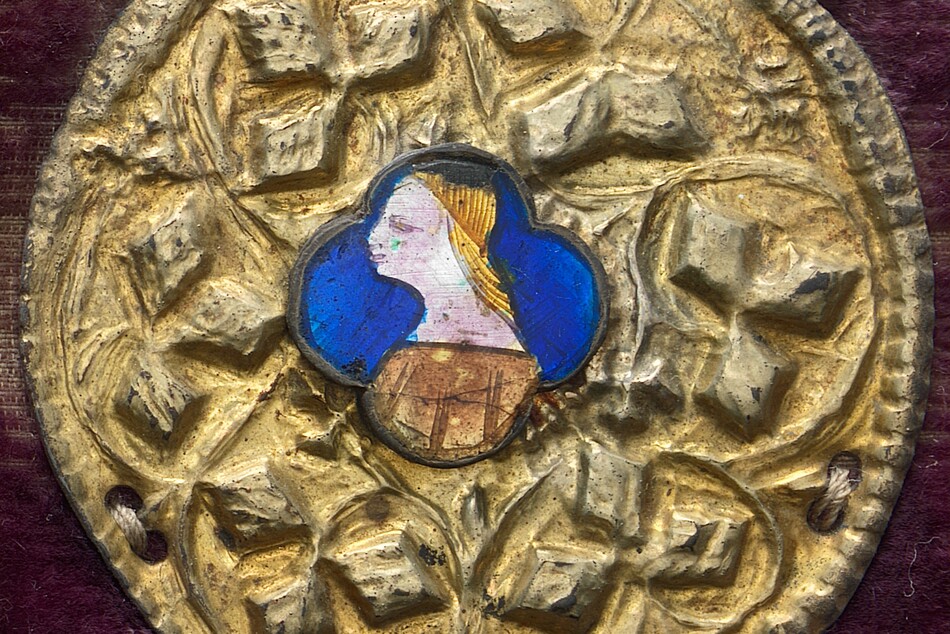
The sculpture is a medallion featuring the profile of a woman. Her face and upper torso are depicted in a smooth, painted style, and she is shown with long, flowing golden hair, contrasting sharply against a vivid blue background. The material of the medallion appears to be a gold or gold-like metal, with a textured surface that forms an intricate pattern around the central portrait. The surrounding design consists of raised, geometric shapes reminiscent of floral motifs. The medallion is relatively small and is set against a dark, textured backdrop.

Decorative Arts

Decorative arts are windows into the culture and styles of their periods. More than just decoration, they tell stories about customs and values. The metalworkers, ceramicists, weavers, cabinetmakers, or glassblowers who created the works are often anonymous. But they left a mark on history through their technical skills and innovative styles.
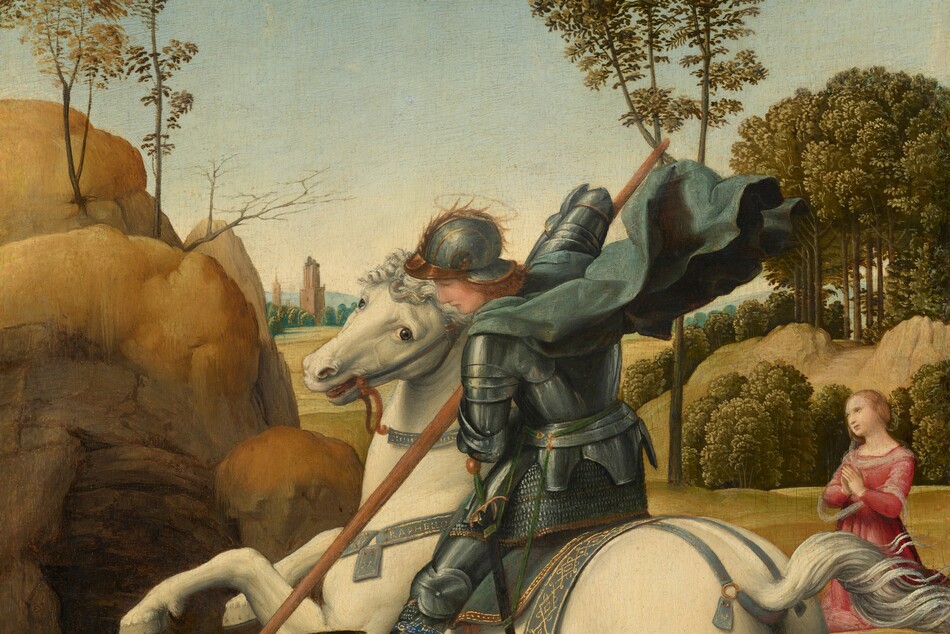
A man wearing armor, sitting astride a cream-white horse, drives a long lance down at a lizard-like dragon as a woman kneels with her hands in prayer in the landscape beyond in this vertical painting. Both people have pale skin and thin, gold halos floating above their heads. At the center of the composition, the man faces our left in profile as he looks down at the creature. The man has a straight nose and honey-brown hair under his gold-trimmed, pewter-gray helmet. Armor covers his entire body, and a celestial-blue cape billows behind him from where it fastens around his neck. A narrow, indigo-blue and gold band is tied around his left calf, and is inscribed with the word “HONI.” A black sword hangs from his left side. The horse is white with a silvery-white mane and tail. It rears on its hind legs as it turns its head to look at us with hazel-brown eyes. The horse wears a blue saddle and bridle, the same color as the man’s cape, trimmed with gold. A strap around the horse’s neck is painted in gold with the name, “RAPHELLO.” The rider thrusts his foot into the stirrup we can see as he plunges a lance down at the dragon under the horse’s front feet. The dragon has tawny brown skin with a mint green, dog-like head. It grips the earth with clawed feet as at pushes at the lance with one front foot. It twists its long, snake-like neck to look at the man with dark eyes. The dragon opens its pointed snout to show its teeth, and bat-like wings splay out. A tall outcropping over a cave rises along the left edge of the composition, behind the dragon. In a field a little farther back, to our right, the woman kneels with her body angled to our left. She tilts her head away from us and gazes past the man and horse. She has a straight nose, pale pink, bow-shaped lips, and her blond hair is pulled back in a bun. She wears a ruby-red dress and a sheer white wrap around her shoulders and across her arms. Around the woman, straw-yellow hills with bands of pine-green trees roll into the distance. Two terracotta-orange towers rise from a row of trees along the horizon. A few taller trees are outlined against the baby-blue sky, which lightens toward the horizon.

Italian Renaissance

The Renaissance, or rebirth, was the cultural flowering in Italy from about 1400 to 1600. Using Ancient Greece and Rome as models, artists, writers, and thinkers studied the natural world, admiring the human body and mind. Florence, a center of craftsmanship, trade, and banking, led Italian cities, generating broad demand for art for churches and homes.