Talks & Conversations

Book Talk: Art & Water

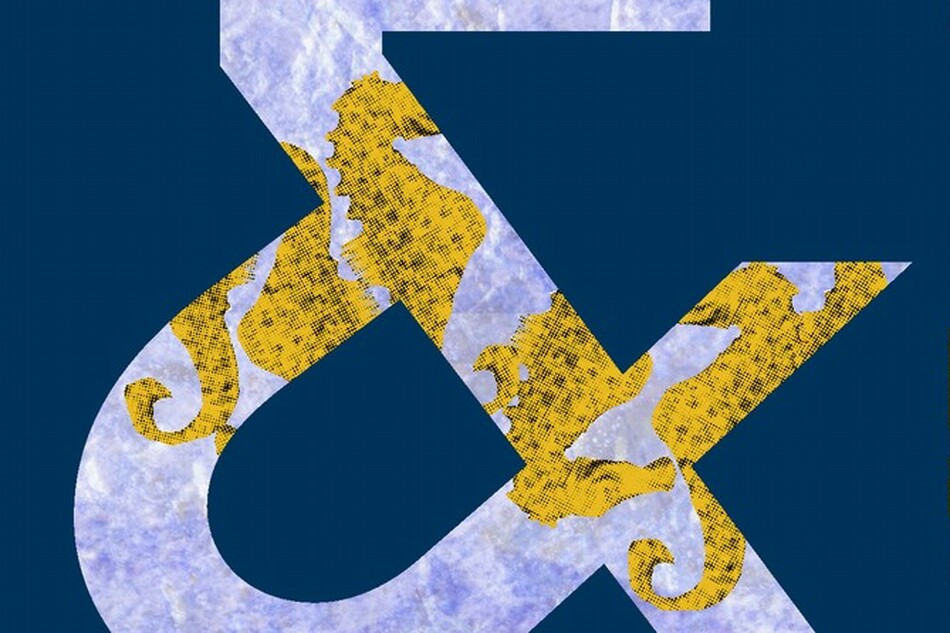
Art & Water book, vellum jacket, and poster insert by artist Aline Motta

Water and its transmutations link the contributions in Art & Water, the second volume in the series Art & from the National Gallery’s Center for Advanced Study in the Visual Arts

The series situates the study of art at the intersection of various disciplines—here, they include modernist literature, poetry, film, and both natural and built environments. Essayists use water to address hydrolatry practices in India; ritual objects and practices of enslaved Afro-Surinamers; traces of millstones in the architecture of Seville; and visualizations of sea-level change in the nineteenth-century United States. Their research places art within broader conversations in the humanities considering a water-oriented rather than terrestrial historical framework.

The book is enlivened by first-person narratives that examine deeply embedded meanings of water. Continuing the series’ tradition of exciting book design, an enclosed poster from Brazilian multimedia artist Aline Motta addresses ancestry, memory, and belonging across the Black Atlantic while compellingly conjuring water’s capacity to transform, bring together, and renew. Water as a connective theme offers a fitting lens to advance understandings of how art, as both material object and practice, remains entangled with the natural, supernatural, and scientific—and, like water, remains inseparable from our daily lives.

This event is co-organized with Politics and Prose and will take place at their Connecticut Avenue location in Washington, DC. It is free with first-come, first-served seating. View the event on their website.

Publication

Art & Water

Art &, Volume 2

Essays, personal meditations, and images that explore water in all its renewing, destructive, corrosive, and connecting power.

You may also like

A sky streaked with azure blue stretches over a gray landscape in this surreal, vertical painting. The sky and land meet halfway up the canvas at a series of short, sharp, charcoal-gray peaks, like canine teeth. Small, diffuse, butter-yellow ovals waft above the peaks. Nine fluffy, cotton-ball like shapes cast narrow shadows across the gray-streaked plane. Three amorphous shapes float over the land closer to us. A ginger-brown, drippy form is to our left, a teal-green, bean-shaped object surrounded with fuzzy white tentacles is to our right, and a peacock-blue, L-shaped drip floats in the distance near the horizon. Thinly painted white and gray lines squiggle or sweep onto the canvas from the left edge. The artist signed and dated the painting in the lower right, “Yves Tanguy 29.”

virtual

Talks & Conversations:  The Art of Looking: Yves Tanguy, The Look of Amber

Registration Required
Sheer, vertical, cliffs, brightly lit in cream white and rust orange by the low sun, tower over a band of people riding horses into the distance in this long, horizontal landscape painting. The glowing cliffs dominate the upper right quadrant of the painting. They lighten from burnt orange along the jagged tops to flame orange down the steep sides, and are and warm, parchment white near the earth. One tall, narrow promontory to our right looms over a range of lower, rounded cliffs. As the cliffs move into the distance, they are shrouded with a lavender-purple haze. The land closest to us dips into a shallow valley at the bottom center of the composition, leading away from us. The dirt-packed earth is dotted with pine-green, scrubby bushes and vegetation and a grove of low, gnarled trees a short distance to our right. One chestnut-brown horse walks along the path at the bottom center of the composition, lagging behind a cluster of at least two dozen horses and riders winding into the distance. The horses range from ivory white to tawny brown and charcoal gray. The riders are loosely painted so some details are indistinct, but they all seem to have brown skin and dark hair. They wear feathered headdresses and garments in teal blue, fawn brown, or golden yellow. They ride over a low hill toward a crystal-blue river, and then back along a flat expanse toward a row of minuscule, triangular tepees lining the horizon in the deep distance. The horizon comes halfway up the composition, and the tepees are backed by a row of rose-pink, flat-topped cliffs. A pale yellow disk hangs low in the sky, over the distant cliffs. The sky above deepens from soft, lilac purple along the horizon to ice and sapphire blue along the top. A few wispy clouds are burnished orange in the sunlight. The artist signed and dated the painting in the lower right corner, “TYMoran 1881,” with the T, Y, and M overlapping to make a monogram.

Talks & Conversations:  Finding Awe: Thomas Moran’s Green River Cliffs, Wyoming 

Registration Required
Sheer, vertical, cliffs, brightly lit in cream white and rust orange by the low sun, tower over a band of people riding horses into the distance in this long, horizontal landscape painting. The glowing cliffs dominate the upper right quadrant of the painting. They lighten from burnt orange along the jagged tops to flame orange down the steep sides, and are and warm, parchment white near the earth. One tall, narrow promontory to our right looms over a range of lower, rounded cliffs. As the cliffs move into the distance, they are shrouded with a lavender-purple haze. The land closest to us dips into a shallow valley at the bottom center of the composition, leading away from us. The dirt-packed earth is dotted with pine-green, scrubby bushes and vegetation and a grove of low, gnarled trees a short distance to our right. One chestnut-brown horse walks along the path at the bottom center of the composition, lagging behind a cluster of at least two dozen horses and riders winding into the distance. The horses range from ivory white to tawny brown and charcoal gray. The riders are loosely painted so some details are indistinct, but they all seem to have brown skin and dark hair. They wear feathered headdresses and garments in teal blue, fawn brown, or golden yellow. They ride over a low hill toward a crystal-blue river, and then back along a flat expanse toward a row of minuscule, triangular tepees lining the horizon in the deep distance. The horizon comes halfway up the composition, and the tepees are backed by a row of rose-pink, flat-topped cliffs. A pale yellow disk hangs low in the sky, over the distant cliffs. The sky above deepens from soft, lilac purple along the horizon to ice and sapphire blue along the top. A few wispy clouds are burnished orange in the sunlight. The artist signed and dated the painting in the lower right corner, “TYMoran 1881,” with the T, Y, and M overlapping to make a monogram.

Talks & Conversations:  Finding Awe: Thomas Moran’s Green River Cliffs, Wyoming 

Registration Required