Talks & Conversations

Book Talk: Art & Water

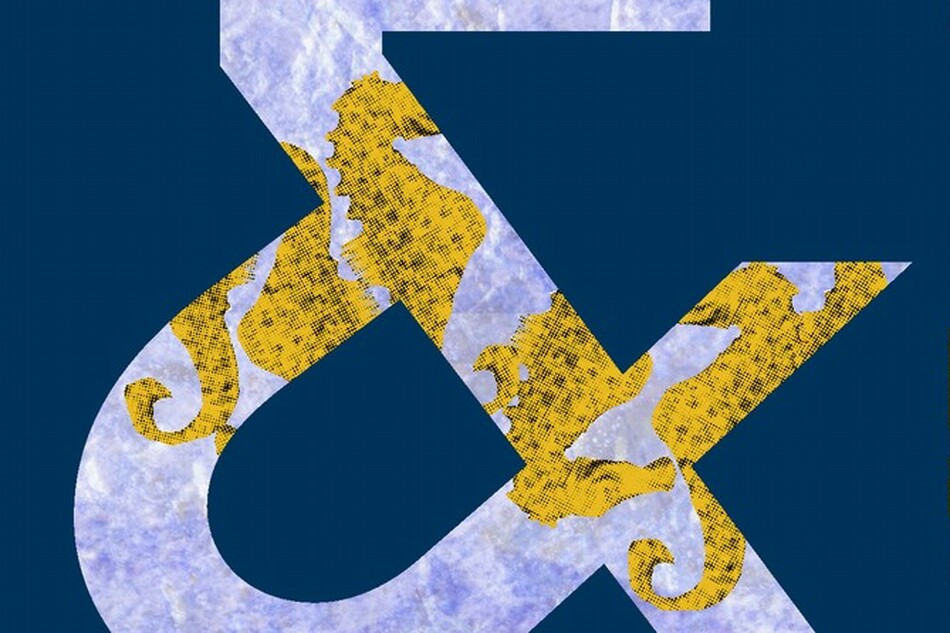
Art & Water book, vellum jacket, and poster insert by artist Aline Motta

Water and its transmutations link the contributions in Art & Water, the second volume in the series Art & from the National Gallery’s Center for Advanced Study in the Visual Arts

The series situates the study of art at the intersection of various disciplines—here, they include modernist literature, poetry, film, and both natural and built environments. Essayists use water to address hydrolatry practices in India; ritual objects and practices of enslaved Afro-Surinamers; traces of millstones in the architecture of Seville; and visualizations of sea-level change in the nineteenth-century United States. Their research places art within broader conversations in the humanities considering a water-oriented rather than terrestrial historical framework.

The book is enlivened by first-person narratives that examine deeply embedded meanings of water. Continuing the series’ tradition of exciting book design, an enclosed poster from Brazilian multimedia artist Aline Motta addresses ancestry, memory, and belonging across the Black Atlantic while compellingly conjuring water’s capacity to transform, bring together, and renew. Water as a connective theme offers a fitting lens to advance understandings of how art, as both material object and practice, remains entangled with the natural, supernatural, and scientific—and, like water, remains inseparable from our daily lives.

This event is co-organized with Politics and Prose and will take place at their Connecticut Avenue location in Washington, DC. It is free with first-come, first-served seating. View the event on their website.

Publication

Art & Water

Art &, Volume 2

Essays, personal meditations, and images that explore water in all its renewing, destructive, corrosive, and connecting power.

You may also like

Talks & Conversations:  Poetry Writing Workshop: María Fernanda on Language

–
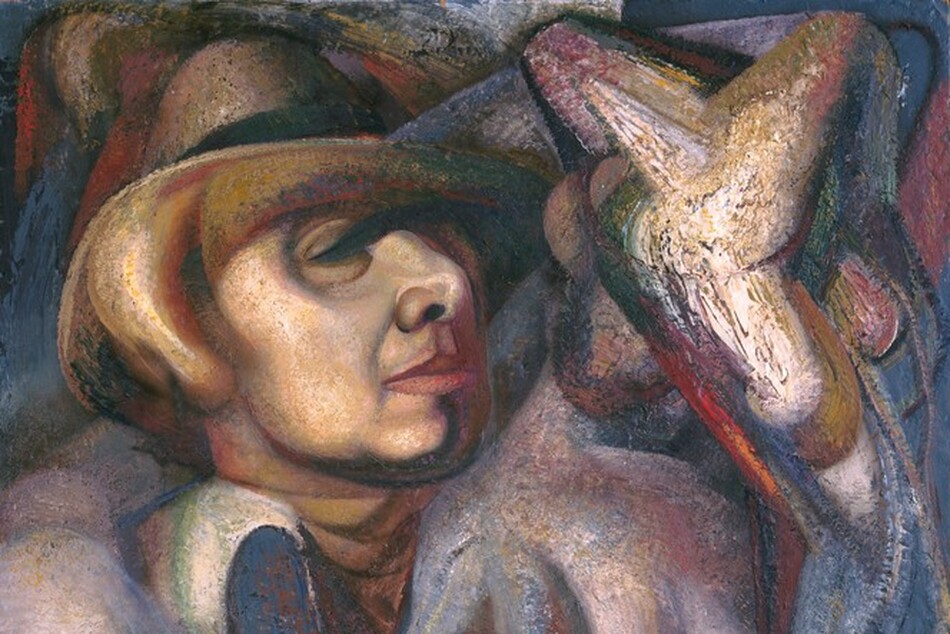
This is a painting of a person surrounded by abstract forms. The person is facing the right, and they have pale skin, high cheekbones, and pink lips. They appear to be wearing a broad-brimmed hat and a thick white collared shirt. One of their hands is visible, clenched in a fist and resting on a brown table. To the right of the person is a white shape that looks like a four-pointed star. Behind the person are similarly abstract swirls of red, blue, and white.

virtual

Talks & Conversations:  The Art of Looking: David Alfaro Sinqueiros, Self-Portrait 

–
Registration Required
An armored man on horseback hands a piece of emerald-green cloth down to the nearly nude man standing next to him in this slightly stylized, vertical painting. Both men have light skin, and they, along with the horse, nearly fill the composition. To our right, the bright white horse stands angled to our right with the front left hoof raised. It has a smoke-gray mane, and wears a black bridle. The man riding the horse has short, copper-blond hair and a long face with a pointed chin. He looks down at the ground with dark eyes under black, arched brows. He has a long, thin nose, and his small lips are closed and framed by the faint suggestion of a mustache. He wears a white ruff pleated into figure-eights over his high-necked armor, which is liberally outlined and decorated with gold against the pewter-colored plates. He grips the voluminous, green cape in one hand and holds a sword in the other, down by the leg we can see. The cleanshaven man next to him, to our left, looks off to our right in profile. He has close-cropped, dark hair and smooth skin. His lips are parted, and he tips his head slightly away from us. He holds the green cloth with the hand closer to the horse and gestures down with his other pointer finger, in front of his hip. A white cloth bandage is wrapped around one shin, and he rests his weight on the other leg. The horse and man stand on a curving spit of brown earth. A spring-green landscape dips down behind them, running low near the bottom edge of the painting. The horizon comes about a quarter of the way up the composition, and fog-gray and white clouds create thin screens across the topaz-blue sky. The loose brushstrokes are visible in some areas, especially in the landscape and clothing. The artist signed his name in Greek near the lower right corner.

Talks & Conversations:  Finding Awe: El Greco’s Saint Martin and the Beggar 

–
Registration Required