Talks & Conversations

Storytime: I Like Myself!

¡Me gusta cómo soy!

Let’s play together while reading aloud the children’s book I Like Myself!/¡Me gusta cómo soy! by Karen Beaumont in English and Spanish. We welcome all ages, especially our youngest visitors and nursing parents.

Our playgroup will gather at the East Building entrance, and we’ll get settled in the Atrium with a special, rotating book and other creative play activities to enjoy. We’ll read the story twice. Storytime is free of charge and registration is not required.

You’re welcome to park strollers at coat check. Children must be accompanied by an adult.

Have a group to bring? Questions?

Contact [email protected].


Juguemos juntos mientras leemos un libro en voz alta en inglés y en español. Invitamos a personas de todas las edades, especialmente a nuestros visitantes más jóvenes, así como a padres y madres lactantes.

Nuestro grupo de juegos se reunirá en la entrada del Edificio Este y nos acomodaremos en el atrio con un libro rotativo especial y otras actividades creativas de juego para disfrutar. La hora de contar cuentos es una actividad gratuita y no es necesario inscribirse.

Se pueden aparcar los cochecitos en el guardarropa. Los niños deben estar acompañados de un adulto.

¿Quiere traer a un grupo? ¿Preguntas?

Escriba a [email protected].

You may also like

The image shows a woman seated on a chair in a luxurious environment. She has fair skin, delicate features, and wavy light brown hair styled in a partial updo. She wears an elegant cream gown with a red overcoat lined in white fur. A maid holds a tray with a glass, a small loaf, and a gold pitcher, while the woman holds a silver platter. Next to the woman, there are ornate armor and weapons on the floor. A painting of a man in historical attire hangs on the wall. The room features wooden paneling and elegant furnishings.

virtual

Talks & Conversations:  The Art of Looking: Marguerite Gérard, Deserved Sorrows
Registration Required
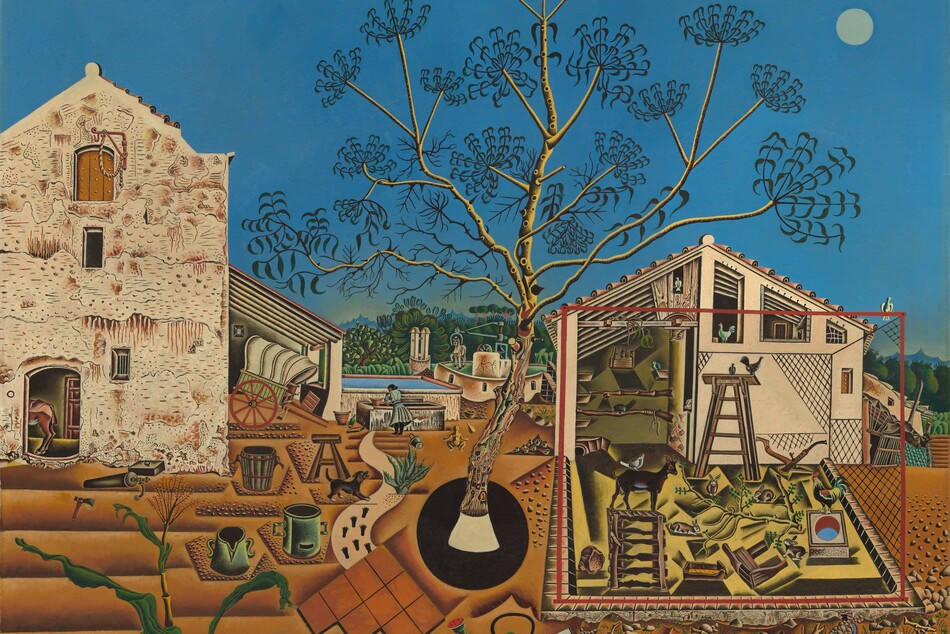
Two angular, cream-white buildings flanking a central, stylized tree are surrounded by brown soil, small animals, and farmhouse objects like watering cans and buckets beneath a clear, azure-blue sky in this square landscape painting. We look straight onto the buildings and slightly down onto the earth in front of us. About a third of the way up the composition, the horizon is lined with trees and mountains in the deep distance. The long, spindly branches of the central tree nearly reach the top edge of the painting and abstracted, sickle-shaped leaves are silhouetted against the sky so no leaves overlap. The far edge of the whitewashed structure to our left is cropped. The façade is pierced by two small rectangular windows and an arched hatch at the top under a winch. The back end of a horse is visible through an open door at the bottom center. Horizontal bands in front of the building suggest furrows in plowed earth, and a single stalk of corn grows up into the scene, seeming close to us. A pen protected by netting stretches out in front of the second structure, to our right of center. That wood-frame building has a triangular peaked roof, and the left half is open, like a lean-to. A goat, rooster, birds, and several rabbits occupy the pen. Watering cans, buckets and pails, a hoe, newspaper, lizard, and snail are spaced around the buildings. A tiny stylized person, perhaps a baby, appears in the distance between the buildings near a well where a woman works. A covered wagon, a round mill, trees, and plants fill the rest of the space between the buildings. A disk-like moon hangs in the sky to the right of the tree. The artist signed and dated the lower left corner, "Miro. 1921-22."

Talks & Conversations:  Finding Awe: Joan Miró’s The Farm 

Registration Required
Two angular, cream-white buildings flanking a central, stylized tree are surrounded by brown soil, small animals, and farmhouse objects like watering cans and buckets beneath a clear, azure-blue sky in this square landscape painting. We look straight onto the buildings and slightly down onto the earth in front of us. About a third of the way up the composition, the horizon is lined with trees and mountains in the deep distance. The long, spindly branches of the central tree nearly reach the top edge of the painting and abstracted, sickle-shaped leaves are silhouetted against the sky so no leaves overlap. The far edge of the whitewashed structure to our left is cropped. The façade is pierced by two small rectangular windows and an arched hatch at the top under a winch. The back end of a horse is visible through an open door at the bottom center. Horizontal bands in front of the building suggest furrows in plowed earth, and a single stalk of corn grows up into the scene, seeming close to us. A pen protected by netting stretches out in front of the second structure, to our right of center. That wood-frame building has a triangular peaked roof, and the left half is open, like a lean-to. A goat, rooster, birds, and several rabbits occupy the pen. Watering cans, buckets and pails, a hoe, newspaper, lizard, and snail are spaced around the buildings. A tiny stylized person, perhaps a baby, appears in the distance between the buildings near a well where a woman works. A covered wagon, a round mill, trees, and plants fill the rest of the space between the buildings. A disk-like moon hangs in the sky to the right of the tree. The artist signed and dated the lower left corner, "Miro. 1921-22."

Talks & Conversations:  Finding Awe: Joan Miró’s The Farm 

Registration Required