


Bound Satyr
Anonymous Artist
Sculptor
Artist After, Paduan, 1470 - 1532
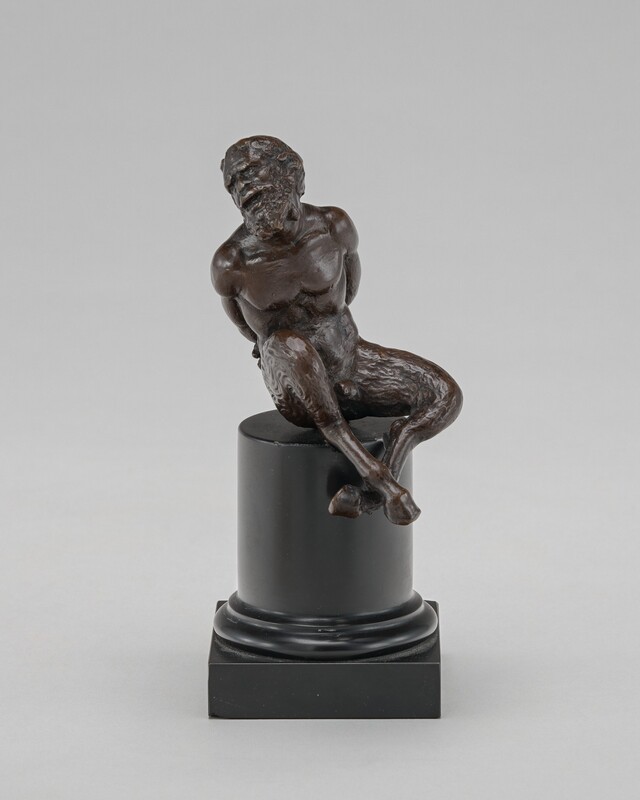
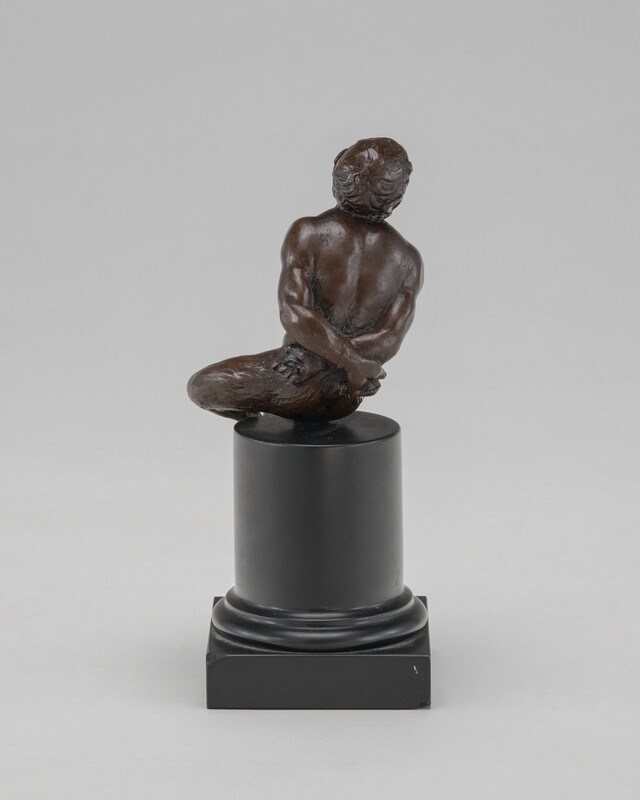
Artwork overview
-
Medium
bronze
-
Credit Line
-
Dimensions
overall: 8.1 x 5.6 x 6.4 cm (3 3/16 x 2 3/16 x 2 1/2 in.)
-
Accession Number
1957.14.32
Artwork history & notes
Provenance
Gustave Dreyfus [1837-1914], Paris; his estate; purchased 1930 by (Duveen Brothers, Inc., London and New York); purchased 1945 by the Samuel H. Kress Foundation, New York; gift 1957 to NGA.
Associated Names
Exhibition History
1983
Raphael and the Ruins of Rome: The Poetic Dimension, Krannert Art Museum, University of Illinois, Urbana-Champaign, 1983-1984, unnumbered catalogue.
Bibliography
1931
Ricci, Seymour de. The Gustave Dreyfus Collection: Renaissance Bronzes. Oxford, 1931: 40, no. 23, pl. 20.
1951
Renaissance Bronzes: Statuettes, Reliefs and Plaquettes, Medals and Coins from the Kress Collection. Introduction by Perry B. Cott. National Gallery of Art, Washington, 1951: 138, as Satyr by Andrea Briosco Riccio.
1965
Pope-Hennessy, John W. Renaissance Bronzes from the Samuel H. Kress Collection: Reliefs, Plaquettes, Statuettes, Utensils and Mortars. London, 1965: no. 485.
1994
Sculpture: An Illustrated Catalogue. National Gallery of Art, Washington, 1994: 193, repro.
Wikidata ID
Q63809174