Past Exhibition

The ’70s Lens: Reimagining Documentary Photography

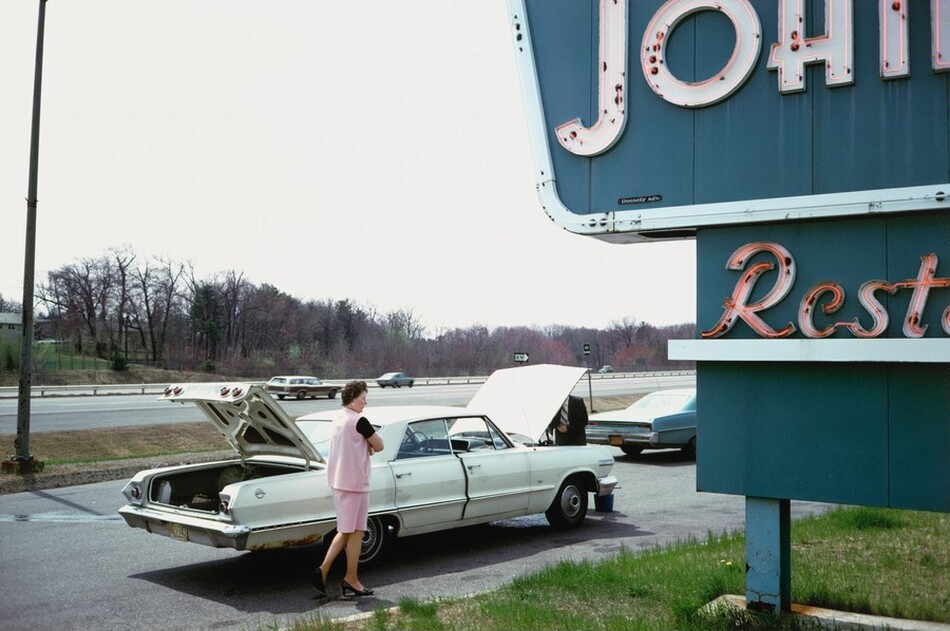
Mitch Epstein, Massachusetts Turnpike 1973, 1973, printed 2005, chromogenic print, Gift of Timothy and Suzanne Hyde in Honor of the 25th Anniversary of Photography at the National Gallery of Art, 2016.124.1

Details

  • Dates

    -
  • Locations

    West Building

    West Building Main Floor, Gallery M27

Mitch Epstein, Massachusetts Turnpike 1973, 1973, printed 2005, chromogenic print, Gift of Timothy and Suzanne Hyde in Honor of the 25th Anniversary of Photography at the National Gallery of Art, 2016.124.1

See how documentary photography transformed during the 1970s.

The 1970s was a decade of uncertainty in the United States. Americans witnessed soaring inflation, energy crises, and the Watergate scandal, as well as protests about pressing issues such as the Vietnam War, women’s rights, gay liberation, and the environment. The country’s profound upheaval formed the backdrop for a revolution in documentary photography. Activism and a growing awareness and acceptance of diversity opened the field to underrepresented voices. At the same time, artistic experimentation fueled the reimagining of what documentary photographs could look like.

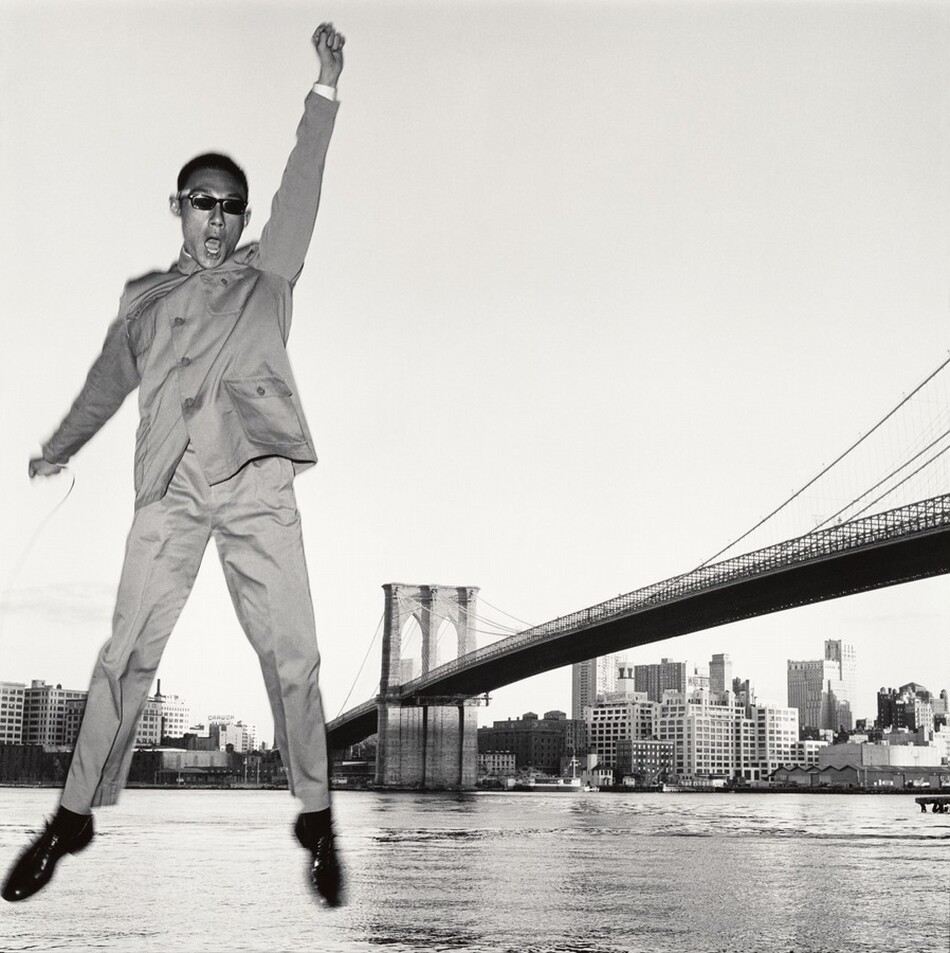
Featuring some 100 works by more than 80 artists, The ʼ70s Lens examines how photographers reinvented documentary practice during this radical shift in American life. Mikki Ferrill and Frank Espada used the camera to create complex portraits of their communities. Tseng Kwong Chi and Susan Hiller demonstrated photography’s role in the development of performance and conceptual art. With pictures of suburban sprawl, artists like Lewis Baltz and Joe Deal challenged popular ideas of nature as pristine. And Michael Jang and Joanne Leonard made interior views that examine the social landscape of domestic spaces.

The questions these artists explored—about photography’s ethics, truth, and power—continue to be considered today.


Organization
Organized by the National Gallery of Art, Washington

Curated by Andrea Nelson, associate curator, department of photographs, National Gallery of Art.

Sponsors
The exhibition is made possible through the leadership support of the Trellis Fund.

Explore Selected Works
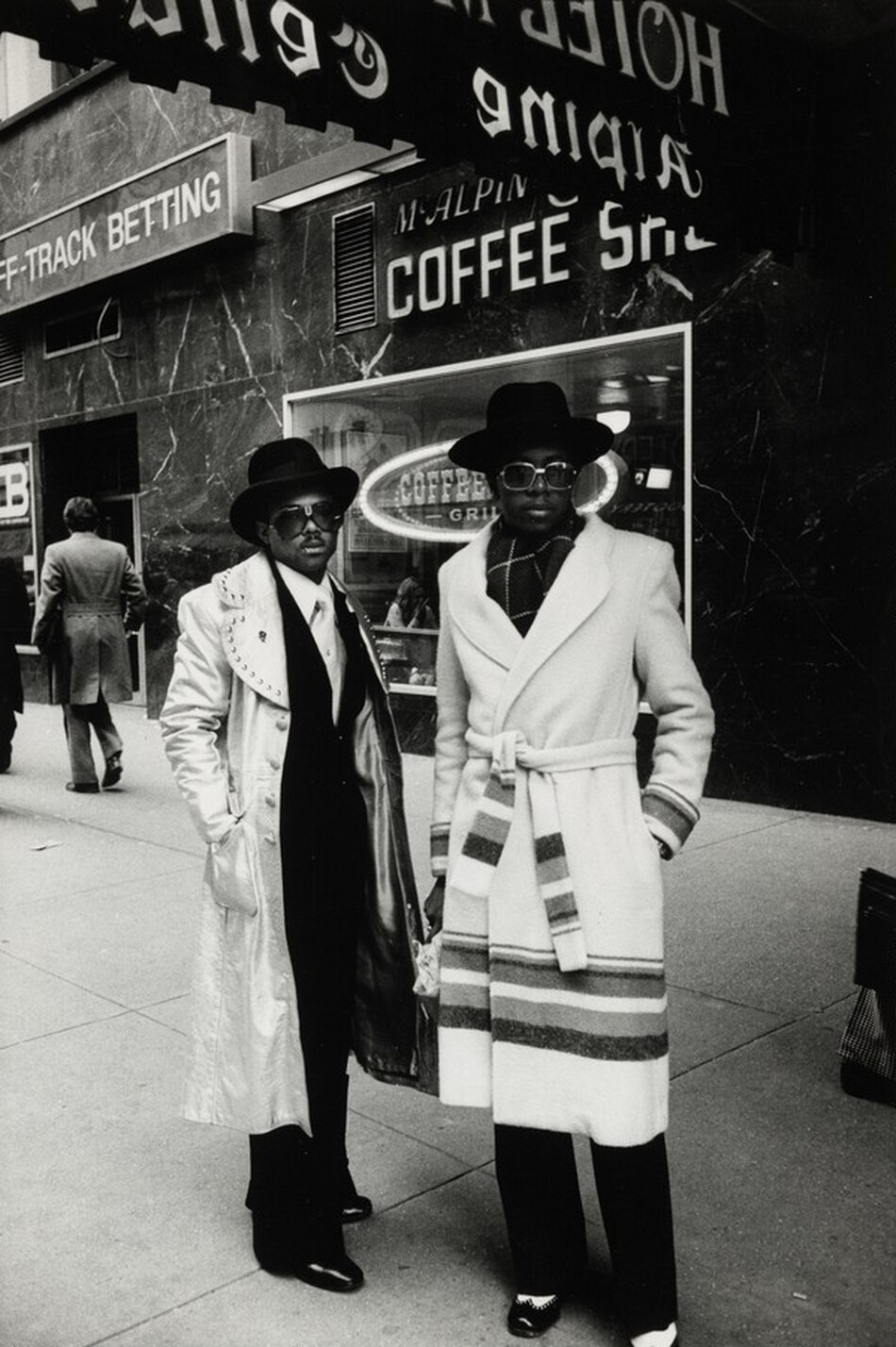
  • This black-and-white photograph shows two fashionably dressed Black men standing on a sidewalk. Both men wear black hats and large sunglasses, and they have serious expressions. The man on the left has medium-toned skin and wears a long, light-colored coat with silver buttons down the sides and around the large collar. Under that coat he wears a black suit, a white shirt, and a white tie. The man on the right has darker skin and wears a light-colored coat with a striped pattern near the hem, tied at the waist by a cloth tie, like a robe. Beneath that, he appears to have on a dark flannel scarf and black pants. Both men have thin mustaches and look towards us. They are standing in front of a building with a dark, marbled exterior and signs such as "OFF-TRACK BETTING" and "MCALPIN COFFEE SHOP," some of which overlap with one another. On the far left, a man in the background is walking away from us.
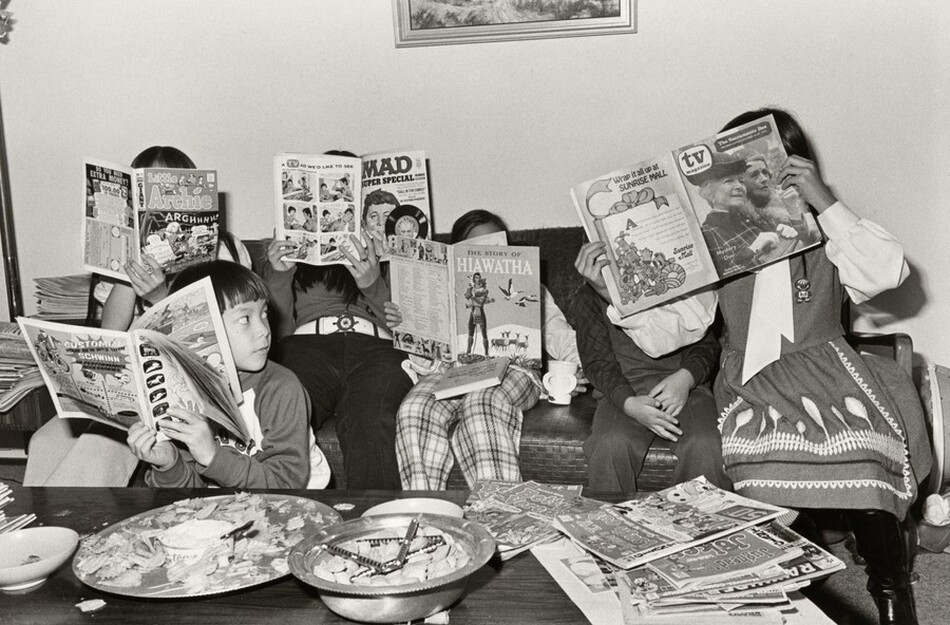
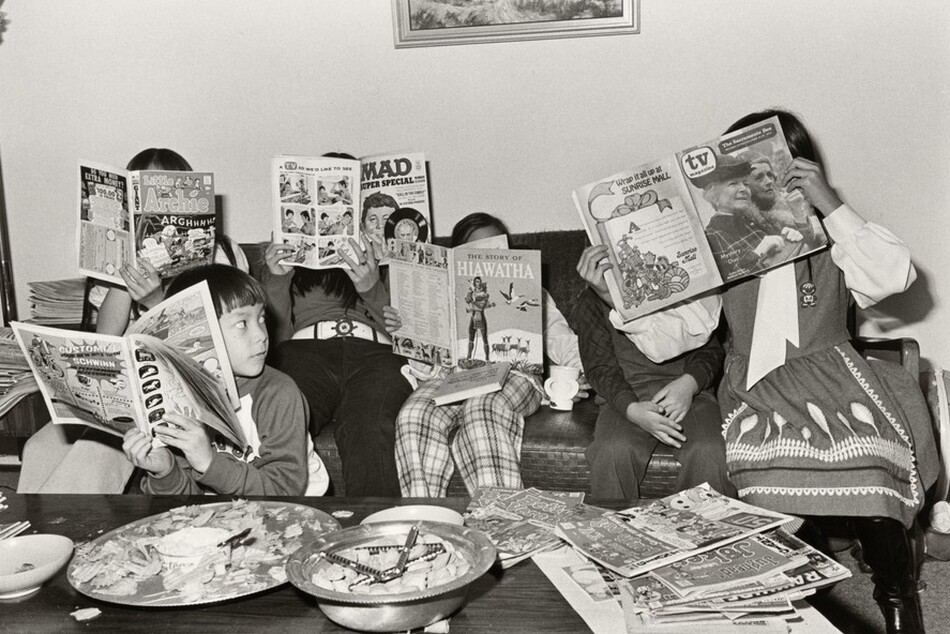
  • In this black-and-white photograph, five children sit closely together on a couch, reading different comic books and magazines. The comic books obscure the faces of the five children, and they appear absorbed in their reading. A sixth child who appears to be a young boy sits on the ground in front of the couch next to a coffee table piled high with dirty dishes and more comic books. His face is partially visible; he has light skin and dark hair, and he looks over his shoulder to the right. The children wear a variety of clothing with different patterns, including long-sleeved shirts, dresses, belts, and long pants. The wall behind the couch is light gray, with the edge of a framed photo visible at the top.
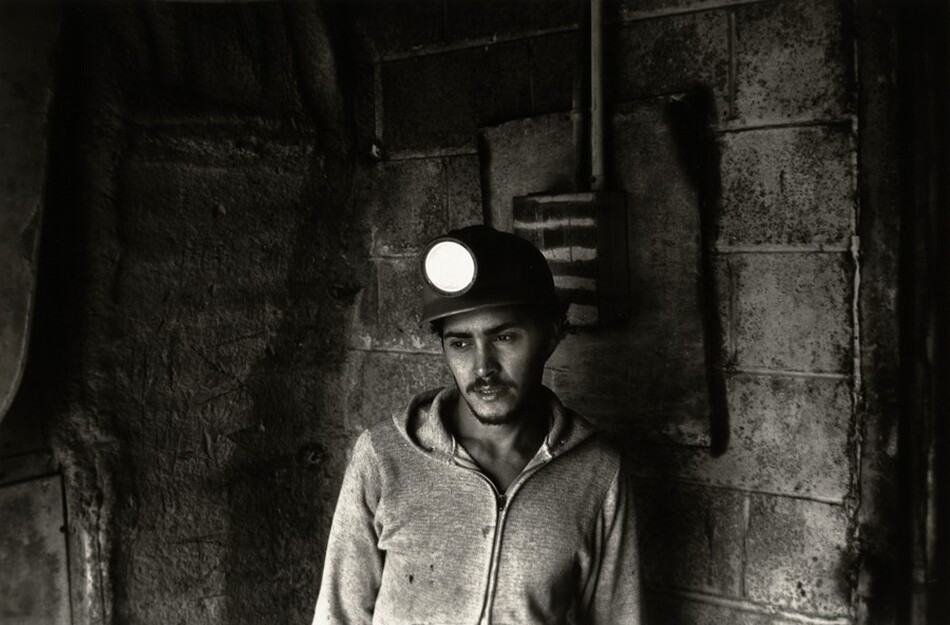
  • The image shows a man standing against a textured wall. He has a beard and short dark hair, wearing a hard hat with a light and a hooded sweatshirt. The background is made of concrete blocks and industrial elements.
  • This black-and-white photograph shows a man in mid-leap with one arm raised above his head. He is facing us, wearing a light-colored suit with a high collar and dark shoes. He has medium-toned skin and short, well-groomed dark hair, and he wears a pair of black sunglasses. His mouth is open. He is holding an object with a cord in his right hand. The backdrop features a long bridge on the right side that stretches over a wide river, and a city skyline in the distance against a light gray sky.
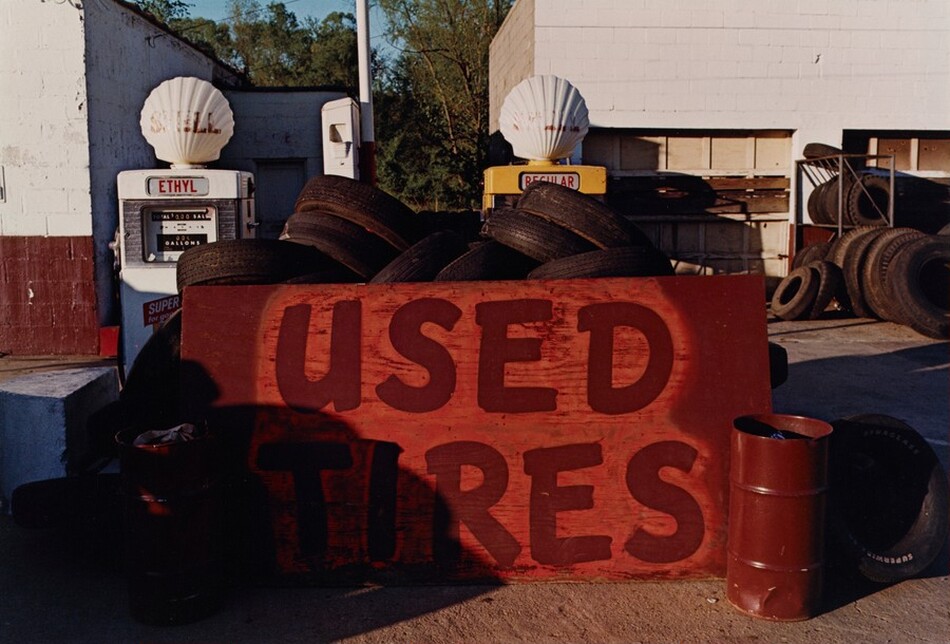
  • The image contains a large red sign that says "USED TIRES" in the foreground, as well as a pile of stacked tires behind it. The color palette consists of browns, reds, whites, and blacks. Two vintage fuel pumps labeled "SUPER" and "REGULAR" are on the left near the building wall, and additional tires are seen on the right side near the building. A red metal barrel is located in the lower right corner next to the sign.
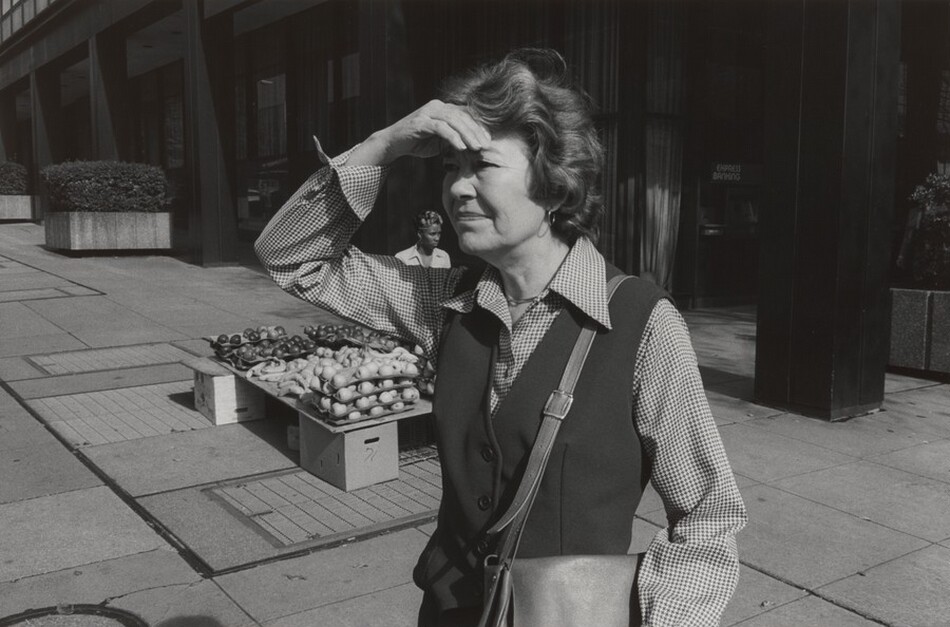
  • The image shows a woman standing on a city sidewalk. She is positioned in profile, looking to the right of the image, with her right hand raised to her forehead. The woman has short, wavy hair and is wearing hoop earrings, a checkered shirt under a dark-colored sleeveless vest, and carrying a crossbody bag. In the background, there are boxes filled with fruits and vegetables on an urban street, with a large building featuring glass and steel elements. A person can be seen near the produce stand, and potted shrubbery is placed along the sidewalk.
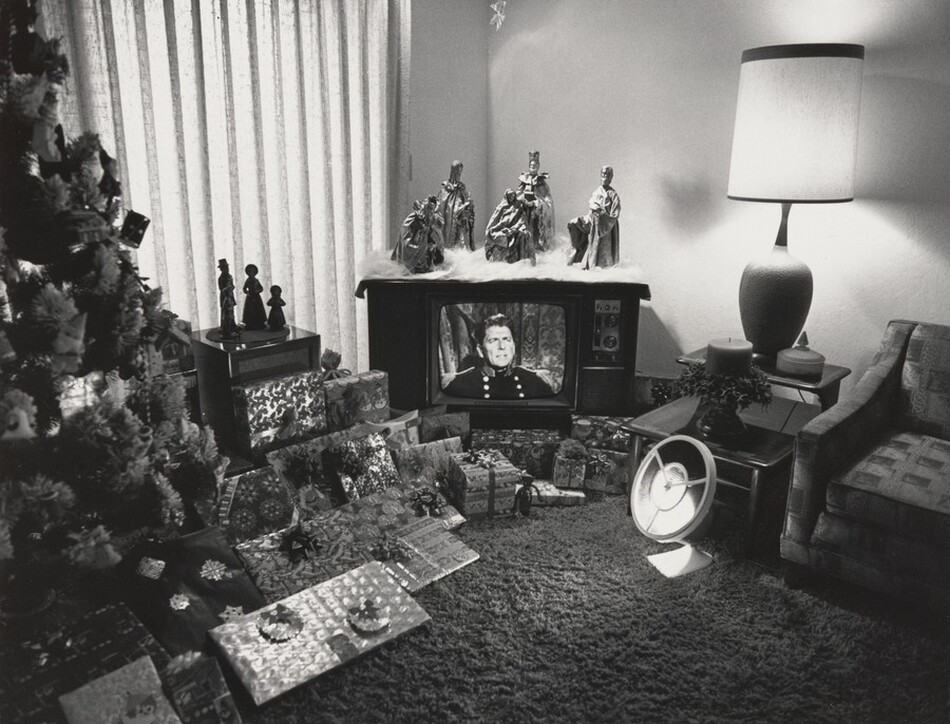
  • The image shows a living room with a large Christmas tree on the left, a vintage television displaying a man in a military uniform in the center, and numerous wrapped presents below the tree and in front of the TV. The room is primarily in shades of gray, as this is a black and white photograph. The Christmas tree is adorned with ornaments, and a set of nativity figurines is displayed on top of the television. A tall floor lamp is positioned to the right of the TV, casting light on an armchair beside it. The presents are spread across the floor in front of the tree and TV, occupying the lower half of the image. A curtain covers the window behind the tree.
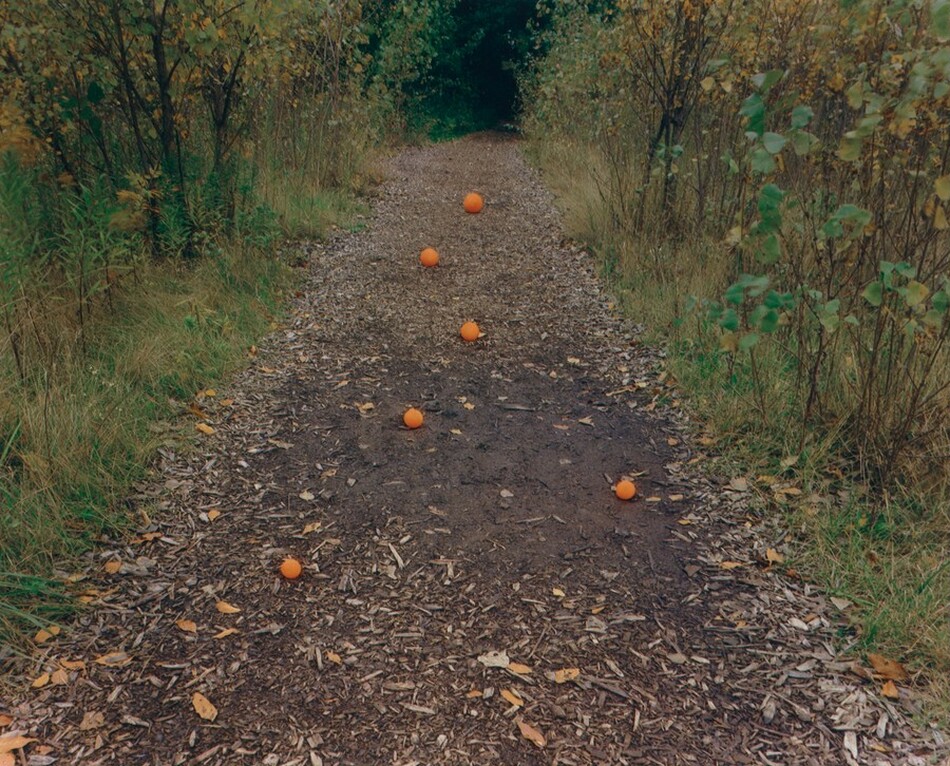
  • This is a photograph of a wooded path with orange balls. The pathway is covered in brown wood chips and surrounded by dense greenery with hints of autumn colors. Scattered along the pathway are several bright orange balls. The foliage lining the path consists of tall grasses and shrubs, creating a natural corridor.
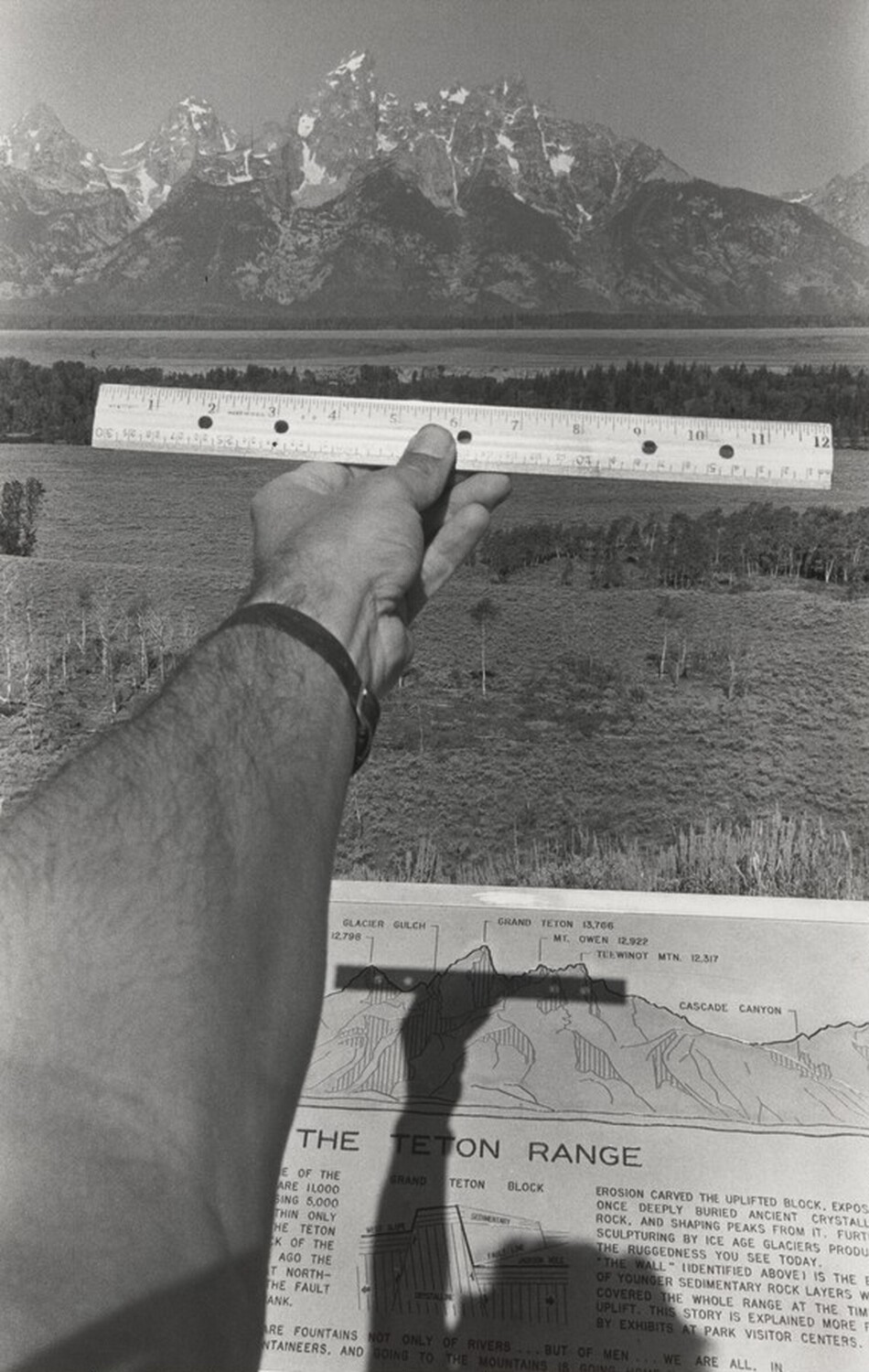
  • The image depicts a person's arm holding a ruler horizontally against a backdrop of a mountain range. The mountains have snowy peaks with rugged surfaces. Below them are darker trees and an open field with small trees. The image is in black and white with high contrast. The person's arm is in the lower left, partially covering the corner, and there is a plaque describing the Teton Range below the ruler.
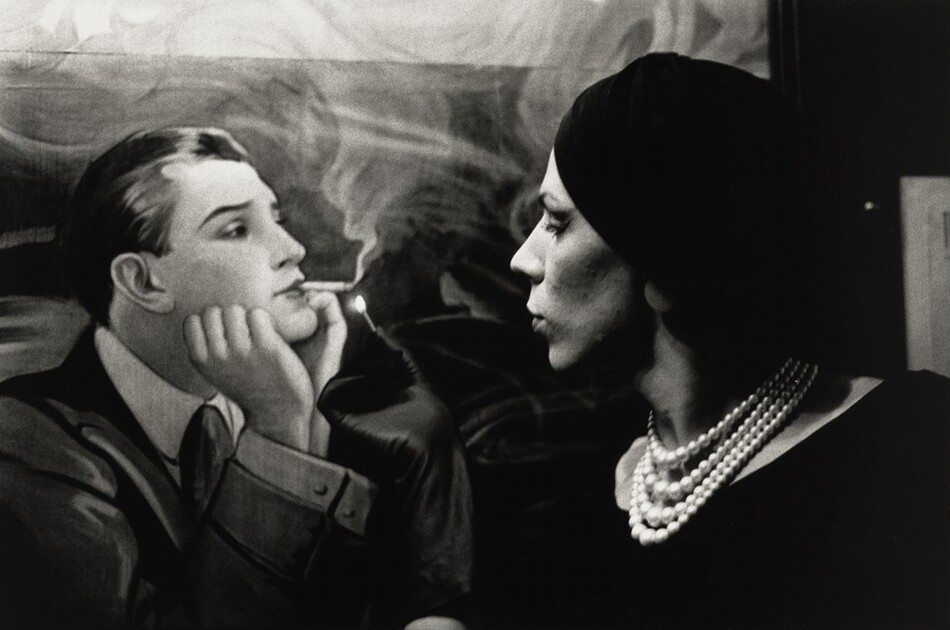
  • This black-and-white photograph shows a person's profile from the shoulders up. The person is on the right side of the photograph, looking left, and they face a painting of a man. The person has light skin, high cheekbones, winged eye makeup, and pursed lips, and they are wearing a black headscarf. They are dressed in a dark garment along with four strands of pearl necklaces. The painting on the left that they are looking towards depicts a man resting his chin on his hands, looking thoughtful while smoking a cigarette in a cloud of smoke. The person in the photograph holds a lit match up to the cigarette of the painted man with a black-gloved hand.
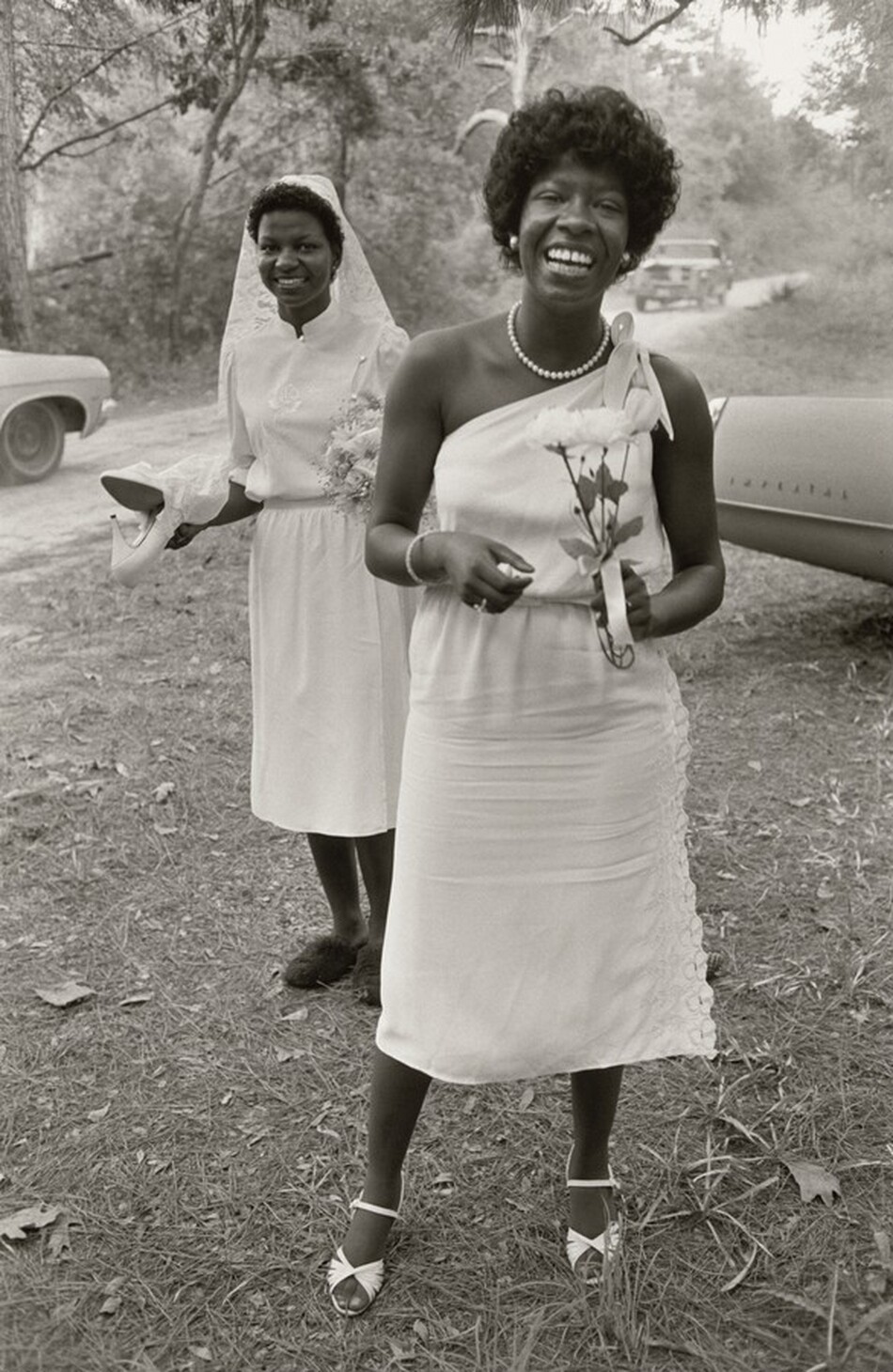
  • This is a black-and-white photograph showing two women standing outdoors. The woman closest to is smiling widely, looking right at us. She has dark skin and short, curly, black hair. She is wearing a white one-shoulder dress with a lacy floral design on the side, a string of pearls around her neck, a white bracelet, a ring, and round earrings. She is holding a bouquet of three white flowers tied with a ribbon, and she has white high heels on her feet. Behind her on the left is the second woman, who also looks out at us, smiling. She is wearing a high-necked white dress and a long, lacy veil. She also has dark skin and short, dark, curly hair under the veil. She holds a large bouquet of light-colored flowers in one hand, and a pair of white high heels in the other hand. On her feet she wears fuzzy gray slippers. The ground beneath the women is covered with grass and a few fallen leaves, and behind them is a dirt road with two cars passing by. Another car is partially visible on the right. Beyond the road are tall gray trees with a sliver of white sky visible near the upper right corner.
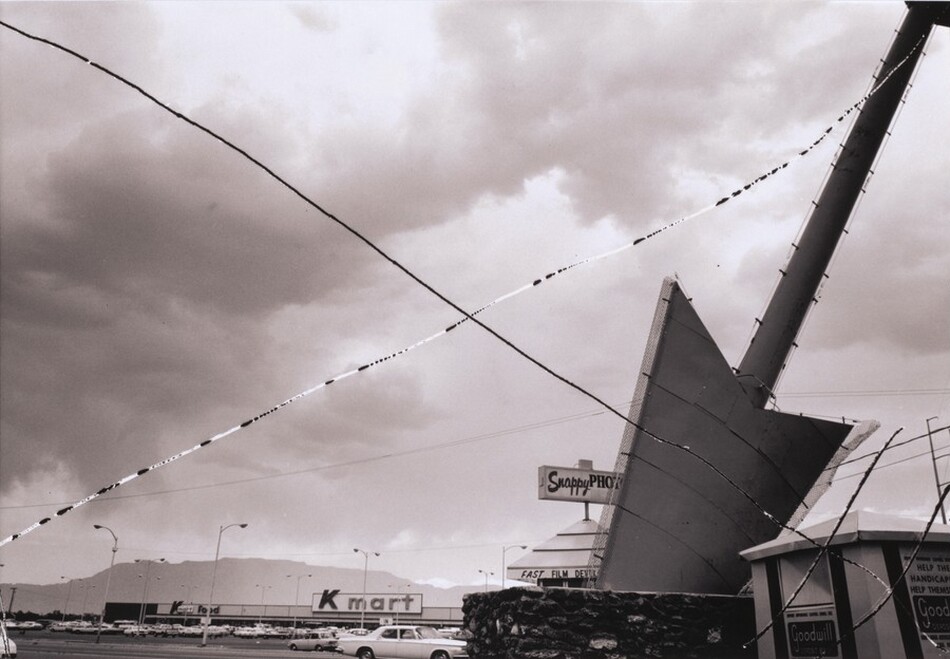
  • The image shows a street scene with dramatic clouds in the sky, captured from a low angle. Buildings and structures, including a Kmart store, a "Snappy PHOTO" sign, and a Goodwill donation bin, are visible. Wires run diagonally across the scene, while the color palette is mainly gray. Light and shadow create contrast in the composition, hinting at an approaching storm.
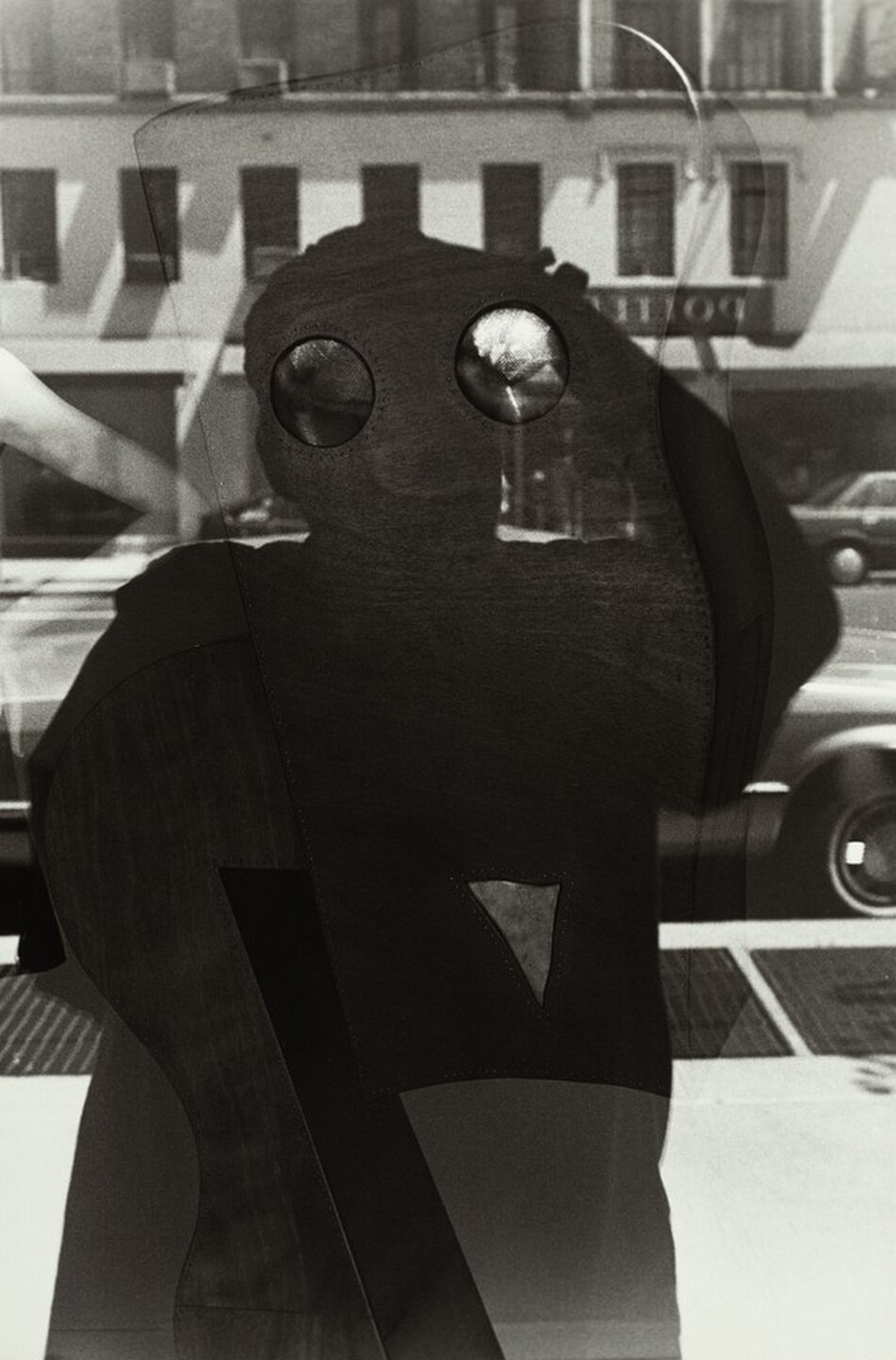
  • The image shows various complex shapes and dark silhouettes overlapping with the background, creating an abstract composition. A larger dark shape resembling a human figure or mannequin, possibly with round goggle-like circles as eyes, merges with the reflection of a street and parked vehicles.
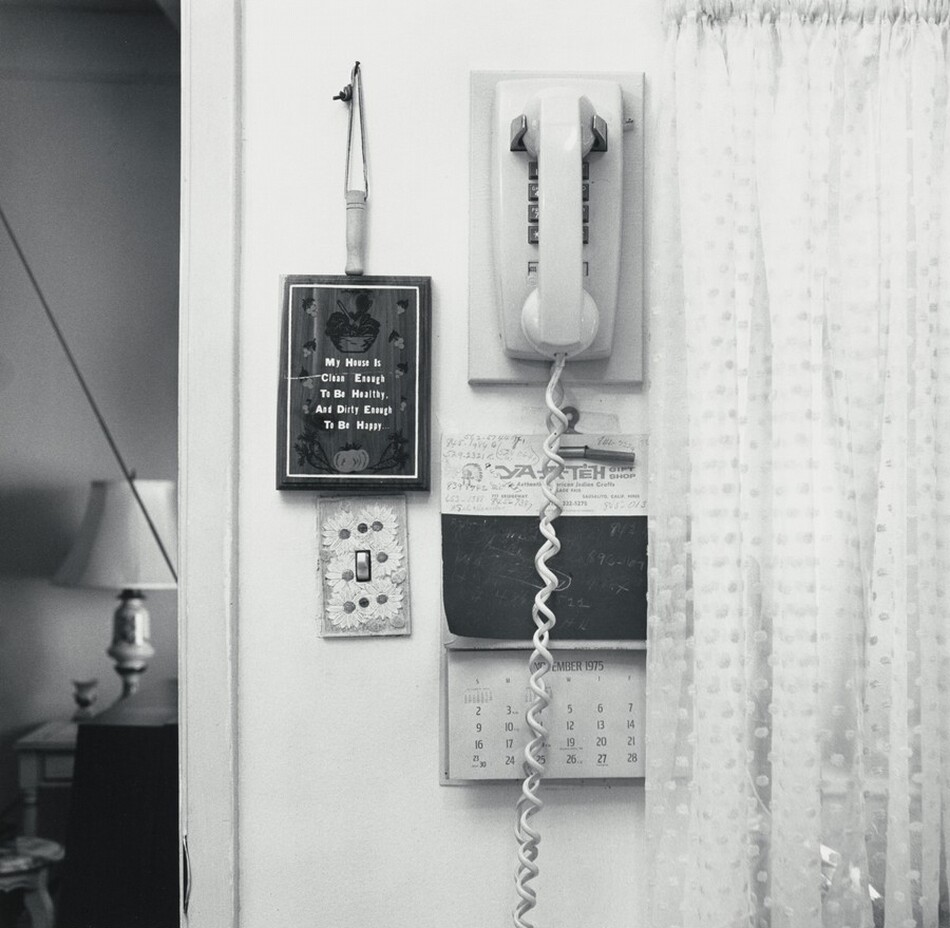
  • This grayscale photograph shows a wall from the interior of a house. Slightly above center is a white, wall-mounted phone with a coiled cord that hangs downward. Below the phone is a notepad with some faint words and numbers written on it, and below that is a calendar for November 1975. A decorative plaque with an inscription hangs to the left of the phone above a light switch decorated with white flowers. The wall behind these objects is white. On the right side are sheer drapes, while on the left another room is partially visible, displaying a lamp and the edges of other furniture pieces.
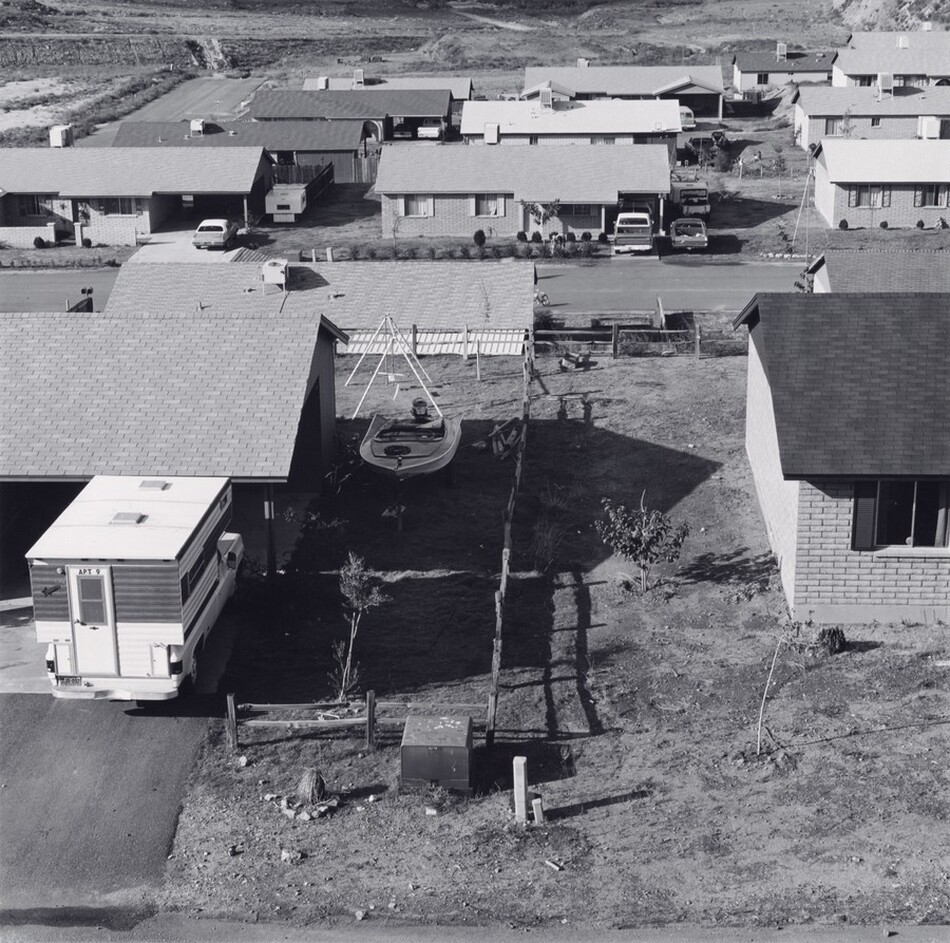
  • The image shows an aerial view of a residential neighborhood with a row of single-story homes. A driveway holds a recreational vehicle next to a home, with a small fenced area where a sailboat and a swing set-like structure are placed. The homes have shingled roofs and brick facades. The horizon is high in the image, revealing more homes and roads in a grid pattern. The black and white colors create contrast between shadows and highlights, such as those from rooftops and fences. The scene portrays a neatly organized suburban area.
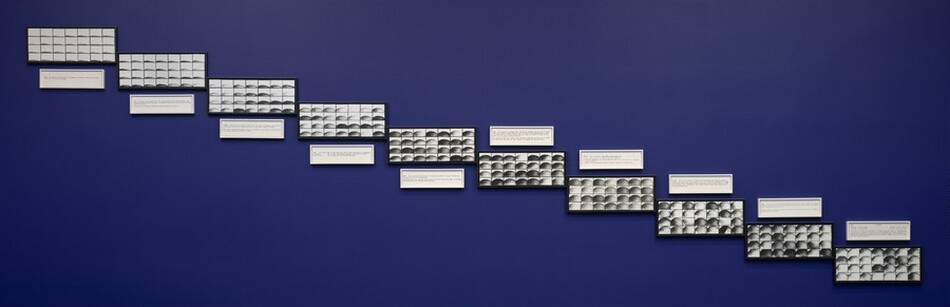
  • This is a collection of ten panels placed diagonally on a deep blue wall, each with a text block above or below them. They start at the top left corner of the wall and travel down to the bottom right corner. Each panel appears to be made of twenty-eight black-and-white photographs in four rows of seven. They all appear to show a curving shape that gets slightly larger in each photograph; the shapes are the smallest in the top left panel and the largest in the bottom right panel.
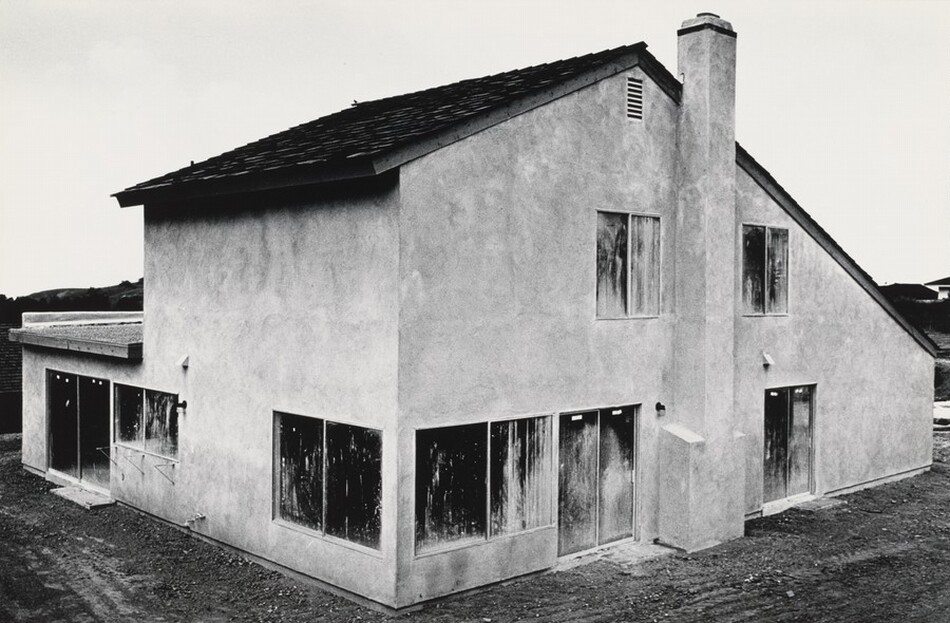
  • This is a photograph of a two-story house with a simple architectural design. The building is captured in a black and white composition, highlighting its stucco exterior and dark shingle roof. The structure has a prominent chimney rising along one side and large windows with visible vertical streaks. The image prominently features the angular lines of the house, creating a contrast between the textured surface and the smooth sky above. The surrounding landscape is sparse, suggesting the house may be located in an open or developing area with dirt visible in the foreground.
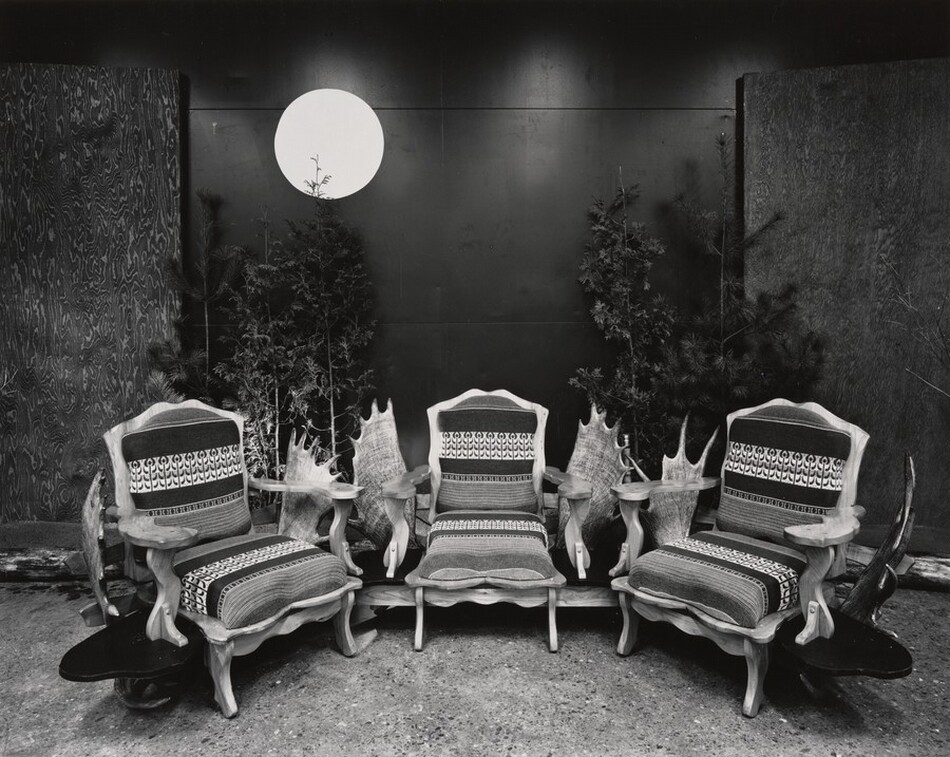
  • This is a photograph of three ornately carved chairs positioned in a natural setting. The chairs have intricate patterns and geometric fabric designs. Antler-like decorations are integrated into the armrests. In the background, there is a row of trees. A large white circular object, resembling the moon, is mounted on the wall. The setting appears to be indoors with a textured concrete floor and wooden panels enclosing the space.

Dig Deeper

In this black-and-white photograph, five children sit closely together on a couch, reading different comic books and magazines. The comic books obscure the faces of the five children, and they appear absorbed in their reading. A sixth child who appears to be a young boy sits on the ground in front of the couch next to a coffee table piled high with dirty dishes and more comic books. His face is partially visible; he has light skin and dark hair, and he looks over his shoulder to the right. The children wear a variety of clothing with different patterns, including long-sleeved shirts, dresses, belts, and long pants. The wall behind the couch is light gray, with the edge of a framed photo visible at the top.

Article:  12 Documentary Photographers Who Changed the Way We See the World

Photographers of the 1970s revolutionized the medium through innovations of both style and subject.
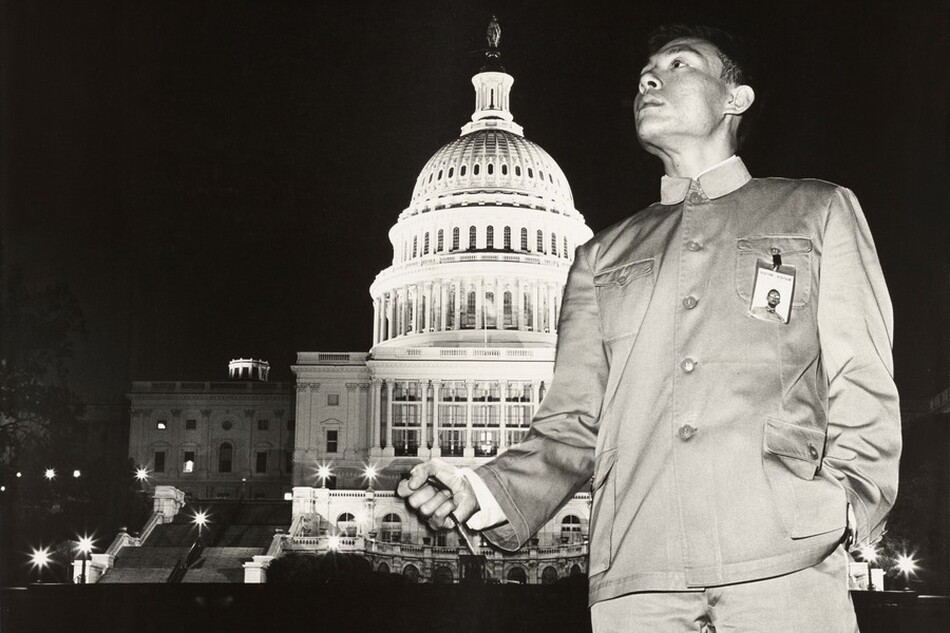
The image shows the upper half of a person in the foreground of a nighttime scene. The person stands slightly turned to the side, looking upward and outward to their right. Their facial features are highlighted by the lighting, showing a focused expression, with short, dark hair styled neatly. The person is dressed in a uniform with a mandarin collar, buttoned up and featuring a high level of tailoring, and worn over a plain shirt. There is an identification badge pinned to their left chest pocket. The person is holding an object with one hand, though details of the object aren't clear. The background prominently features the brightly illuminated dome of the United States Capitol Building, and the contrasting dark sky accentuates the architectural details. The area surrounding the capitol appears well-lit, emphasizing the structure's iconic presence.

Article:  Visionary Photographer Tseng Kwong Chi’s Vintage “Selfies”

Discover the artist's “East Meets West” series from the 1970s and 1980s exploring American identity and exclusion.