


National Gallery of Art Acquires Significant Work by Juan Correa
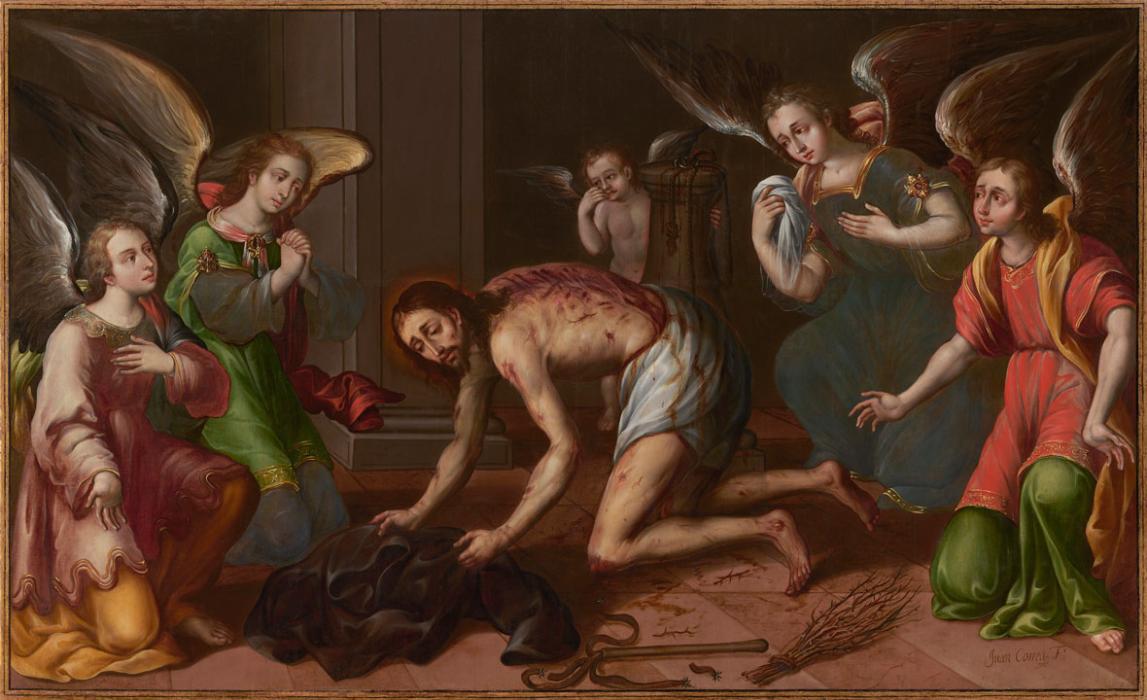
Juan Correa
Christ Gathering His Garments after the Flagellation, c. 1670s
oil on canvas
overall: 173 x 284 cm (68 1/8 x 111 13/16 in.)
National Gallery of Art
Patrons' Permanent Fund and Gift of Funds from Gerald Spears and Mary Mochary
2024.4.1
The National Gallery of Art has recently acquired Juan Correa’s painting Christ Gathering His Garments after the Flagellation (circa 1670s), the first work of colonial Latin American art to join the collection. This seminal acquisition, which is the earliest painting by an artist of color to enter the collection, reflects the museum’s efforts to expand the narratives in its collection across time and geography.
This painting will be on view beginning October 24, 2024, in gallery 29 on the Main Floor of the West Building.
“We are thrilled to acquire this first major work by a colonial Latin American artist of the caliber of Juan Correa.” said E. Carmen Ramos, chief curatorial and conservation officer at the National Gallery of Art. “This transformative acquisition aligns with our goals to expand our collection of works by major artists that are missing from our collection and that broaden the narratives of art history. Correa’s masterpiece will help us craft new stories in our galleries that consider the relationships between European artistic traditions and art produced in and for colonial societies. Its powerful emotive force will help our audiences explore the social implications of religion and spirituality. That Correa was an artist of African descent reveals his determination to be an artist, as well as his place among other important artists of color in the Americas. This work will open new perspectives in our presentation of both European and American art, broadly defined.”
Created in Mexico City in the late 17th century, this large, signed painting of Christ reaching for his garments after being whipped is a superb example of Correa’s mature style. It is also characteristic of the Counter-Reformation images produced in the Spanish colonies of North and South America. The painting shows Christ on his hands and knees after being flagellated at the column behind him. The broken instruments of his torture are strewn on the ground. As Christ reaches for his cloak, five angels weep openly, moved by his suffering. Due to its large scale, this work was likely created as an object of public devotion for a cathedral or church chapel and was commissioned by an important patron.
From 1691 to 1698 Correa painted two mural-sized canvases for the sacristy of Mexico City’s cathedral. These works are highly regarded among his surviving works and are examples of the Mexican baroque. Correa (circa 1645–1716) was the son of a Spanish surgeon and a freed Black woman of African descent. The artist referred to his heritage in 1693 when he described himself in an official document as mulato libre, maestro pintor (free mulatto, master painter). Others from this racial background were barred from painting professionally, yet Correa found a way to succeed.
Press Kit
Contact Information
You may also like

Press Release: Major Exhibition Exploring the Creative Process of Printmaking Across Nearly Five Centuries Opens at the National Gallery of Art
Tinker Tinker: Printmakers at Work illuminates the printmaker’s creative process by presenting over 150 prints from the National Gallery of Art’s exceptional holdings of preparatory drawings, states, progressive color proofs, and final prints.

Press Release: National Gallery of Art Appoints Virginia Anderson as Christiane Ellis Valone Senior Curator of American Art and Head of the Art of the Americas
Anderson will lead the art of the Americas department, which stewards the National Gallery’s collection of paintings, sculpture, and decorative arts from the Americas. In this role, she will advance the museum’s continued development of a collection of art of the Americas that is reflective of the broad scope of artistic innovation across various media and time periods.