


Mary Morton
Rediscovering Mary Cassatt
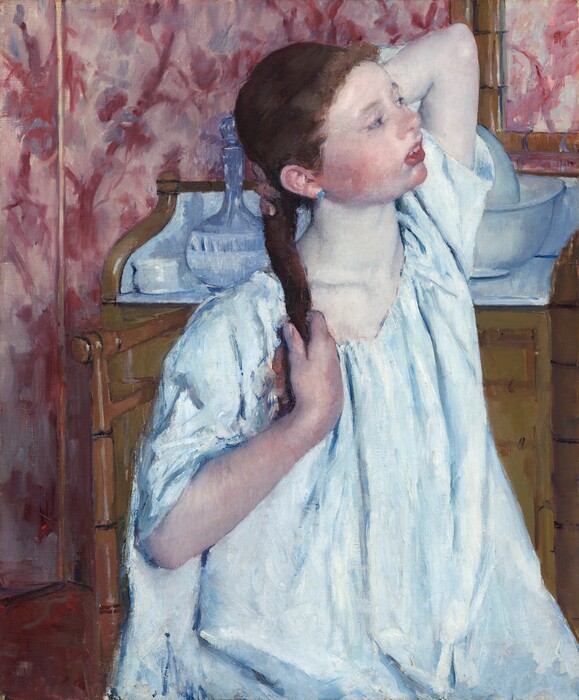
The year 2026 marks the centennial of Mary Cassatt’s death, an opportunity to reexamine her career, work, legacy, and contemporary relevance. The finest and most representative collection of Cassatt’s work belongs to the National Gallery of Art, and is the responsibility of the French paintings department. As the head of that department, I anticipated this moment with several years of deep research on Cassatt, here at the National Gallery as well as in all of the museums in this country and in Paris that house significant collections of her work. In addition to immersing myself in the scholarly literature, I worked with print and paintings conservators and curators, students and fellows, and academic art historians to fully grasp Cassatt’s contributions. The Ailsa Mellon Bruce National Gallery of Art Sabbatical Fellowship gave me four precious months to write a book draft about what I discovered. Cassatt Reconsidered, produced by Getty Publications, will come out in October of this year.
In a world saturated with mass reproductions of impressionist paintings and the ensuing kitschification of certain artists’ work—Edgar Degas’s ballerinas, Auguste Renoir’s depictions of pretty girls in pretty dresses, and Claude Monet’s haystacks and water lilies—Mary Cassatt has perhaps fared the worst. Mishandled by the art market and art writers during her lifetime, and by art historians and curators across the 20th century, Cassatt is best known to the museum-going public as a sentimentalizing painter of mothers and children. Exhaustively tapped for Mother’s Day cards, calendars, and living room posters, her oeuvre is commonly perceived as cloyingly familial.
How did this happen to arguably the most ambitious, vanguard female artist of the later 19th and early 20th centuries? Fiercely ambitious, energetically independent, and relatively long-lived, Cassatt employed and manipulated strains of Renaissance and contemporary painting to express her female subjectivity through a brilliantly modern body of work on par with the most revered impressionist “masters.” She disturbed conventional ideals of femininity, childhood, and maternity, an uncompromising feat that complicated her career success as well as her place in art historiography.
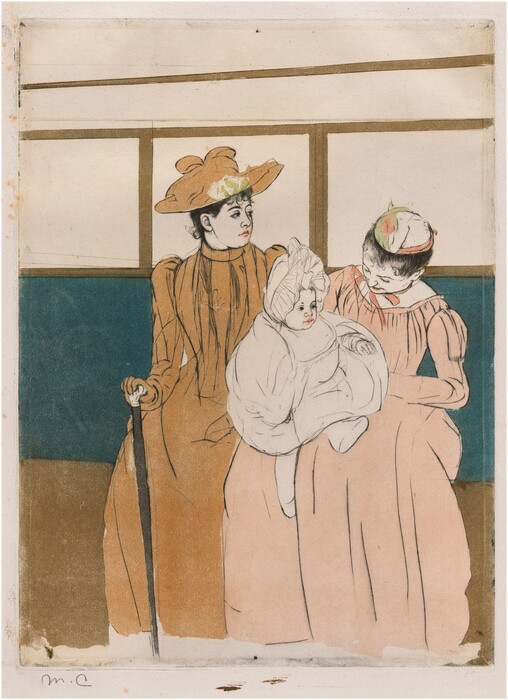
This book argues that Cassatt has been and continues to be misunderstood and misrepresented, largely due to the systemic sexism of the Parisian art world in which she developed her career as well as the sustained failure by 20th-century art historians to accommodate the work of women artists on their own terms. The story begins with her dealer, Paul-Louis Durand-Ruel (1831–1922), who strategically neglected Cassatt’s career in France, only belatedly featuring her work and then reserving her for an exclusively American market. Center sabbatical funds enabled research on the correspondence between Cassatt and Durand-Ruel held in the gallery archives in Paris, the vast majority of which remains unpublished.
Durand-Ruel encouraged Cassatt to take up the motif of motherhood and children, codified in her first biography, titled Mary Cassatt: Un peintre des enfants et des mères (1913). Art historians largely continued this narrative across the 20th century, and the idea that she was not a serious artist resulted in superficial treatment and relegated her to the margins of the heroic story of modernism. Further complicating a clear picture of her artistic achievement was her absorption in US museums by departments of American art, whereas the most meaningful context for her oeuvre sits firmly in the Parisian art world of the second half of the 19th century: its critics, exhibitions, and artistic community.
Neither a biography nor a retrospective treatment, Cassatt Reconsidered interrogates and expands the limited art-historical “box” in which Cassatt has been placed. Issues covered include her misalignment with “Impressionism,” the intermedial character of her printmaking and painting, the technical virtuosity of her paint handling, and the precise nature of her engagement with the women’s movements in France and the United States. The aim is to convey the advanced, progressive nature of Cassatt’s work to a broad audience in an accessible way, and at the same time to encourage readers to take a more critical approach to art history and art museums. While academic and museum institutions are essential sites of cultural and historical expertise, the record shows the powerful effect of underlying social values on content presented to the public. Market forces and the demands of institutional advancement are never very far from the stories we are told. Art objects have their own agency, however, and we owe it to them and their makers to engage with them “in the flesh,” with open eyes, receptive and appraising.
Department of French Paintings
Ailsa Mellon Bruce National Gallery of Art Sabbatical Fellow, 2025–2026
Mary Morton remains curator and head of the French paintings department at the National Gallery of Art, where she is presenting an installation of the museum’s Cassatt collection with Mary Cassatt: An American in Paris (February–August 2026).