


Poetry Writing Workshop: Where We At!
-
-
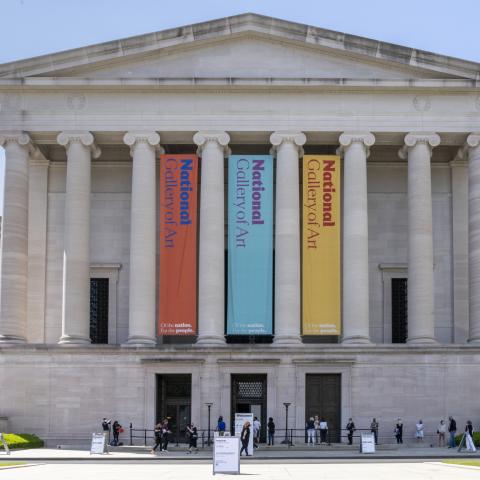 West Building
West Building Main Floor, Gallery M75

María Fernanda. Photo by Jonae Davis.
Join award-winning poet María Fernanda for an in-gallery poetry writing workshop inspired by the exhibition Photography and the Black Arts Movement, 1955–1985.
We encourage you to wear your favorite accessories, clothing, or both to help draw inspiration for your poems. You will be invited to write and experience contrapuntal poems, a poetic form blending two or more poems.
This program is for people of all experience levels.
Paper, pencil, and a folding seat will be provided. Notebooks encouraged.
The title of this program is inspired by Where We At! Black Women Artists, Inc. (WWA)'s Where We At: Black Women Artists: 1971. Weathers, 1973.
María Fernanda (she/hers) is an award-winning poet. Her work explores the intimacy of sisterhood, the anchor of intergenerational coexistence, and grief. Poetry is her way of sharing her own rich literary upbringing in Washington, DC. She shares beloved traditions of care with her community through literary means and enjoys hearing her attendees ignite new ones. Awarded the Norma Elia Cantú Award in Creative Writing and the Andrea Klein Willison Prize for Poetry, María Fernanda has performed her original work across the United States, including at the Brooklyn Museum’s American Art Galleries for the exhibition Soul of a Nation: Art in the Age of Black Power. Her latest literary works appear in The Hill Rag, The Healing Verse Poetry Line, Soul Sister Revue, Cave Canem's Dogbytes, and Cheryl Clarke's born in a bed of good lessons: poems inspired by the works of Lucille Clifton. María Fernanda is a Callaloo fellow, a published contributor of the Library of Congress, a two-time Best of the Net nominee, and a Hurston/Wright Foundation Poetry Award finalist. In 2025, she became the first poet to present and perform at the Brookings Institution, led a Black Girl's Poetry workshop at the National Museum of Women in the Arts in collaboration with Black Girls in Art Spaces, and joined a co-presentation of poets at the National Museum of African American History and Culture. She is the founder of four independent programs, including a poetry garden, where Black literary artists and horticulturists discuss their creative and historic connections to gardens. María Fernanda hopes to highlight poetry’s versatility and create more opportunities for literary artists across the world.
Image Caption: María Fernanda. Photo by Jonae Davis.
You may also like


Talks & Conversations: American Art at Home and Abroad: FAPE’s Gift to the National Gallery

virtual