Article

Picturing the Eclipse

5 min read

The celestial world has transfixed artists for centuries. And few cosmic events are as dramatic as a solar eclipse.

Whether you’ll have a chance to see this year’s total solar eclipse or not, you can explore our collection. Discover depictions of eclipses—and other awe-inspiring images of the cosmos.

The eclipse chaser

German photographer Wolfgang Tillmans took his earliest photographs of the night sky when he was 10 years old. He is a devoted eclipse chaser and has witnessed at least five total solar eclipses. Tillmans made these photos of the 1998 total solar eclipse in Aruba. The black and blue images are from his camera pointed skyward, while the beige photos are of the ground. Tillmans captures the crescent shadows that leaves cast during an eclipse, nature’s own pinhole cameras.
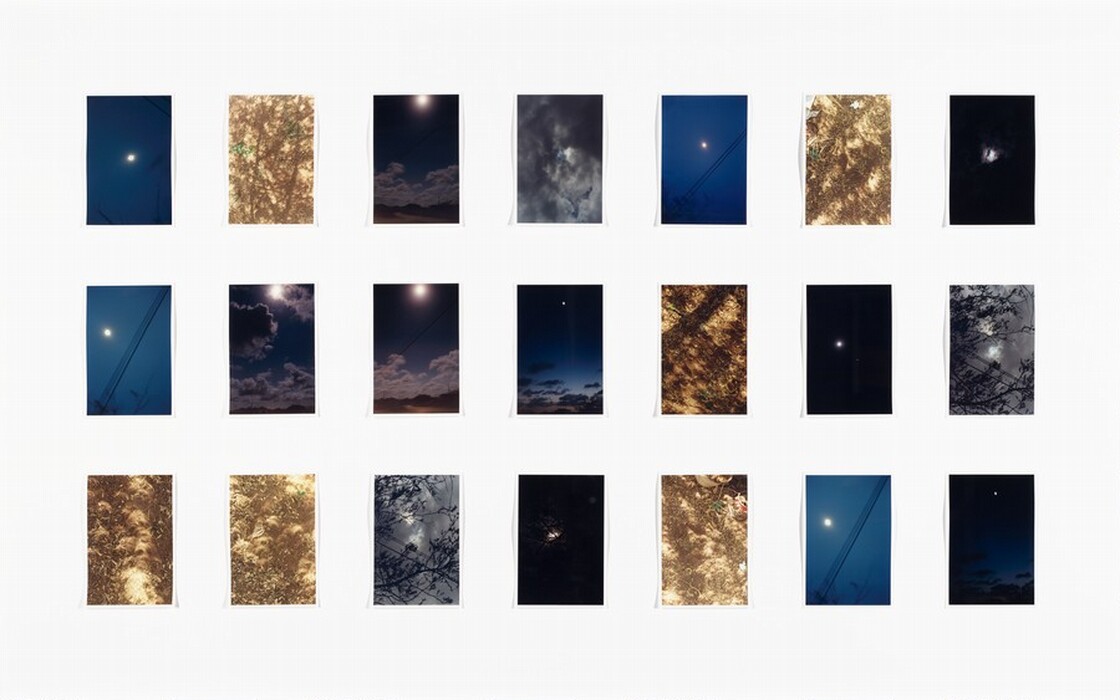
The image shows a grid of 18 photographs arranged in three rows, each capturing a different scene. The point of view varies in each photo, with most appearing to be taken from low angles looking upwards. Some images show a horizon with hills and clouds in a night or dusk setting. The brushstrokes detail sharp edges in some night sky scenes and softer, shadowed areas in others. The color palette includes deep blues, blacks, browns, and highlights of white or pale yellow from light sources like the moon and stars. Textured surfaces like dry earth and tree shadows are seen in scenes closer to the viewer, while soft-lit clouds and celestial objects are visible in the distance. The backgrounds create a serene and contemplative atmosphere with natural elements providing visual interest.
Wolfgang Tillmans, Total Solar Eclipse Grid, 1998, 21 chromogenic prints, Gift of The Heather and Tony Podesta Collection, 2014.150.17

In astronomical terms, a solar eclipse is straightforward. The moon passes between the earth and sun, obscuring our view of the sun. But on the ground, it’s a strange experience. The sudden darkness seems otherworldly—even apocalyptic. Tillmans describes the event:

You could see the shadow arrive, travelling at the speed of an aeroplane. You could look down the horizon and then it came in a ‘whoosh’ right over you... Suddenly there is the corona in the sky; this ring of ice-cold fire. You see stars and planets and black sky. The horizon has an eerie, very dark, dusky light. It’s totally shocking because it’s so powerful; something that comes from outside this planet and touches you. And then after three minutes it’s all over and it’s daylight again.

The anonymous recordings of 1932

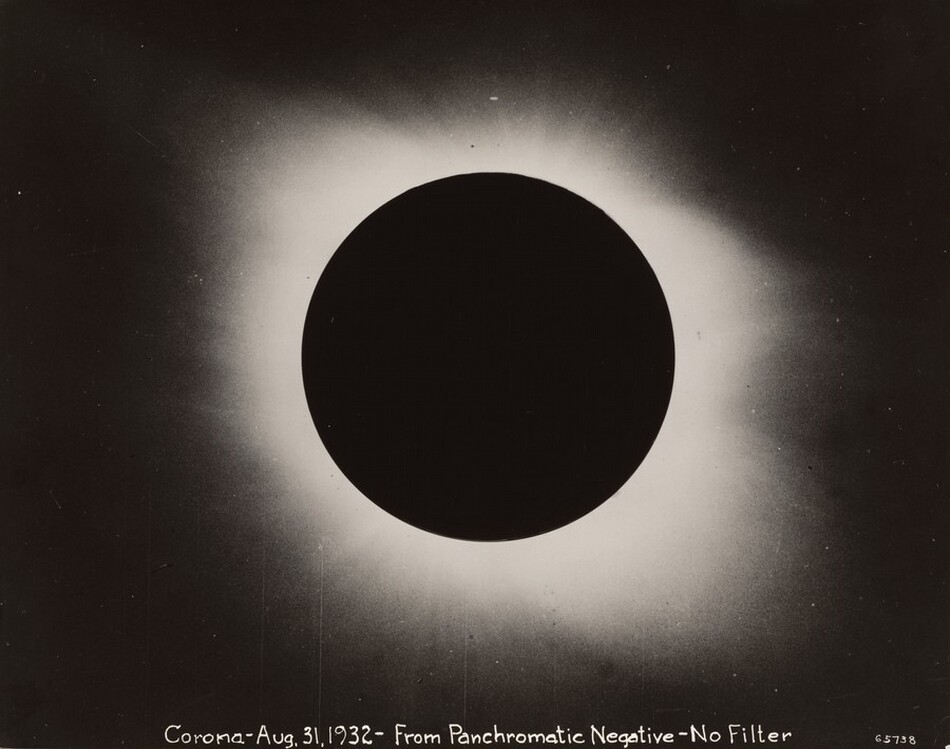
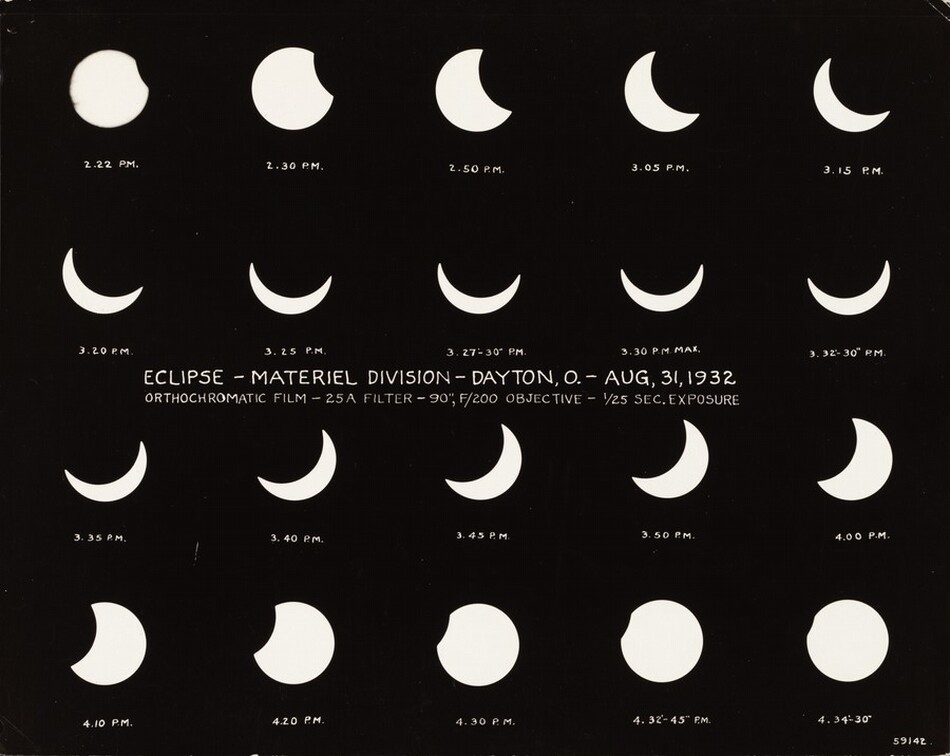
We know little about these images of the 1932 eclipse, which passed through part of New England and Canada. The first, a gelatin silver print, records the corona of the total eclipse. Our colleagues at the Smithsonian Air and Space Museum think that astronomers at universities in the area, such as Harvard, likely made these. Dayton, Ohio, only caught views of a partial eclipse, which is recorded in the second image.
The eclipse, personified
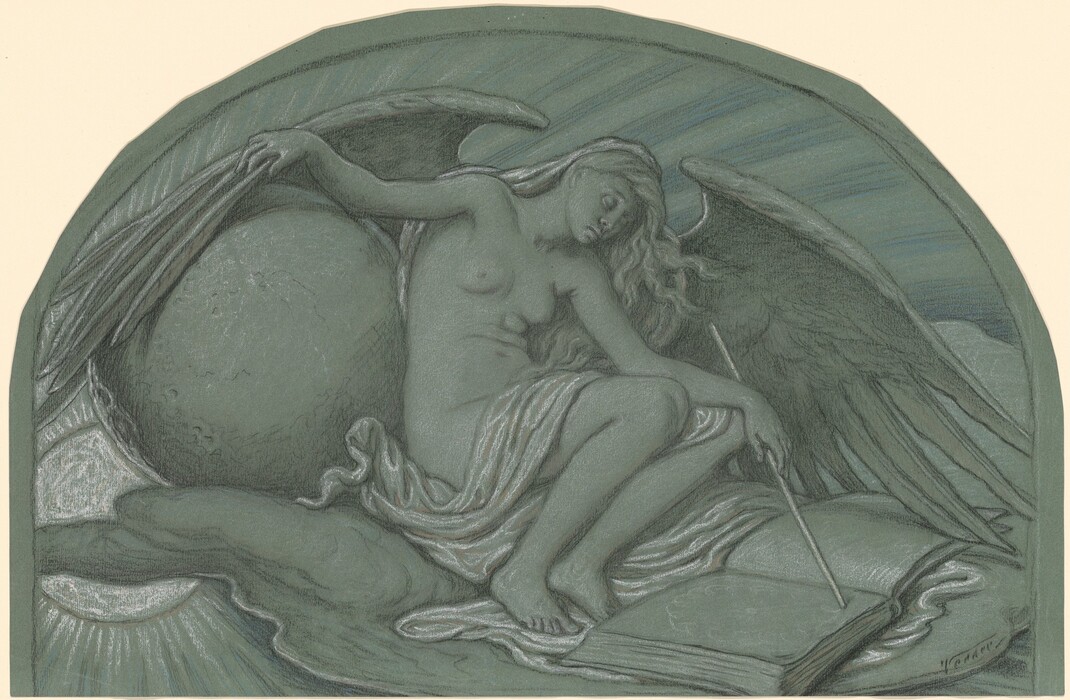
The image shows a winged figure seated with a relaxed posture. The figure has long flowing hair, closed or semi-closed eyes, and is lightly dressed. They hold a stick touching an open book on their lap. The figure's wings are spread out against a large spherical object in the background. The setting has a lightly shaded background with subtle gradients.
Elihu Vedder, Study for "The Eclipse of the Sun by the Moon", 1892, charcoal and chalk on green wove paper, Corcoran Collection (Gift of the American Academy of Arts and Letters), 2014.136.197

Elihu Vedder was an American symbolist painter best known for his murals at the Library of Congress. In those murals, he shows ideals like peace and prosperity as figures of women. Similarly, in his study for the painting The Eclipse of the Sun by the Moon, the moon is a winged figure. She blocks the light of the sun with both her wings and the rocky sphere of the moon itself.

Discover more cosmic images
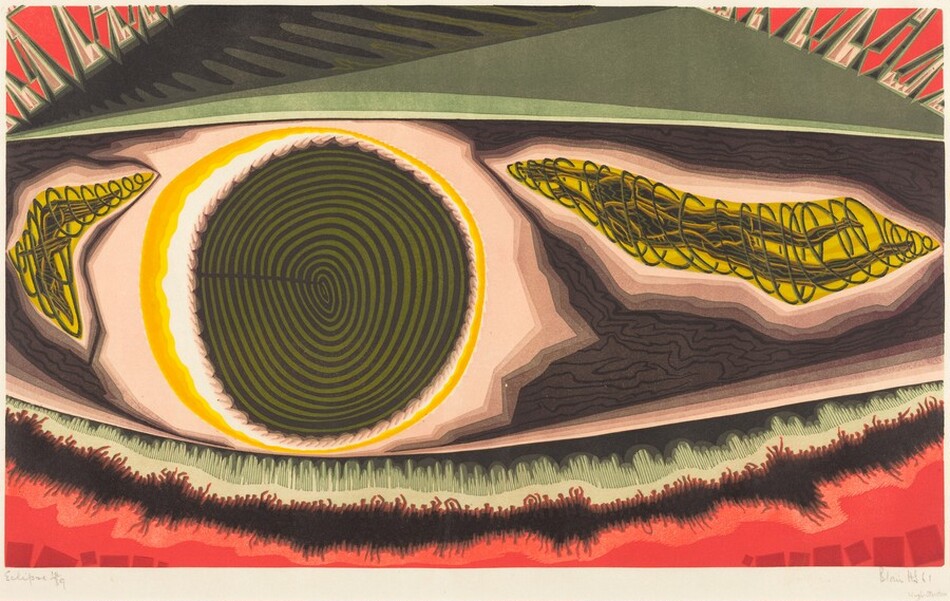
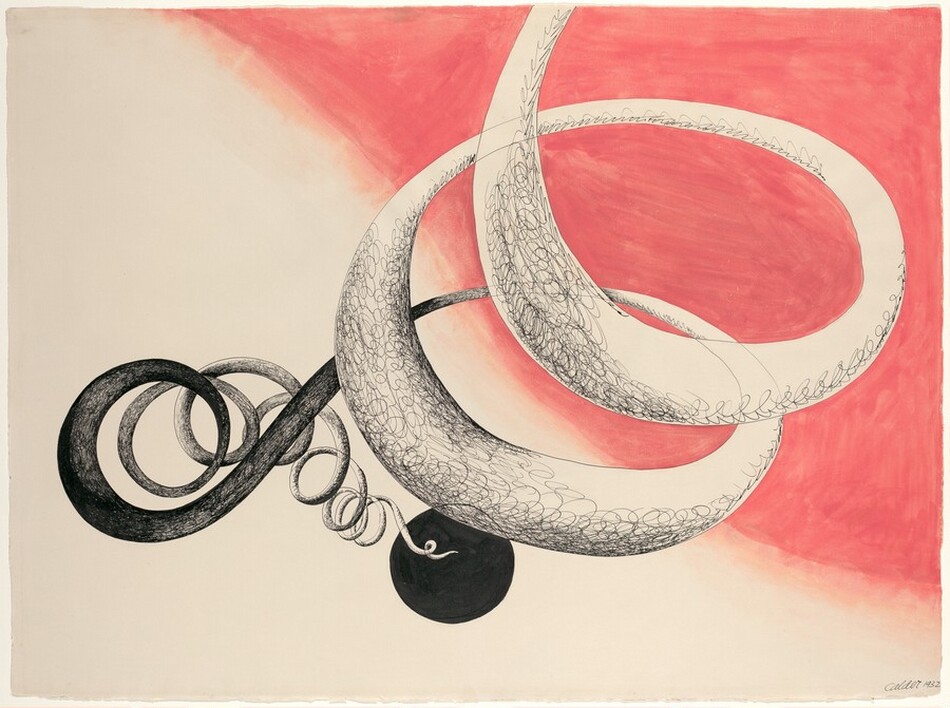
  • The image shows concentric circles and spiraling lines in an abstract design. There is a central shape that looks like an eye with a green spiral at the center, surrounded by yellow and pink outlines. On each side are elongated pointed shapes. The background has layered bands and geometric streaks in green, red, and black.
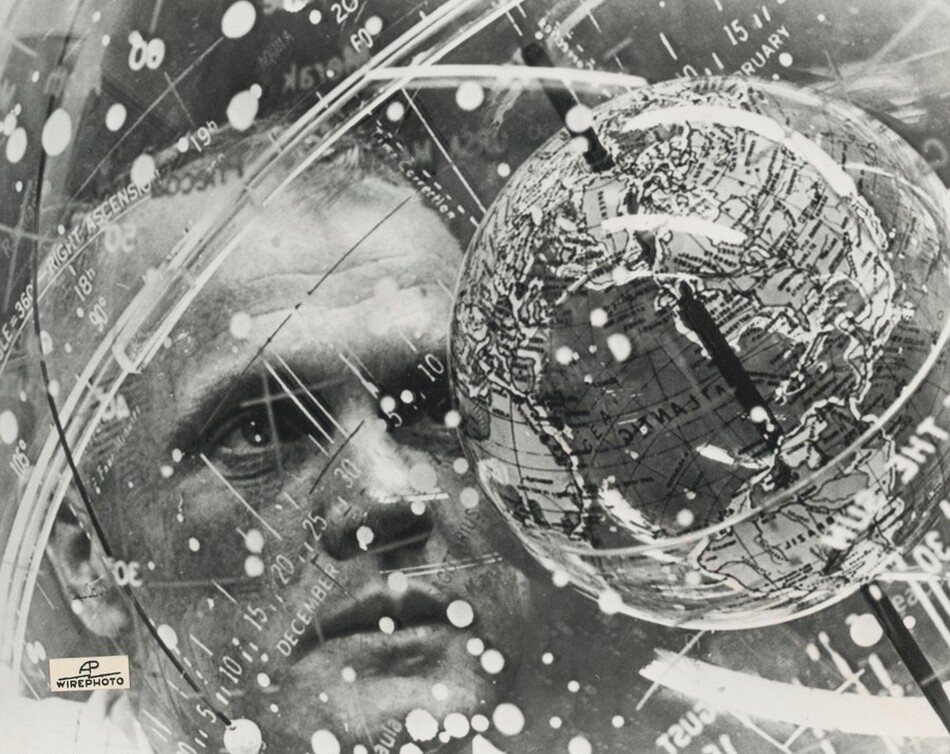
  • This is an image showing the interior of a spacecraft or a simulation scenario involving space and Earth observation. The image features a detailed model of the Earth surrounded by lines and coordinates, which suggest navigation or scientific analysis. The globe is displayed with markings of continents and meridians for geographical orientation. Text and numbers are present, possibly representing data or technical information. Abstract shapes and reflective surfaces create a futuristic and scientific ambiance, emphasizing the technical and intellectual aspects of observing Earth from a spatial perspective.
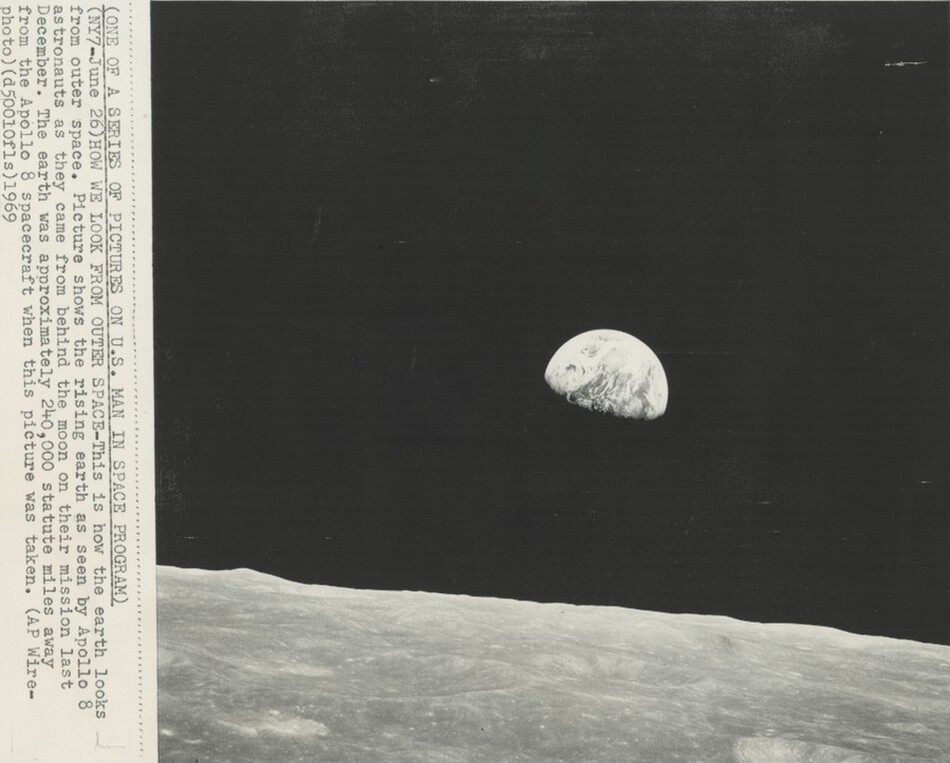
  • The image shows a view from lunar orbit, with the Moon's rocky surface in the foreground and the distant Earth partially illuminated in the background. The lunar surface displays various shades of gray with a textured appearance. The Earth is visible on the right side of the image, showing swirling white clouds and bluish-green landmasses against a black backdrop. The overall color scheme is monochromatic, with shades of gray and the Earth standing out in bright white.
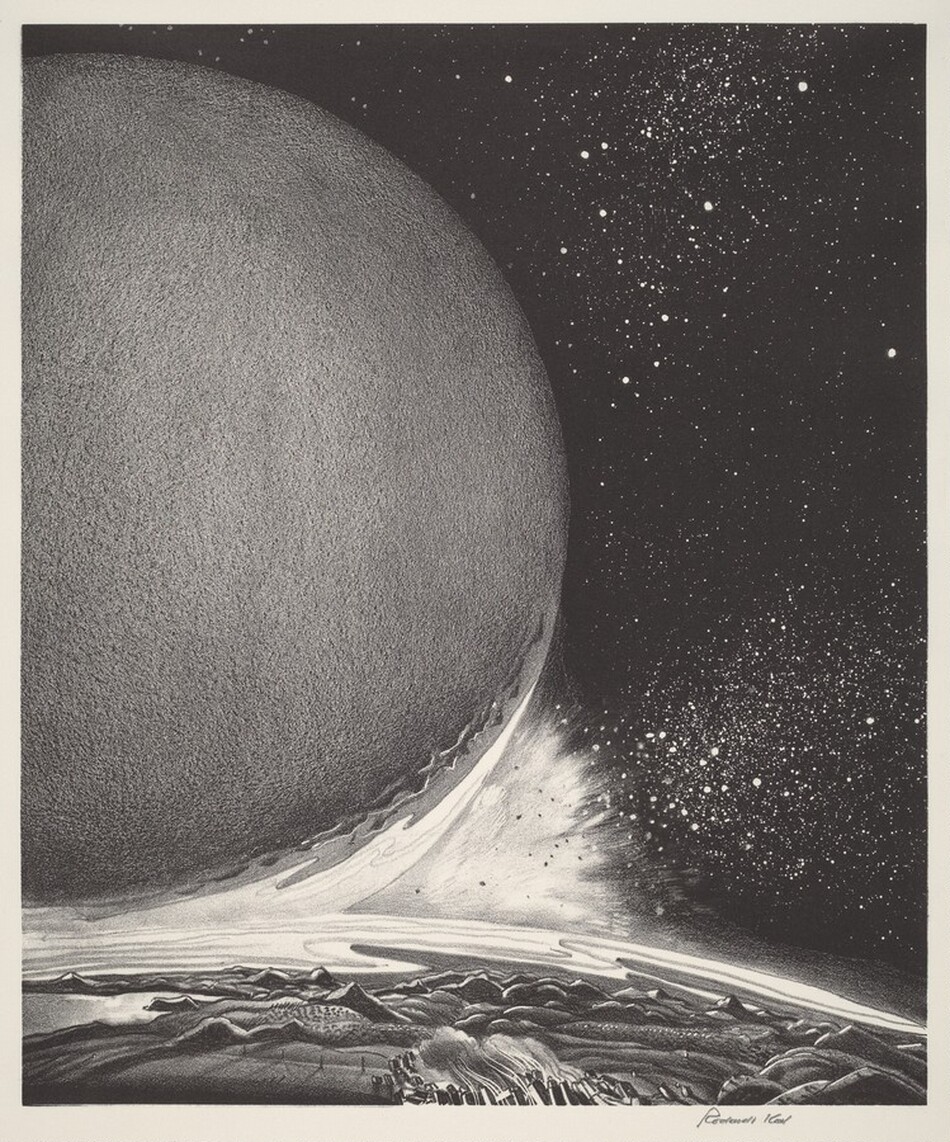
  • The image depicts a cosmic scene with a curved horizon, a massive celestial body on the left, and a line of light marking the horizon. The scene features detailed lines and stippling for textures and shades, with a monochromatic color palette emphasizing the vastness of space.
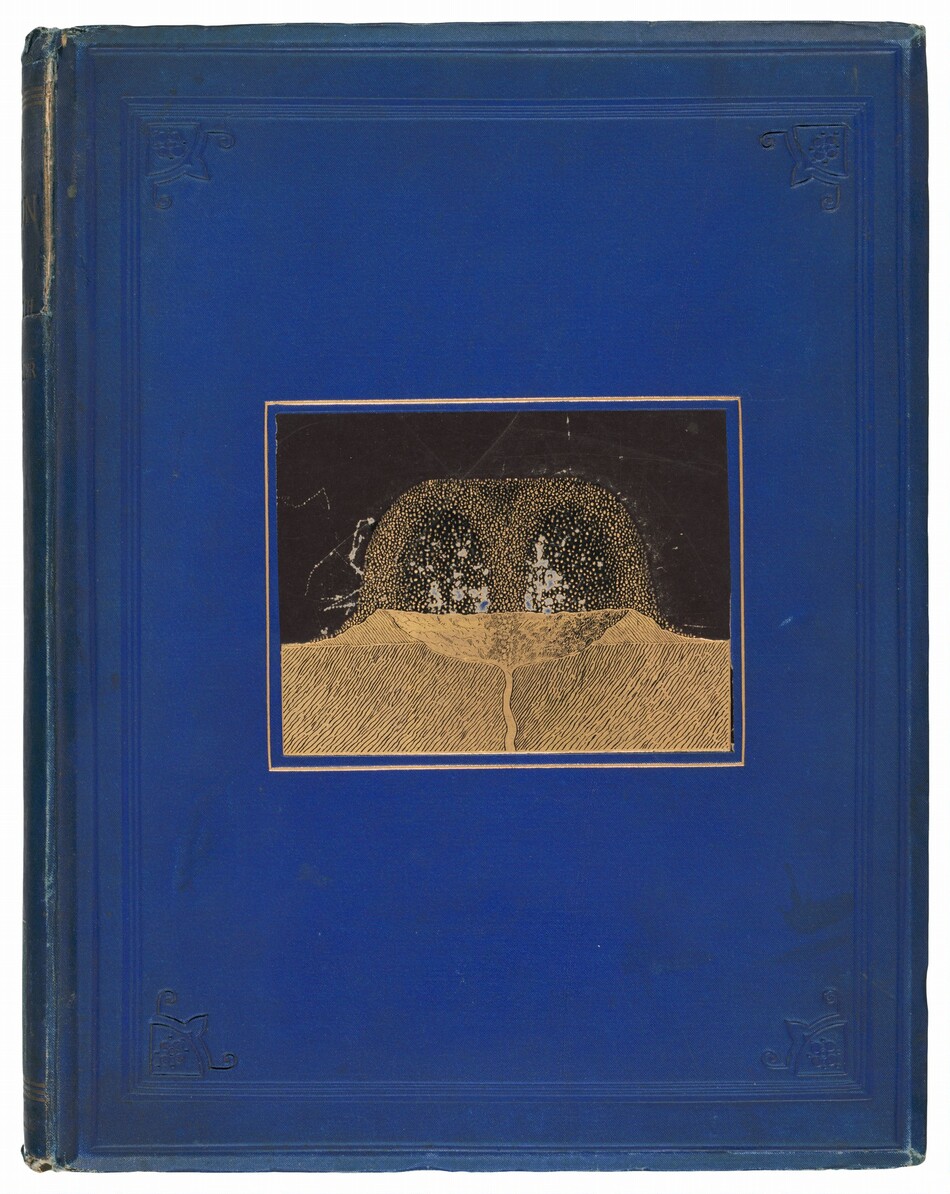
  • This is a photograph of the cover of a blue book featuring an illustration. The book cover is a deep blue color, with embossed decorative elements at each corner. At its center, there is a rectangular inset with a black and gold illustration. The illustration appears to be a mound or a hill composed of intricate patterns and stippling against a dark background.
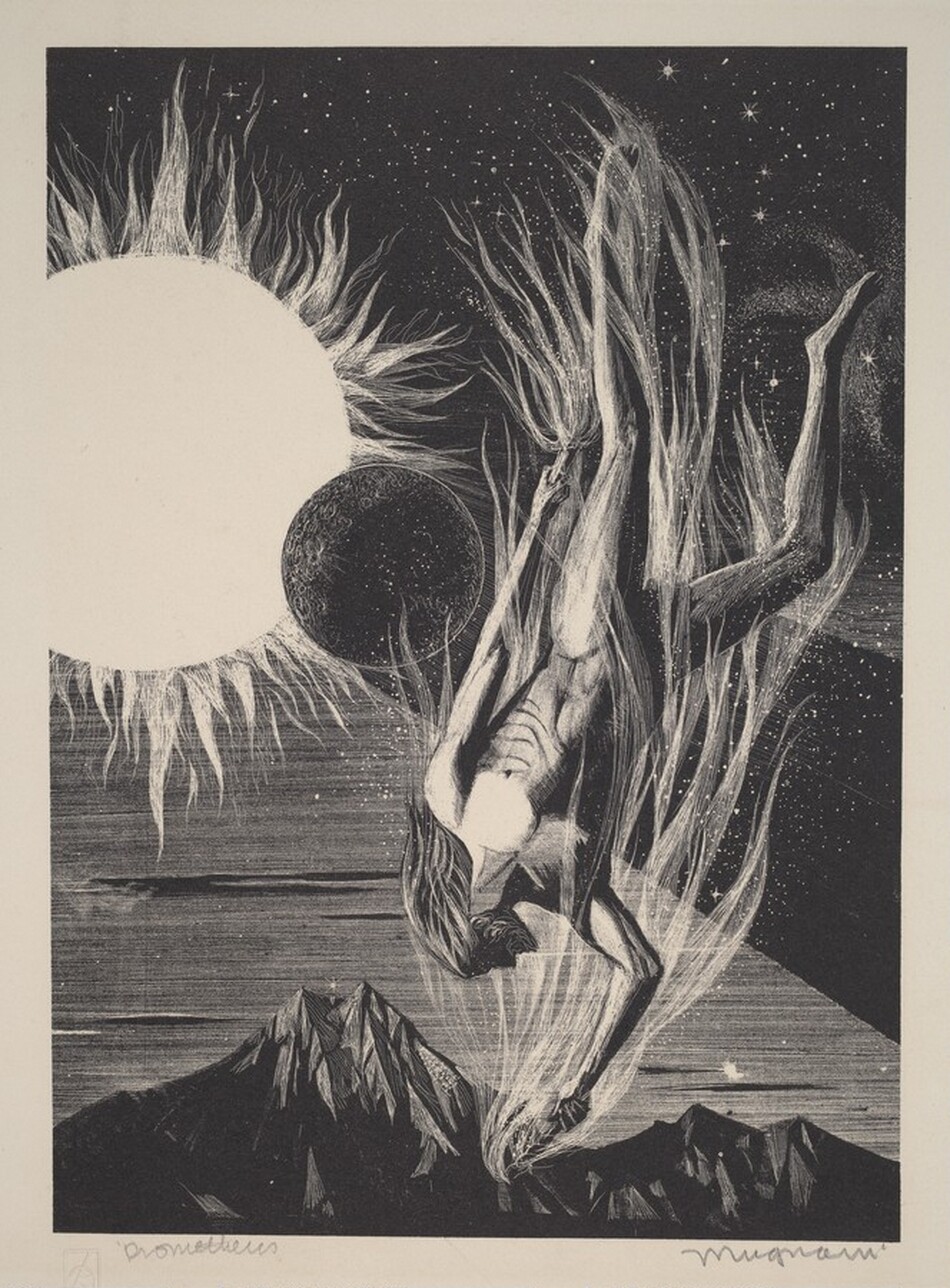
  • The image depicts intertwining lines intersecting with geometric shapes, creating an abstract composition. A human figure in descent with elongated limbs and flowing lines suggests movement. The scene includes a celestial landscape with a large radiant circle resembling a sun, and a smaller dark circle resembling a moon or planet. Pointed peaks in the background evoke distant mountains under a starry sky.
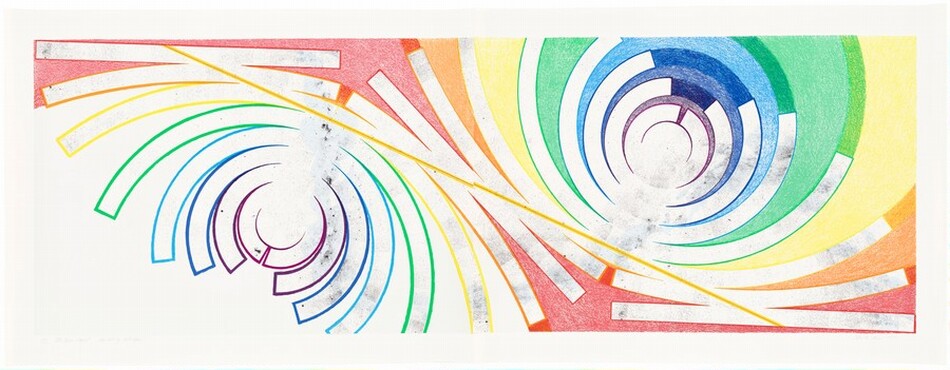
  • The image shows colorful, curved lines and arcs arranged in a spiraling pattern. The lines are vibrant and overlap, creating a sense of movement and depth. Colors like blue, green, yellow, and red are present in the design.
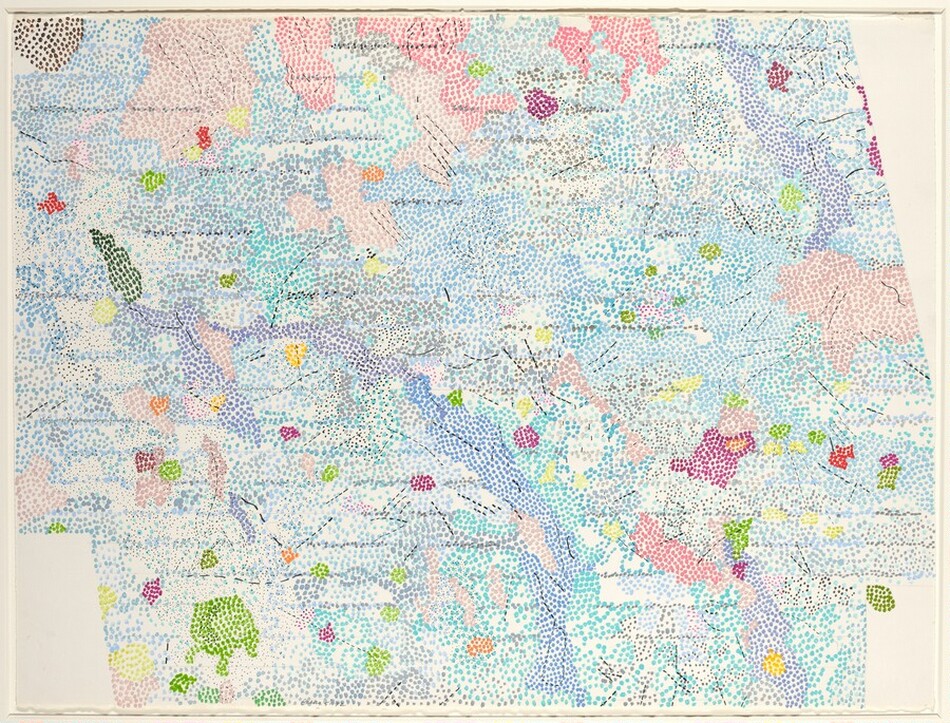
  • The image shows numerous small, circular, and dot-like shapes spread across the canvas, forming a complex network of colors and patterns. The composition resembles a pointillism technique, where the dots blend to create larger areas of color. The dots are in various hues like blues, pinks, greens, and purples. They create irregular shapes that may remind one of natural landscapes or cloud formations, connecting the dots into a cohesive yet fragmented visual scene.
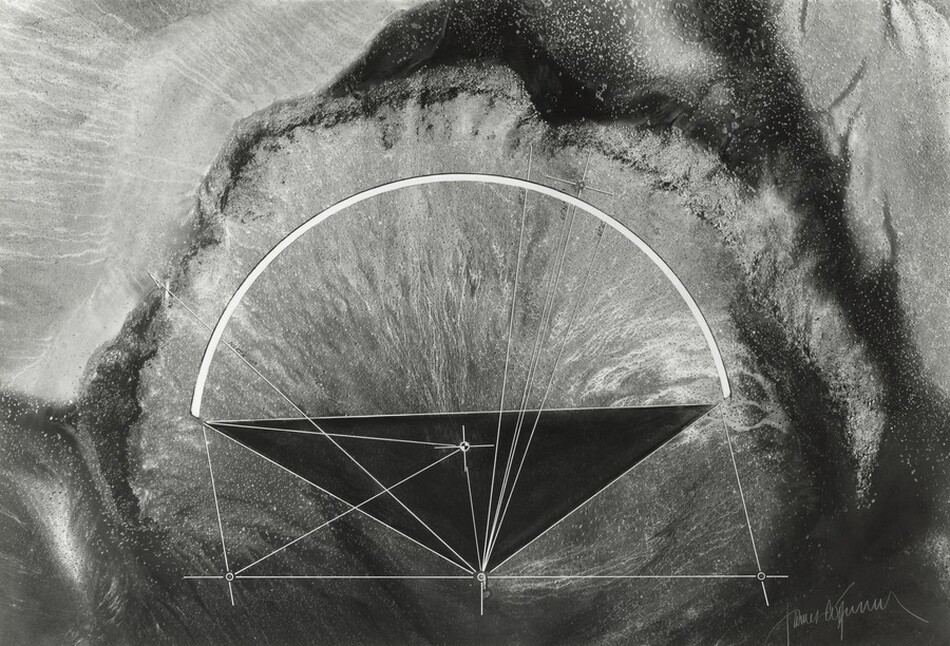
  • The image showcases a combination of geometric shapes and lines arranged in a compelling composition. A prominent semi-circle is placed in the center, with precise lines extending outward from a central point beneath it, creating an abstract design. These elements resemble an artist's compass or drafting tool, possibly overlaying a textured background that hints at a lunar surface or grainy landscape. The semi-circle could be interpreted as a horizon or sunrise within the abstract arrangement of shapes and textures.
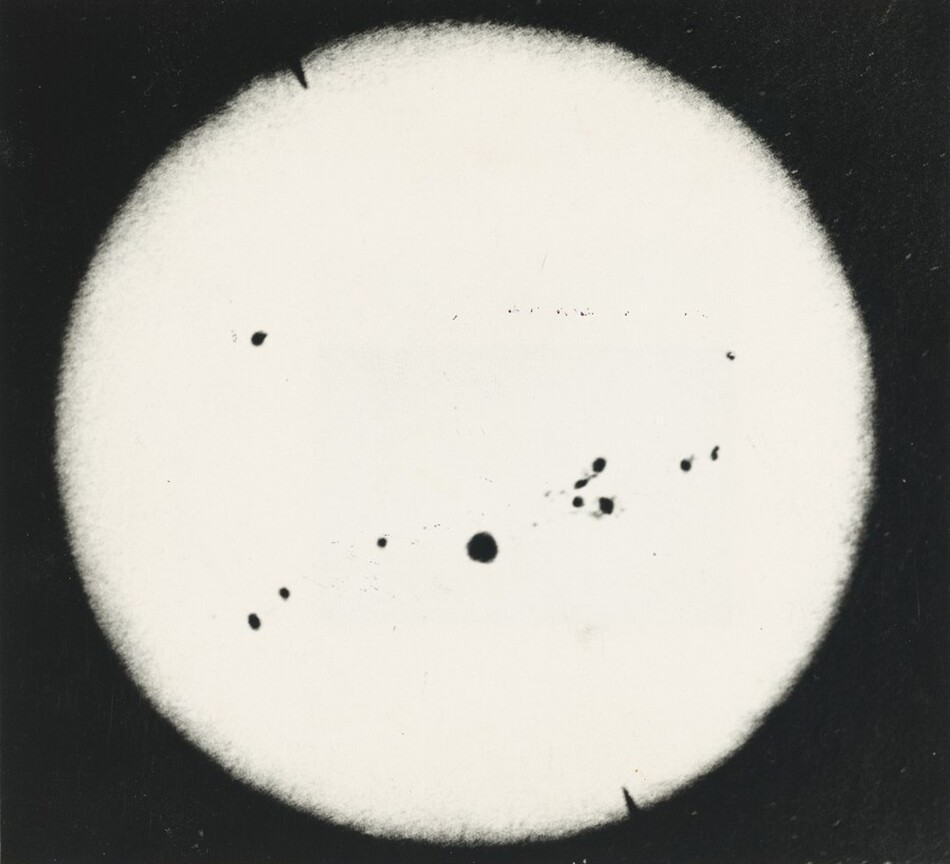
  • The image displays a circular shape in the center, set against a dark background, with black dots of varying sizes scattered across its surface.
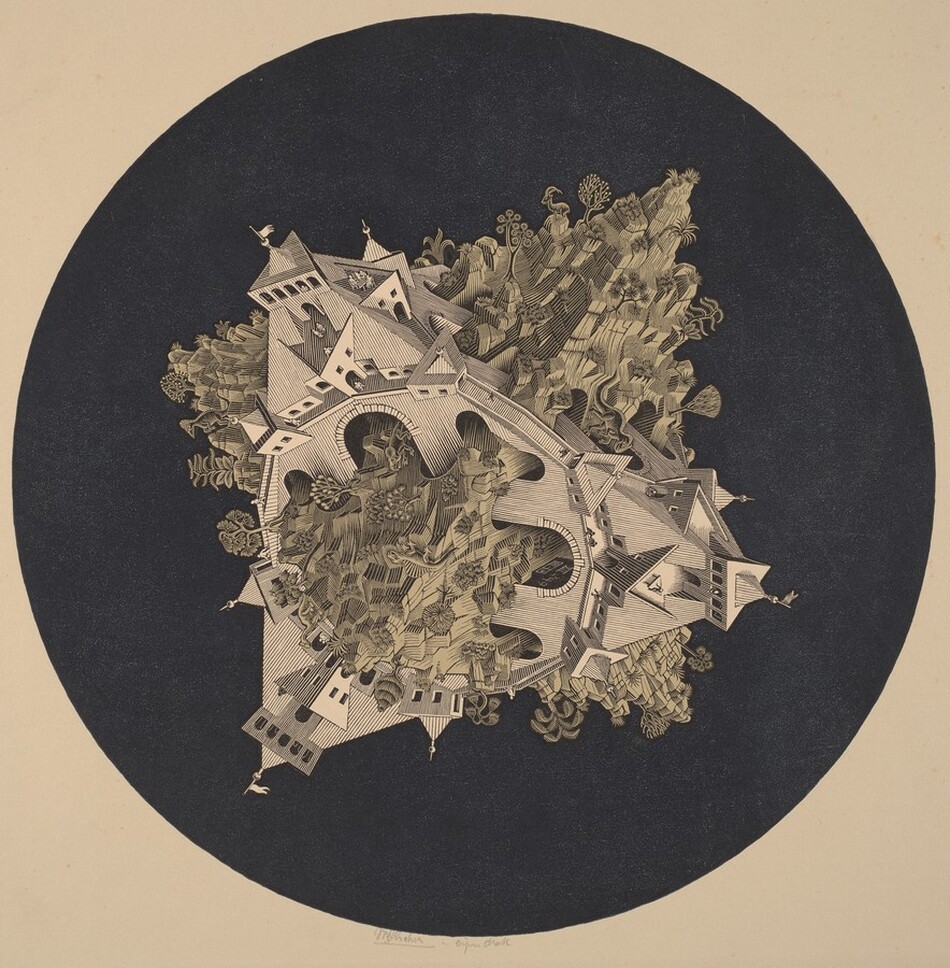
  • The image depicts an abstract arrangement of lines and shapes within a large circle against a dark background. The forms within the circle resemble buildings with pointed rooftops, arches, and small windows, surrounded by patterns resembling foliage and rocky terrain. The overall composition suggests a floating island or dreamlike village where architectural and natural elements are interconnected in a surreal manner.
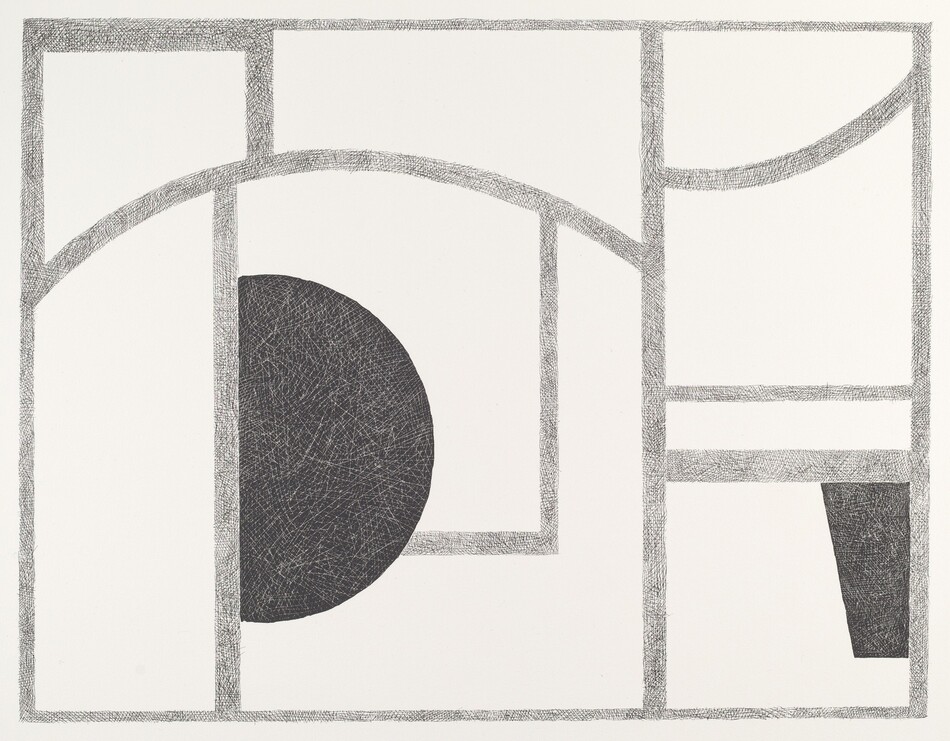
  • The image features an array of geometric shapes and lines intersecting the canvas. A dark circle is in the left center, and an angled trapezoid-like shape is on the right. These elements are enclosed within a grid-like framework, resembling an architectural blueprint or map. The composition's abstract nature suggests connections to windows, walls, and pathways.
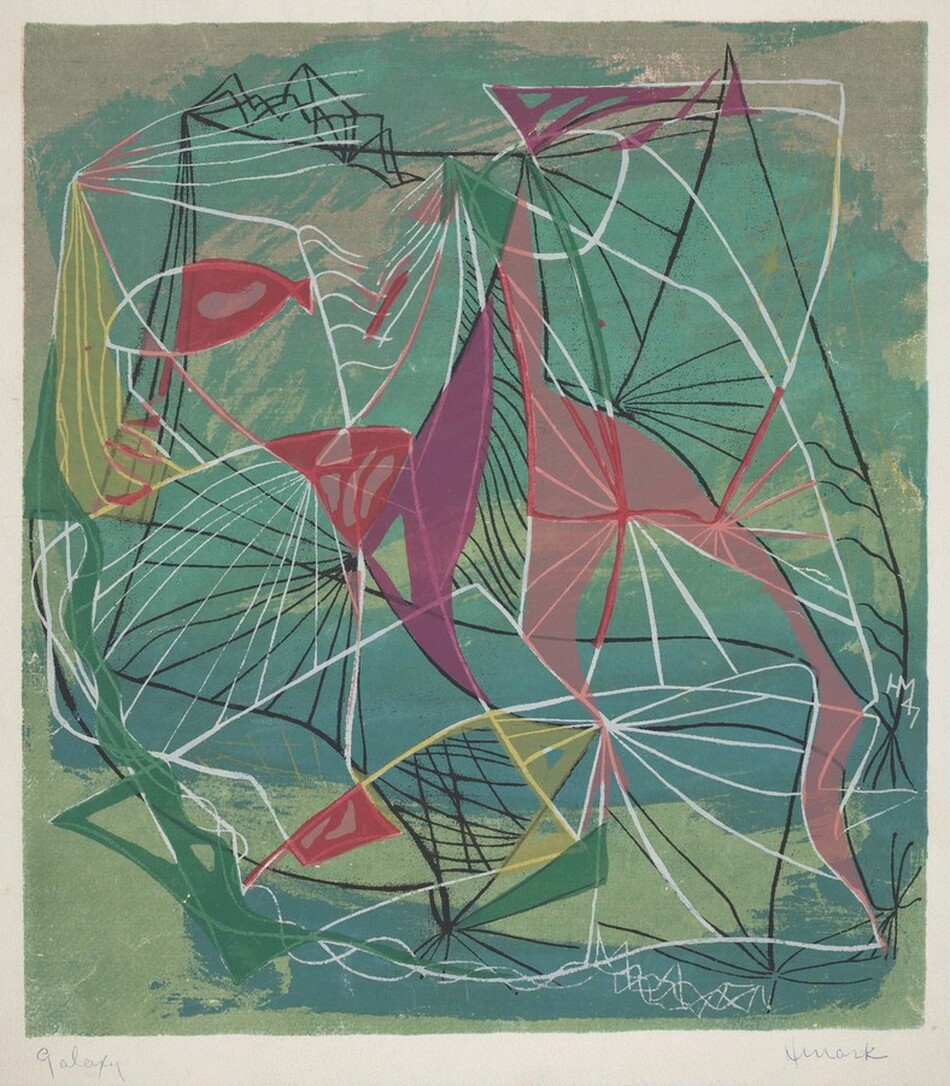
  • The image displays a complex composition of overlapping lines and shapes dominating the canvas. Curved and angular white and black lines crisscross the image to form an intricate network of shapes. Vivid colors like red, purple, and green intersperse within these lines. The background is a blend of green and earthy tones, adding depth to the abstract shapes.

You may also like

A collage of two photos. On the left, Megan O'Cain drafts her concept for her butter dress. On the right, Megan poses a model wearing the butter dress and reclining on a grassy lawn.

Article:  How I Made This: Megan O’Cain’s “Mound of Butter” Fever Dream Ruffle Dress

Open Call finalist Megan O’Cain explains how a 19th-century portrait of butter stopped her in her tracks—and how she spun it into a whimsical maximalist dress. 

Article:  Your Guide to Summer at the National Gallery

Our nine tips for bringing art, music, and joy to your summer.