


Seven Artists Inspired by Jazz

Since its emergence in New Orleans in the late 19th century, jazz music has been a hotbed of inspiration for modern artists. Some artists approached the subject more figuratively, like Leonard Pytlak’s screenprint of Ella Fitzgerald scat singing and Oliver Lee Jackson’s tribute to Julius Hemphill. Others took the music’s rhythmic freedom and improvisational energy and found ways to express that in their own visual language. Explore the fertile connection between visual artists and jazz and listen to our selection of music-artwork pairings.
Piet Mondrian
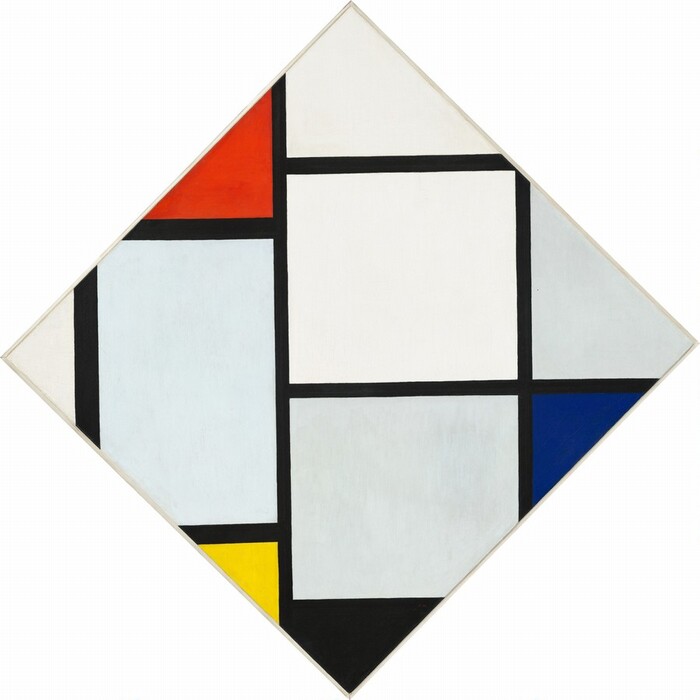

Piet Mondrian, Broadway Boogie-Woogie, 1942–1943, oil on canvas, Gifted anonymously, Museum of Modern Art, New York
The Dutch painter Piet Mondrian’s works are instantly recognizable. His philosophy (which he called neoplasticism) distills form and color into their simplest elements: bright primary colors, black lines, basic geometric shapes.
Originally Mondrian had used straight, black lines to keep colors separate. But when he moved to New York in 1940, he fell in love with boogie-woogie, a rollicking style of piano-based blues where the left hand and right hand create crossing rhythms. The syncopation and polyrhythm of boogie-woogie exploded Mondrian’s vocabulary, spilling over into his art. His black lines are ingested by colored elements.
Compared to the stillness and balance of his earlier works, Broadway Boogie-Woogie vibrates with propulsive energy. The horizontal and vertical lines appear to bounce against each other, like the left and right hands of a pianist playing boogie-woogie.
Listen to: Meade Lux Lewis’ “Honky Tonk Train Blues”
Adger Cowans
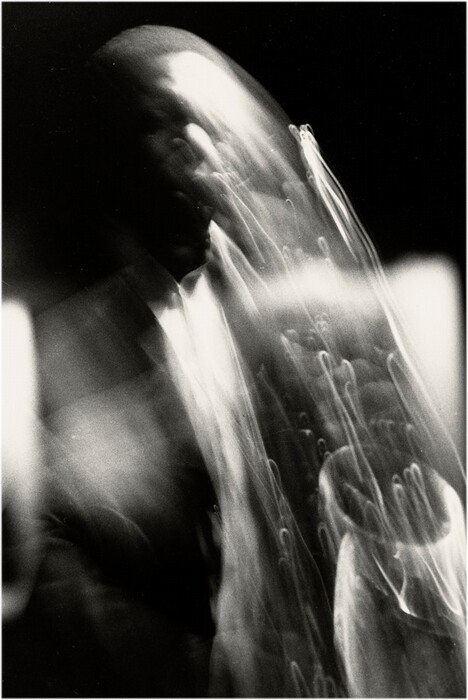
How can a photographer capture a jazz musician in the throes of improvisation? While a snapshot documents a single moment, the experience of music stretches through time.
Adger Cowans set the shutter speed of his camera to be just slow enough, in the dim light of Lower Manhattan’s Village Gate, to expose the bobbing of John Coltrane’s tenor saxophone. Through the river of fragmented light, we feel the dynamism of Coltrane's solo.
Cowans was part of the Kamoinge Workshop, a group of Black photographers in New York City. Fellow Kamoinge members like Ming Smith were inspired by the atmosphere and creative freedom of the jazz clubs.
Listen to: John Coltrane’s “Africa (Live at the Village Gate / 1961) featuring Eric Dolphy
Romare Bearden
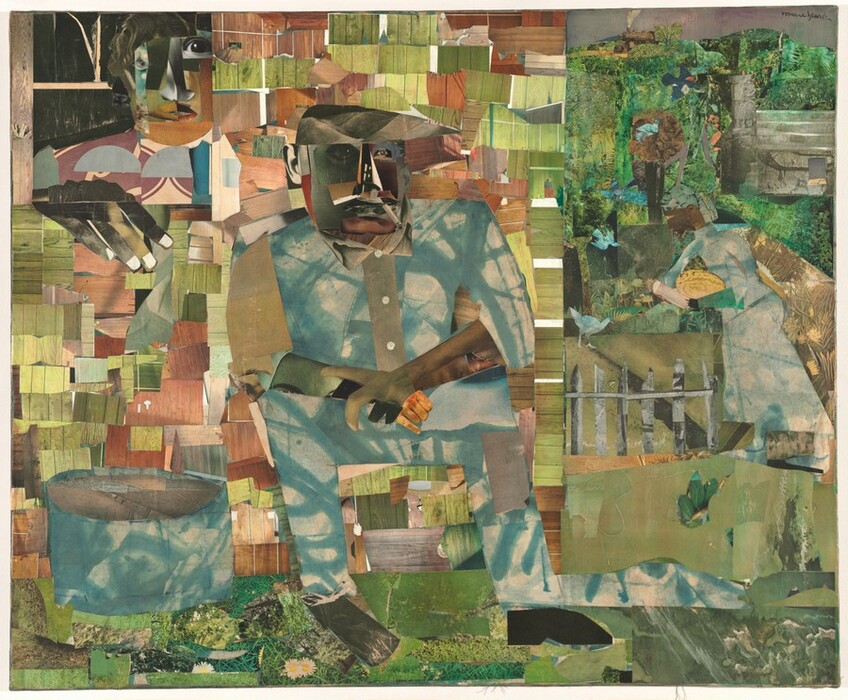
Romare Bearden’s iconic work Tomorrow I May Be Far Away takes its name from the lyrics of Edith Johnson’s 1929 song “Good Chib Blues”: “Aah, tomorrow I may be far away / Oh, tomorrow I may be far away / Don’t try to jive me, sweet talk can’t make me stay.”
Part of the wave of African Americans who ventured north during the Great Migration, Bearden’s parents moved the family from North Carolina, to New York City, when he was just three years old. But he often returned to Charlotte in his childhood to visit relatives.
Just like Johnson’s song, Bearden’s collage meditates on the fracture in time and distance that comes from leaving home. Its shifts in scale, breaks in color and pattern, and disarranged perspectives, rhythm, and repetition play with the grammar of jazz and blues in visual form.
Listen to: Edith Johnson’s “Good Chib Blues”
Mikki Ferrill
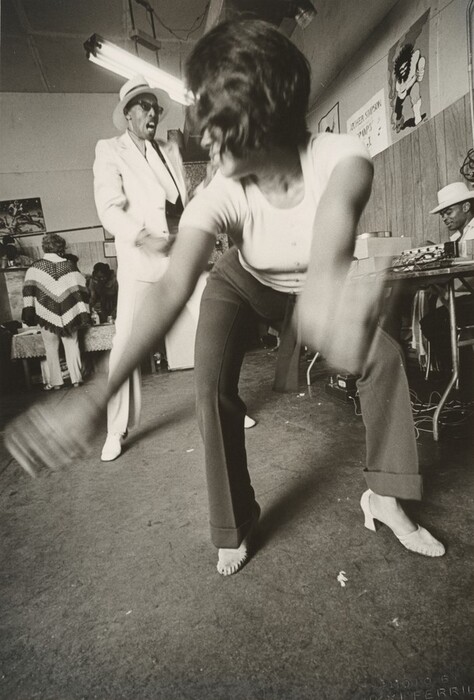
Mikki Ferrill was born in Chicago and apprenticed under fellow South Side photojournalist Ted Williams. At Newport Jazz Festival in Rhode Island, she learned from Williams to hang back from the stage until the musicians were fully warmed up and into the middle of their set. It taught Ferrill that “you won't get an intimate picture unless you mesh with your subject. . . . You don't want to be an outsider looking in.”
After a three-year sojourn in Mexico, Ferrill returned to Chicago in 1970. There, a friend introduced her to the Garage, a beloved neighborhood pop-up venue in a South Side auto garage where DJs spun jazz records and locals danced. “I used to call it my church, because it was on a Sunday,” she said. “For me it was kind of spiritual, a relief from all the stress of the week.”
Ferrill shot photographs of the Garage community with a Vivitar wide-angle lens that required her to get up close to her subjects; she then made copies for them to take home. In her lively, intimate photos, you can feel their collective release.
Sam Gilliam
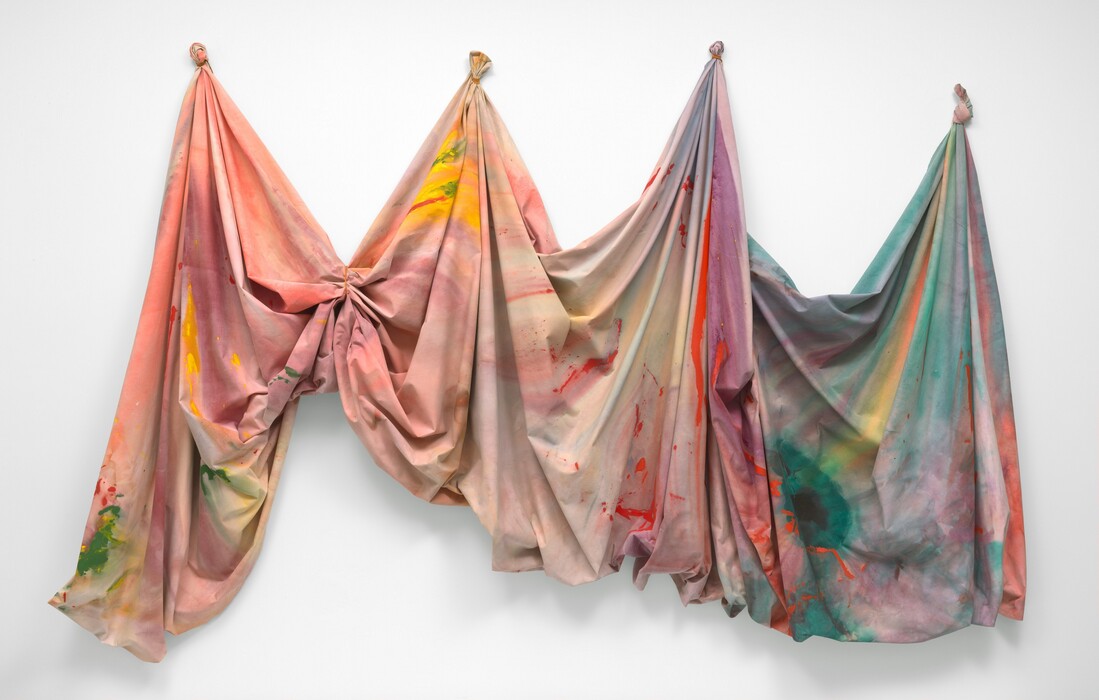
Born in Tupelo, Mississippi, Sam Gilliam moved to Washington, DC, in 1962 and became an avid patron of the city’s jazz venues like Bohemian Caverns.
Gilliam was particularly inspired by John Coltrane’s “sheets of sound”: “[Coltrane] didn’t bother to stop at bars and notes and clefs and various things,” he said. “He just played the whole sheet at once.”
Coltrane's boundary-breaking musicianship finds resonance in Gilliam’s own innovations, the iconic Drape Paintings. In the late 1960s, he liberated his large-scale, colorful canvases from their frames. By gathering and folding their cloth and hanging them in room corners and along walls, the paintings were no longer two-dimensional. They took up space like sculptures and created their own environments.
Listen to: John Coltrane, “‘Round Midnight”
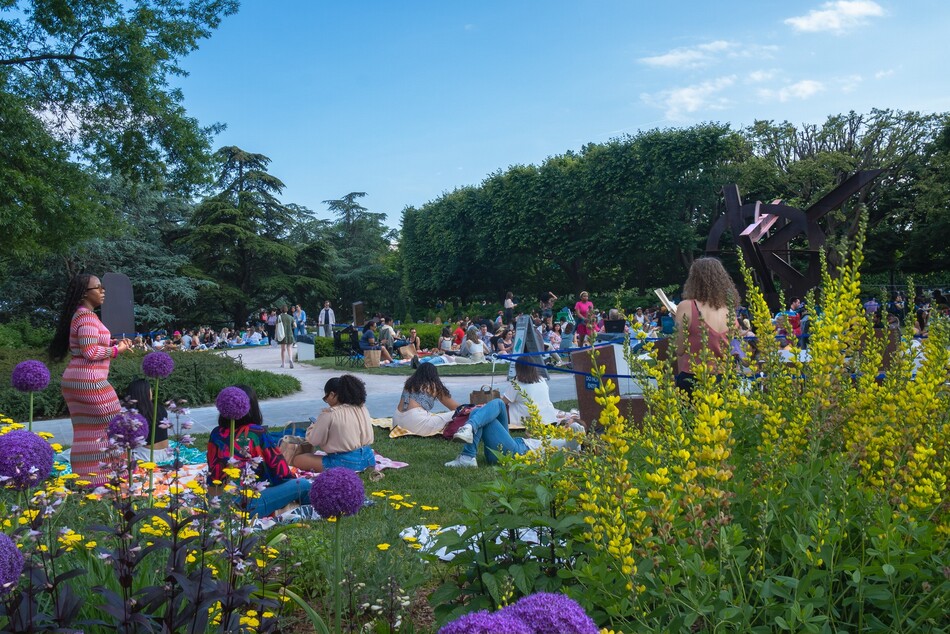
Jazz in the Garden
Enjoy jazz and art together at our beloved outdoor concert series.
Richard Mayhew
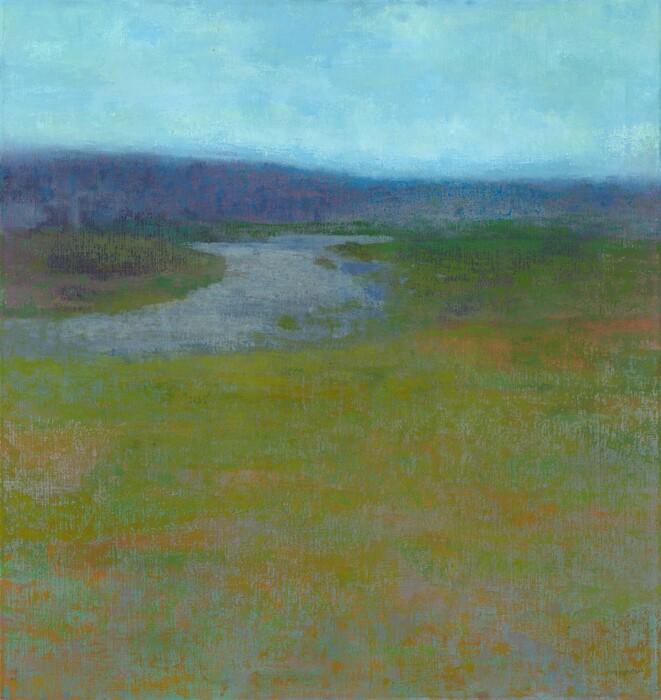
Richard Mayhew is known for the pulsating, abstracted landscapes that he constructed from memory and emotion, dubbed “mindscapes.” Before going to art school, Mayhew dabbled in music and sang in local nightclubs with a jazz band. “My art is based on feeling—of music and mood and sensitivity and the audio responses of sound and space,” he once said. “I want the essence of the inner soul to be on the canvas.”
In 1970, Mayhew joined the Henry Street Settlement, a center for visual and performing arts in New York, where he would present his paintings as a slideshow lecture. While sketching a group of dancers rehearsing there, he was struck by how the rhythms of their movements echoed the rhythm in his paintings.
Inspired, he invited the dancers and jazz musicians in the next room—including Harold Mabern, Larry Ridley, Keno Duke, and Freddie Waits—to perform alongside his slideshow lecture. As he advanced the slides of his different works, the musicians and dancers would respond and improvise based on the painting’s light, color, and sense of motion. The format was so successful that it inspired several interdisciplinary art programs and performances on the East Coast.
Listen to: Harold Mabern, “Rakin’ and Scrapin’”
Gordon Parks
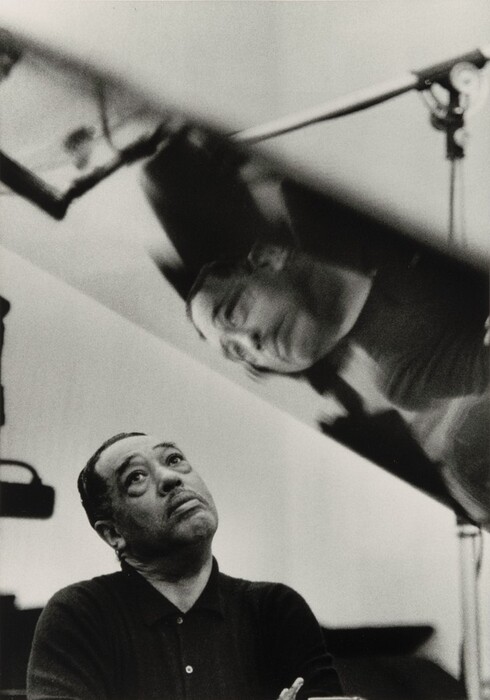
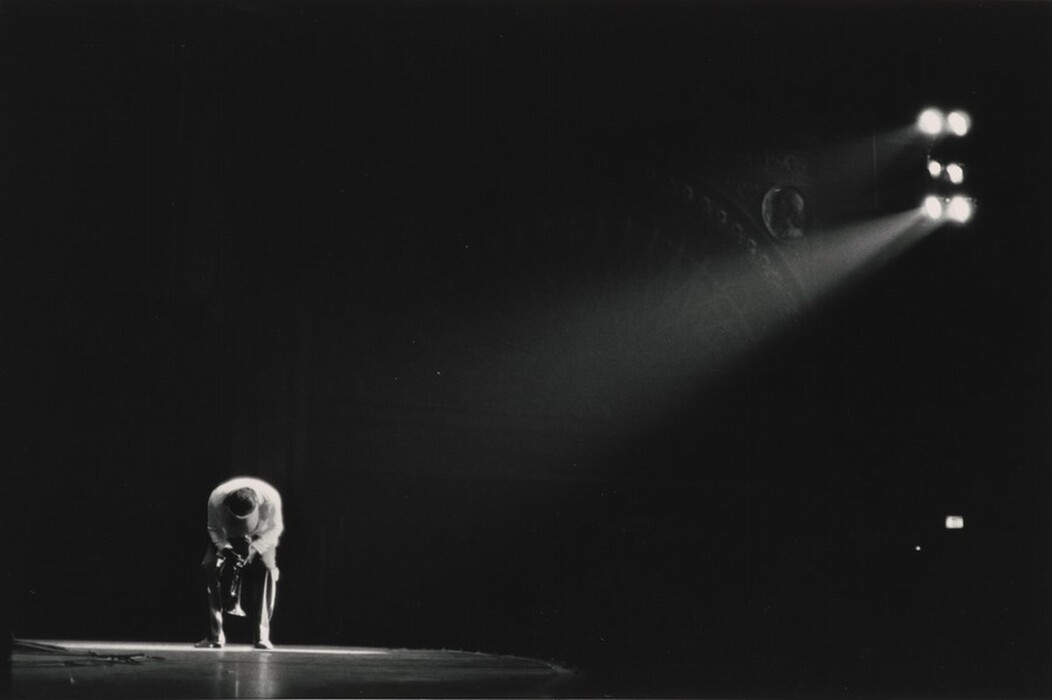
In his high school yearbook, Gordon Parks wrote that he wanted to be “a general or a Jazz Sheik.” Parks would go on to become a renowned photographer known for the force of his documentary images. But he also continued to pursue his music, composing concertos and sonatas for piano and cello and scoring some of his own films.
Parks’s sensitivity to the musician’s craft is evident in his portraits of jazz players. In this portrait, Duke Ellington is reflected poetically in a diagonal slice of his piano's lid as he listens closely to himself in playback.
In 1981, Parks documented Miles Davis’s triumphant return to the stage after a five-year retirement. Despite the massive scale of the Hollywood Bowl amphitheater, the photograph shows a man and his trumpet, aglow in his own world.
Listen to: Miles Davis, “The Man with the Horn”
You may also like

Article: Your Guide to Summer at the National Gallery
Our nine tips for bringing art, music, and joy to your summer.
Article: 12 Documentary Photographers Who Changed the Way We See the World
Photographers of the 1970s revolutionized the medium through innovations of both style and subject.