


Who Is Mark Rothko? 9 Things to Know

Mark Rothko’s art is among the most recognizable of the 20th century. We’ve gathered key facts about the artist to help you understand his life and work.
1. He painted the world as he experienced it.
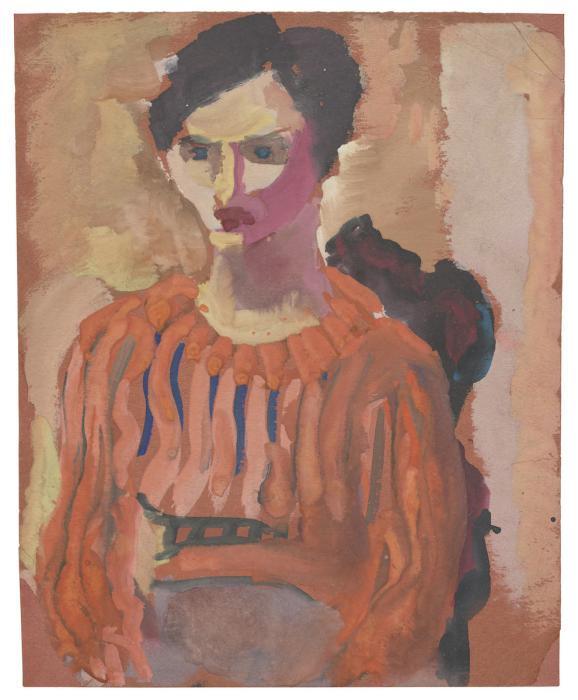
Mark Rothko, Untitled (seated woman in striped blouse), 1933/1934, watercolor on construction paper, National Gallery of Art, Washington, Gift of The Mark Rothko Foundation, Inc., 1986.56.472. © 2023 Kate Rothko Prizel and Christopher Rothko
Today, Rothko is famous for his abstract paintings. But as a young artist, he made works on canvas and paper with recognizable imagery: landscapes, city scenes, bathers, and portraits.
Still, these paintings did not perfectly represent reality. By his late 20s, Rothko had developed a subjective approach to art. He admired the work of Paul Cézanne and Henri Matisse, two leading French painters. And Milton Avery, an older American artist, was his mentor. Like them, Rothko painted the world as he experienced it—not exactly as it appeared.
2. His abstract works are about human emotions.
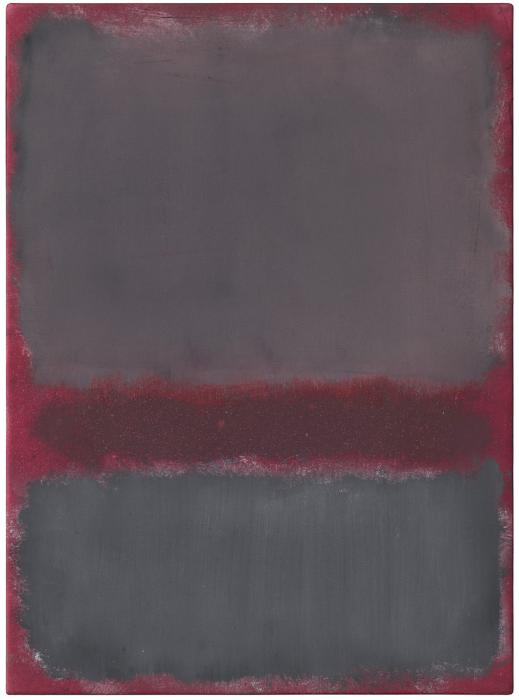
Mark Rothko, Untitled, 1967, oil and watercolor on watercolor paper mounted on hardboard, Gift of The Mark Rothko Foundation, Inc., 1986.43.259. Copyright © 2023 Kate Rothko Prizel and Christopher Rothko
By 1949, Rothko had settled on the format for which he is best known today: soft-edged rectangles arranged vertically against a monochrome (single color) background. Despite this increased emphasis on color and absence of recognizable subjects, he was not only interested in form. Rothko insisted that his abstract paintings (like his earlier figurative works—ones that clearly represented objects or people) were about nothing less than the very nature of human experience:
“I’m interested only in expressing basic human emotions—tragedy, ecstasy, doom and so on, and the fact that lots of people break down and cry when confronted with my pictures shows that I communicate those basic human emotions. . . And if you, as you say, are moved only by their color relationships, then you miss the point!”
3. He was inspired by classical mythology and architecture.
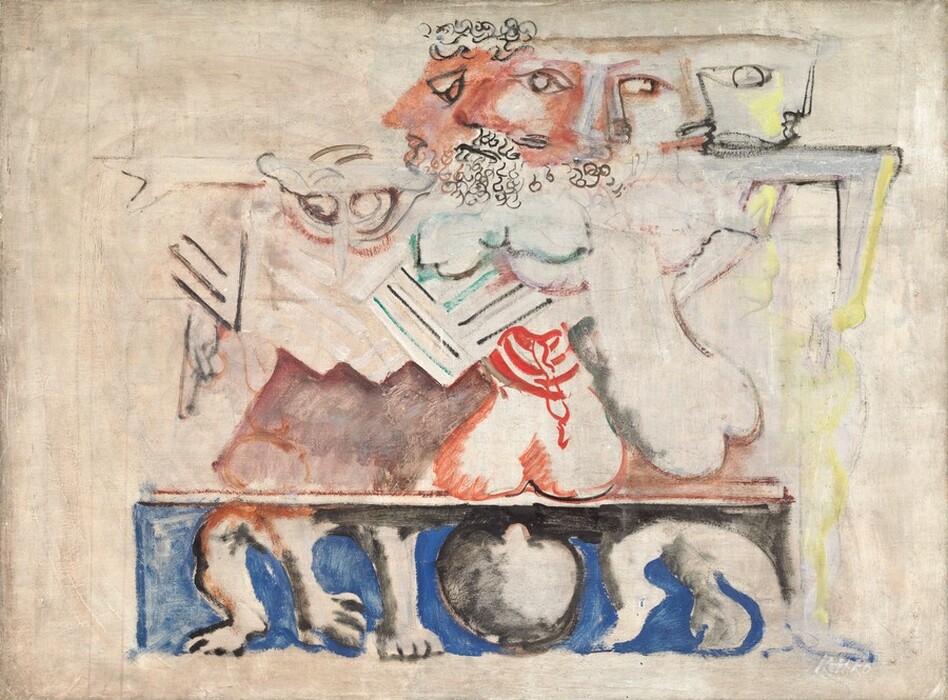
Rothko’s paintings may look modern, but they often reference classical subjects. Some of his paintings from the early 1940s were inspired by mythological figures such as Oedipus, the Greek king of Thebes, and his daughter, Antigone. This “tragic and timeless” subject matter, as Rothko and his friend Adolph Gottlieb described it in a 1943 letter to the New York Times, felt particularly relevant during World War II.
Other paintings from this moment draw on features of ancient art and architecture, which Rothko studied at the Metropolitan Museum of Art in New York. Many years later, when visiting the Doric-style temples at Paestum in Italy, Rothko reflected that he had “been painting Greek temples all [his] life without knowing it.”
4. He changed his name from Markus Rothkowitz.
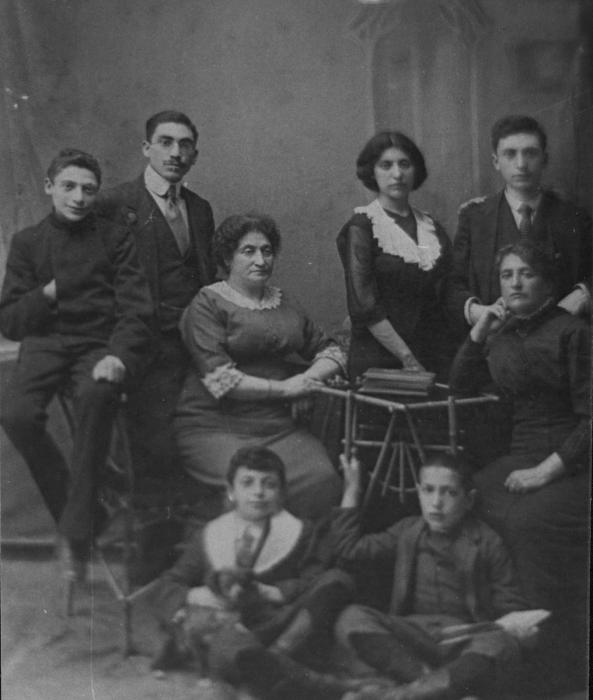
Ten-year-old Markus Rothkowitz (sitting at the bottom right) with his family in Dvinsk, 1913. Directly behind him, on the right, sits his mother, and in the third row, standing, with a white collar, stands his sister Sonia. Copyright © 2023 Kate Rothko Prizel and Christopher Rothko
Rothko started using a shortened version of his name around 1940, not long after he became an American citizen. The artist’s Jewish family had immigrated from Dvinsk, Russia (now Daugavpils, Latvia) shortly before his 10th birthday.
It was common for Jewish immigrants to change their surnames throughout the 1930s, when antisemitism was on the rise in both Europe and America.
5. He taught children’s art classes—and shared materials with his students.
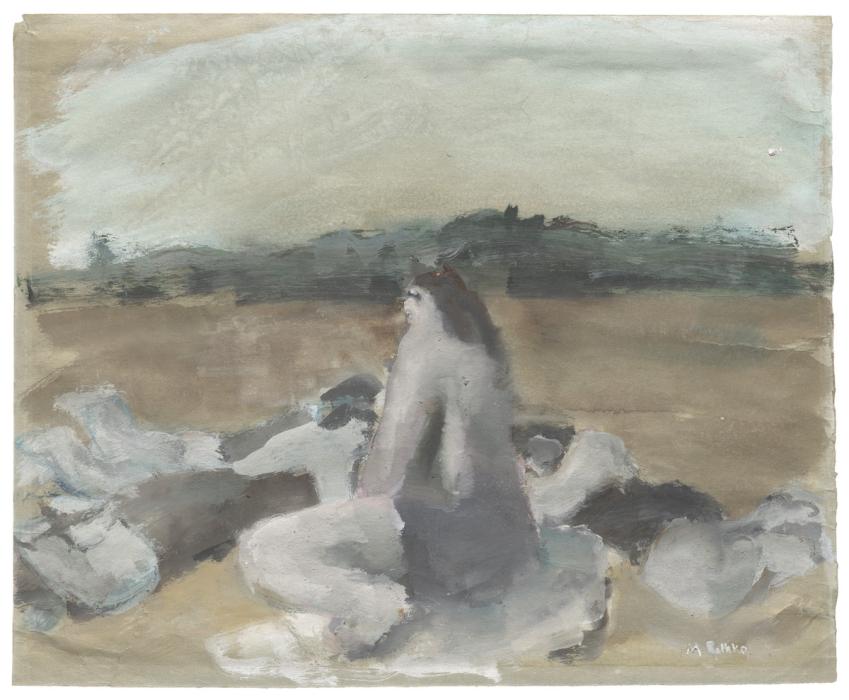
Mark Rothko, The Bathers, 1934, watercolor on construction paper, Gift of The Mark Rothko Foundation, Inc., 1986.43.198. Copyright © 2023 Kate Rothko Prizel and Christopher Rothko
To support himself at the start of his career, Rothko worked part-time jobs. His longest appointment was at the Brooklyn Jewish Center from 1929 to 1946, where he taught twice-weekly art classes for children.
Rothko sometimes used the same materials as his students. He painted one group of watercolors from the 1930s on colored construction paper, a cheap pulp paper normally marketed for children. (You can see several examples in the first gallery of Mark Rothko: Paintings on Paper.)
6. He was particular about how viewers experienced his works.
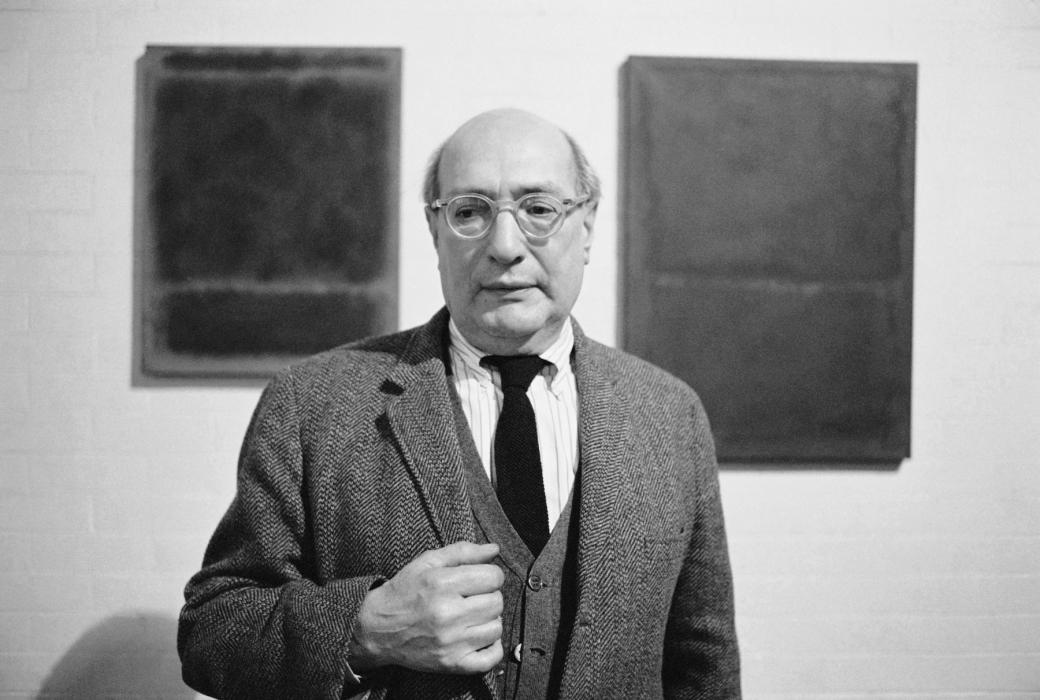
Sedat Pakay, Mark Rothko, 1967. The paintings at left and right are both from 1959. © Sedat Pakay
Works on paper are generally exhibited in frames and behind glass because they are (typically) small and delicate. But Rothko wanted his paintings on paper displayed without either. Instead, he insisted that they be mounted—attached to a secondary support of linen or board and affixed to stretchers or strainers.
These unusual choices lend Rothko’s paintings on paper the appearance and presence of his works on canvas. They also offer viewers a direct, uninterrupted experience. This relationship between artwork and viewer was very important to Rothko. As he said, “A painting is not a picture of an experience; it is an experience.”
7. He was also particular about where viewers experienced his works.
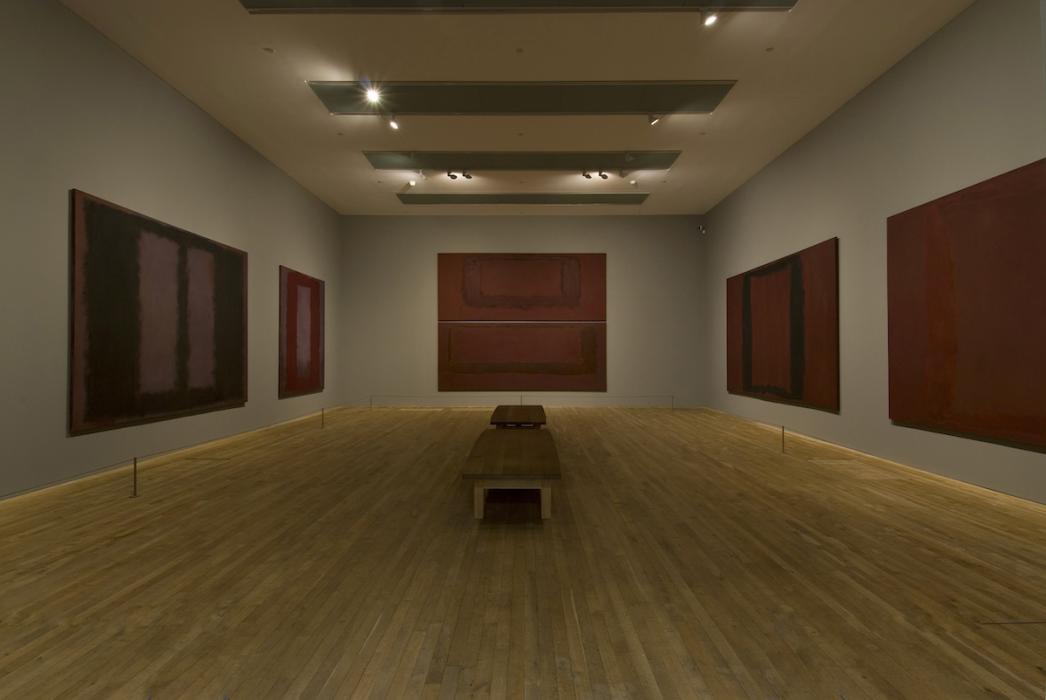
Rothko Room, Tate's Seagram Murals display, Tate Modern, c.2006. Photo: © Tate
Rothko cared deeply about the environment in which his work was displayed. In 1958, he was commissioned to paint a series of large murals for the Four Seasons, an upscale new restaurant in Manhattan’s Seagram Building. He dedicated over a year to the project, making some 30 canvases in a somber palette of dark reds, browns, and blacks.
But after eating a meal at the restaurant, Rothko abandoned the job, refusing the $35,000 commission. He could not stomach the murals serving as mere decoration for a noisy restaurant full of wealthy patrons. “Anybody who will eat that kind of food for those kind of prices will never look at a painting of mine,” Rothko said. He later gave nine paintings from the project to the Tate in London, where they are displayed as he intended, in subdued light in a dedicated space.
8. He received a degree from Yale University—eventually.
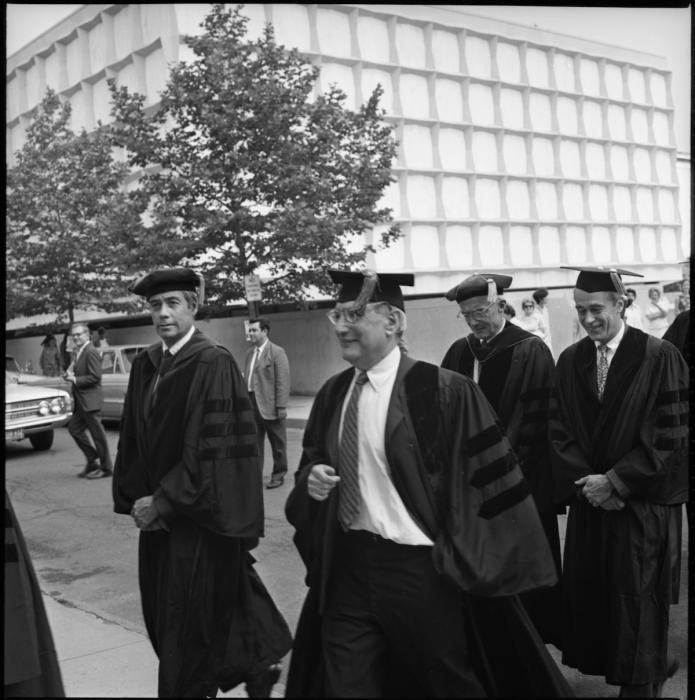
Rothko, in the front right, at commencement in 1969 when he received an honorary doctorate. Yale Events and Activities Photographs (RU 690). Manuscripts and Archives, Yale University Library.
In 1969, at age 65, Rothko received an honorary doctorate from Yale. He had attended the university 46 years earlier, but never graduated.
Rothko enrolled at Yale in 1921. He studied a wide range of subjects including English, French, biology, economics, philosophy, and psychology. He planned to become an attorney or engineer, but campus life proved difficult. As a poor Jewish immigrant among the Protestant upper classes, Rothko was something of an outcast. After Yale converted his tuition scholarship to a loan, he dropped out altogether.
9. He embraced both light and dark.
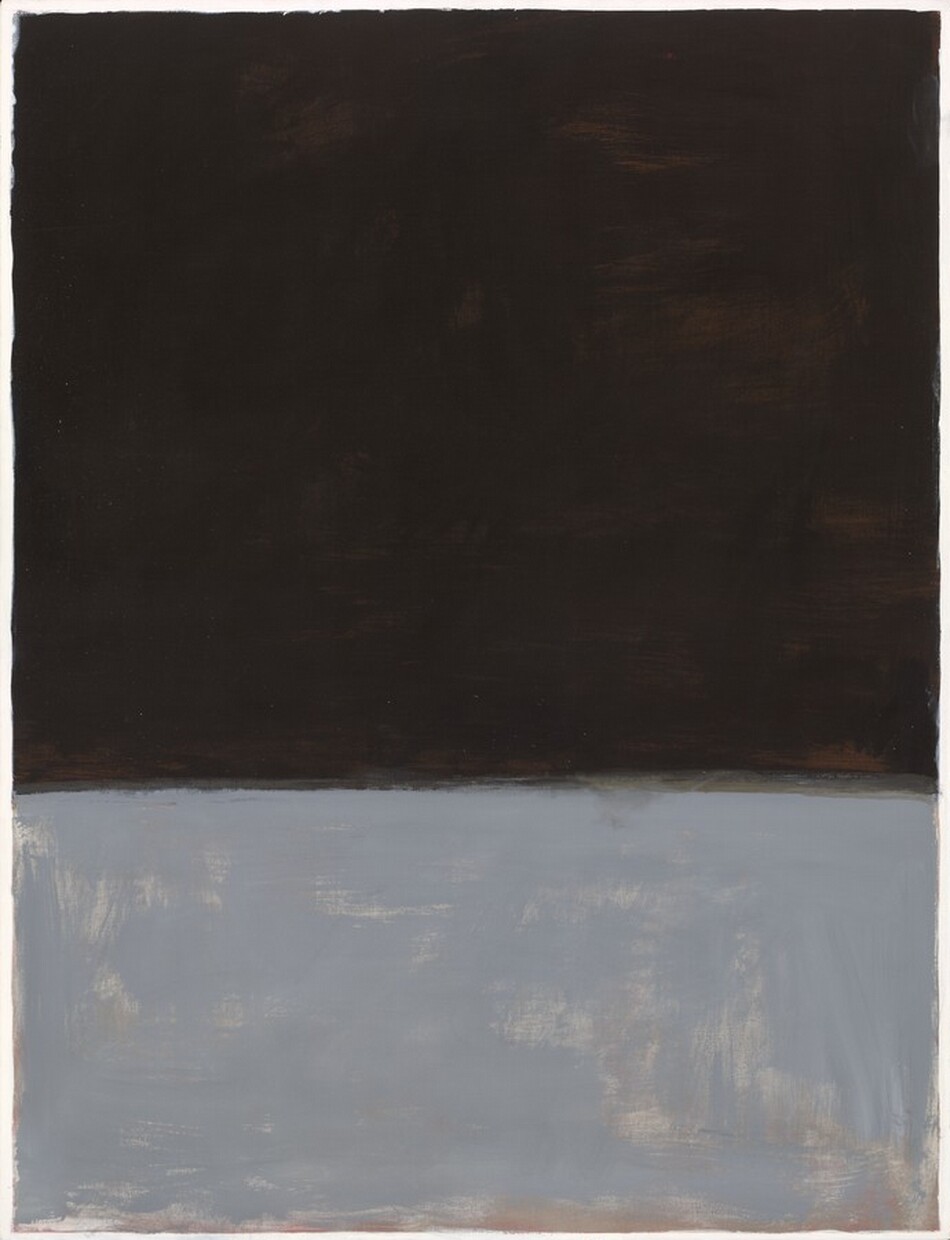
In late 1969, Rothko made two related series of dark paintings, known as the Brown and Grays (on paper) and the Black on Grays (on canvas). Friends and critics saw in these somber works a reflection of Rothko’s fading health: he had suffered a near-fatal aortic aneurysm one year prior. And after Rothko died by suicide in February 1970, the dark paintings became associated with his death. That link has persisted to this day.
But Rothko also produced a suite of large-scale paintings on paper in softer tones during that same time. They were mauve, lavender, pale pink, and light blue. It can be hard to avoid reading an artist’s work as a reflection of their life—especially when that artist was an expressionist like Rothko. But sometimes the work itself tells a more complicated story.

You may also like
Article: George Morrison Gets His Due
The Minnesota painter merged abstract expressionism with traditional Ojibwe values.

Article: Your Tour of Women Artists at the National Gallery
See these 10 works by trailblazing women artists during your next visit.