American and European Sculptures

Filter Results

130 artworks on view.

Results

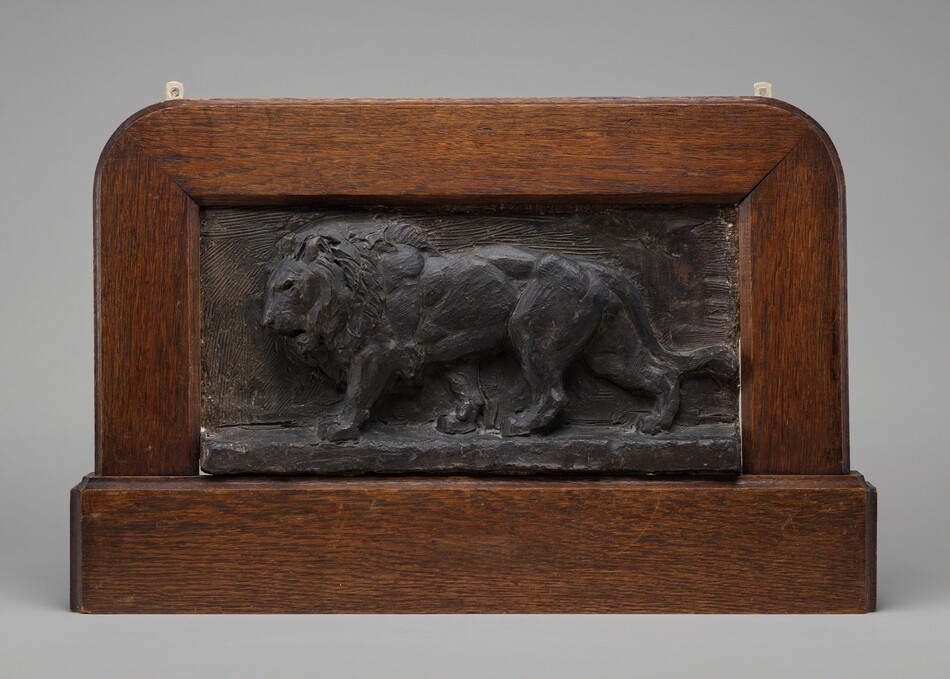
The sculpture depicts a lion in a striding position, showcasing its muscular build and distinctive mane. It is crafted from a dark-colored material, likely bronze, and set within a wooden frame. The artwork is presented as a relief, with the lion seeming to emerge from the surface, creating a sense of depth and dimension.

Lion of the July Column

Antoine-Louis Barye

1836

Tinted terracotta  Accession ID  1984.62.1

On View: West Building Ground Floor, Gallery G8
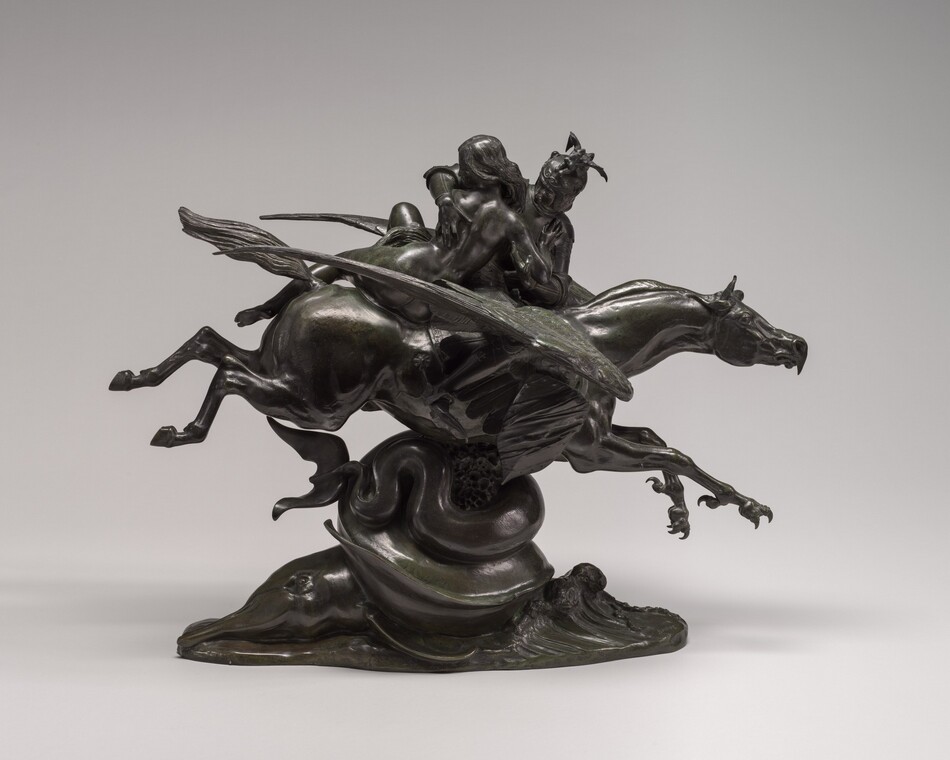
The sculpture shows two figures riding a winged creature. The creature combines horse and bird features, with a horse body, bird wings and talons. The figures are intertwined on the creature's back, indicating movement. The sculpture is made of a dark material, probably bronze. It has intricate details and shows fine craftsmanship. The base has swirling patterns, supporting the figures and creature above.

Roger and Angelica on the Hippogriff

Antoine-Louis Barye

model c. 1840, cast by 1873

Bronze  Accession ID  2014.136.269

On View: West Building Ground Floor, Gallery G8
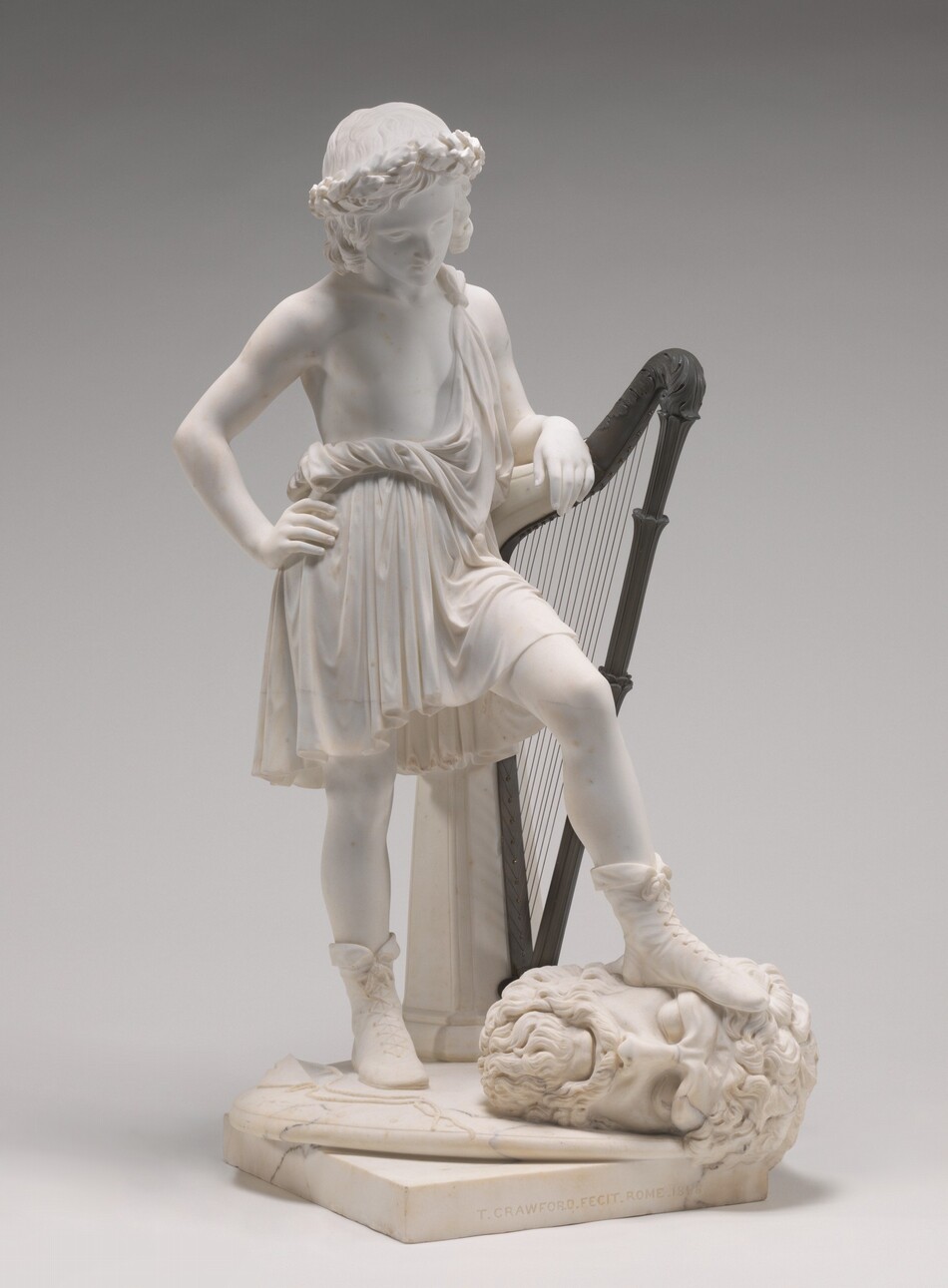
A smooth-skinned boy, David, looks down at a severed head lying at his feet in this free-standing white marble sculpture. David’s body and head are angled slightly to our right in this photograph, and we look directly onto the large face of the severed head, which belonged to Goliath. David’s head is bowed, and he wears a ring of flowers over shoulder-length curls. His right hand, to our left, rests on that hip, and his other elbow is propped on a chest-high, bronze harp. Cloth drapes over David’s far shoulder, though his chest is otherwise bare. The fabric twists around the waist and falls to his knees. High boots are laced up over the ankles. One foot rests squarely on the temple of Goliath’s severed head. Goliath’s heavy brows are deeply furrowed over closed, deep-set eyes. His cheeks are lined, his mouth downturned in a bushy, curly beard. A slingshot lies on the base next to Goliath’s head. They are on a thin, disk-like base atop a thicker square base, all carved from marble. The artist inscribed the front face of the lower base to read, “T. CRAWFORD. FECIT. ROME. 1848.”

David Triumphant

Thomas Crawford

model 1845/1846, carved 1848

Marble and bronze  Accession ID  2008.93.1

On View: West Building Ground Floor, Gallery G9
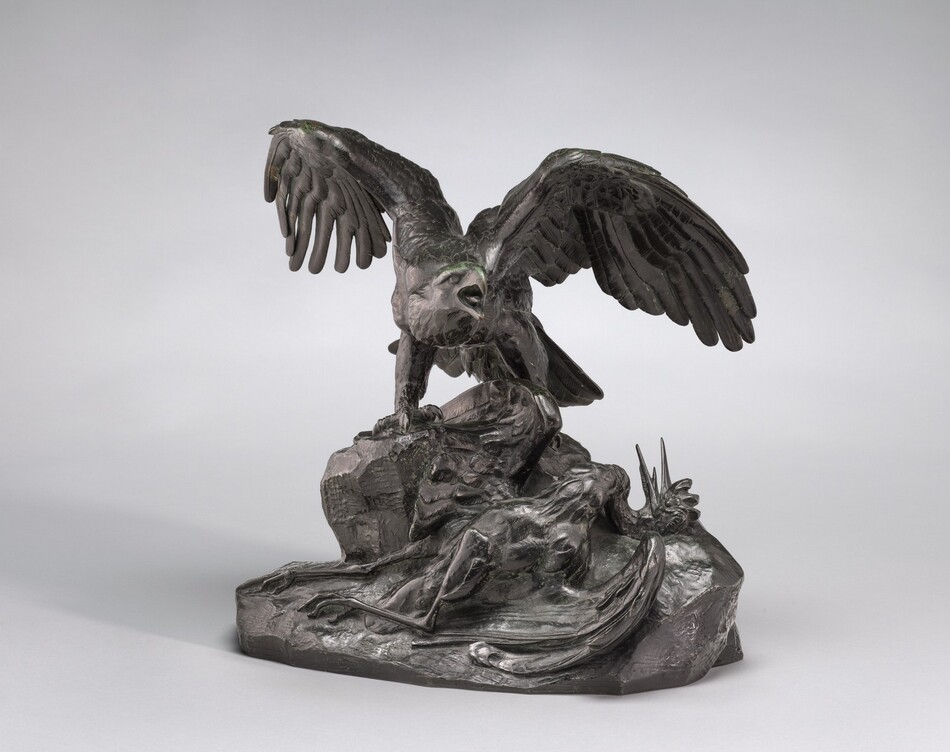
The sculpture features an eagle with its wings spread wide, perched on a rocky outcrop. A goat is seen beneath the eagle. The sculpture is made of bronze with a dark brown color and greenish patinas. The scene appears dynamic and intense, with detailed feathers and rugged textures. It is approximately the size of a small to medium table centerpiece, allowing multiple viewing angles at eye level.

Eagle Holding a Heron

Antoine-Louis Barye

model n.d., cast c. 1857/1873

Bronze  Accession ID  2015.19.3852

On View: West Building Ground Floor, Gallery G21
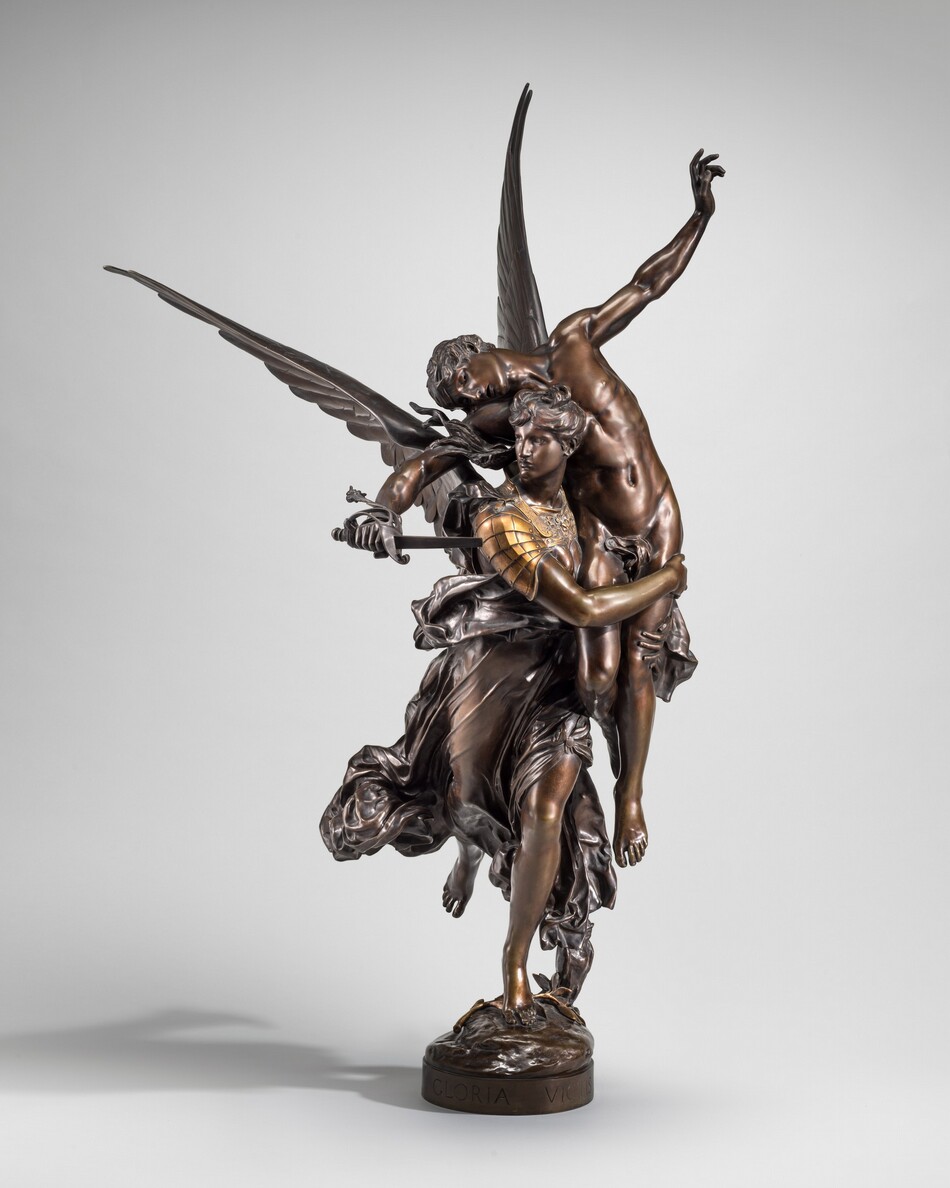
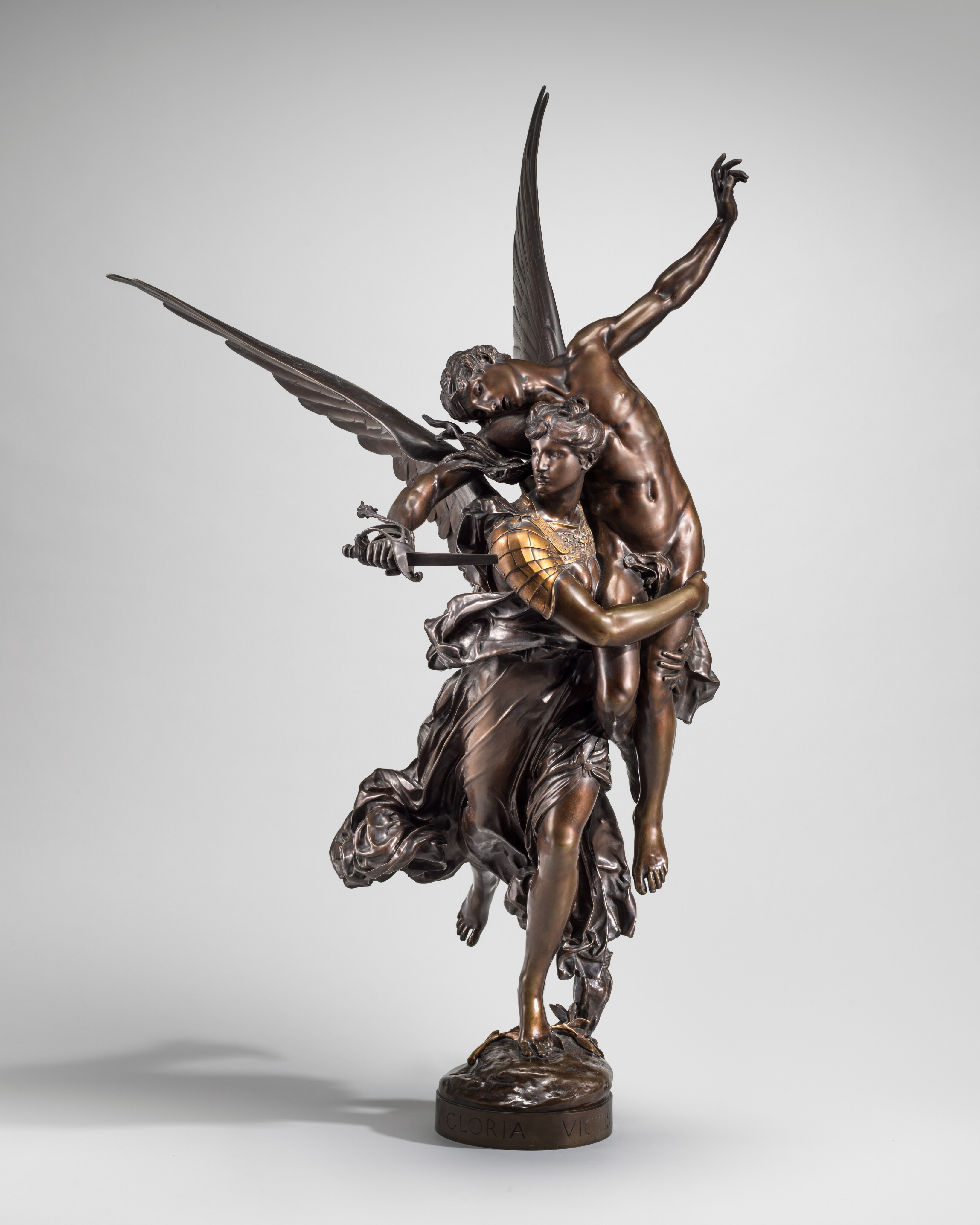
A winged woman has hoisted a young, muscular man up and across one shoulder in this freestanding bronze statue. In this view, the woman runs toward us, her back foot lifted, as she wraps her arms around the man’s thighs. She looks off to our left, her hair swept up. Long, narrow wings slice into the space behind her. Her chest and shoulders are covered with gold armor, and drapery swirls around her legs. The man is nearly nude, covered only with a cloth across his groin. His arms are flung wide, one reaching high in the air and the other holding a broken sword by the woman’s shoulder. His head lolls to one side, his lips parted. A laurel branch lies at the woman’s foot on a small mound textured like a rock. An inscription on the front rim of the base reads “GLORIA VICTIS.”

Gloria Victis

Marius-Jean-Antonin Mercié

model c. 1874, cast after 1879

Bronze  Accession ID  1985.52.1

On View: West Building Ground Floor, Gallery G7
""

At the Print Stand

Honoré Daumier, Anonymous Artist

c. 1860, probably completed by 1914 by another hand

Oil on wood  Accession ID  2014.136.29

On View: West Building Ground Floor, Gallery G8
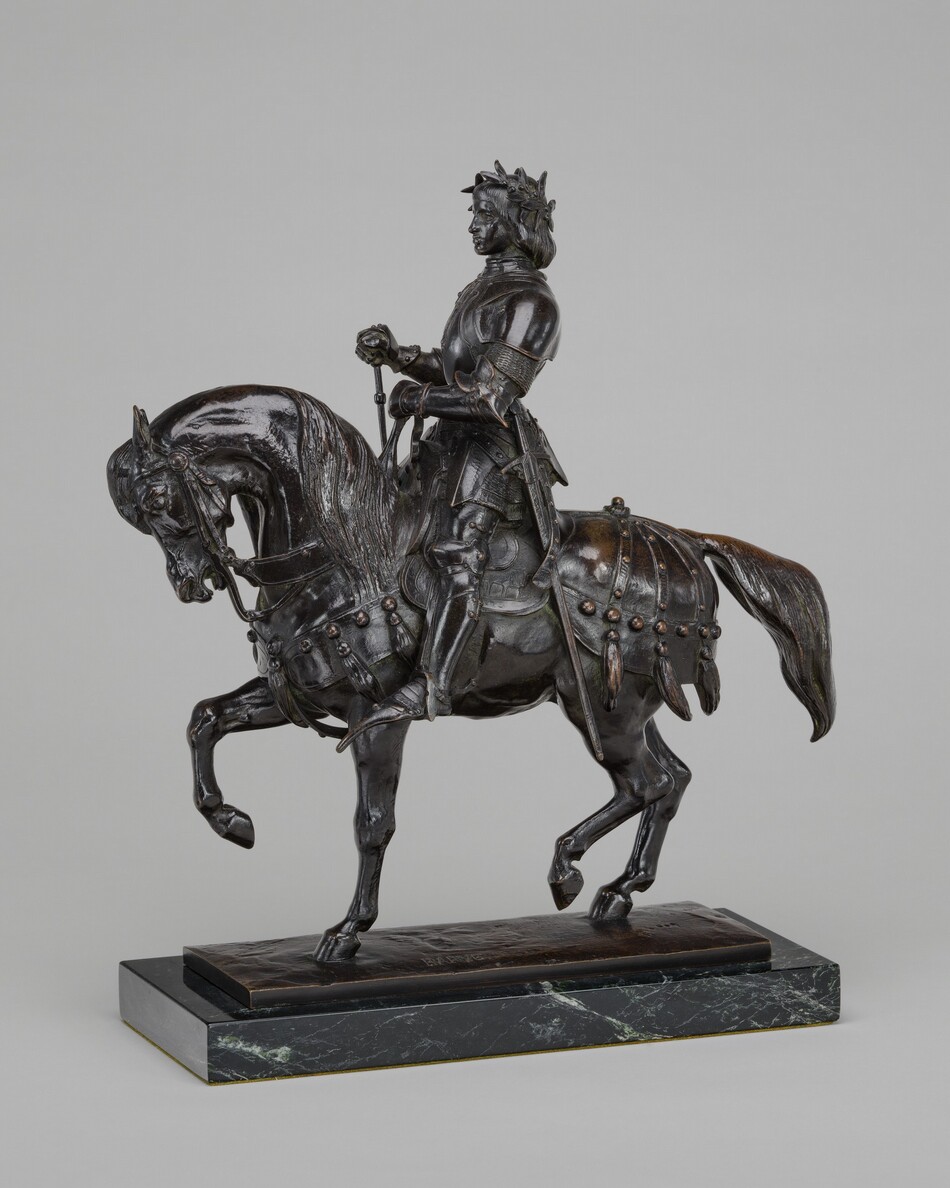
The sculpture depicts a figure wearing ornate armor and a laurel wreath crown, seated atop a horse in a commanding stance. Both the rider and the horse have intricate detailing. The horse's tack is adorned with decorative elements. The sculpture is crafted from dark bronze. It is set upon a rectangular base on a block of dark, polished stone with greenish veining.

Charles VII the Victorious on Horseback

Antoine-Louis Barye

model c. 1844, cast 1860/1909

Bronze  Accession ID  1980.44.1

On View: West Building Ground Floor, Gallery G8
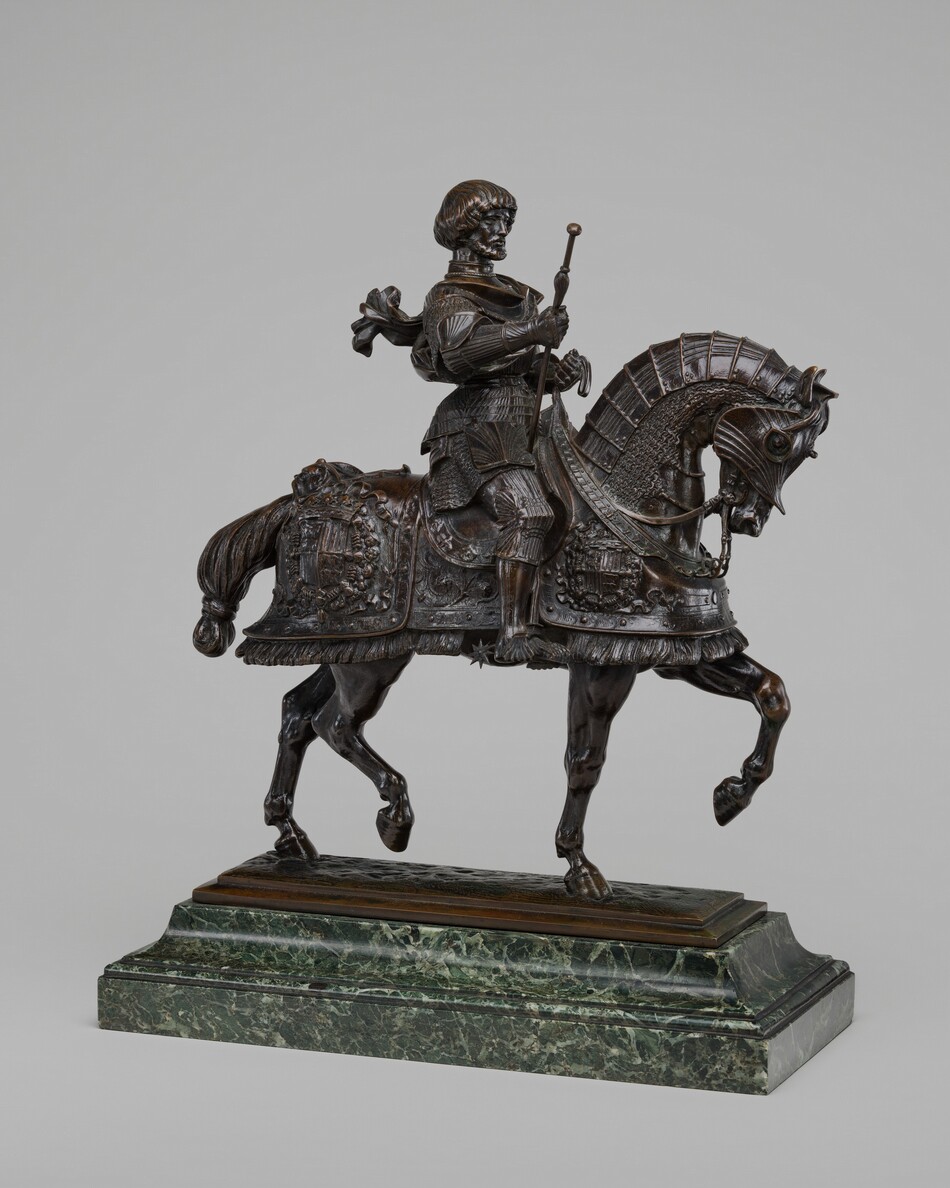
The sculpture portrays an armored horse and rider holding a baton in his right hand. The figure features a medieval style with a plumed helmet and intricate armor, suggesting regality and power. Crafted from dark bronze, the sculpture showcases detailed textures throughout the armor and horse's trappings. The horse is shown in motion, with its front legs lifted. The sculpture stands on a green marble base, creating a polished contrast.

Gaston de Foix on Horseback

Antoine-Louis Barye

model 1839/1840, cast after 1855

Bronze  Accession ID  1980.44.2

On View: West Building Ground Floor, Gallery G8
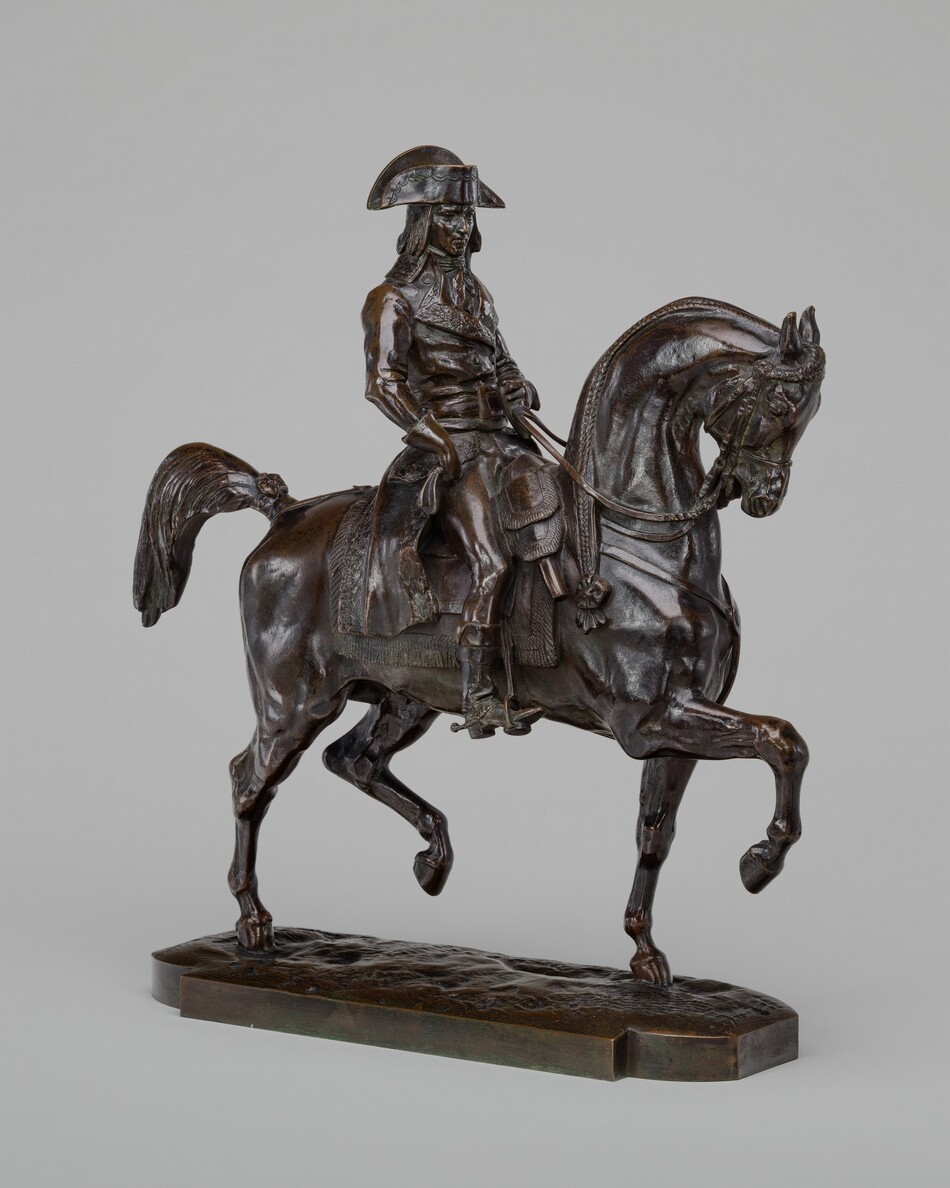
The sculpture depicts a mounted figure, a man in historical military attire, riding a horse. The rider is wearing a distinctive bicorne hat and a military uniform. The sculpture is made from a dark metal, likely bronze. The horse is portrayed in a dynamic pose, with one front leg raised, and its mane and tail are intricately detailed. The sculpture stands on a rectangular base.

General Bonaparte on Horseback

Antoine-Louis Barye

model c. 1838, cast after 1847

Bronze  Accession ID  1980.44.3

On View: West Building Ground Floor, Gallery G8
The sculpture depicts two human figures, one male and one female. The male figure is standing and holding the female figure up with both hands. The female figure is positioned on top of the male, her body leaning forward towards him. The sculpture is rendered in a dark, metallic material with a glossy sheen. The detailed texture captures the anatomy of the figures and drapery wrapped around them, creating a sense of dynamic movement and interaction between the two. The figures are depicted in an intimate pose, with the male looking upwards towards the female, who is gazing down at him with her hands resting on his shoulders. The sculpture presents a lifelike representation of the human form in motion.

The Espousal (The Passage of the Rhine)

Aimé-Jules Dalou

model 1890/1892, cast c. 1907

Bronze  Accession ID  1990.68.2

On View: West Building Ground Floor, Gallery G8
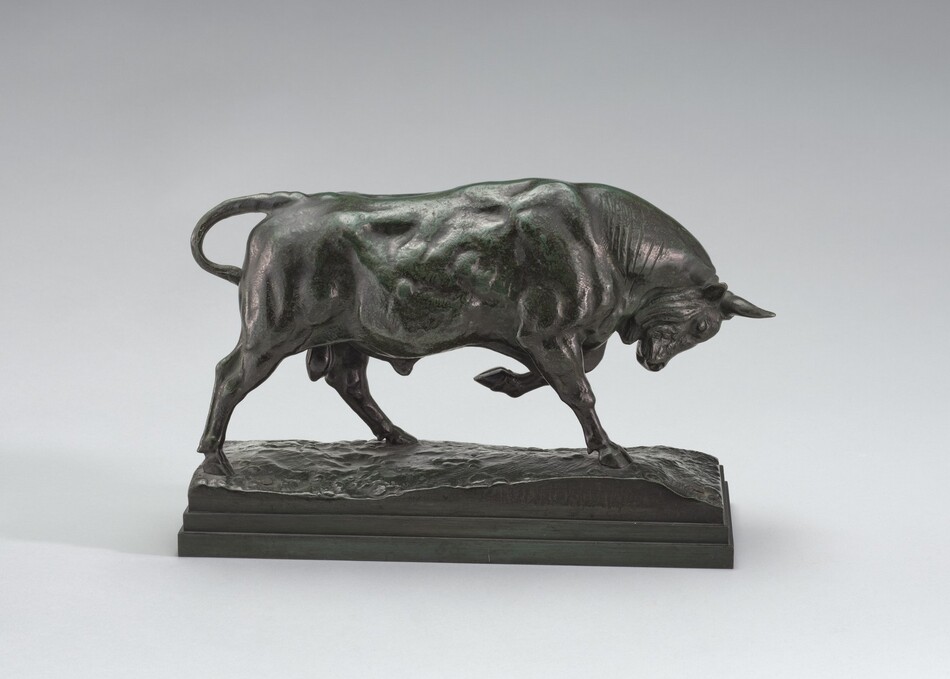
The sculpture depicts a muscular bull with its head lowered and one foreleg raised. The bull appears to be in motion, emphasizing its powerful stance. It is made of dark-colored material, likely bronze, with a rich patina that includes greenish hues from oxidation. The surface is smooth and intricately detailed, highlighting the bull's muscles and form. It stands on a rectangular base that mimics the ground texture. The sculpture showcases the bull's physique and posture, dominating the space.

Bull

Antoine-Louis Barye

model n.d., cast c. 1857/1873

Bronze  Accession ID  2015.19.3849

On View: West Building Ground Floor, Gallery G21
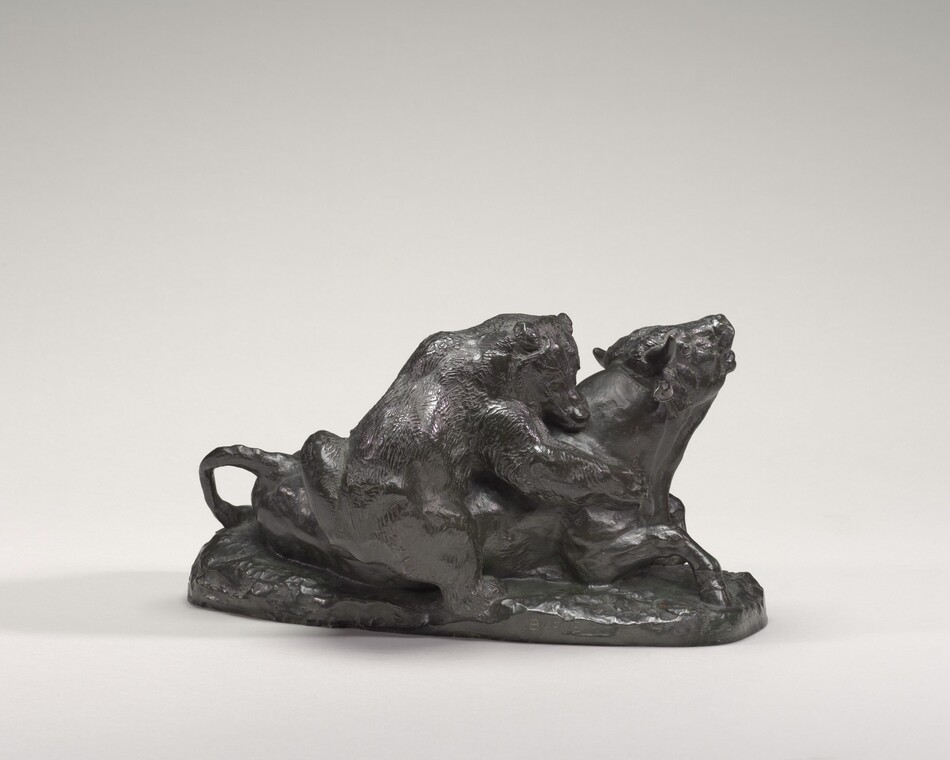
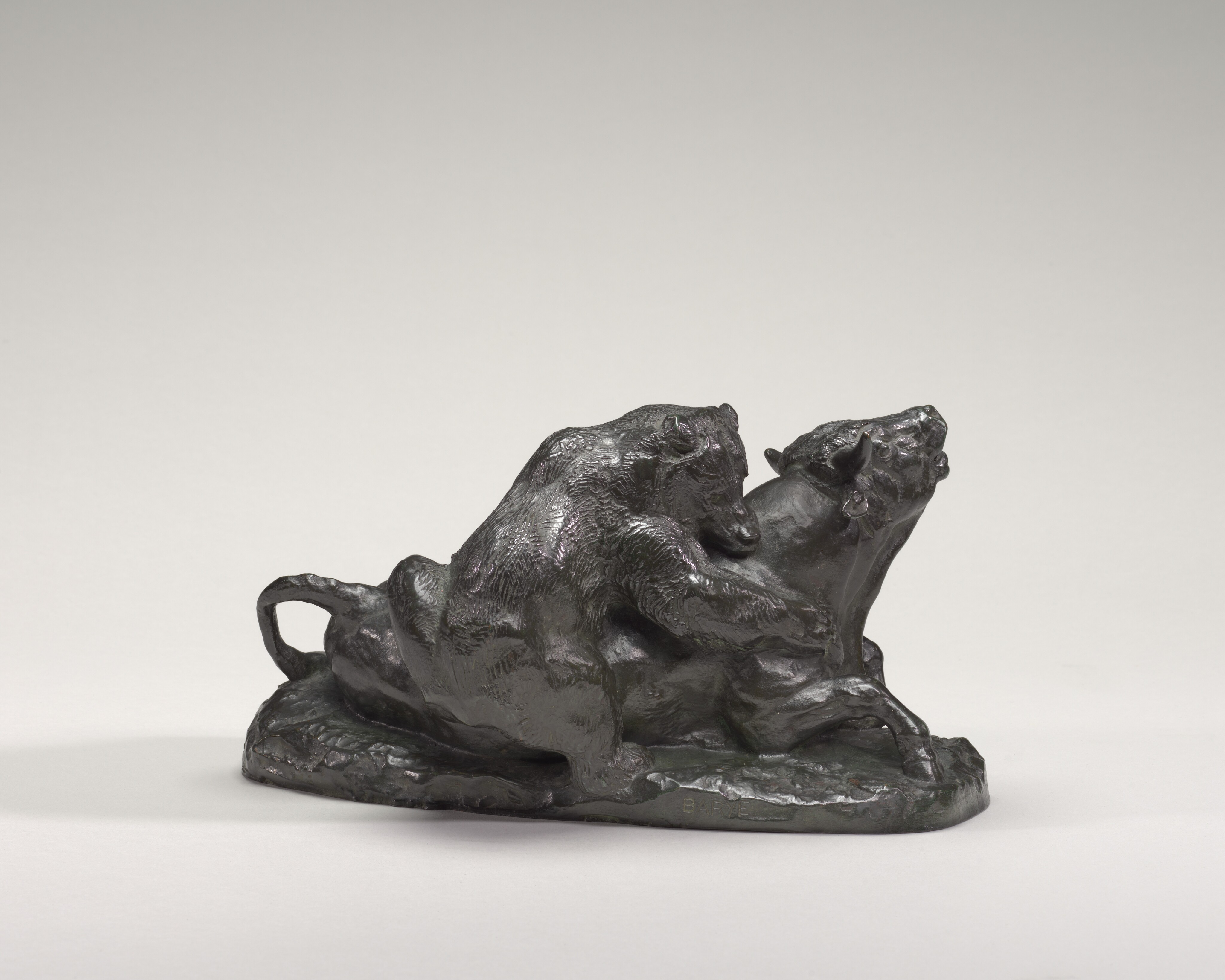
The sculpture features two animals, appearing to be bears, in a dynamic interaction. One bear seems to be riding the other, captured in a poised moment. The sculpture is made of a dark, metallic material, possibly bronze, giving it a sturdy and reflective surface. The material enhances the realism of the fur texture on the bears and adds depth to their forms. The sculpture portrays the muscular build and natural postures of the animals on a textured base, suggesting a natural setting. Overall, the piece is compact yet expressive, frozen in a moment of dynamic movement.

Bull Brought Down by a Bear

Antoine-Louis Barye

model n.d., cast c. 1840/1873

Bronze  Accession ID  2015.19.3851

On View: West Building Ground Floor, Gallery G21

Loading Results