Talks & Conversations

Finding Awe: Helen Frankenthaler’s Mountains and Sea

Helen Frankenthaler, Mountains and Sea, 1952, oil and charcoal on unsized, unprimed canvas, on extended loan to the National Gallery of Art, Washington, D.C.

Use your senses to unlock new meaning in Helen Frankenthaler's abstract painting. Explore the awe found in big ideas and changing perspectives.

During this 90-minute pause from your daily route, we’ll look slowly and mindfully at Helen Frankenthaler’s Mountains and Sea. You’ll be invited to look closely, wonder, and share your insights with the group.  Together, we’ll learn “awe practices” that you can bring to your everyday life.

When the workshop is full, the registration button will stop working. Due to last-minute cancellations, check back on the morning of April 25th to see if tickets are available for the morning or afternoon session. Ages 18 and up. Questions? Email us at [email protected].

"Finding Awe" is grounded in the National Gallery’s mission to welcome all people to explore and experience art, creativity, and our shared humanity. It offers new “awe practices” drawn from the research of Dacher Keltner, professor of psychology at the University of California-Berkeley, director of The Greater Good Science Center, and author of Awe: The New Science of Everyday Wonder and How It Can Transform Your Life (2023). Research shows that experiences of awe help support mental and physical wellbeing and open us up to greater creativity and deeper empathy. Explore awe at the National Gallery of Art.
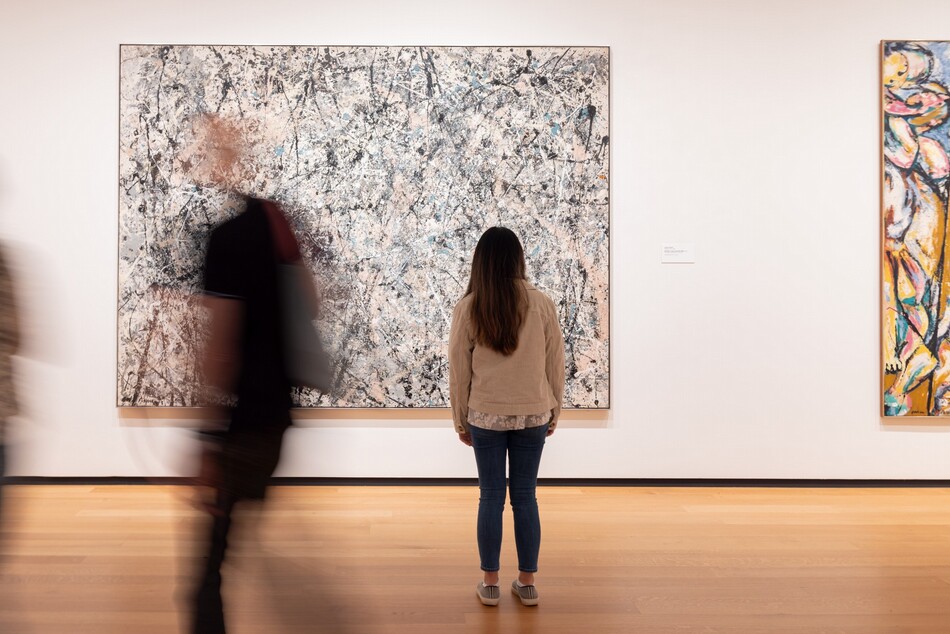
Awe at the National Gallery of Art

Find ways to nurture an awe mindset—both at the museum and at home.

You may also like

An armored man on horseback hands a piece of emerald-green cloth down to the nearly nude man standing next to him in this slightly stylized, vertical painting. Both men have light skin, and they, along with the horse, nearly fill the composition. To our right, the bright white horse stands angled to our right with the front left hoof raised. It has a smoke-gray mane, and wears a black bridle. The man riding the horse has short, copper-blond hair and a long face with a pointed chin. He looks down at the ground with dark eyes under black, arched brows. He has a long, thin nose, and his small lips are closed and framed by the faint suggestion of a mustache. He wears a white ruff pleated into figure-eights over his high-necked armor, which is liberally outlined and decorated with gold against the pewter-colored plates. He grips the voluminous, green cape in one hand and holds a sword in the other, down by the leg we can see. The cleanshaven man next to him, to our left, looks off to our right in profile. He has close-cropped, dark hair and smooth skin. His lips are parted, and he tips his head slightly away from us. He holds the green cloth with the hand closer to the horse and gestures down with his other pointer finger, in front of his hip. A white cloth bandage is wrapped around one shin, and he rests his weight on the other leg. The horse and man stand on a curving spit of brown earth. A spring-green landscape dips down behind them, running low near the bottom edge of the painting. The horizon comes about a quarter of the way up the composition, and fog-gray and white clouds create thin screens across the topaz-blue sky. The loose brushstrokes are visible in some areas, especially in the landscape and clothing. The artist signed his name in Greek near the lower right corner.

Talks & Conversations:  Finding Awe: El Greco’s Saint Martin and the Beggar 

–
Registration Required
An armored man on horseback hands a piece of emerald-green cloth down to the nearly nude man standing next to him in this slightly stylized, vertical painting. Both men have light skin, and they, along with the horse, nearly fill the composition. To our right, the bright white horse stands angled to our right with the front left hoof raised. It has a smoke-gray mane, and wears a black bridle. The man riding the horse has short, copper-blond hair and a long face with a pointed chin. He looks down at the ground with dark eyes under black, arched brows. He has a long, thin nose, and his small lips are closed and framed by the faint suggestion of a mustache. He wears a white ruff pleated into figure-eights over his high-necked armor, which is liberally outlined and decorated with gold against the pewter-colored plates. He grips the voluminous, green cape in one hand and holds a sword in the other, down by the leg we can see. The cleanshaven man next to him, to our left, looks off to our right in profile. He has close-cropped, dark hair and smooth skin. His lips are parted, and he tips his head slightly away from us. He holds the green cloth with the hand closer to the horse and gestures down with his other pointer finger, in front of his hip. A white cloth bandage is wrapped around one shin, and he rests his weight on the other leg. The horse and man stand on a curving spit of brown earth. A spring-green landscape dips down behind them, running low near the bottom edge of the painting. The horizon comes about a quarter of the way up the composition, and fog-gray and white clouds create thin screens across the topaz-blue sky. The loose brushstrokes are visible in some areas, especially in the landscape and clothing. The artist signed his name in Greek near the lower right corner.

Talks & Conversations:  Finding Awe: El Greco’s Saint Martin and the Beggar 

–
Registration Required
An armored man on horseback hands a piece of emerald-green cloth down to the nearly nude man standing next to him in this slightly stylized, vertical painting. Both men have light skin, and they, along with the horse, nearly fill the composition. To our right, the bright white horse stands angled to our right with the front left hoof raised. It has a smoke-gray mane, and wears a black bridle. The man riding the horse has short, copper-blond hair and a long face with a pointed chin. He looks down at the ground with dark eyes under black, arched brows. He has a long, thin nose, and his small lips are closed and framed by the faint suggestion of a mustache. He wears a white ruff pleated into figure-eights over his high-necked armor, which is liberally outlined and decorated with gold against the pewter-colored plates. He grips the voluminous, green cape in one hand and holds a sword in the other, down by the leg we can see. The cleanshaven man next to him, to our left, looks off to our right in profile. He has close-cropped, dark hair and smooth skin. His lips are parted, and he tips his head slightly away from us. He holds the green cloth with the hand closer to the horse and gestures down with his other pointer finger, in front of his hip. A white cloth bandage is wrapped around one shin, and he rests his weight on the other leg. The horse and man stand on a curving spit of brown earth. A spring-green landscape dips down behind them, running low near the bottom edge of the painting. The horizon comes about a quarter of the way up the composition, and fog-gray and white clouds create thin screens across the topaz-blue sky. The loose brushstrokes are visible in some areas, especially in the landscape and clothing. The artist signed his name in Greek near the lower right corner.

Talks & Conversations:  Finding Awe: El Greco’s Saint Martin and the Beggar 

–
Registration Required