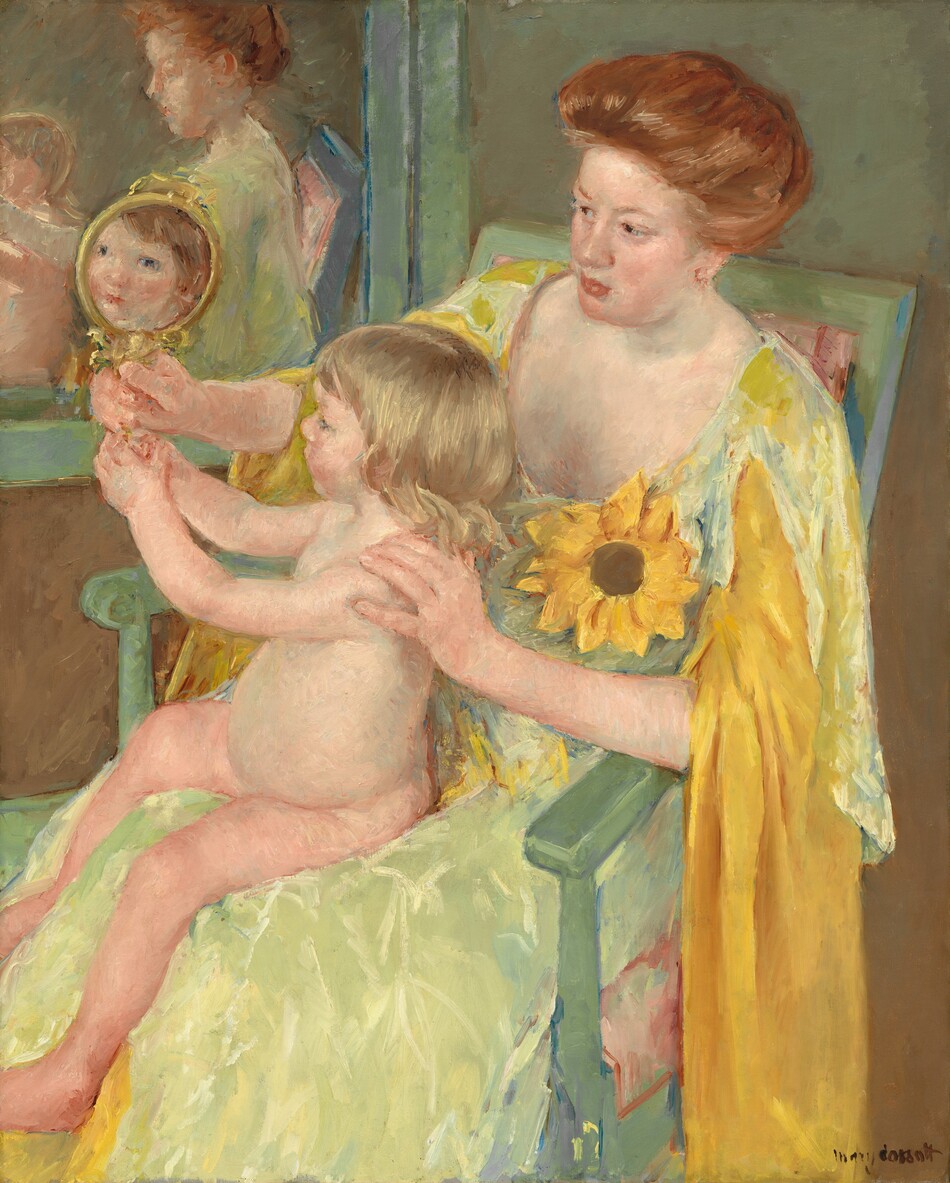
We look slightly down onto a woman dressed in golden yellows, sitting in a pale green chair, with a nude child sitting in her lap as they both gaze into a mirror in this vertical portrait painting. Both the people have pale, peachy skin. The chair is angled to our left so the woman’s knees and child cant down toward the lower left corner of the composition, and the woman leans onto the arm closer to us. The chair is painted mint green and the rose-pink upholstery is visible on the seat and a corner behind the woman’s shoulder. To our right, the woman’s vibrant, copper-colored hair is pulled loosely to the back of her head. She has a rounded nose, flushed cheeks, and her full, coral-pink lips are closed. Her long dress has a low, U-shaped neckline. The fabric shimmers from pale, cucumber green to light sunshine yellow. The sleeves of the dress split over the shoulder and a second long, goldenrod-yellow sleeve falls from her elbow off the bottom edge of the canvas. An oversized sunflower, larger than the woman’s face, is affixed to her dress near her left shoulder, closer to us. She looks with dark eyes down toward the small, gold-rimmed mirror she holds in her right hand, farther from us. The child also holds the handle of the mirror with both hands, and in the reflection, the child looks back at us with dark eyes, a button nose, and pink lips. The child’s hair in the reflection is the same copper color as the woman’s, but the child on her lap has blond, shoulder-length hair. The woman rests one hand on the child’s left shoulder, closer to us. The child has a rounded belly and smooth, rosy limbs. The woman and child are reflected in a second mirror hanging on the wall alongside them, opposite us. Their reflections are very loosely painted. The wall behind the pair is sage green across the top and it shifts to fawn brown across the bottom. Brushstrokes are visible throughout, especially in the woman’s dress and hair, and are more blended in the bodies and faces. The artist signed the painting in the lower right corner, “Mary Cassatt.”
Mary Cassatt, Woman with a Sunflower, c. 1905, oil on canvas, Chester Dale Collection, 1963.10.98

Current Exhibition

Mary Cassatt

An American in Paris

Details

  • Dates

    -
  • Locations

    West Building

    West Building Main Floor, Gallery M86

  • Ticketing Information

    Admission is always free and passes are not required

An intimate exhibition brings together rarely-seen treasures and iconic works by Mary Cassatt, marking 100 years since her death.

Mary Cassatt’s art and life reflect an independent spirit that defied expectations for women in her time.  Explore three galleries in the National Gallery’s impressionist collection to look closely at how she worked. Some 40 paintings, drawings, and prints—largely drawn from our rich holdings of her work—show an artist shaped by tradition yet radically modern.

Selected works
Stories

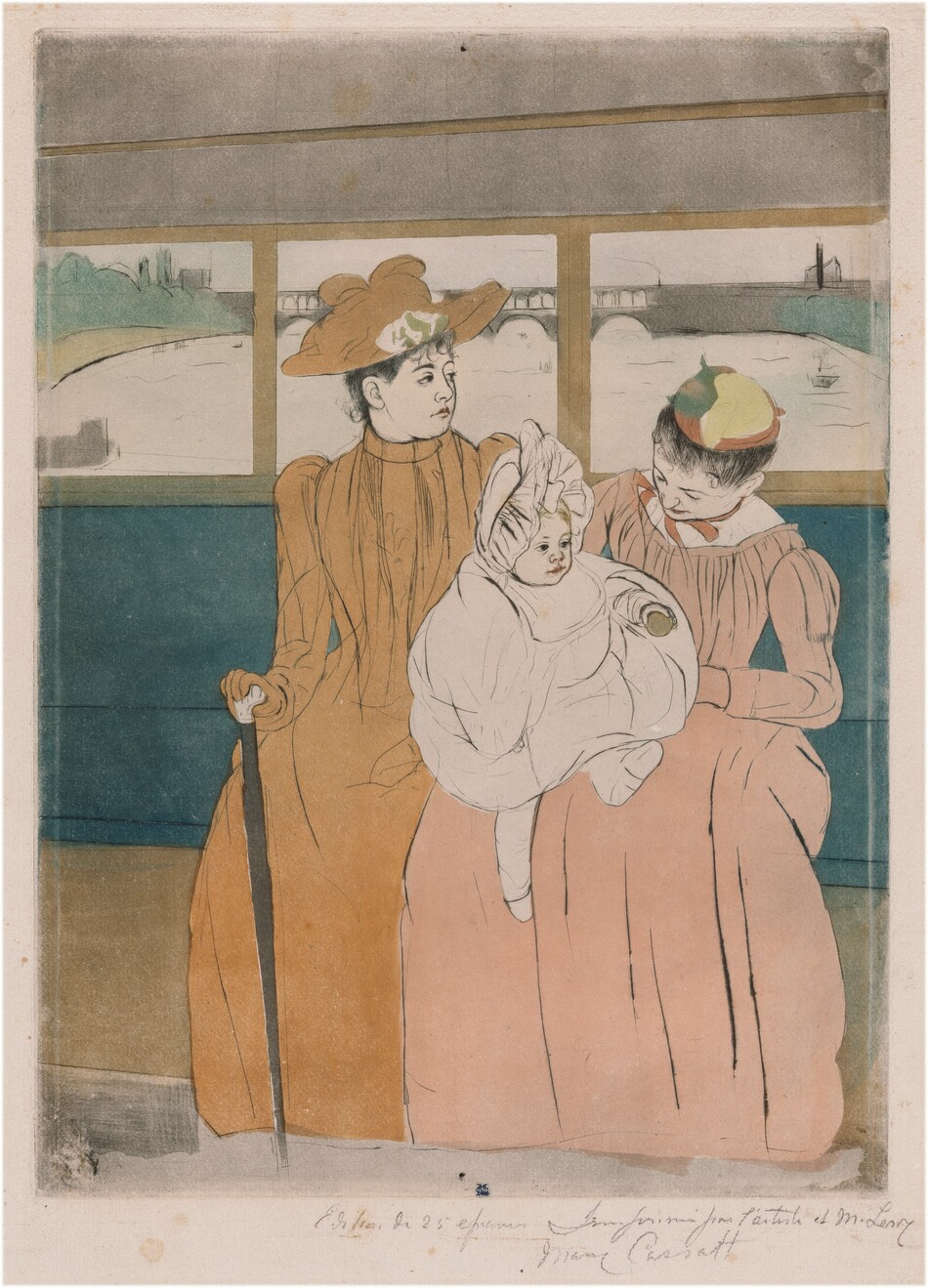
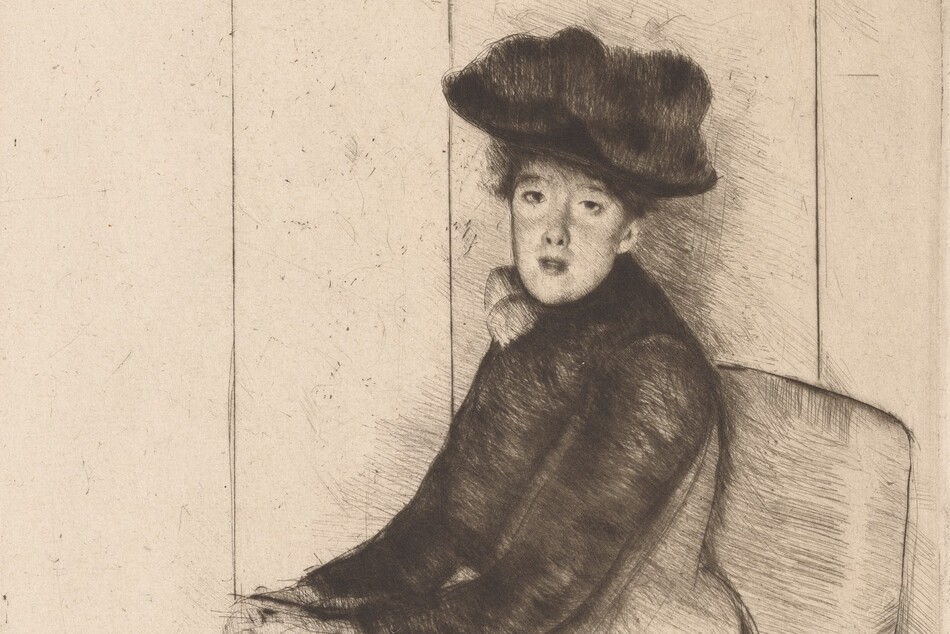
The image depicts a seated woman wearing a large coat and skirt. She is seated with her body angled to the side, head turned slightly towards the viewer. The woman has delicate facial features, with her hair covered by a fluffy hat. Her hands are resting in her lap as she sits on a wide chair. She is not wearing any visible jewelry or holding any objects. The background features simple vertical lines resembling a plain interior wall, creating a minimalist setting.

Interactive Article:  Mary Cassatt, the Daring Printmaker

The pioneering American impressionist was one of the most innovative printmakers of her generation.
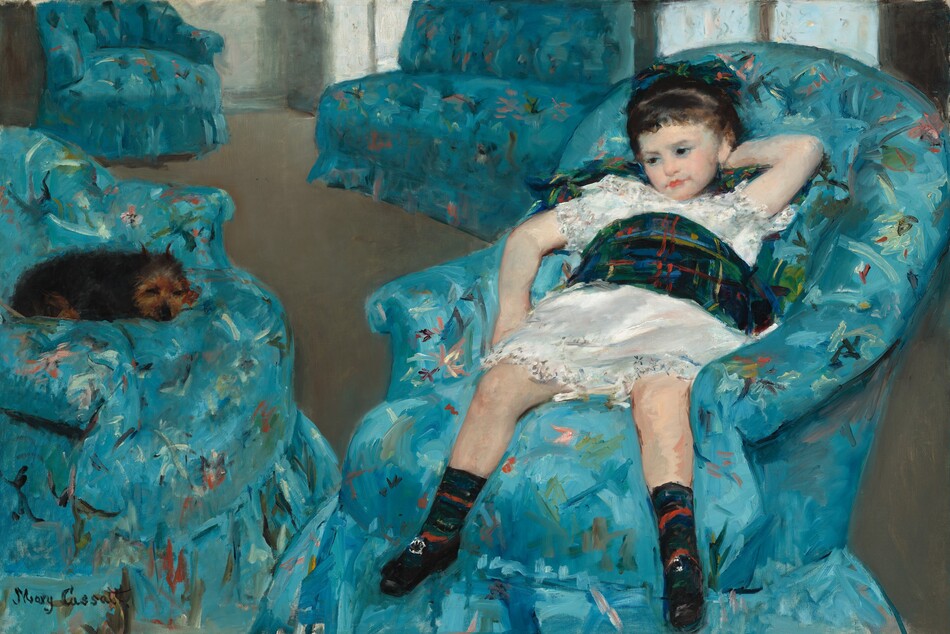
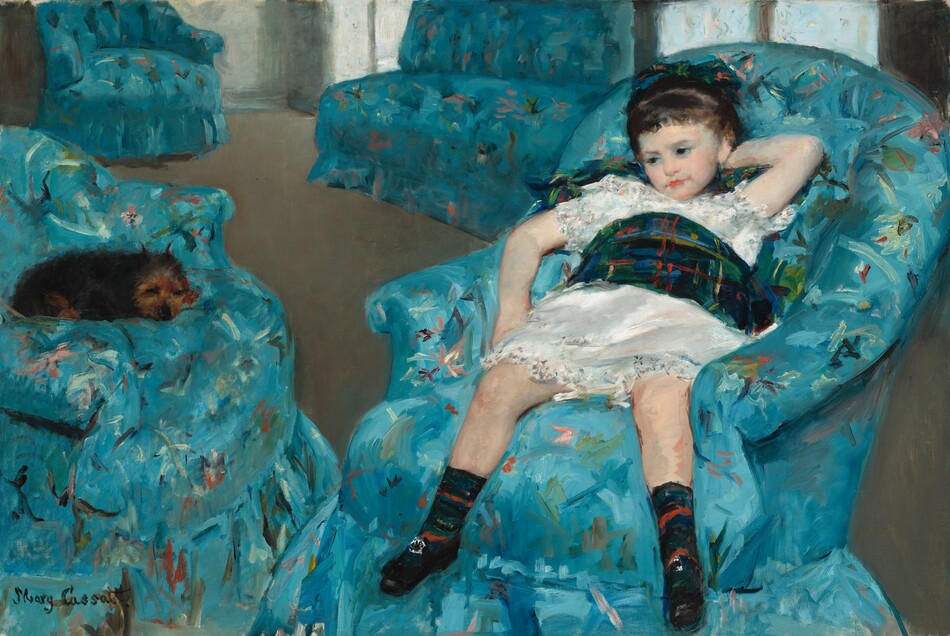
A small brown dog and a pale-skinned little girl wearing a white dress sit in matching celestial-blue armchairs in this horizontal painting. To our right, the girl sits with her legs angled to our left. She slumps back with her legs spread, and her left elbow, on our right, is bent so that hand rests behind her head. Her other elbow is draped over the armrest. Her dark brown hair appears to be pulled back, and tawny brown eyes under faint brows gaze down and to our left. She has a small nose set in a round face and a coral-pink mouth closed in a straight line. Her white dress has touches of gray, soft pink, and powder blue with a wide plaid sash around her waist. The pine-green, black, and sapphire-blue sash is accented with overlapping vertical and horizontal lines of burnt orange, light blue, and mustard yellow. Her socks match her sash and come up to mid-calf, over black shoes with silver buckles. The small dog has scruffy black fur and a russet-brown face. It lies curled in the chair opposite the girl, to our left, with its eyes closed and ears pricked up. The rounded backs of the upholstered chairs curve down to become the low arms. The vivid and light blue fabric of the chairs is scattered with loosely painted strokes of avocado and forest green, peach pink, cherry red, plum purple, and white. Beyond the chairs closest to us is another armchair and an armless loveseat, both covered with the same fabric. They sit at the back of the room, in a corner flooded with silvery light coming through four windows on the right side. The furniture is arranged on a peanut-brown floor. The artist signed in the lower left, “Mary Cassatt.”

Article:  Mary Cassatt Brings Girls and Women into the Museum

Author and art historian Katy Hessel on the impressionist's iconic painting.
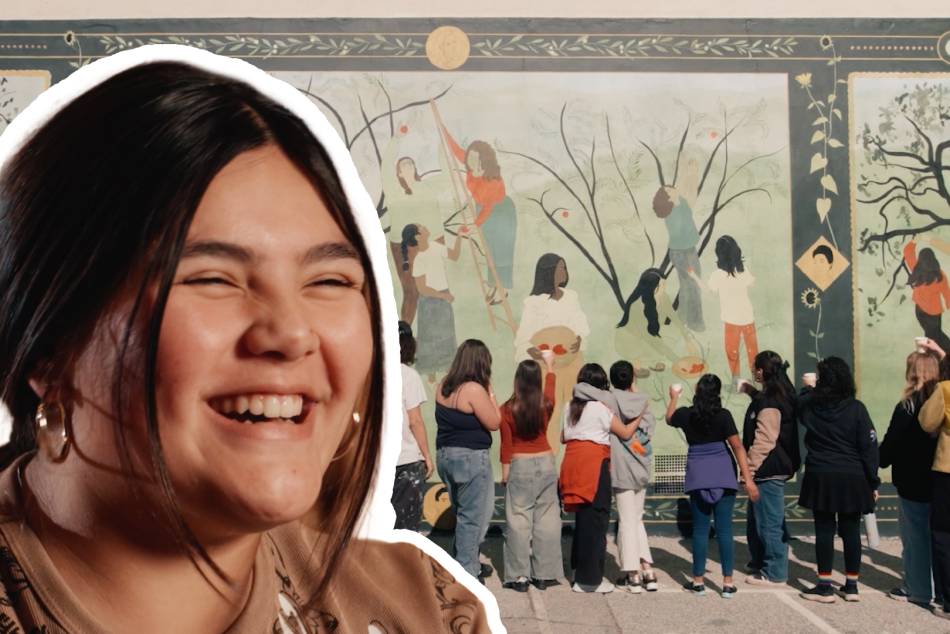
A student smiles in front of a painted mural at Altadena Elementary School

Video:  How a Mural Healed a Community

After a wildfire destroyed their elementary school, a group of young artists came together to rebuild—by painting a mural inspired by Mary Cassatt’s lost masterpiece.


Organization
Organized by the National Gallery of Art, Washington

Curated by Kimberly A. Jones, curator of nineteenth-century French paintings, department of French paintings; Rena Hoisington, curator and head, department of old master prints; Mary Morton, curator and head, department of French paintings; with Michelle Bird, curatorial associate, department of French paintings, all of the National Gallery of Art.

Sponsors 
Major support for the exhibition has been provided by the Judy and Peter Blum Kovler Foundation.

The exhibition is also made possible through the support of the Leonard and Elaine Silverstein Family Foundation.