


Color in "Still Life with Peacock Pie" (1627) by Pieter Claesz

Coloring page reproduction of Pieter Claesz, Still Life with Peacock Pie, 1627. This is an auto-generated image.
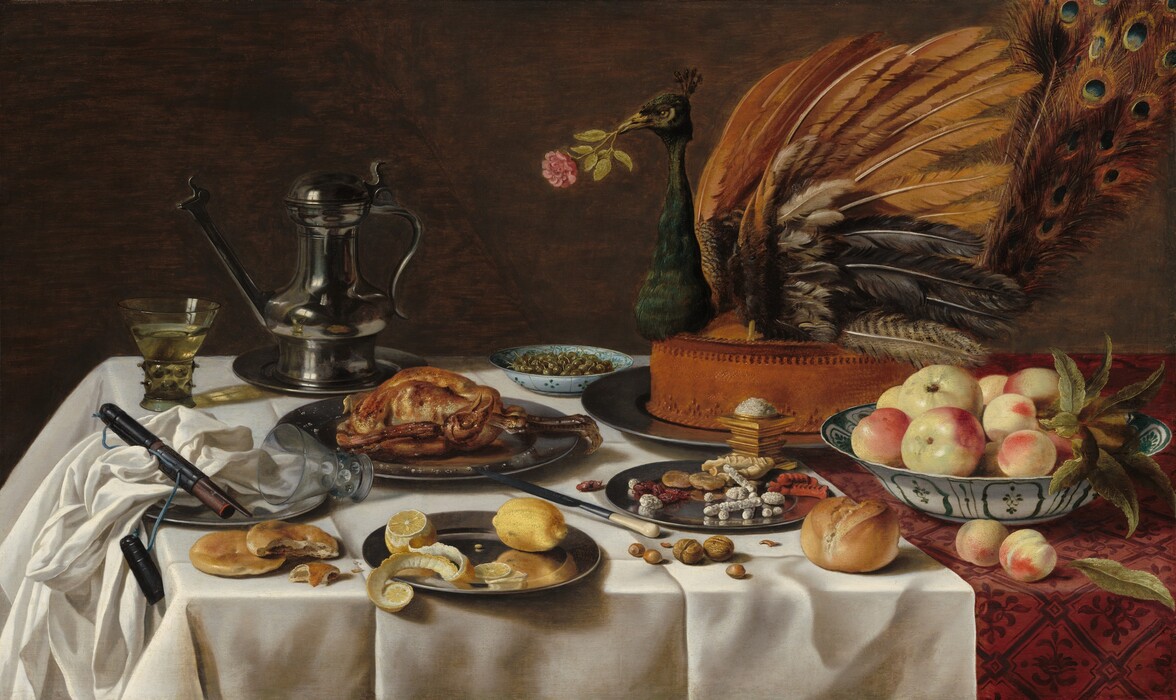
In this large―more than four feet across―and magnificent banquet piece, Pieter Claesz (1596/97–1660) demonstrates why he was one of the most important still-life painters in Haarlem. A sumptuous feast is set with some of the most extravagant foods available in the Netherlands in the early 17th century. A large peacock pie is festooned with the fowl’s own feathers and gullet—a true delicacy marking only the most special occasions—plus a pink rose placed in its beak. An array of foods surrounds the garnished game, including a cooked bird, olives, lemons, breads, peaches, nuts, and candies. Many of these foods, which Claesz rendered beautifully in pewter platters and Wan-li bowls, were delicacies imported from foreign lands. A small mound of salt, which was itself a precious spice, in a gilded saltcellar adds even more flavor to the meal. Perched at the ready is a berkemeier filled with glistening white wine poured from a pewter pitcher.
Painted in 1627, the size of this spectacular banquet feast is critical to its impact. Using life-size pictorial elements, the table top becomes extension of the viewer’s space. Claesz subtly enhances the effect with evidence of human presence―food partially eaten, a napkin crumpled―and precisely captured textures: the pebbly lemon peel cascading from the plate, the shining pewter pitcher, the tablecloth’s crisp folds. He harmonized and animated the scene with subtle shadows and delicate touches of light, as in the light passing through the glass of wine and reflecting on the cloth. This banquet scene was purchased through the Lee and Juliet Folger Fund.


