


The Energy and Motion of Jackson Pollock’s “Number 1, 1950 (Lavender Mist)”
The painter created a new technique to meet the new age he lived in.

Splash, drip, drizzle, splat. As we look at this painting, we can almost picture Jackson Pollock at work. And while the patterns may look random at first glance, Pollock’s process was controlled and intentional. Answering critics, he once declared, “No chaos, dammit!”
With Number 1, 1950 (Lavender Mist), the artist pioneered a new technique. While painters had dripped before, Pollock was the first to do it with such single-minded focus.
For Pollock, the process of creation was just as important as the finished product. Each mark on the canvas corresponds to a gesture he made while creating. This technique, in which an artist’s physical movements are visible in the finished work, came to be known as action painting.
Explore Lavender Mist to learn about Pollock’s dynamic process, unusual tools, hidden handprints, and innovative approach to painting.
Pollock’s Action Painting
Born in Cody, Wyoming, in 1912, Pollock moved to New York City in 1930 to pursue a career as an artist. He achieved some success early, even securing a commission from famed art collector Peggy Guggenheim. But his breakthrough came when he and his wife, fellow artist Lee Krasner, moved to New York’s Long Island. Next to their house was a large barn that Pollock began using as his studio. The cavernous space gave him room to experiment.
One of Pollock’s first introductions to new ways of applying paint came from Mexican muralist David Alfaro Siqueiros’s Experimental Workshop: A Laboratory of Modern Techniques in Art in 1936. Organized by Siqueiros during a stay in New York City, the workshop experimented with different tools, materials, and approaches to using them. Axel Horn, a Workshop participant, recounted testing different ways of using nitrocellulose lacquer: “We sprayed through stencils and friskets, embedded wood, metal, sand, and paper. We used it in thin glazes or built it up into thick gobs. We poured it, dripped it, splattered it, hurled it at the picture surface.” Through the Workshop, Siqueiros developed a theory of “controlled accidents.”
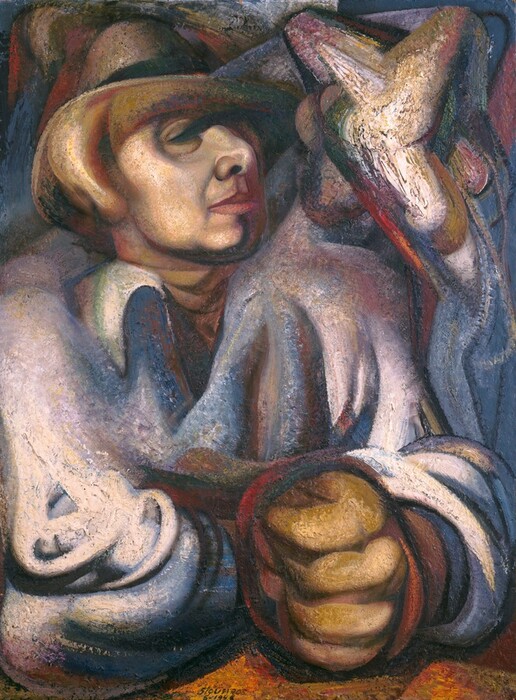
Later in the 1940s, Pollock saw the work of the innovative Ukrainian American painter Janet Sobel. Her abstract allover paintings left an impression on him. Working in his barn, Pollock was ready to put his learning and inspiration into practice.
Making Lavender Mist
To make a work like Lavender Mist, Pollock would first roll a large piece of canvas out onto the floor. Unlike traditional painters, he didn’t make preparatory drawings. Rather, he composed on the fly, letting instinct and unconscious impulse guide him. “It is only after a sort of ‘get acquainted’ period that I see what I have been about,” Pollock said.
In 1950, photographer Hans Namuth set out to document Pollock’s unique process through still images and a short film. Namuth’s work showed how important movement was to the artist’s work.
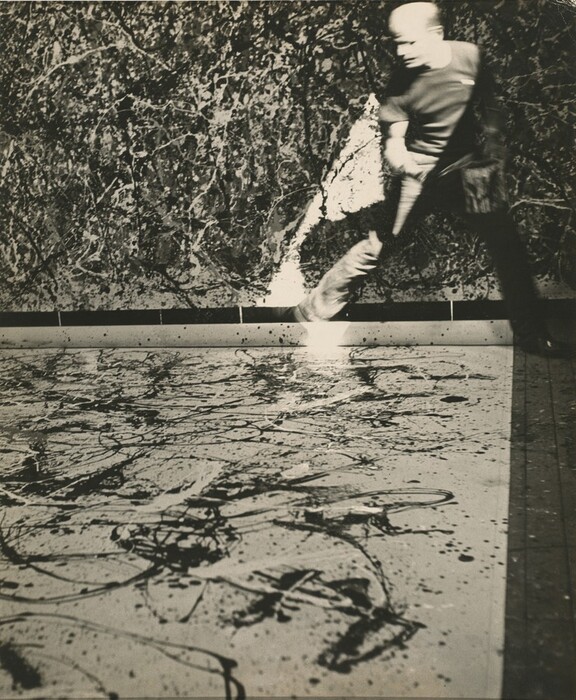
On the back of one of these photographs, Pollock wrote “energy and motion made visible—memories arrested in space.”
A Layered Palette of Colors
Despite the title, there are no lavender-colored pigments in Lavender Mist. Art critic Clement Greenberg (an advocate of Pollock’s work) suggested the title, maybe to describe the effect of the layered mix of colors.
Looking closer reveals the full palette. Flashes of light purple emerge from this swirling combination of black, blue, white, and beige.
New Techniques for a Changing World
Pollock developed his signature technique in the 1940s and ’50s, while the world was changing rapidly around him. His “drip paintings” pushed the boundaries of abstract art, which didn’t come without controversy. But the artist knew that, to capture this world in paint, he had to create a novel visual language.
My opinion is that new needs need new techniques. And the modern artists have found new ways and new means of making their statements. It seems to me that the modern painter cannot express this age, the airplane, the atom bomb, the radio, in the old forms of the Renaissance or of any other past culture. Each age finds its own technique.
Jackson Pollock
Pollock became a prominent abstract expressionist with an enormous impact on the development of painting. He helped establish New York City as a leading cultural center in the 20th century. The art world’s focus shifted from Europe to the United States. And Pollock’s emphasis on process and improvisation spurred other new forms of expression, from music to performance art.
You may also like
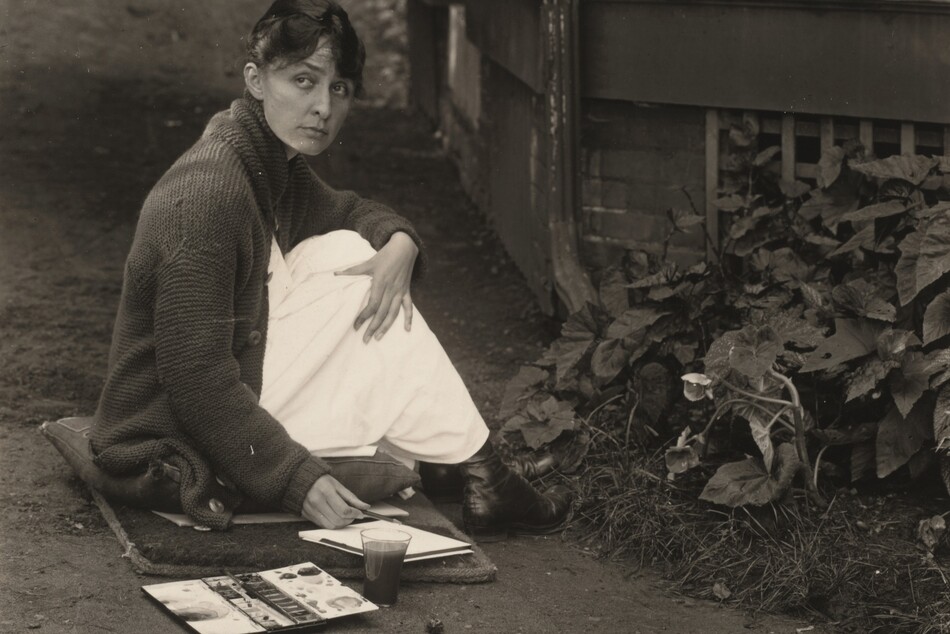
Interactive Article: Everyday Awe
Learn how the American painter Georgia O'Keeffe marveled at commonplace natural forms—and how to find the same sense of awe on your own.

Article: Painter George A. Morton Transcends Tradition
Through sustained looking and detailed re-creations, this Atlanta-based artist studies Rembrandt and Sargent while finding new subjects that carry forward the painters’ traditions.