


Understanding Van Gogh Through One of His Final Self-Portraits
The artist painted the turbulent work as he recovered from a mental health crisis.

How much do we change throughout our lives? How many different versions of ourselves exist? The artist Vincent van Gogh recognized we undergo significant changes over time or even from one day to the next. He once wrote that, in his view, “the same person supplies material for very diverse portraits.”
Van Gogh painted 36 self-portraits during his short life, creating 36 distinct versions of himself. Some are dark and moody, others bright and colorful, yet each captures a different side of his complex character. The artist even painted a surrogate “portrait” of himself as an empty chair.
The Dutch artist was undergoing an immense transformation when he painted this work in 1889. He was in the process of reconstructing his own identity after a period of severe mental illness.
In December of the previous year, while living in the southern French town of Arles, Van Gogh’s emotional health began deteriorating rapidly. After a possible psychotic break that resulted in him cutting off his ear, the artist voluntarily committed himself to a mental health facility in the nearby town of Saint-Rémy-de-Provence. He spent 13 months there—and created over 140 paintings.
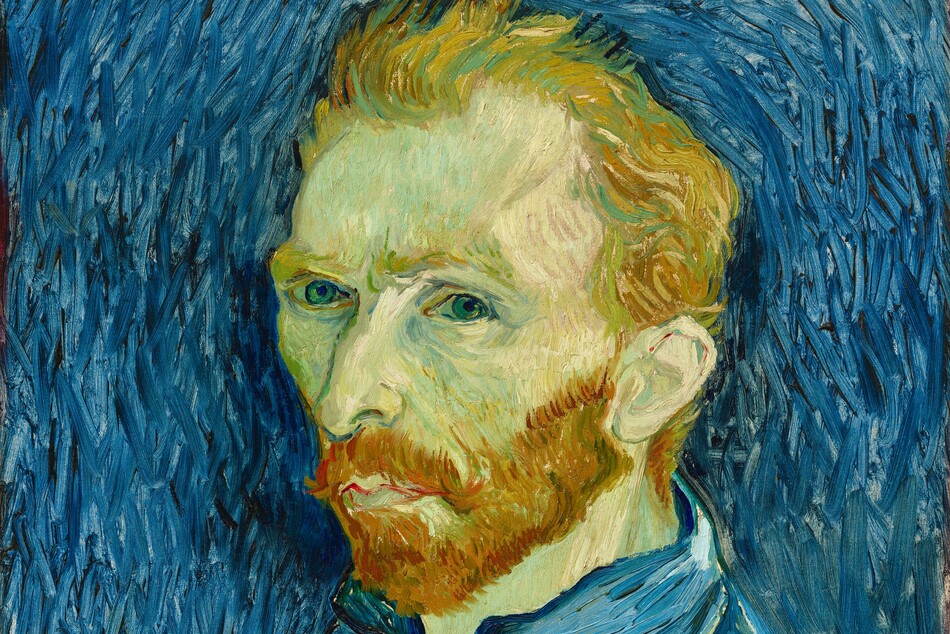
Van Gogh refused to let his illness define him. He wrote that he began working on this painting “on the first day [he] got up” following this challenging time. Through the creation of this self-portrait, the artist rediscovered himself by reconstructing his own self-image.
Self-Image
While painting his self-portrait, Van Gogh made some unexpected artistic choices. What was he trying to communicate about himself?
Changing Colors
People change and evolve, and sometimes artworks do, too. When writing to his brother Theo, Vincent described this self-portrait’s “dark violet blue.” As we can see, the background is no longer purple; it’s bright blue.
Many of Van Gogh’s pigments have degraded over time, dramatically altering the appearance of several works. This is especially true of his red pigments. Here, Van Gogh combined red and blue to create the shade of violet he described in his letter. The red in this mixture has faded over the years, making the electric blue hues more prominent.
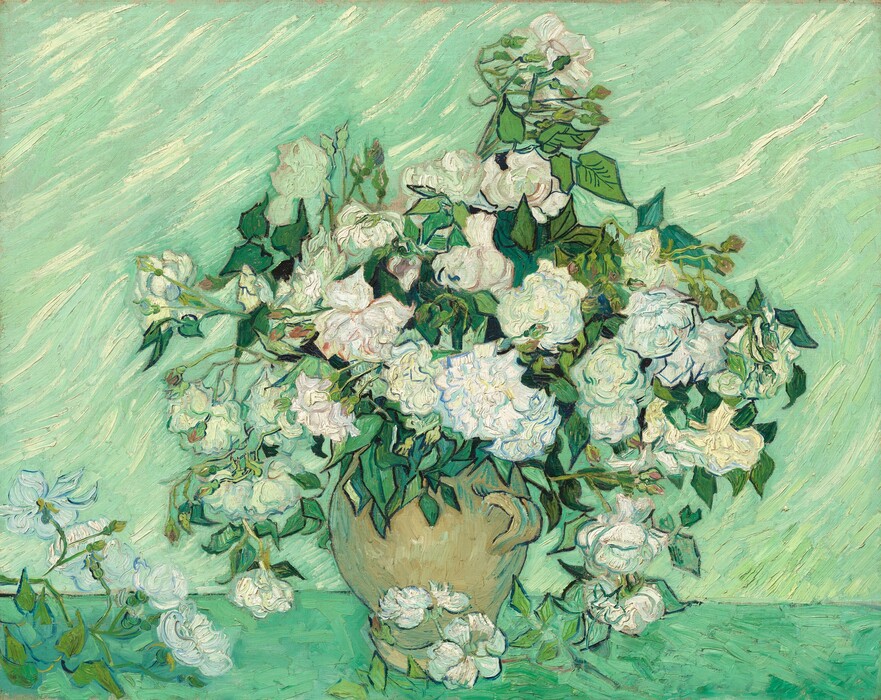
Roses, another painting by Van Gogh in the National Gallery’s collection, has undergone a similar transformation. The delicate white blooms used to be pink, which created a striking contrast with the pale green background. Van Gogh mixed red and white paint to render these flowers. The red faded in the years since this work was painted in 1890, and the flowers now appear to be white.
Van Gogh’s Final Self-Portraits
The self-portrait in the National Gallery’s collection is one of three Van Gogh is known to have painted during August and September 1889. Those three include one portrait in the collection of the Nasjonalmuseet in Oslo, Norway which recent research confirmed he painted at the time. In a letter to his brother Theo, Van Gogh described that painting, believed to have been made in August, as “an attempt from when I was ill.”

Van Gogh painted this self-portrait in August of 1889. He described it as "an attempt from when I was ill."
Vincent van Gogh, Self-portrait, 1889, oil on canvas, Nasjonalmuseet for kunst, arkitektur og design, The Fine Art Collections. Photo: Nasjonalmuseet/Anne Hansteen.

He then made this portrait in September 1889, after the one in our collection. Its background echoes the swirls of The Starry Night.
Vincent van Gogh, Portrait of the artist, 1889, oil on canvas, Don Paul et Marguerite Gachet, 1949, Musée d'Orsay. © GrandPalaisRmn (musée d'Orsay) / Adrien Didierjean
In September of 1889, while in the midst of creating the National Gallery’s self-portrait, Van Gogh wrote to Theo, “People say—and I’m quite willing to believe it—that it’s difficult to know oneself—but it’s not easy to paint oneself either.”
He worked through the challenge, painting another self-portrait that month. His pose and position remain the same. But where short strokes of blue radiate around and behind his figure in two of the self-portraits, here they swirl across the canvas. Their sense of movement echoes the skies of The Starry Night and Wheat Field with Cypresses, paintings made during his time at Saint-Rémy-de-Provence.
Vincent van Gogh died in July 1890, less than a year after creating the self-portrait in the National Gallery’s collection. He was just 37 years old. While his death was a tragedy, numerous versions of Vincent endure—in film, literature, and most crucially, his self-portraits. We’re fortunate to spend time with just one of them.
Post-Impressionism
Post-impressionists took the impressionists’ recording of light and color in nature to more emotional and spiritual places. And each artist pursued unique subject matter and a distinctive style. Paul Cezanne was preoccupied with natural forms and spatial depth. Paul Gauguin and Vincent van Gogh expressed themselves through bold color and brushwork.
You may also like
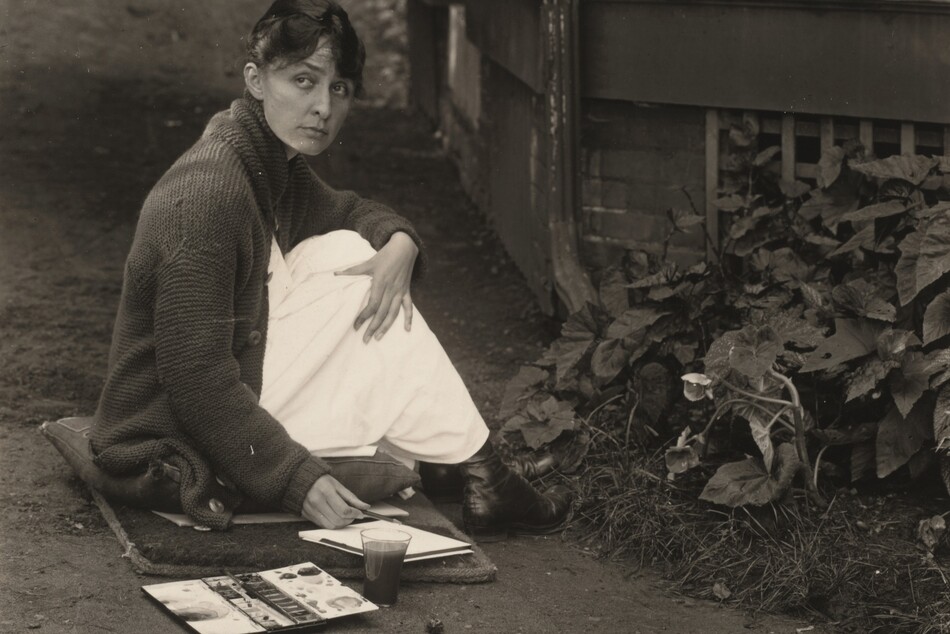
Interactive Article: Everyday Awe
Learn how the American painter Georgia O'Keeffe marveled at commonplace natural forms—and how to find the same sense of awe on your own.

Article: Painter George A. Morton Transcends Tradition
Through sustained looking and detailed re-creations, this Atlanta-based artist studies Rembrandt and Sargent while finding new subjects that carry forward the painters’ traditions.