Italian Medieval and Renaissance Paintings and Sculptures

Filter Results

367 artworks on view.

Results

A female torso from the neck to the shoulders and knees is carved from white marble in this freestanding sculpture. The body is square toward us in this photograph. The neck is jagged where the head has broken off, and the arms are missing below the shoulders. The leg on our right is broken off above the knee and the other below the knee. Firm, round breasts are above a soft belly and smooth groin. Some areas of the surface are smooth and others are rough, and the marble has darkened to tan in places. The sculpture is supported by a metal rod on our right, and the work rests on a square base. The wall behind is light gray.

Torso of Aphrodite

Hellenistic 2nd Century B.C./1st Century A.D., Roman 2nd Century B.C./1st Century A.D.

c. 200 B.C./150 A.D.

Marble  Accession ID  1969.9.1

On View: West Building Main Floor, Gallery M26
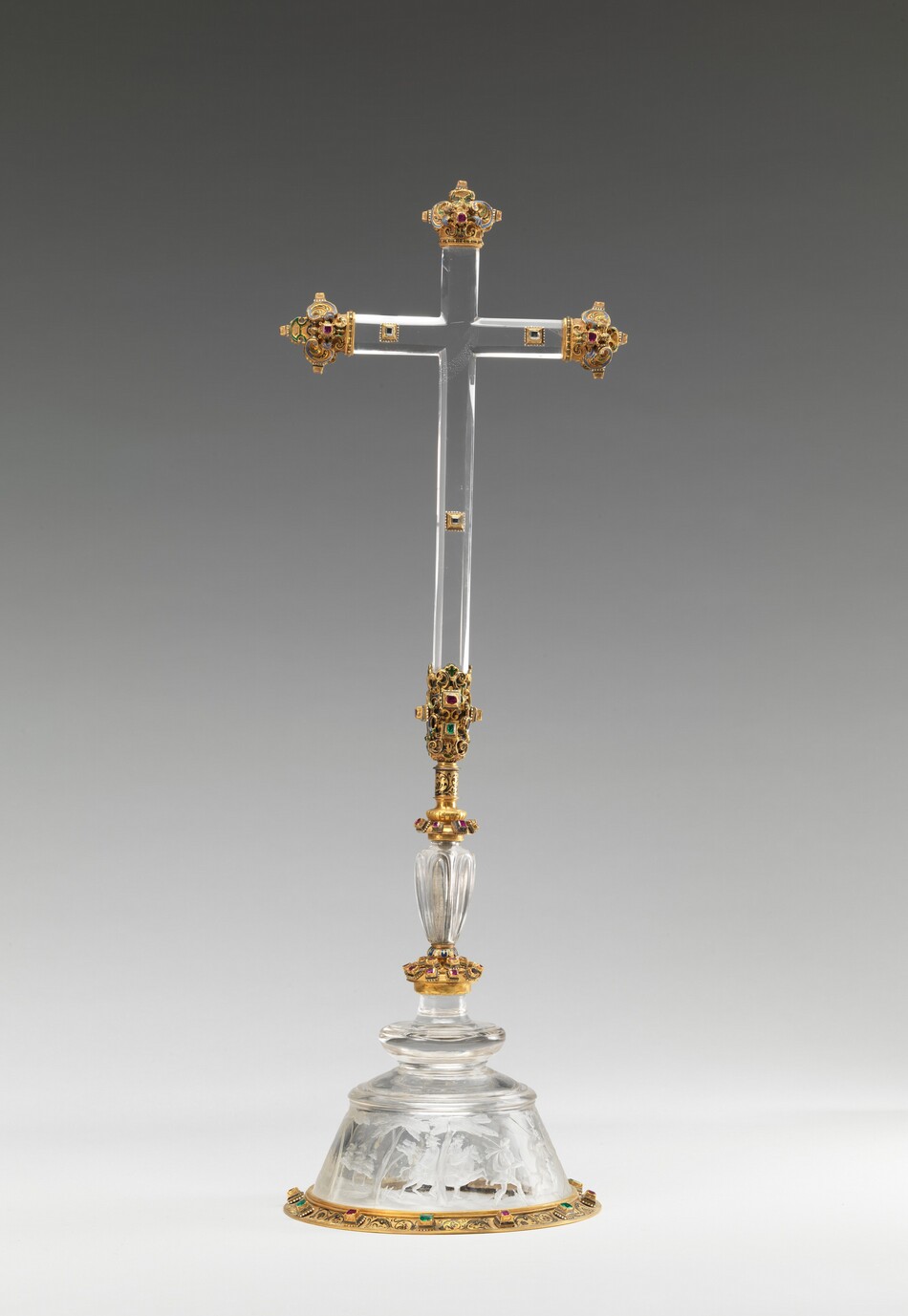
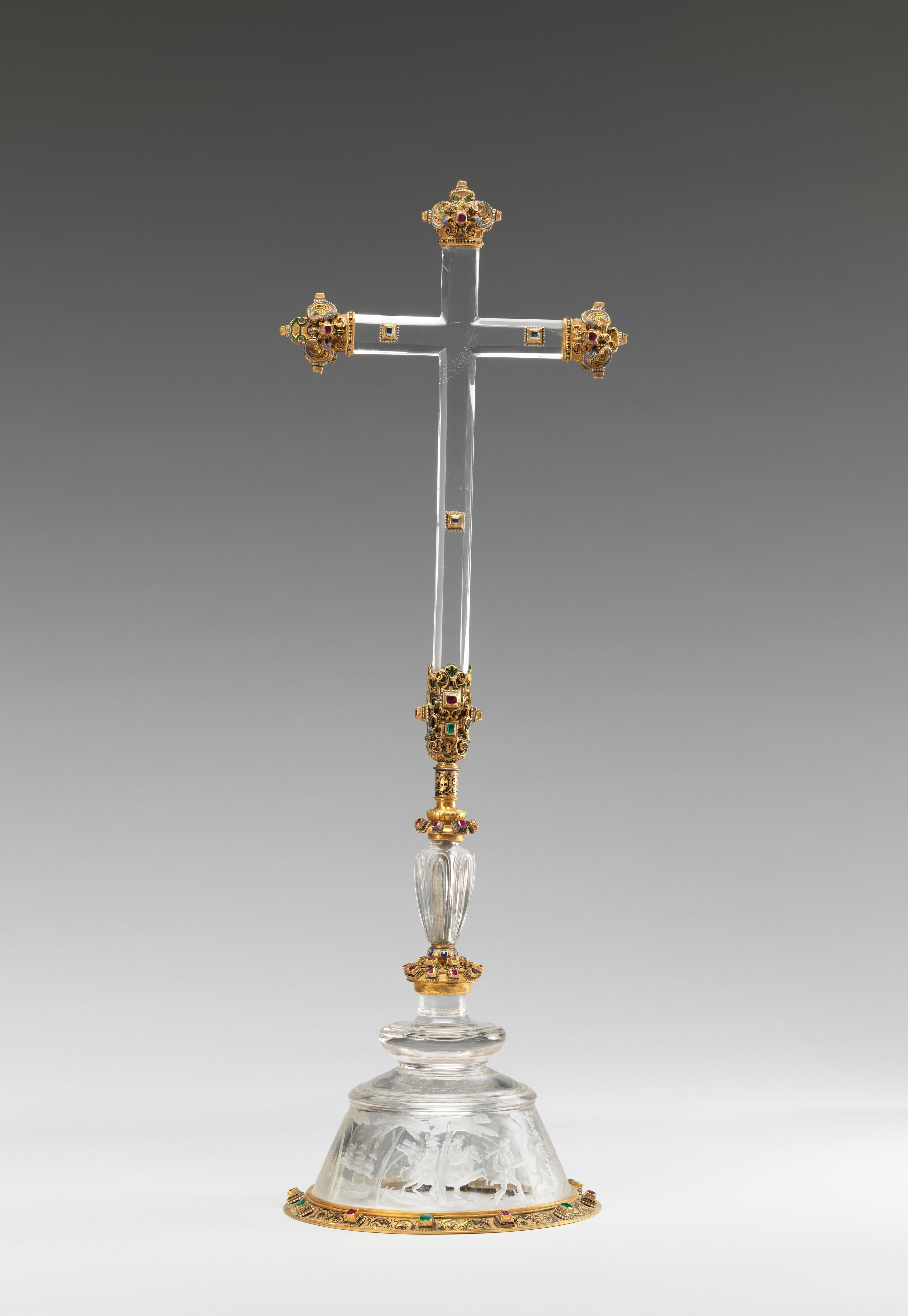
This sculpture is a cross on a highly detailed base. Most of the cross is transparent, similar to clear glass or crystal, while its ends are decorated with gold and colorful jewels in the shape of small crowns. The cross is connected to the base with more gold, which is then connected to a clear stem. The base is also transparent and appears to feature etched figures on horseback under tall trees. The bottom of the base has a ring of gold encrusted with jewels in shades of pink and green.

Altar Cross

Saracchi Workshop, Western European 19th Century

c. 1590 (foot); mid to late 19th century (cross and its mounts)

Rock crystal, enameled gold, 3 beryls, 46 spinels, and 11 emeralds  Accession ID  1942.9.294

On View: West Building Main Floor, Gallery M27
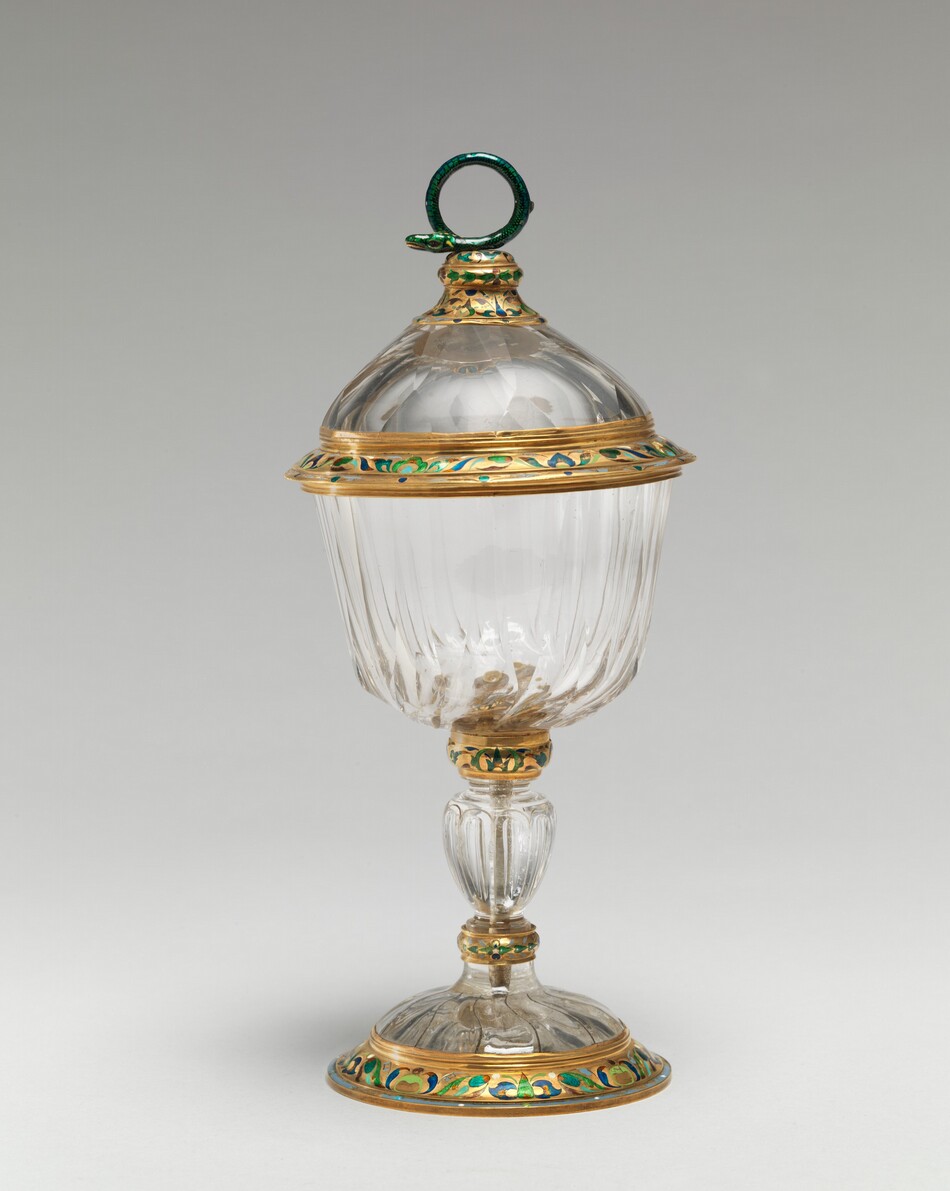
This is a photograph of an ornate glass goblet with a lid. The goblet is elaborately decorated and features a clear, textured glass bowl and stem, topped with a lid. The rim of the lid and base feature gold detailing with an intricate pattern incorporating vibrant colors, including greens and blues. The lid is topped with a ring-like handle. The craftsmanship showcases elegance and attention to detail. The photograph captures the play of light through the textured glass, highlighting the artistry in its design.

Covered Cup with Serpent Handle

Freiburg-im-Breisgau 17th Century, Italian 16th Century, Western European 19th Century

c. 1620/1630 (all but stem and mounts); late 16th century (stem); late 19th century (mounts)

Rock crystal and enameled gold  Accession ID  1942.9.297

On View: West Building Main Floor, Gallery M27
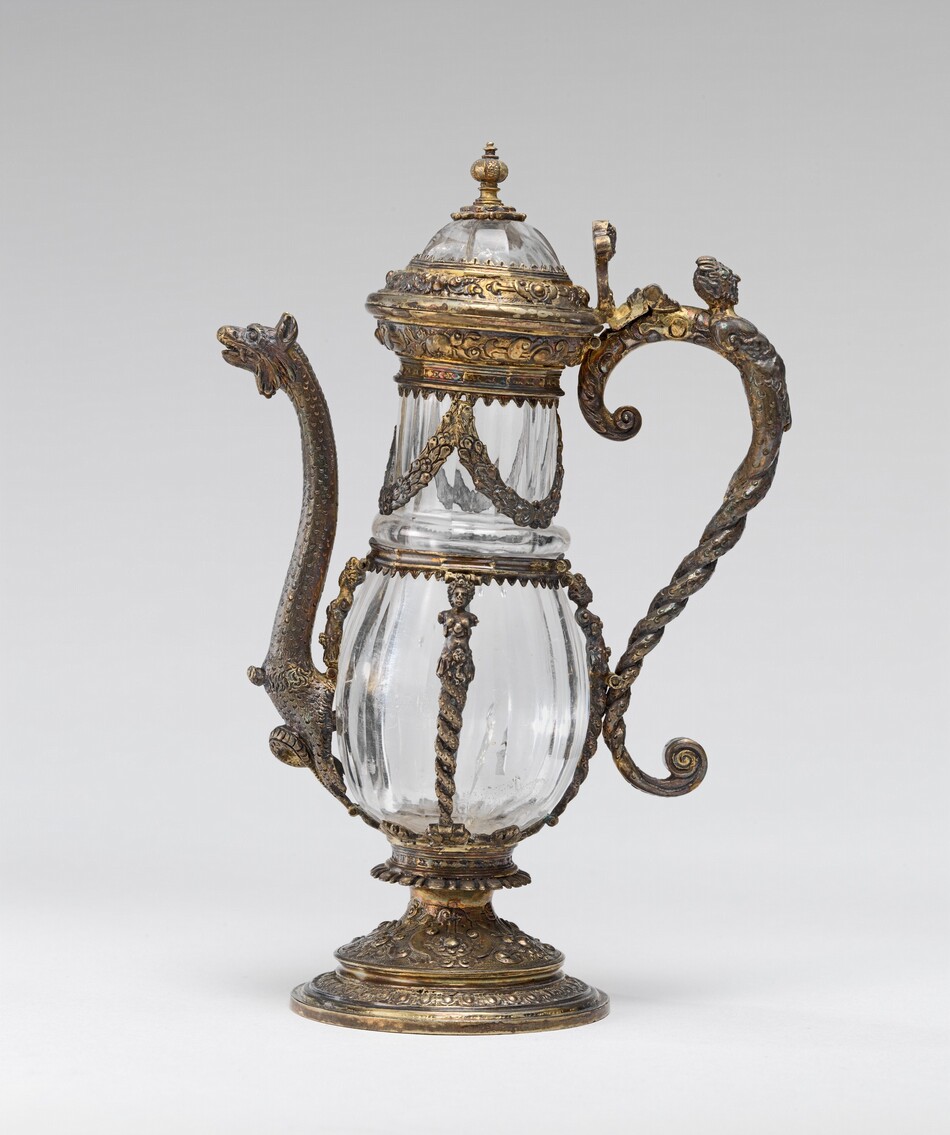
This is a photograph of an ewer. It features a clear glass body with vertically cut panels, held by twisted metal bands. The metalwork includes floral and scrolling motifs. The spout resembles a dragon or serpent's head, while the handle is twist-carved with a similar design. The base and lid are gilded and engraved, with a finial capping the lid. The combination of glass and metalwork gives the ewer a luxurious appearance, reflecting the artistry of the Renaissance period.

Ewer and Cover

Venetian 14th Century, Parisian 14th Century, London 17th Century, Western European 19th Century, Western European 20th Century

14th century (crystal); c. 1600 (mounts); before 1905 (spout)

Rock crystal and gilded silver and copper  Accession ID  1942.9.303

On View: West Building Main Floor, Gallery M27
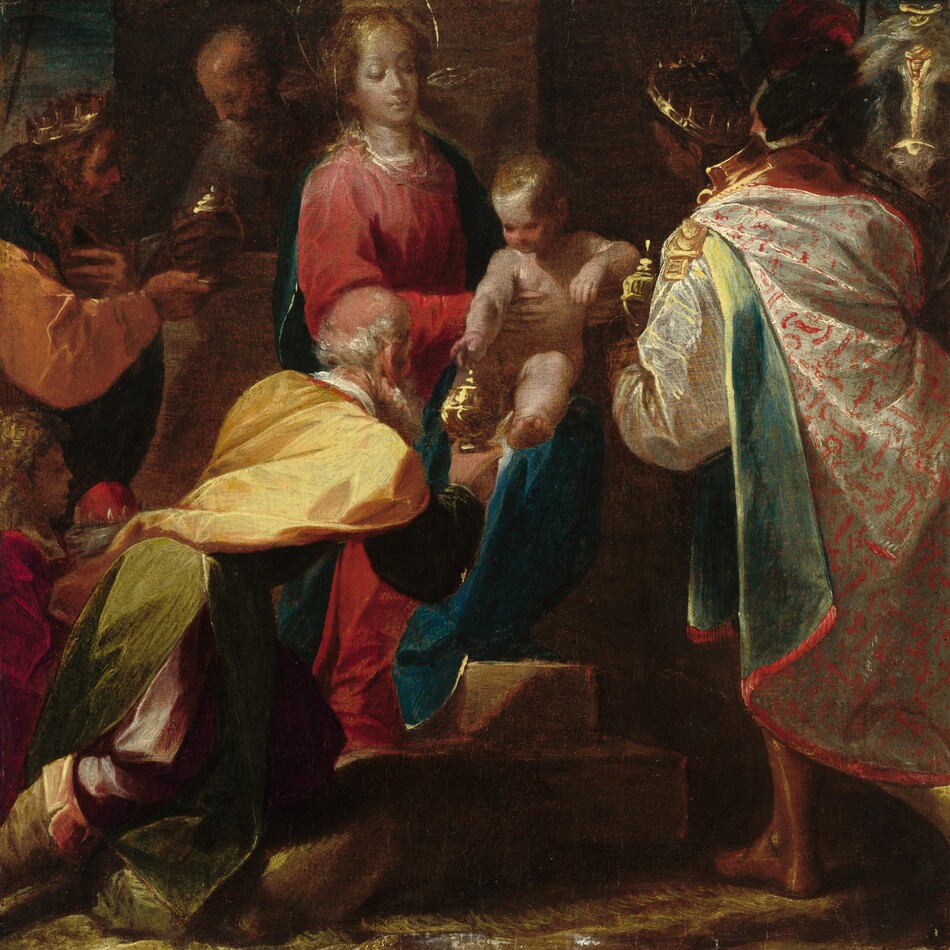
Five people gathered around a woman holding a nude baby boy fill this square painting. The woman is at the center of the composition with her head almost touching the top edge. She has pale skin, blond hair, and a gold halo painted as a single line. She looks down at the child she supports on her left knee, to our right. She wears a marine-blue robe over a raspberry-red dress. The child also has pale skin and blond hair. His cheeks are flushed, and he reaches forward with one chubby arm. The balding, light-skinned man kneeling in front of him and to our left holds out a gold, orb-shaped vessel. That man is bearded with white hair, and he wears a canary-yellow cloak over a leaf-green robe and pale brown, calf-high boots. A smaller person, also kneeling, holds a crown just behind the older man. That person and the two men who stand on the far side have pale, peachy skin. One of the standing men wears honey orange and forest green and a gold crown over his long brown hair. He holds up another vessel, this one bronze brown with gold fittings, out to another bearded, balding man standing behind the woman. To the right, a man with brown skin also wears a crown, holds a gold vessel, and has a cloak patterned with crimson red over pearl white. The underside of the cloak is laurel green, and this man appears to be barefoot. He stands facing away from us so only his cheek and one ear are visible as he faces the baby. A gray horse with a gold halter is behind the Black man in the upper right corner.

The Adoration of the Magi

Pier Francesco Mazzucchelli, called Morazzone

c. 1600

Oil on panel  Accession ID  2016.87.1

On View: West Building Main Floor, Gallery M27
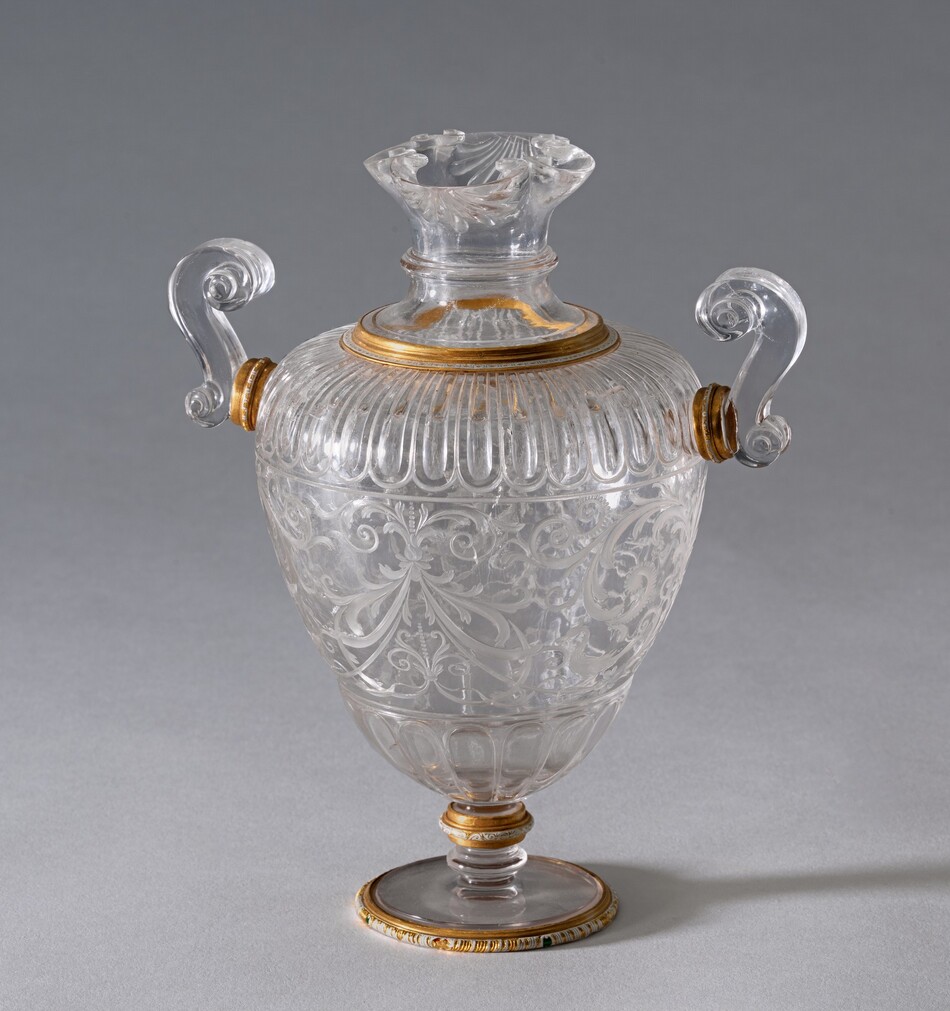
This is a vessel or urn made of a clear material with engravings and swirling patterns across its surface. The urn has a pair of curved handles on each side, and the bases of the handles, as well as the rim at the top of the vessel, have gold bands circling them. The body of the urn is bulbous and transitions into a narrow neck that flares outwards at the opening. The base of the sculpture is a round disc, featuring gold details around the edges.

Vase with Two Handles

Milanese 17th Century, Western European 19th Century

c. 1600 (vase); 19th century (handles)

Rock crystal and enameled gold  Accession ID  1942.9.301

On View: West Building Main Floor, Gallery M27
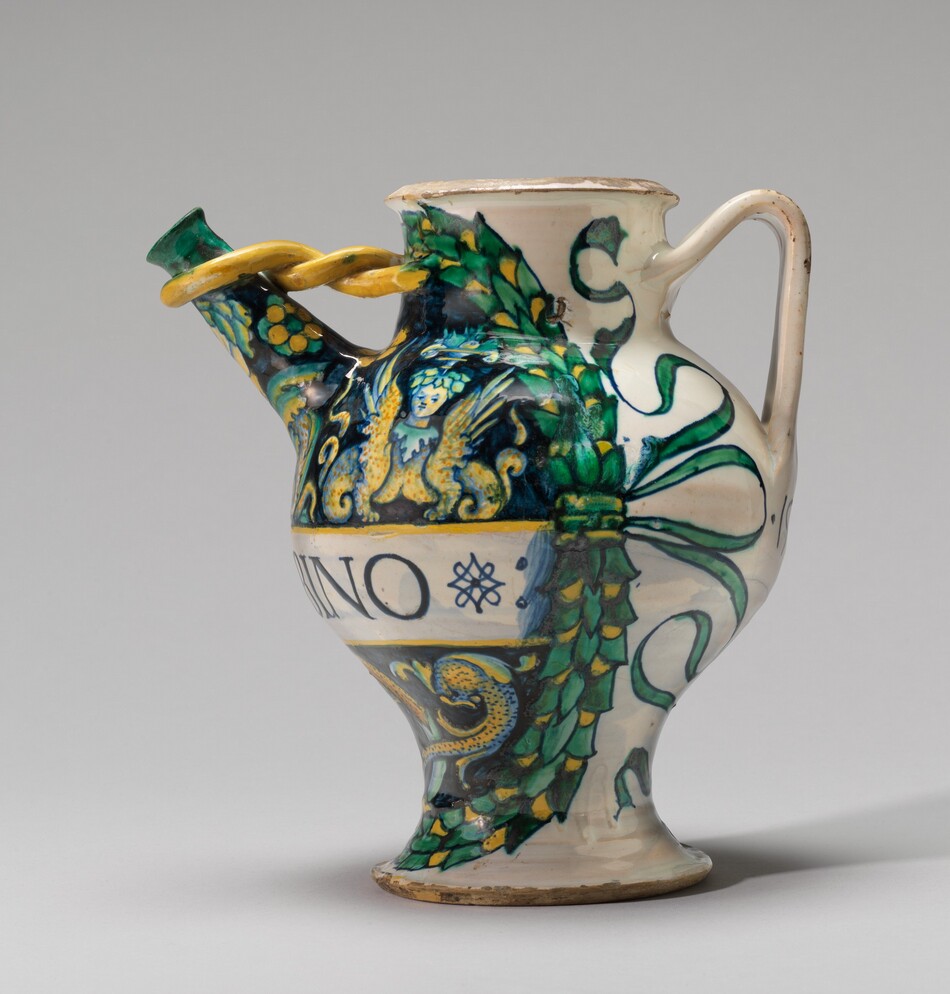
This is an image of a decorative ceramic jug. The jug has a classical shape with a central body, a narrow neck, and a spout with a double-looped handle. It is richly decorated with vibrant colors, primarily deep blues and greens, portraying intricate patterns and motifs including scrolling leaves and floral designs. The jug is embellished with stylized lion faces and the text "INO" framed by ornamental flourishes. These decorative elements give the jug an elaborate appearance, suggesting it is both utilitarian and aesthetically pleasing.

Spouted drug jar with sphinxes

Deruta 16th Century

1507

Tin-glazed earthenware (maiolica)  Accession ID  2015.19.3988

On View: West Building Main Floor, Gallery M17
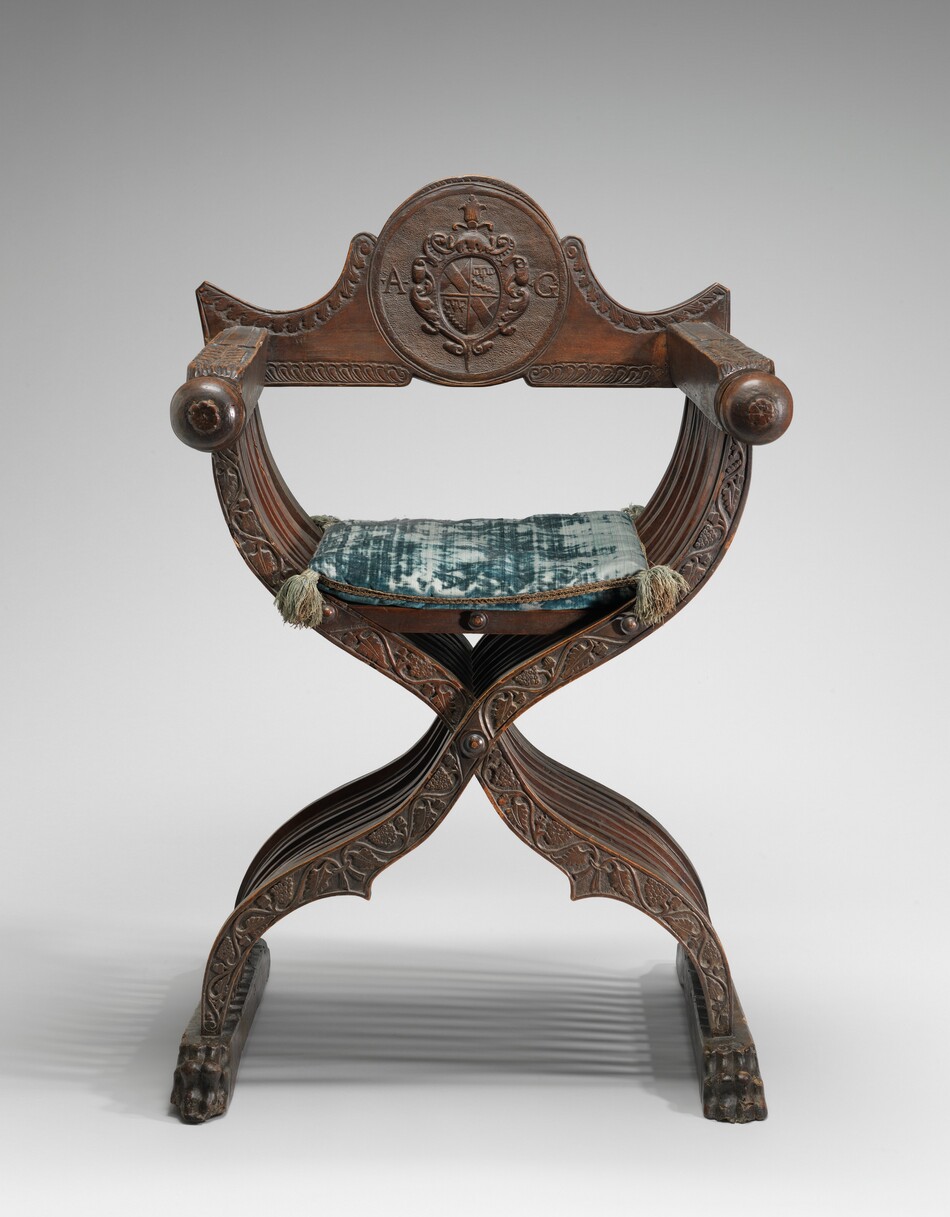
The curving X-frame design of this wood chair creates an hourglass silhouette from the front, and creates a bucket-like seat for the sitter. The front face of the wooden frame is carved with curving vines and stylized bunches of grapes and leaves, and the frame ends with clawed lions’ feet at the bottom. The seat and legs are made up of alternating slats so the chair could fold up. Imagine interlacing your fingers and then moving your palms back and forth—that is how the pivot of this chair works. The arms of the chair, which have a rounded knob at each front end, rest along the top edges of the slats. The back rail connects at the back of the arms. A crest at the center of the back rail is flanked by the capital letters “A” to the left and “G” to the right. The crest and letters are contained within a medallion-like form, and the sides of the back rail dip down to meet the arms. A worn, pale blue velvet cushion rests on the seat, and has tassels at the front corners. The chair is shown against a pale gray background.

Walnut Savonarola Chair with Letters A.G.

Italian 16th Century

c. 1520/1540

Walnut  Accession ID  1942.9.382

On View: West Building Main Floor, Gallery M22
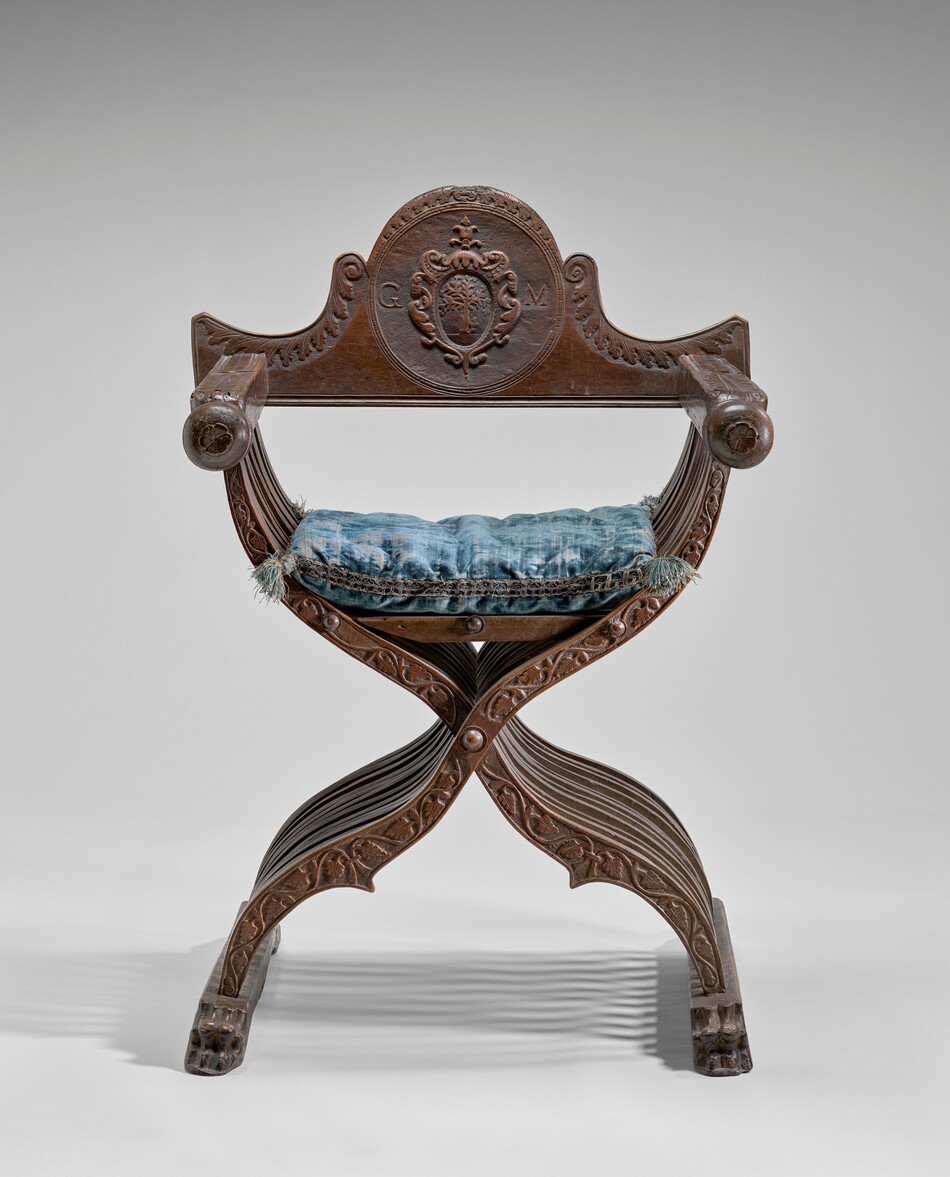
The sculpture is a wooden chair featuring a decorative backrest with a circular emblem in the center that includes a coat of arms and the letters "G M" etched on either side. The chair is made of richly colored brown wood with visible grain patterns and detailed carvings, adding texture and depth. The legs cross in an X pattern and end in carved lion's paws. The armrests have a rolled design. The chair is topped with a blue cushioned seat with tassels at the edges.

Walnut Savonarola Chair with Letters G.M.

Italian 16th Century

c. 1520/1540

Walnut  Accession ID  1942.9.392

On View: West Building Main Floor, Gallery M22
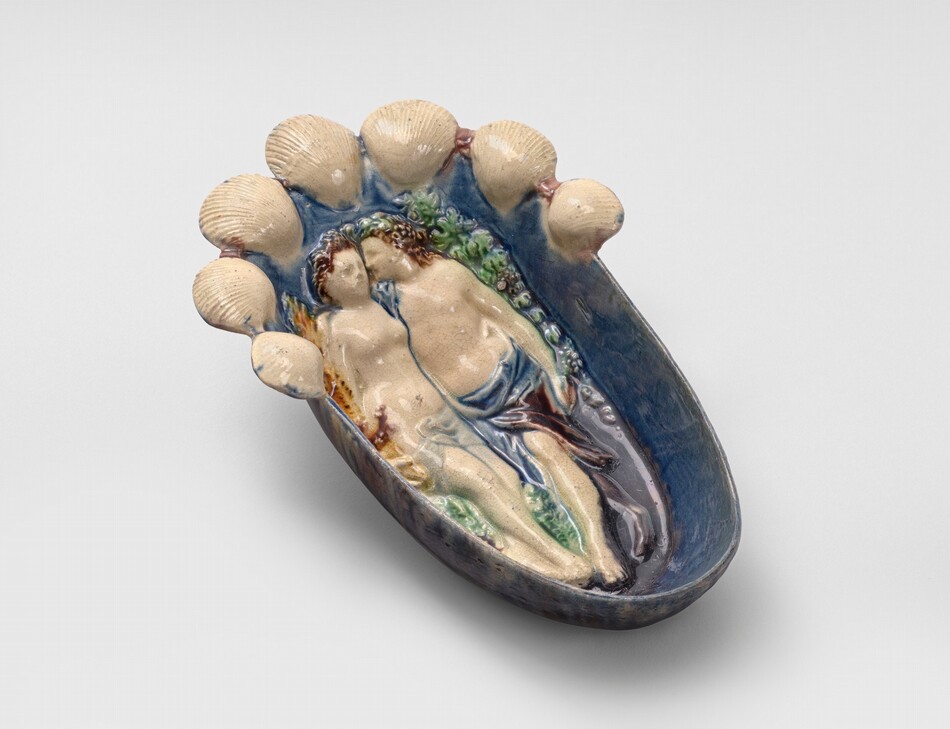
The sculpture is a shallow dish with two reclining figures at its center. The figures are human and intertwined, surrounded by small white seashell-shaped elements. The dish is made of ceramic with various colors. The material has a three-dimensional appearance and is detailed. The colors used are greens, blues, and flesh tones with a deep blue shade on the outer rim, giving it a lush and colorful look with naturalistic elements.

"Gondola" with Bacchus and Ceres

Fontainebleau Pottery, Avon Pottery

late 16th/early 17th century

Lead-glazed earthenware  Accession ID  2015.19.4062

On View: West Building Main Floor, Gallery M25
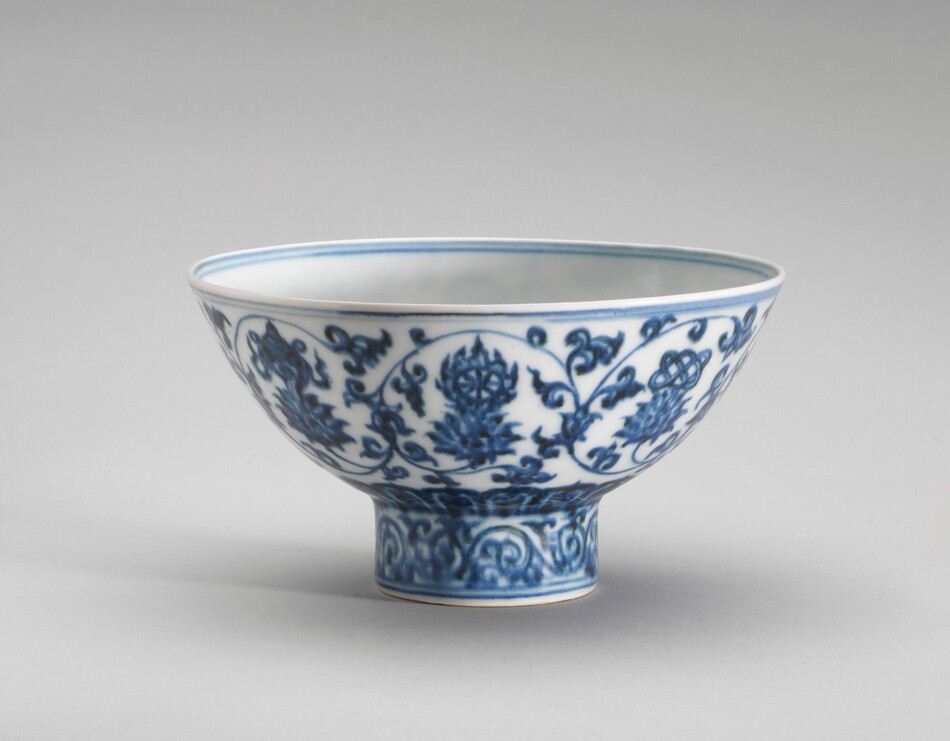
This sculpture is a blue and white bowl. The white body of the bowl is adorned with intricate blue floral motifs that extend around its circumference, featuring large blossoms encircled by thin, leafy vines. The interior of the bowl is white except for a simple blue line just below its rim. The base of the bowl features a tall circular foot, which carries a series of decorative blue swirling patterns matching the bowl's primary design.

Stem Bowl

Chinese Ming Dynasty

Xuande period, 1426/1435

Porcelain with underglaze blue decoration  Accession ID  1972.43.5

On View: West Building Main Floor, Gallery M25
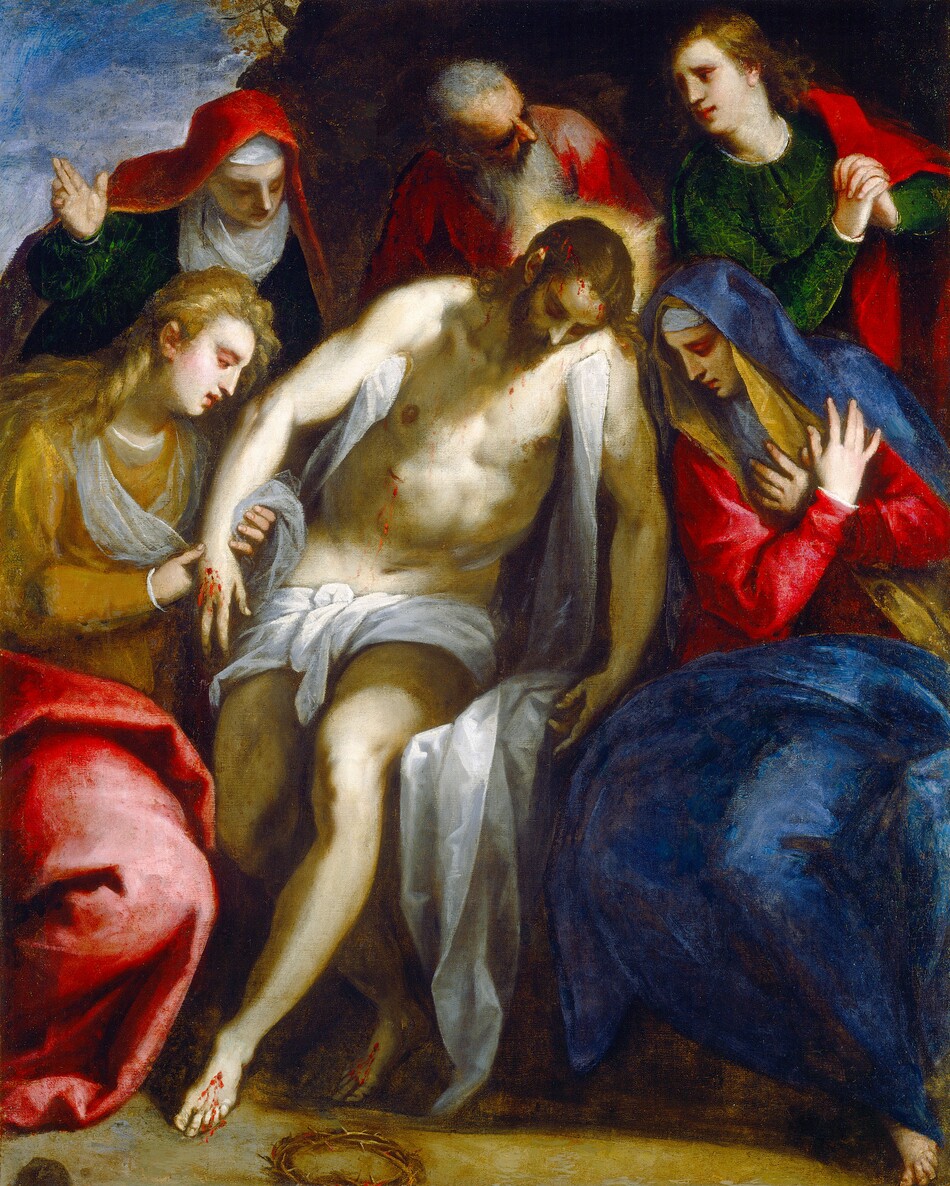
This painting features a group of individuals surrounding a man. He is seated, supported by the others. The man has pale skin, long dark hair, a dark beard, and eyes that appear closed. He is nude except for a white cloth around his waist and two more hanging from his shoulders. Blood is dripping from his forehead, his hands and feet, and a cut along his torso. A halo of yellow light shines from behind his head. Surrounding him are five people with pale skin and various hairstyles, all wearing richly colored garments. Two of them seem to be women with their heads covered. Two more seem to be young men with long, flowing hair. The fifth is an old man with gray hair and a gray beard, standing behind the central man. The background is dark, with a small patch of blue sky visible near the top left corner, and the ground below the group is brown, with a circle of thorny branches sitting by the feet of the central man.

Lamentation

Jacopo Palma il Giovane

c. 1620

Oil on canvas  Accession ID  1991.19.1

On View: West Building Main Floor, Gallery M28

Loading Results