Italian Medieval and Renaissance Paintings and Sculptures

Filter Results

367 artworks on view.

Results

This is a painting of a medieval scene on a ceramic tile. The tile features a central image of a figure on horseback dressed in a green robe, reaching out with a red cloth towards another figure beside the horse. This second figure is on foot, draped in a similar red cloth. The horse appears dynamic and detailed, standing on a grassy landscape with a few stylized trees and architectural elements in the background. The outer edge is adorned with an intricate repeating pattern in orange tones, while the edges of the tile display a blue border with geometric designs. This is in the style of traditional Maiolica ware, a type of tin-glazed pottery.

Tile with Saint Martin and the Begger

Tuscan 16th Century, Cafaggiolo 16th Century, Sienese 16th Century

c. 1500/1520

Tin-glazed earthenware (maiolica)  Accession ID  2015.19.3986

On View: West Building Main Floor, Gallery M25
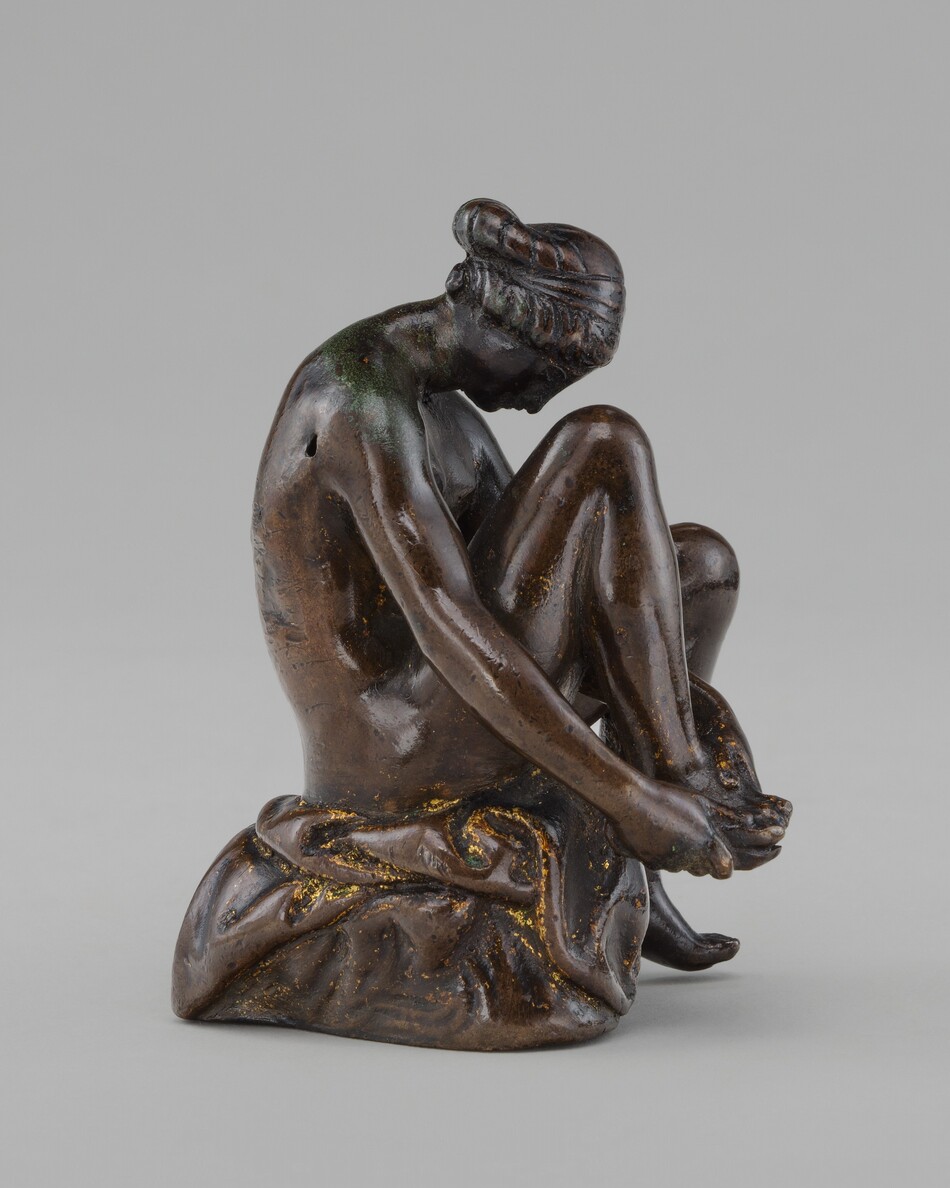
The sculpture portrays a seated female figure with a contemplative pose. She has her legs drawn up and arms wrapped around them. Her head is slightly bowed, and she has a neat bun hairstyle. The sculpture is made of a bronzed material with a lustrous brown color and subtle greenish undertones. The figure is placed on a base resembling draped fabric, adding texture and depth. The overall impression is one of elegance and tranquility, with smooth and realistic proportions and details.

Woman Cutting Her Nails

Anonymous Artist

early 17th century

Bronze//black lacquer (much rubbed) over medium brown bronze; traces of gilding on drapery and seat  Accession ID  1957.14.24

On View: West Building Main Floor, Gallery M25
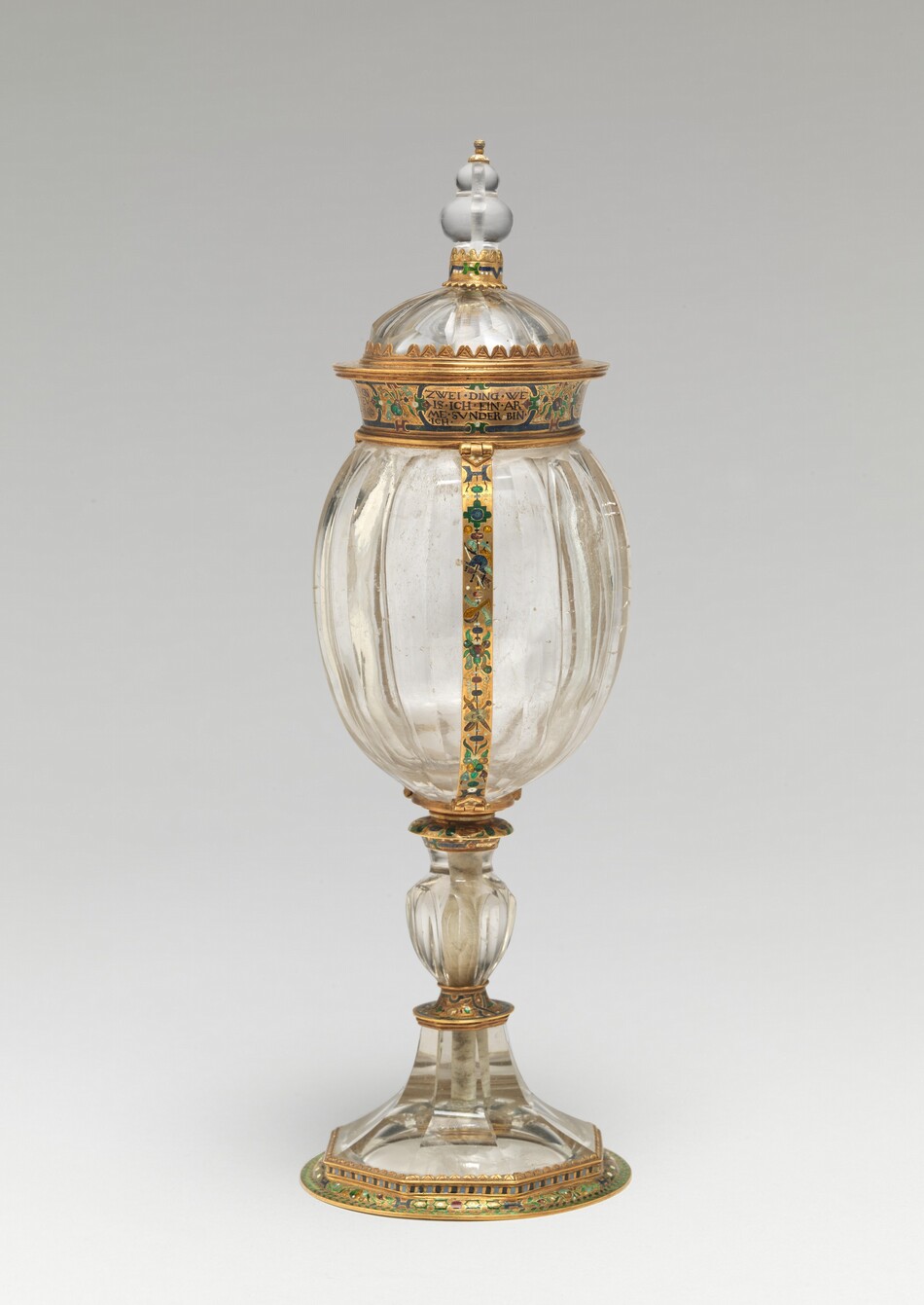
The sculpture is an ornate goblet with a lid. The goblet is made primarily of clear glass, although the top, the base, and a line down the side are adorned with gold-colored metal bands featuring enamel work in green, yellow, brown, and blue. The designs on the metal include flowers, fruit, weapons, and musical instruments. There is a section of text at the top of the goblet, below the lid. At the top of the lid is a white knob.

Covered Cup with Shield of Arms of the Countess of Gleichen

Freiburg-im-Breisgau 16th Century, Augsburg 16th Century

c. 1566 (crystal); 1566 (mounts)

Rock crystal and enameled gold  Accession ID  1942.9.296

On View: West Building Main Floor, Gallery M27
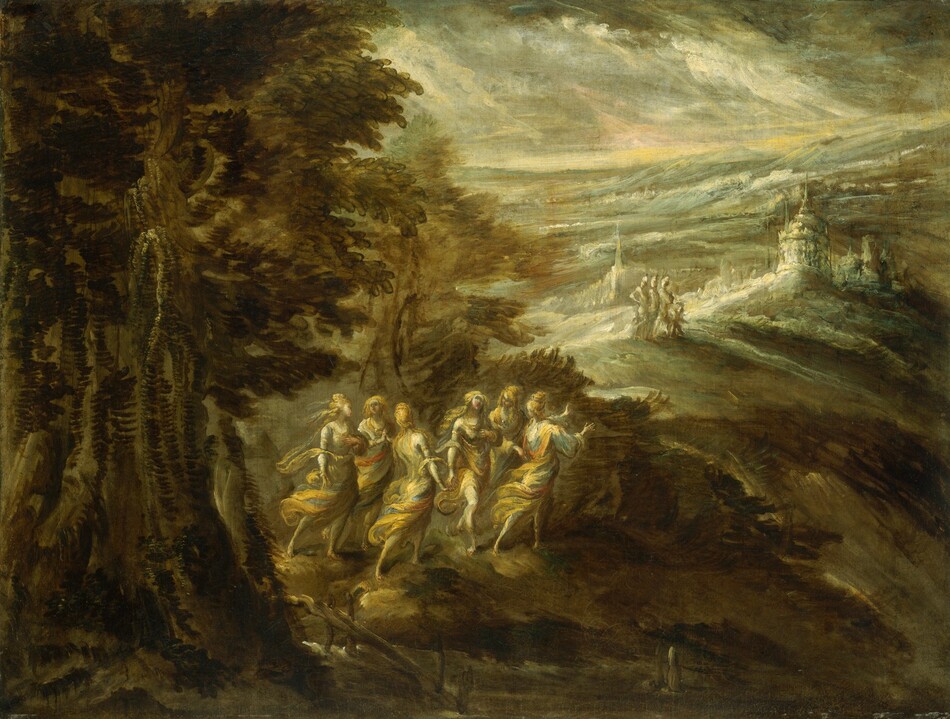
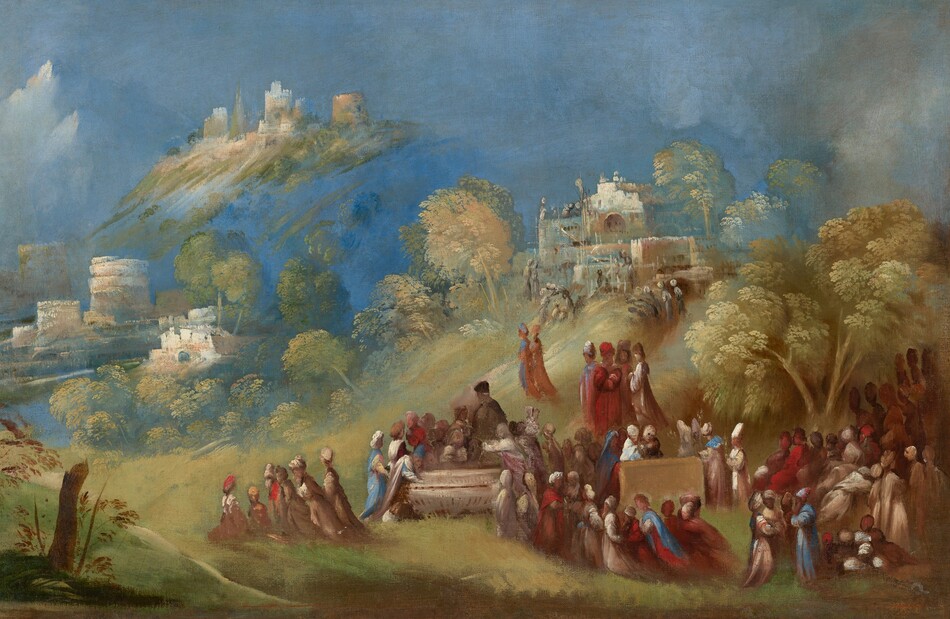
The painting shows a high vantage point of a group of people in a dark, green landscape. Closest to us, near the center of the painting, are the six people with pale white skin and long yellow hair, wearing in flowing garments in yellow, white, and blue. They stand under dark foliage from large trees. In the distance to the right, the dark trees open into a wide, white landscape. Towards the upper right corner, there is a faint architectural structure resembling a shining white castle. Rolling hills are visible in the distance, and the sky is filled with swirling clouds in grey, peach, and yellow tones.

Fantastic Landscape with Figures

Emilian 16th Century

late 16th century

Oil on canvas  Accession ID  1952.4.1

On View: West Building Main Floor, Gallery M27
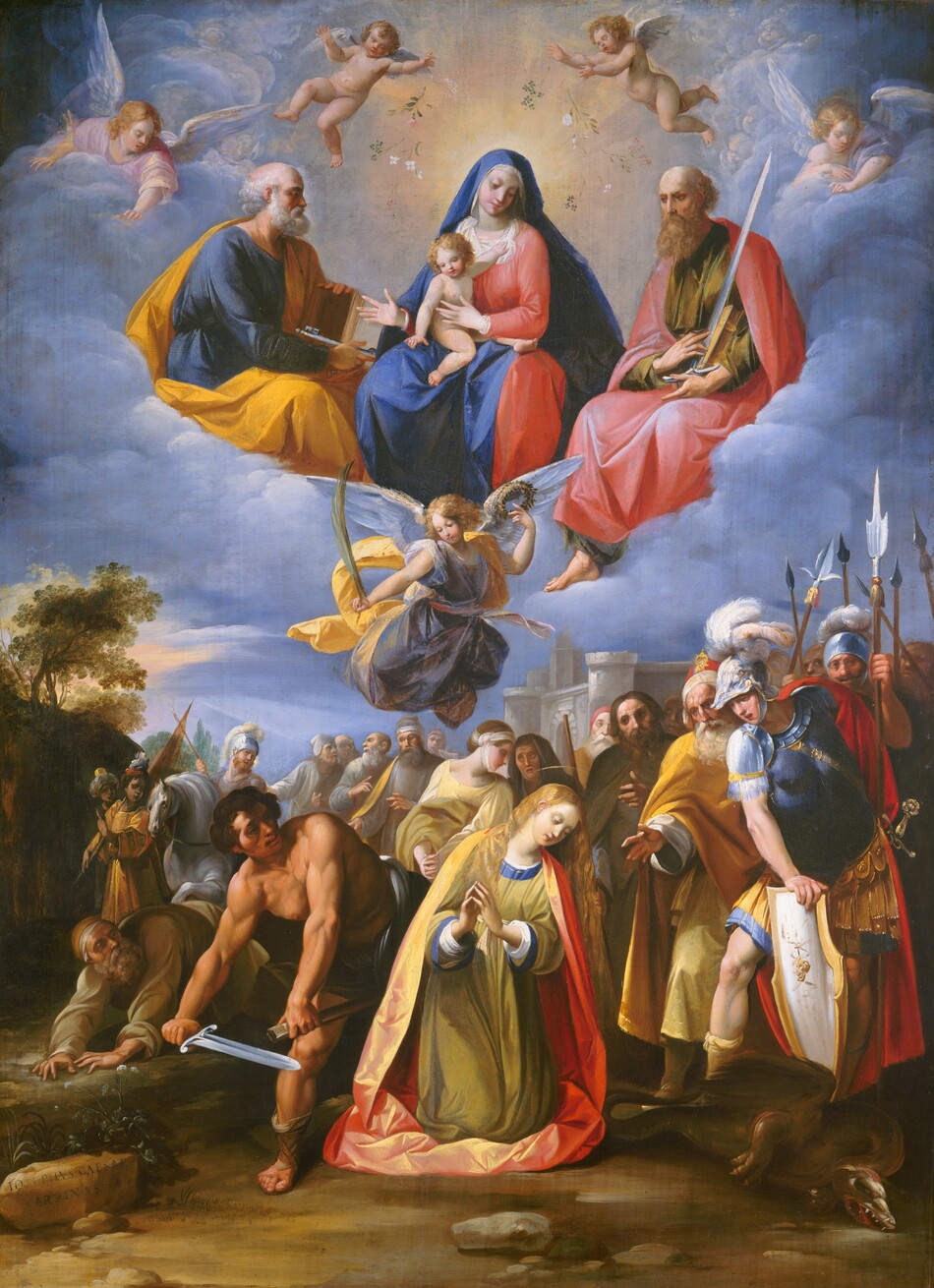
A young woman with long blond hair kneels in front of a crowd of about two dozen people, mostly men, under a heavenly group on cloudbanks overhead in this vertical painting. They all have pale or tanned skin. At the bottom center, the young woman, Saint Margaret, kneels facing us as she tips her head down and to our right, her fingertips pressed together in prayer. Her cloak shimmers from pale yellow to coral red over an olive-green gown edged with sapphire blue. A thin gold halo floats over her loose, waist-length hair. A muscular, bare-chested man to our right unsheathes a sword as he twists toward Saint Margaret. An armored man to our right rests one hand on a white and gold shield, which pins dragon to the ground. Another man is on horseback in the crowd beyond, and the rest appear to stand. Some hold halberds and spears. A rocky outcropping rises to our left, and a gray building is in the distance to our right. A woman holding a baby, Mary and Jesus, and two bearded men sit in a cloud bank in the top half of the picture. One man holds an oversized key and the other a sword. They and the people below wear robes and cloaks in tones of golden yellow, royal blue, dark rose pink, or shades of gray and brown. A winged angel holding a crown of leaves and a palm frond flies between the two groups, and more blond-haired angels hover above. Two baby-like putti scatter flowers over Mary. The artist signed the work in the lower left corner as if he had written his name on a rock. It reads, “IOSEPHVS CAESAR ARPINAS.”

Martyrdom of Saint Margaret

Giuseppe Cesari

c. 1608/1611

Oil on panel  Accession ID  1984.4.1

On View: West Building Main Floor, Gallery M27
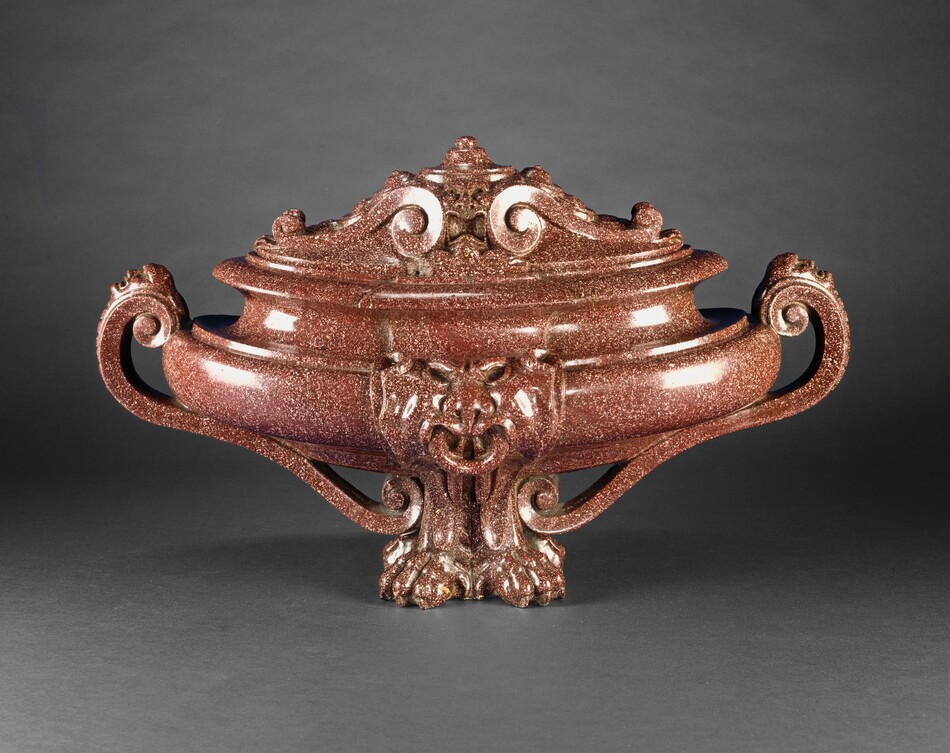
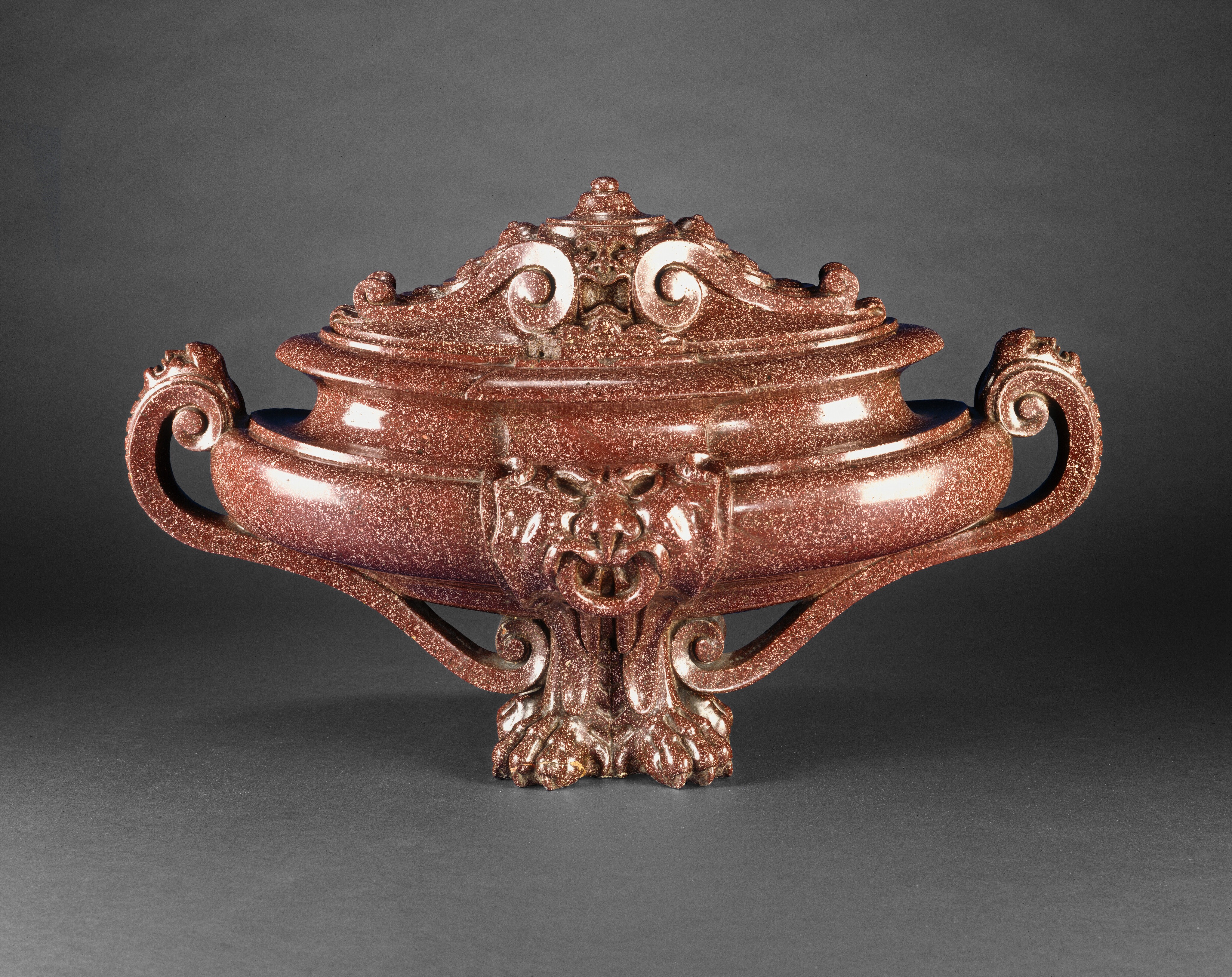
Carved with highly polished, speckled, rust-colored stone, this wide, elongated urn is oval shaped when seen from above. We look onto one longer side in this photograph. The foot of the urn is carved into two lion’s feet, turned slightly outward at an angle from each other. Where the body of the urn meets the feet is an animal-like face with a prominent lower lip and lion-like nose. The lower portion of the urn curves up to create a shallow bowl shape before angling inward into a deeply carved cove above. Two scrolling handles, one on each narrow end of the urn, curve from the bulging bowl of the urn down to the feet. Each handle is decorated with a human face, seen in profile with mouth open, near where the handle meets the body of the urn. The lid is decorated with scrolls and foliation that flank a humanoid face with a gaping mouth, a broad nose, and wide-open eyes. Light glints off the smooth polished surface, and the urn sits against a charcoal-gray background.

Urn with Grotesque Masks

Florentine 16th Century

c. 1580/1620

Porphyry  Accession ID  1953.13.2

On View: West Building Main Floor, Gallery M19
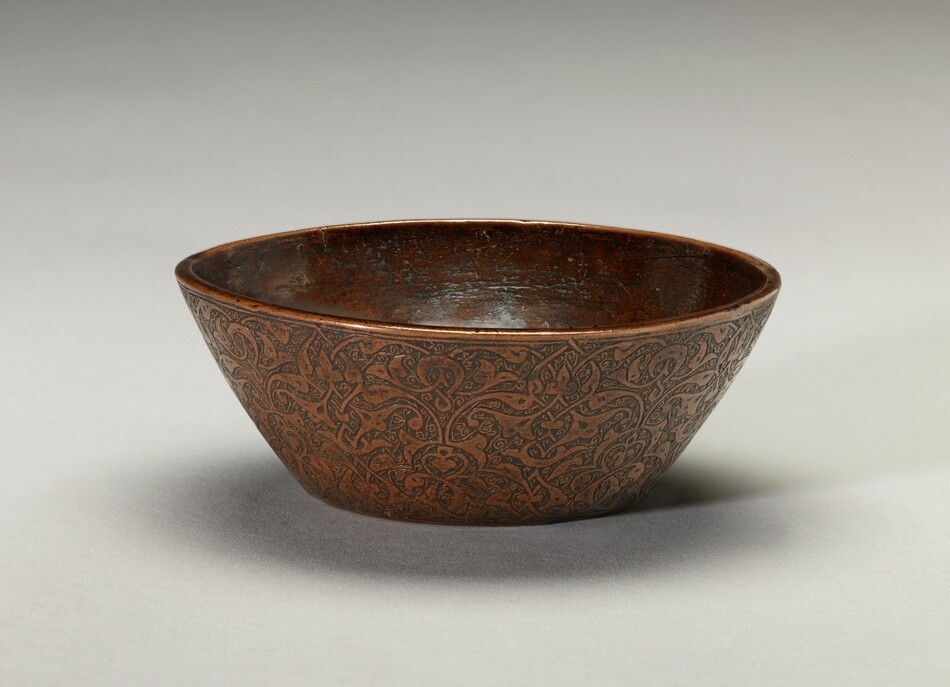
The image displays a sculpted bowl with a circular form. The bowl is a dark metallic brown color, suggesting it is made of metal such as bronze or copper. It is adorned with intricate engraved patterns consisting of interwoven swirling lines and curves. The bowl appears slightly worn with variations in patina but maintains a polished sheen. The angled placement of the bowl in the image showcases both the inner and outer surfaces, emphasizing the craftsmanship of the patterns and the smooth contours of the bowl.

A Bowl

Veneto-Islamic 16th Century

mid 16th century

Bronze//medium brown patina  Accession ID  1957.14.96

On View: West Building Main Floor, Gallery M25
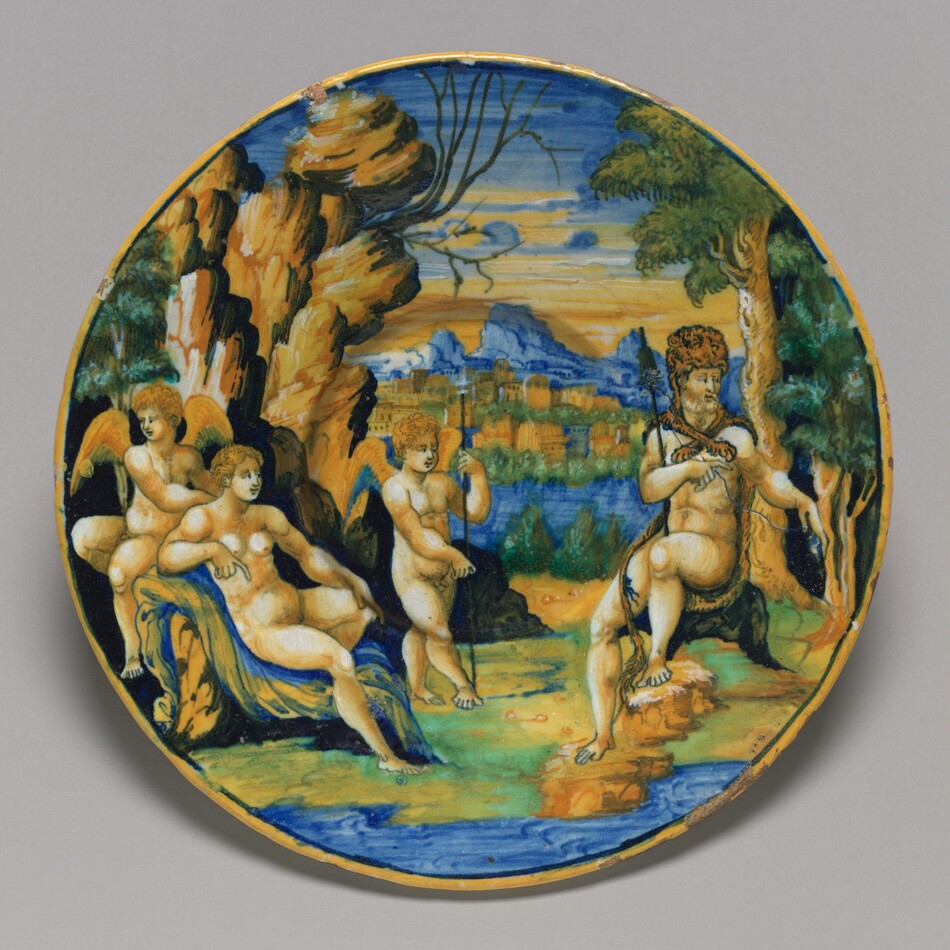
This is a painting of an outdoor scene with mythological figures. The artwork depicts a group of nude, winged figures relaxing in a lush landscape, with a distant view of a classical city beneath a sky tinged with sunset hues. In the foreground, trees and rock formations frame the mythological figures, who are adorned with rich colors and intricate details. The central sitting figure plays a pipe. The artist uses vivid colors like blues, greens, and earth tones. This is in the style of Giorgio Andreoli, known for his work with majolica ceramics featuring mythological and idyllic themes.

Plate with Hercules and Omphale

Sforza di Marcantonio

1551

Tin-glazed earthenware (maiolica)  Accession ID  2015.19.4015

On View: West Building Main Floor, Gallery M17
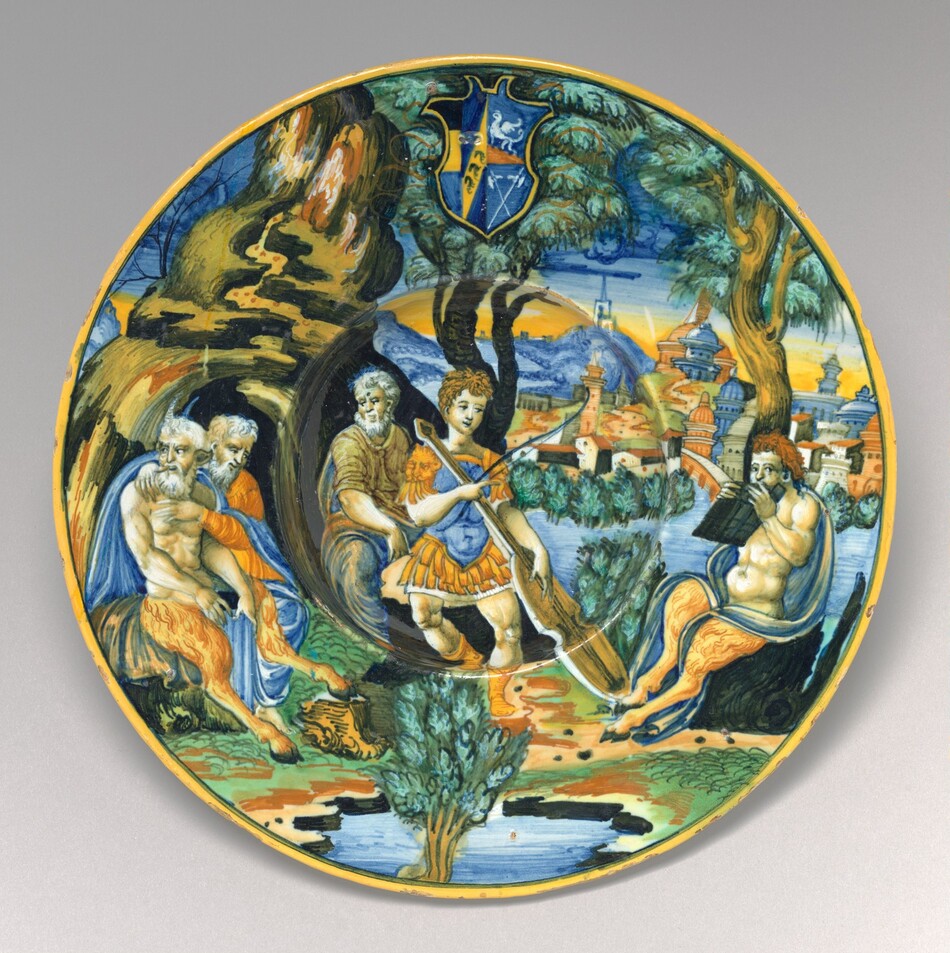
This is a painting of a decorative ceramic plate featuring a mythological scene. The plate is decorated with classical figures in an outdoor setting. The central figure is a person in classical attire with a blue and orange outfit, holding a spear or staff. To the left are older, bearded figures seated under a large tree. On the right, another figure sits under a tree, possibly reading from a scroll. The background shows a landscape with a walled city, turrets, and a river winding through greenery. The upper part of the plate features a heraldic shield with a yellow border. The style reflects the Italian Renaissance era.

Plate with Pan and Apollo

Urbino 16th Century

c. 1535/1540

Tin-glazed earthenware (maiolica)  Accession ID  2015.19.4019

On View: West Building Main Floor, Gallery M17
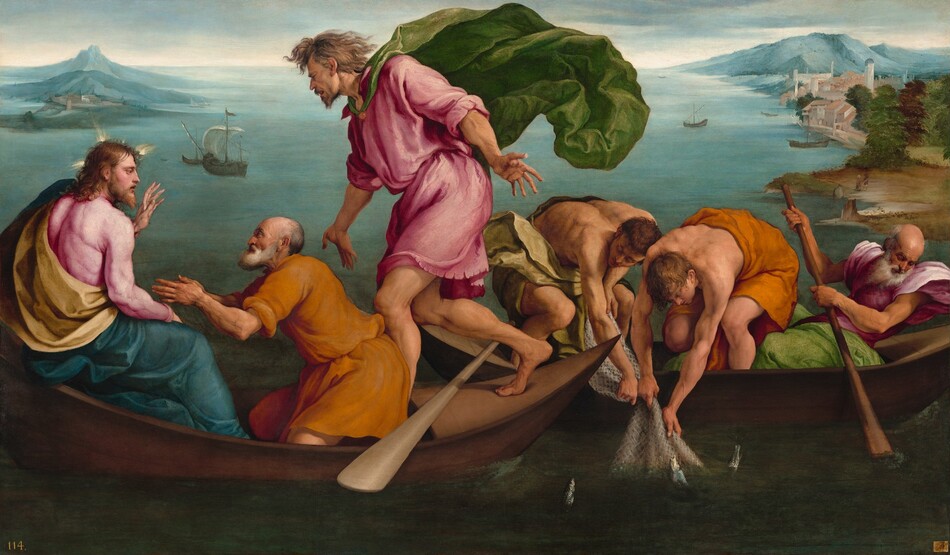
Close to us, six light-skinned men crowd into two small wooden boats that together span the width of this horizontal painting. The bow of the boat to our left overlaps the stern of the boat to our right. In the stern of the boat to our left, along the left edge of the canvas, a man, Jesus sits in profile facing our right. A marine-blue garment drapes around his waist and legs over a rose-pink tunic, and three rays of gold light emanate from the top, front, and back of his head. He raises his left hand toward the other two men in his boat. A bearded, balding man wearing marigold orange kneels with his hands pressed together in prayer in front of Jesus. To our right, at the bow of the boat and near the center of the composition, a younger bearded man with flowing hair steps toward Jesus, his arms outstretched. His pink tunic and emerald-green cape billow around him. Two muscular, bare-chested men bend over the side of the boat to our right, pulling in a fishing net. A balding man with a white beard sits in the bow of that boat, his body facing our left. He looks over his left shoulder toward the water and the half-submerged oar he holds. Blue water stretches into the distance between a distant mountain to our left and the meandering shoreline to our right. The horizon where the blue sky meets the water is close to the top edge of the composition.

The Miraculous Draught of Fishes

Jacopo Bassano

1545

Oil on canvas  Accession ID  1997.21.1

On View: West Building Main Floor, Gallery M22
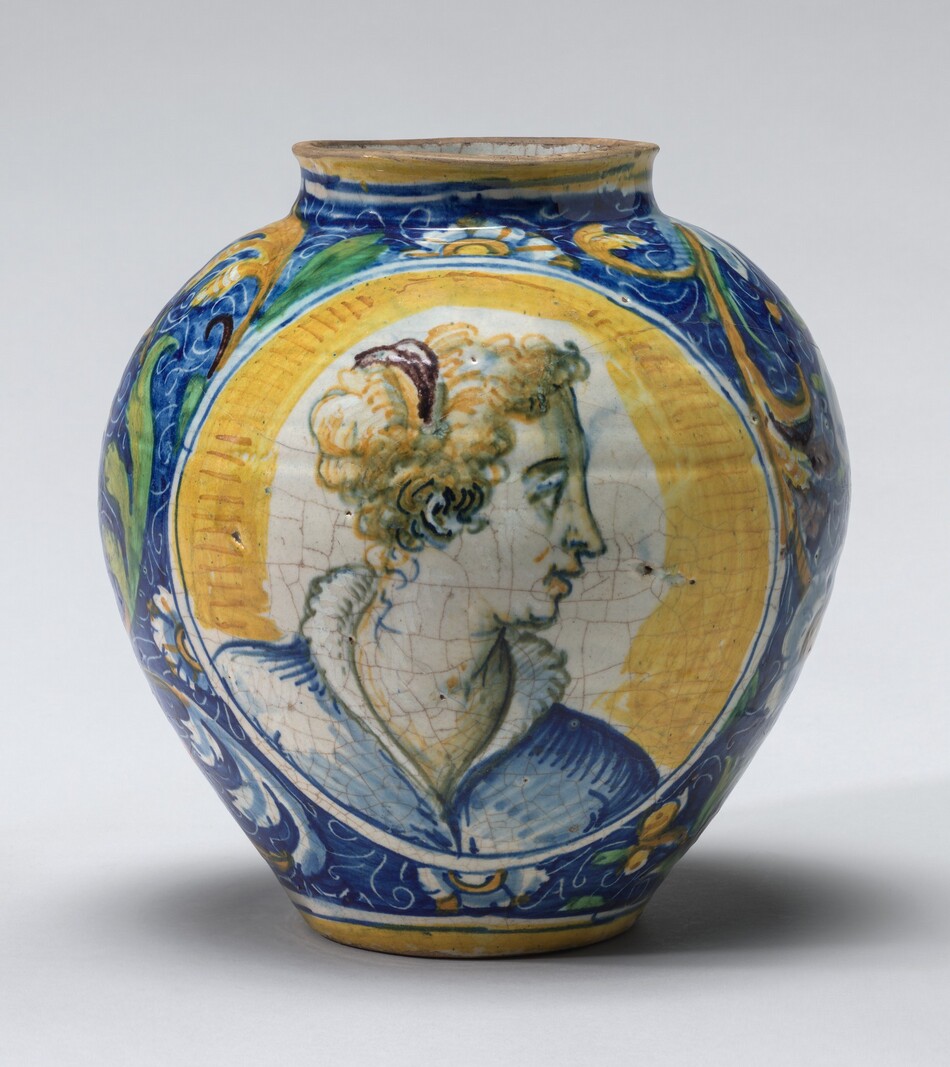
This is a photograph of a decorative ceramic jar with a portrait. The jar is adorned with vibrant colors featuring a central circular medallion depicting a profile portrait. The portrait is done in a classical style, with curly hair, an elaborate ruff collar, and delicate features facing left. The background of the medallion is styled in a warm yellow tone. Surrounding this central image, the jar has intricate patterns in blue, yellow, and green, incorporating leaves and floral motifs. The rounded shape of the jar, along with the rich colors and artistic glaze work, suggest an appreciation for classical art design. The craftsmanship and detail suggest the piece could be from the period of Renaissance ceramics.

Drug jar with heads of women

Italian 16th Century

c. 1550/1570

Tin-glazed earthenware (maiolica)  Accession ID  2014.136.325

On View: West Building Main Floor, Gallery M25

Loading Results