Modern Art 1940–1980

Filter Results

76 artworks on view.

Results

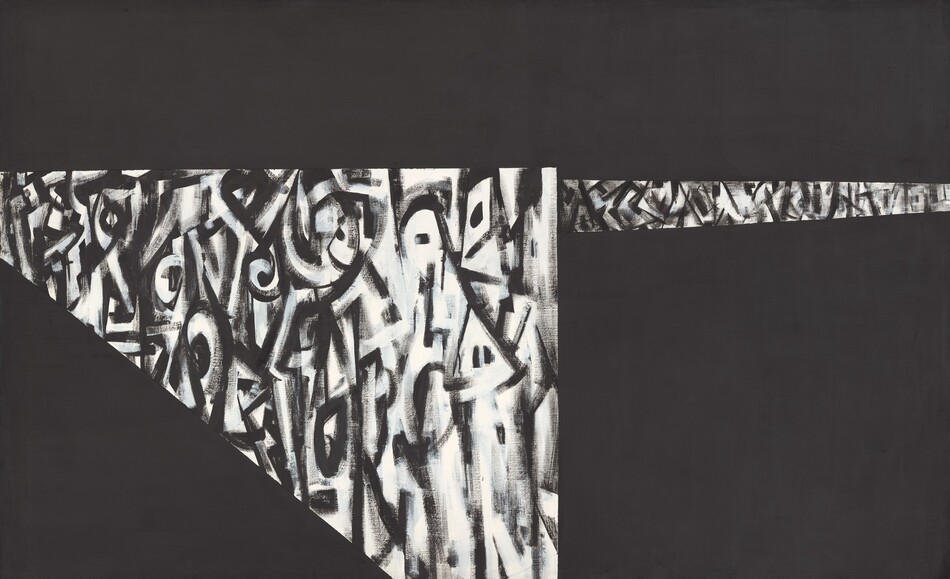
A black and white triangle to our left floats against a black background, and a black and white strip extends from the triangle at the center of the composition to our right in this abstract horizontal painting. The triangle to our left is set so the long edge, across from a right angle, cuts across the lower left corner of the canvas, extending off both edges. This main triangle is filled with black and white curved, straight, and angled lines in shapes reminiscent of letters and symbols. Similar marks fill the narrow strip that spans the right half of the painting, connecting the right angle of the triangle with the right edge of the canvas. The area behind the triangle and strip is flat black.

Untitled (Alabama)

Norman Lewis

1967

Oil on canvas  Accession ID  2009.45.1

On View: East Building, Upper Level, Gallery E406
""

Clarinet Bridge

Claes Oldenburg

1992

Canvas, wood, clothesline, polyurethane foam, resin, and latex paint  Accession ID  1995.38.1

On View: East Building, Upper Level, Gallery E407

First Theme

Burgoyne Diller

1964

Oil on canvas  Accession ID  1994.82.2

On View: East Building, Upper Level, Gallery E407
The image displays overlapping geometric shapes such as rectangles and parallelograms arranged in an abstract formation. The shapes are colored in vibrant hues like red, blue, green, yellow, and purple, intersecting at various angles. The pattern resembles a chaotic mosaic or tangled web, reminiscent of a city map. The bold, solid colors create a dynamic composition that leads the eye in multiple directions across the canvas.

Hawk's Return

William T. Williams

1969-1970

Acrylic on canvas  Accession ID  2025.35.1

On View: East Building, Upper Level, Gallery E407
In this painting, vertical lines of varying color and thickness have been painted on the center-left side of a light-colored canvas. The stripes are deep blue-green, brown, vivid orange, dark blue, bright yellow, dark red, light green, purple, and dark green. These stripes have been painted next to one another with no space in between. They stretch in straight lines from the bottom of the canvas almost to the top, with a small gap in between. Blank, off-white canvas is visible on either side of this group of lines, with more space on the left than on the right. The lines are mostly straight, although there are some small areas of imperfection where the colors slightly overlap or blend together.

1-33

Morris Louis

1962

Acrylic on canvas  Accession ID  1976.64.1

On View: East Building, Upper Level, Gallery E407
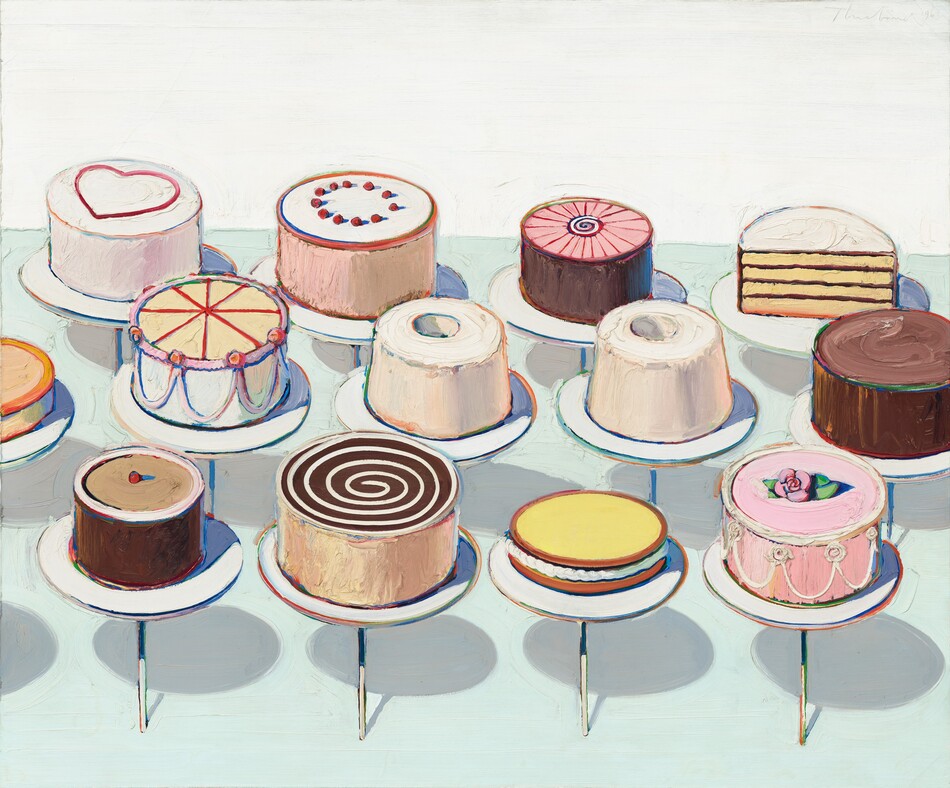
Thirteen round cakes sit in three rows, each on a disk-like stand supported on a thin rod, in this horizontal painting. We look slightly down onto the cakes, which only barely overlap. All of the cakes are round except for one, which has been cut in half so we see the four layers of yellow cake and chocolate frosting inside. The top of that cake is white. All of the other cakes are unique except for two angel food cakes at the center, which are slightly different heights. Most of the other cakes have white or brown frosting, except for a pink cake at the front right. That cake has white swags piped on the sides and a pink rose on the top. Next to it is a cake topped with yellow, perhaps lemon curd. The other two cakes in the front row have a white swirl against dark brown frosting, and the fourth, near the left egde, is topped with a single red cherry. Half of a low, pale orange cake is cut off by the left edge of the canvas in the middle row. Each cake stand casts a pale gray shadow against the light, arctic-blue counter. The paint is thickly applied throughout, and the outlines around the cakes, plates, and rods are streaked with rainbow colors. The artist signed the work by incising his name and the date into the wet white paint in the top right corner: “Thiebaud 1963.”

Cakes

Wayne Thiebaud

1963

Oil on canvas  Accession ID  1991.1.1

On View: East Building, Upper Level, Gallery E407
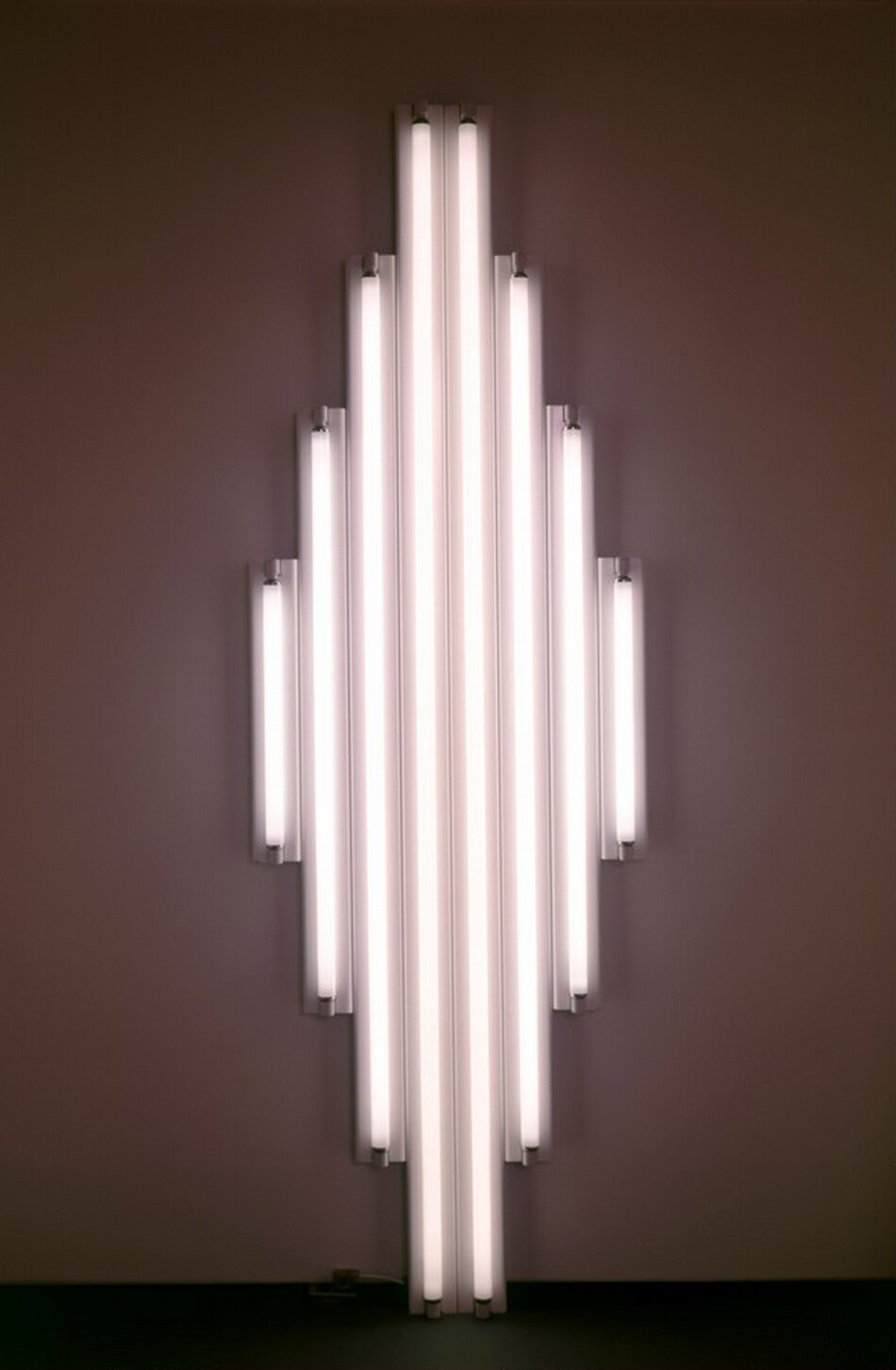
The sculpture is composed of fluorescent light tubes arranged in a symmetrical pattern. The tubes are vertically aligned in a configuration that forms an elongated diamond shape. The lights emit a soft white glow, illuminating the surrounding area. The sculpture is mounted on a wall and appears to be composed of materials typically used for fluorescent lighting fixtures, such as glass and metal. The arrangement gives the appearance of a structured and linear design, standing out distinctly against the neutral-colored wall behind it.

"monument" for V. Tatlin

Dan Flavin

1968

Cool white fluorescent light  Accession ID  2001.68.1

On View: East Building, Upper Level, Gallery E406
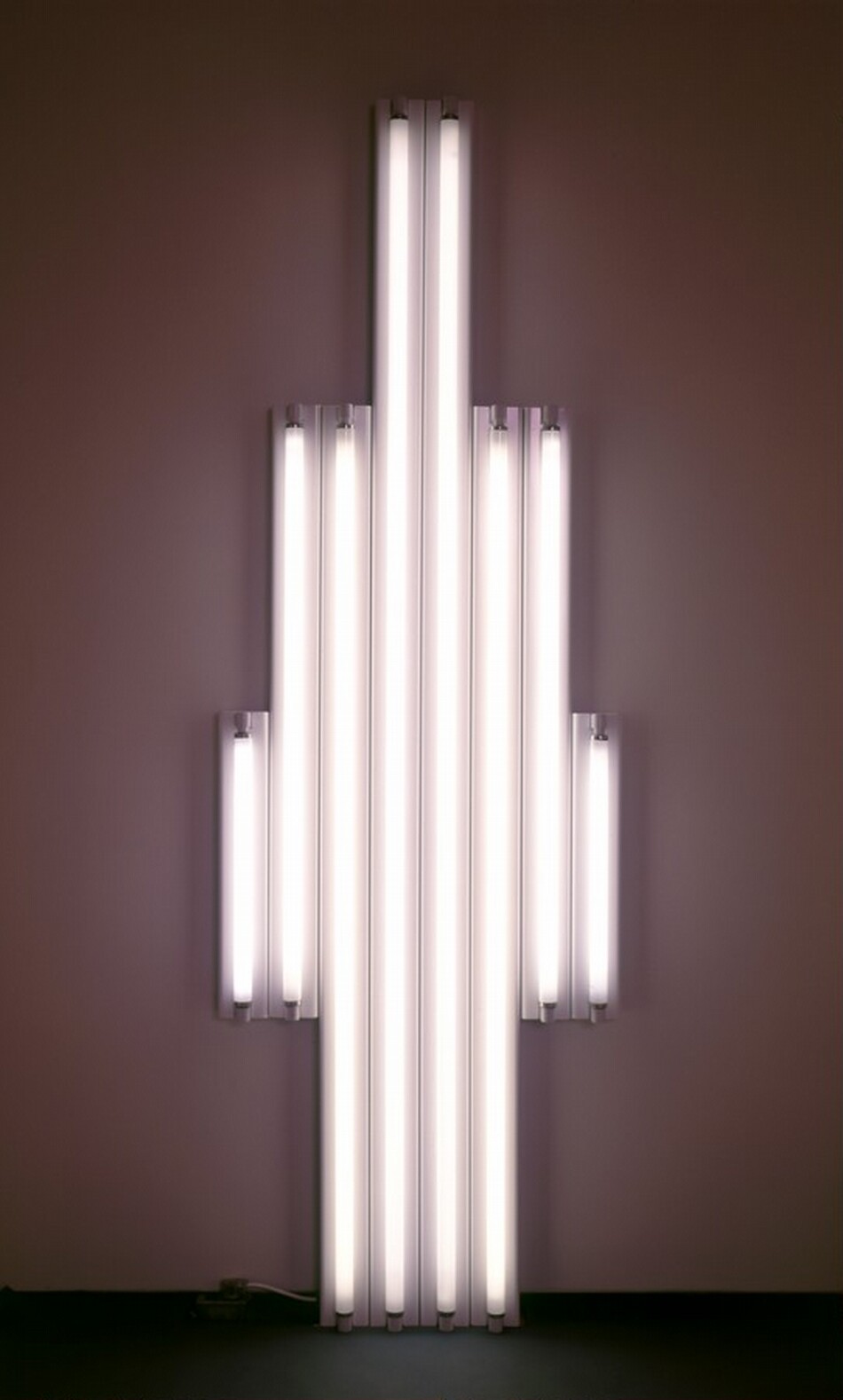
This sculpture is an arrangement of fluorescent light tubes against a plain wall. The tubes are of different lengths and are all placed vertically. In the center are two tall tubes, with a series of shorter tubes extending to the left and right. They create a tiered triangle shape with a line extending from the bottom that looks similar to a blocky arrow pointing upwards. The tubes cast white light on the wall behind them.

"monument" for V. Tatlin

Dan Flavin

1969-1970

Cool white fluorescent light  Accession ID  2001.84.1

On View: East Building, Upper Level, Gallery E406
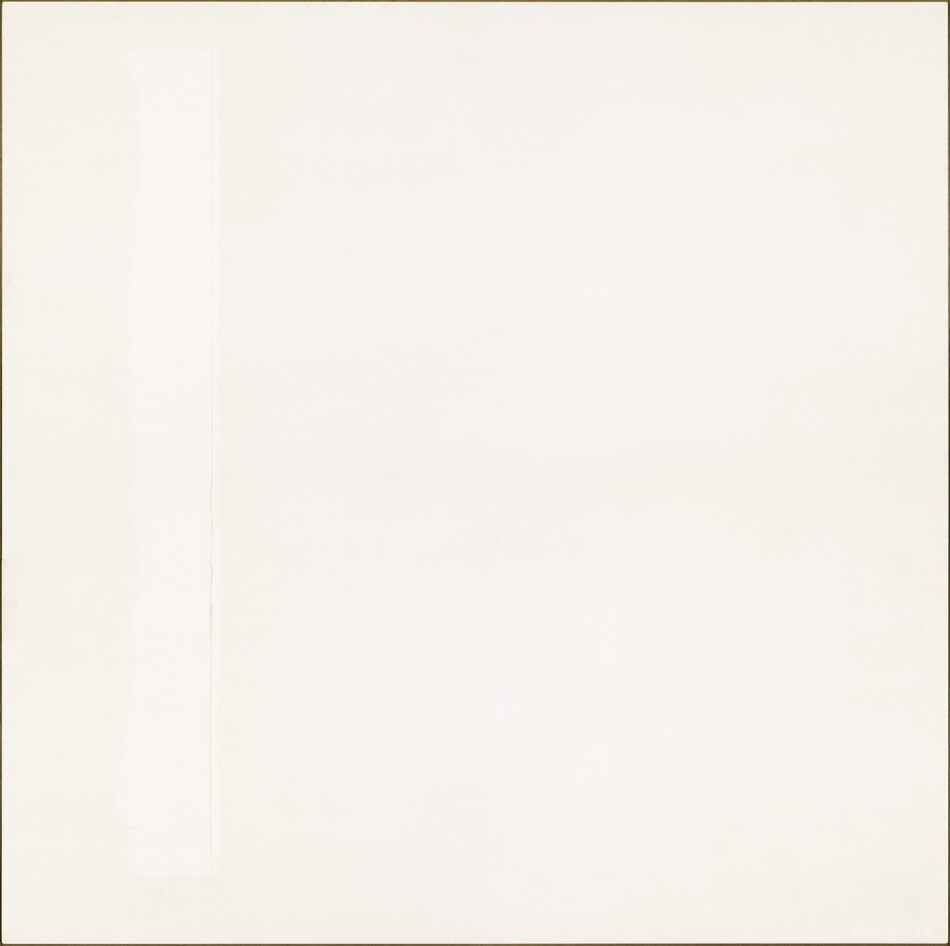
At first glance, this painting appears to be empty, off-white canvas. Upon closer inspection, however, a vertical strip becomes visible on the left side. This strip is a slightly brighter white than the rest of the canvas. The painting is outlined by a thin, dark line.

Arundel XI

Anne Truitt

1974

Pencil and acrylic on canvas  Accession ID  2014.136.126

On View: East Building, Upper Level, Gallery E406
The image depicts a silhouette of a person's upper body from the shoulders upwards, in profile view facing left. The figure wears a brimmed hat and has an indistinct facial profile with a possible nose and facial hair. The background is a solid light color.

Messenger

Thomas Chimes

1989

Oil on wood  Accession ID  2009.122.1

On View: East Building, Upper Level, Gallery E406
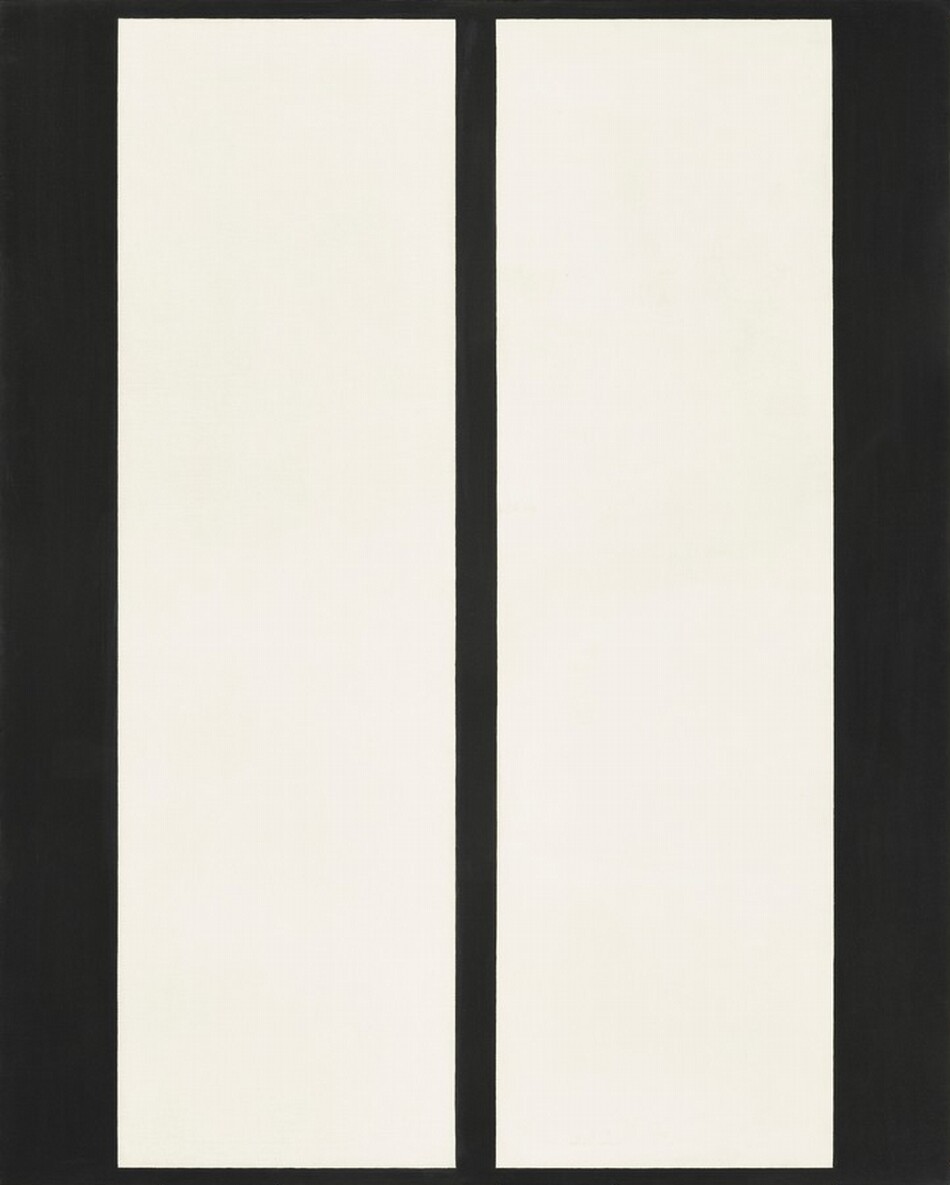
The image shows two large vertical white rectangles, divided by a thin black line in the center. The black lines surrounding the white spaces resemble the frames of windows, creating an abstract composition. The stark contrast between the white and black sections emphasizes the geometric shapes and simplicity of the design.

No. 18

John D. McLaughlin

1966

Oil on canvas  Accession ID  2015.19.126

On View: East Building, Upper Level, Gallery E406
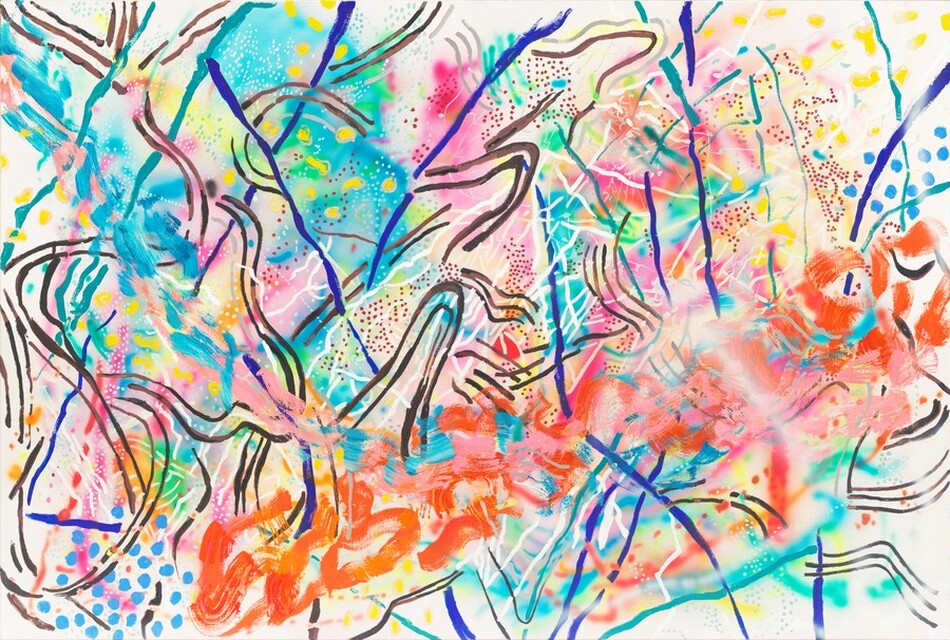
This colorful painting is comprised of swirling lines and curved shapes in various bright colors filling the canvas. Bright teals, reds, pinks, yellows, browns, and oranges fill the image. The colors are applied in swirling lines, dots, or abstract shapes. Some of the lines crisscross the entire canvas, while others are in a contained area. In some places, the white of the canvas beneath provides a background for the colors.

Agualine

Nancy Graves

1980

Oil on canvas  Accession ID  2010.14.1

On View: East Building, Upper Level, Gallery E407

Loading Results