


Everyday Awe
Through the Eyes of Georgia O’Keeffe


senior educator
We often think about awe in response to rare and intense events, such as viewing a sunrise over the Grand Canyon or watching Olympians break world records. But awe is also found in the commonplace—watching the leaves of a gingko tree change from green to yellow or appreciating a colleague’s skills and talents. To experience “everyday awe,” we just need to slow down, pause to notice what’s around us, wonder, and express gratitude for the marvelous beauty in the familiar.
American artist Georgia O’Keeffe (1887–1986) exemplifies “everyday awe.” She paused, looked closely, and found the extraordinary in the ordinary. Her artistic practice can inspire us to see through a lens of awe. Known for her paintings of flowers, bones, shells, stones, leaves, trees, mountains, and other natural forms, O’Keeffe invites us to slow down and reflect on what it means to truly see.
Deep Looking
“Nobody sees a flower—really it is so small—and to see takes time, like to have a friend takes time.”
Georgia O’Keeffe
The first lesson we can learn from O’Keeffe is that seeing is about building relationships—with nature, with art, with others. To look more closely, we need to find ways to move beyond the first glance and get to know what’s around us more deeply. By giving our full attention to something or someone, we create authentic connections.
Take a close look at her series of paintings of the jack-in-the-pulpit.
Pause to notice the colors, lines, and shapes that make up each composition.
Then compare them: What do some of the paintings have in common? What differences do you observe? Which painting do you find most intriguing? Why?
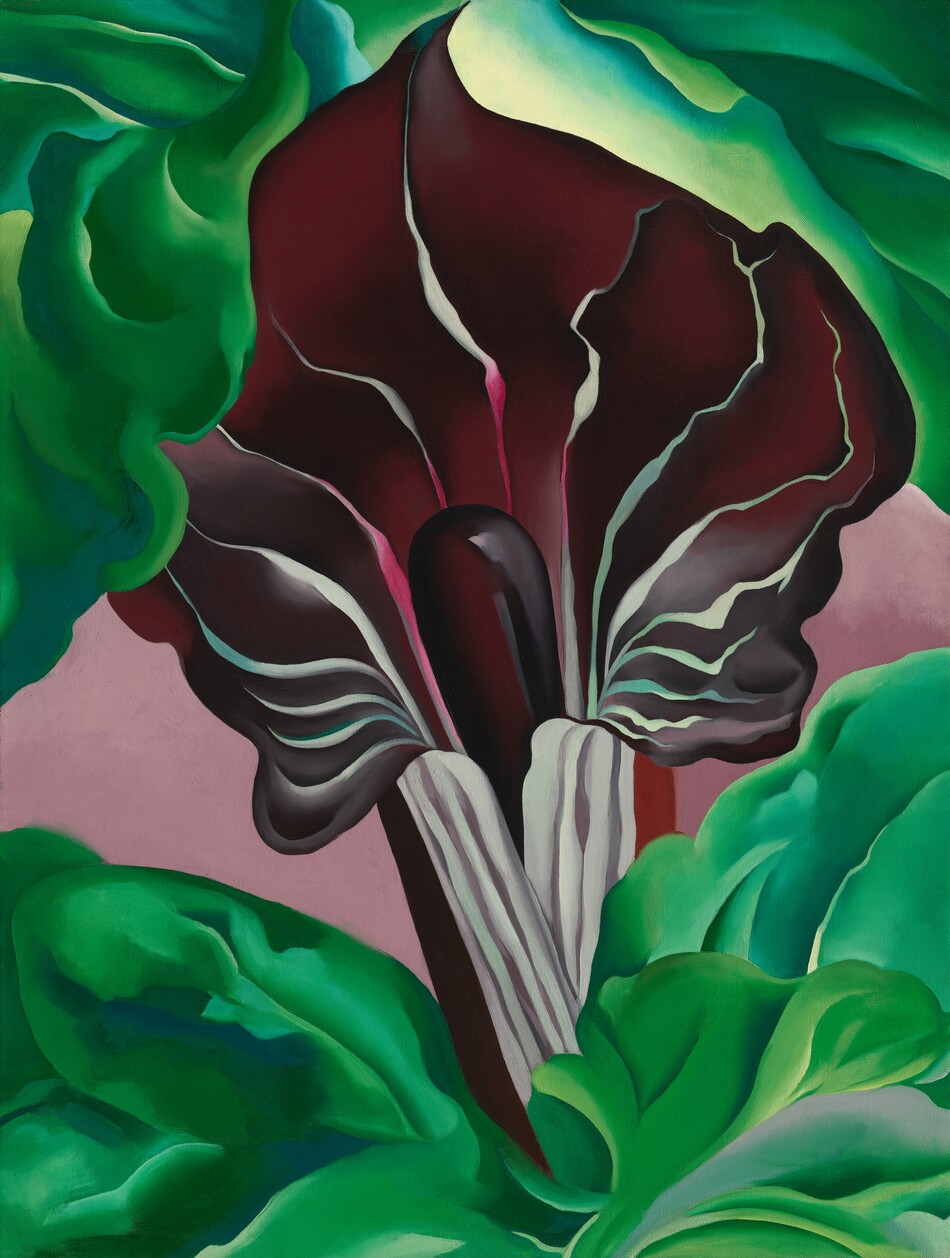

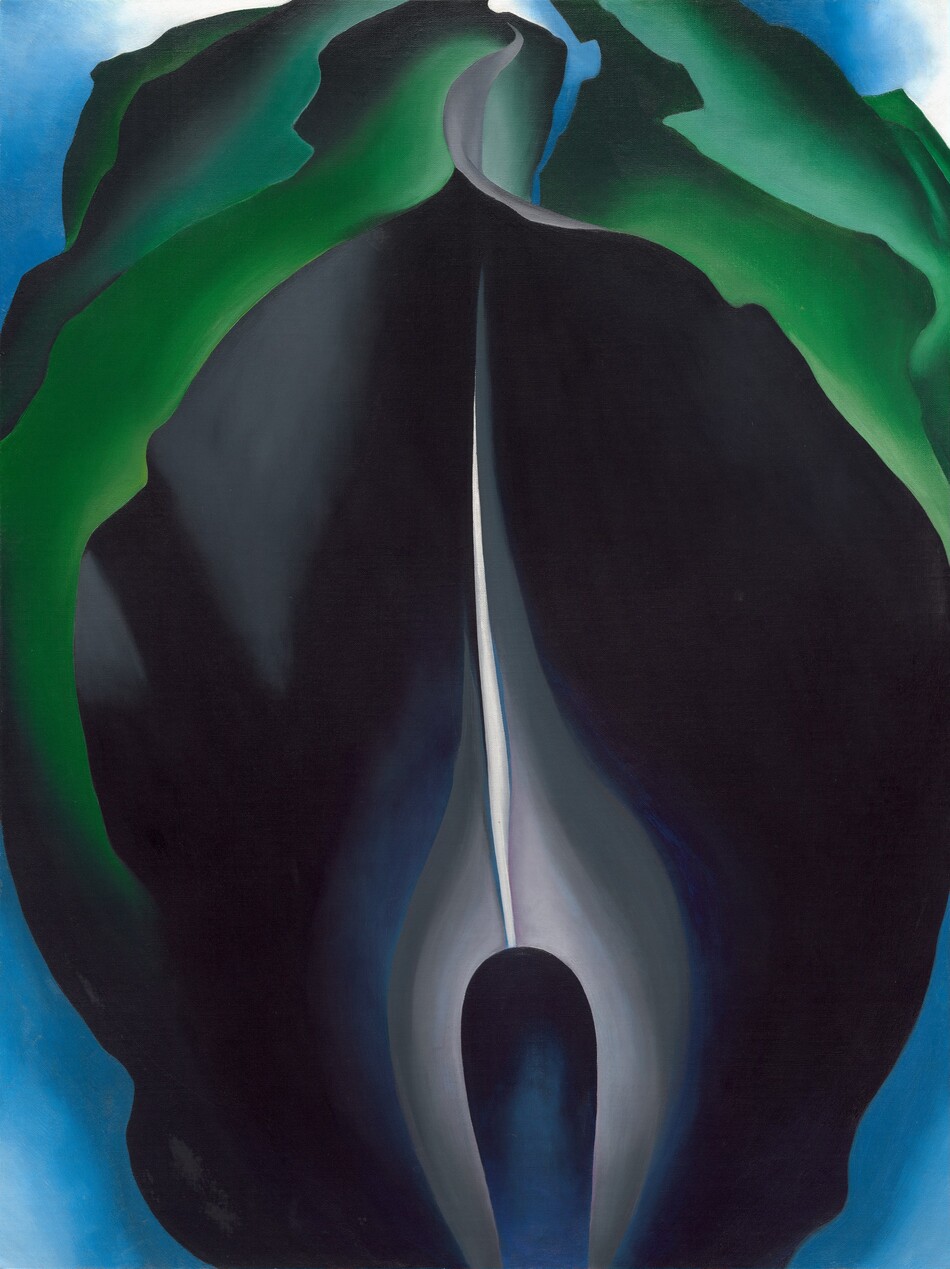

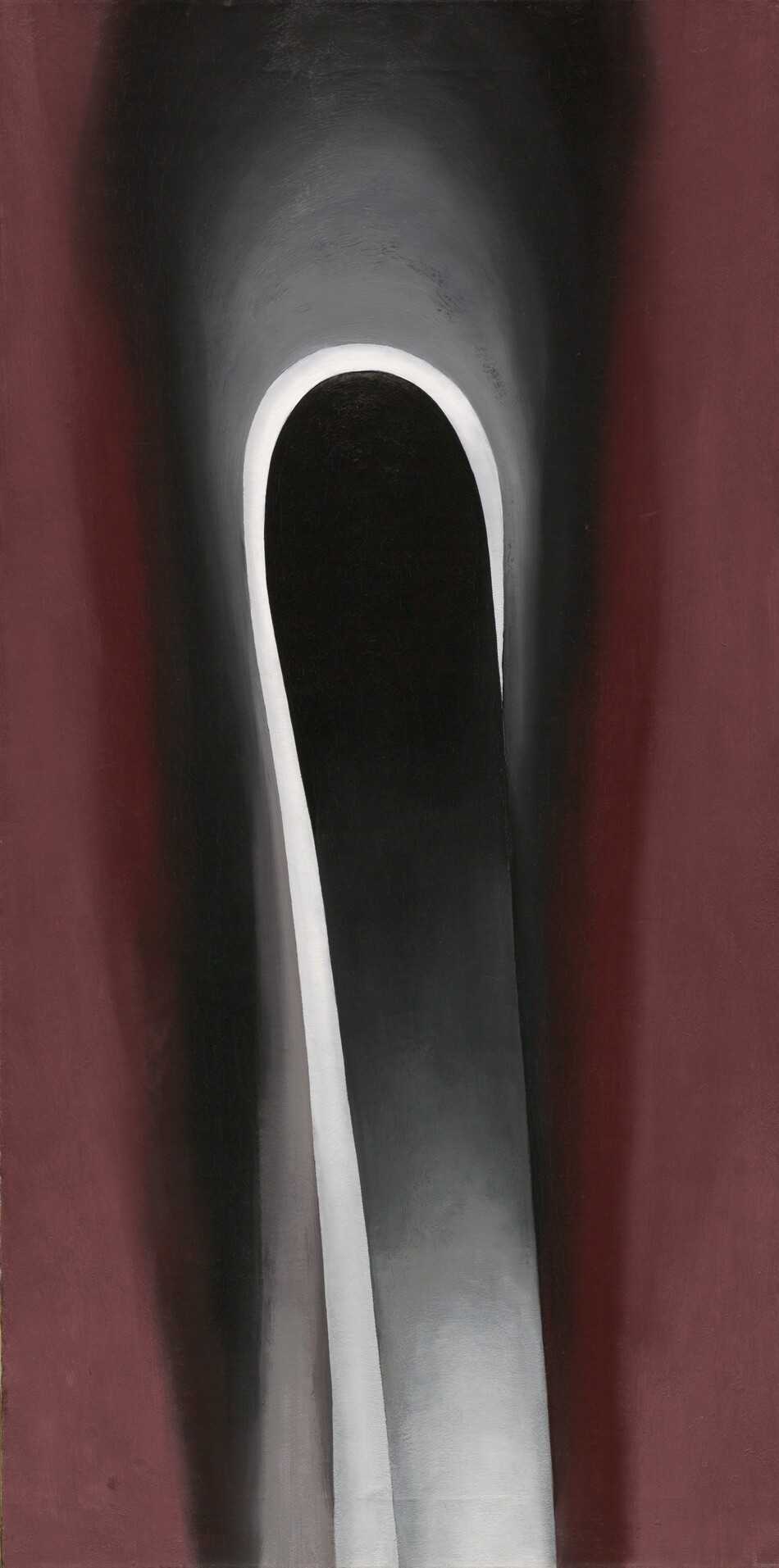
Concentrating on a single flower, O'Keeffe contemplates the intricate structure of the jack-in-the-pulpit. Curling leaves and sky are evident in some of her paintings, while the flower fills the entire canvas in others. By magnifying details deep inside the center of the flower, O’Keeffe makes visible and monumental what is often overlooked.
O’Keeffe’s Flower Fascination
O’Keeffe first painted flowers when she was growing up in rural Wisconsin. Her high school art teacher introduced her to jack-in-the-pulpits during a lesson, pointing out the plant’s unique shapes and color variations. The artist recalled,
“This was the first time I remember examining a flower. . . . She started me looking at things—looking very carefully at details. It was certainly the first time my attention was called to the outline and color of any growing thing with the idea of drawing or painting it."
Georgia O'Keeffe

An Arisaema Triphyllum or Jack-in-the-pulpit flower. Image via Wikimedia Commons.

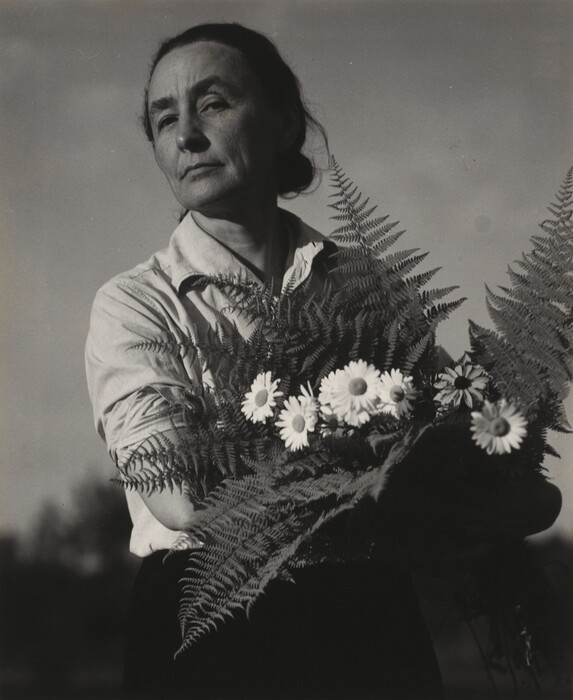
ln 1930 O'Keeffe found jack-in-the-pulpits in the woods near her summer home on Lake George in Upstate New York. She was inspired to create a series of six paintings. (The first one is now in a private collection. The next five are in the National Gallery’s collection.) These works show her deep interest in the design of nature.
O’Keeffe’s process of zooming in on details in nature, enlarging them to fill the canvas, and simplifying their colors and shapes transforms the flowers. Based on her close observation of nature, her form of abstraction turns particulars into universals.
A Beautiful World in Each Shell
One of O'Keeffe’s favorite activities was to pick up seashells as she walked along the beach. She often drew her favorite shells, and she displayed her collection at her home in New Mexico.
Sketching as O’Keeffe did helps us slow down our eyes so we can notice details and translate observations into lines and shapes.
Each shell was a beautiful world in itself. . . . I have always enjoyed painting them—and even now, living in the desert, the sea comes back to me when I hold one to my ear.
Georgia O'Keeffe
Find Awe Around You
How might you find everyday awe as Georgia O’Keeffe did?
Pause. Find a spot where you can focus on something in nature: a flower, tree, leaf, mountain, or water. Take a few deep breaths.
Notice. Look closely at patterns, small and large. Examine lines, shapes, textures. Notice changing light, repetition, symmetry. Appreciate the complexity and the intricate beauty.
Capture. Make a small sketch or photograph to remind yourself of this moment.
Awe at the National Gallery of Art
Come explore how to nurture an awe mindset.
You may also like

Article: 10 Ways to Cultivate Everyday Awe
Our quick tips for finding awe in art and the world around you.

Article: Holding Place: The Work of Alaskan Artist Sonya Kelliher-Combs
The tools, textures, and symbols of daily life in rural Alaska inspire this Indigenous artist to create works that tell layered stories of loss and resilience.