


How Three Artists Invite You to Contemplate the Enormity of the World
Experience the vastness of the universe, and our place within it, through awe-inspiring landscape paintings.

Vastness is a key ingredient of awe, and awe is good for us. We encounter vastness when we meet something that exceeds our ordinary frame of reference—something immense, mysterious, complex, or difficult to comprehend. In these moments, we pause (or sometimes are “stopped in our tracks”) and stretch our understanding to make room for what we are experiencing. Accommodating new perspectives is central to awe.
Vastness does not simply refer to physical size. It can be found in an endless horizon or towering tree, and also in the intricate structure of a flower, the depth of a parent’s love, the sweep of history, or the mysteries of the ocean. What matters isn’t how large something is, but how far it extends beyond what we already feel, believe, or understand. Because that frame is personal, so too is our sense of vastness. What inspires awe in one person may leave another unmoved.
Experiences of vastness can shift our self-concept. Faced with something larger than our individual concerns, we may feel small . . . in a good way! We may feel connected to something greater than ourselves. Vastness can help take our focus off ourselves—off our own individual cares and worries—and draw our attention toward our relationships with others, nature, history, and the wider world. By expanding our frame of reference, vastness opens us to awe and interconnectedness.
One way artists convey vastness is through panoramic views of nature. By inviting viewers to gaze toward distant horizons, adopt new perspectives, and reflect on the magnitude of the universe, artists help us appreciate vastness in the world around us.
Vastness at the Shore
How does the Norwegian painter Johan Christian Dahl convey vastness in View from Vaekero near Christiania? Consider that by taking your own imaginary “awe walk” through the painting. Zoom in and explore. You might imagine your sensory experience of the place. What would you feel? Hear? Smell? Touch? Taste?
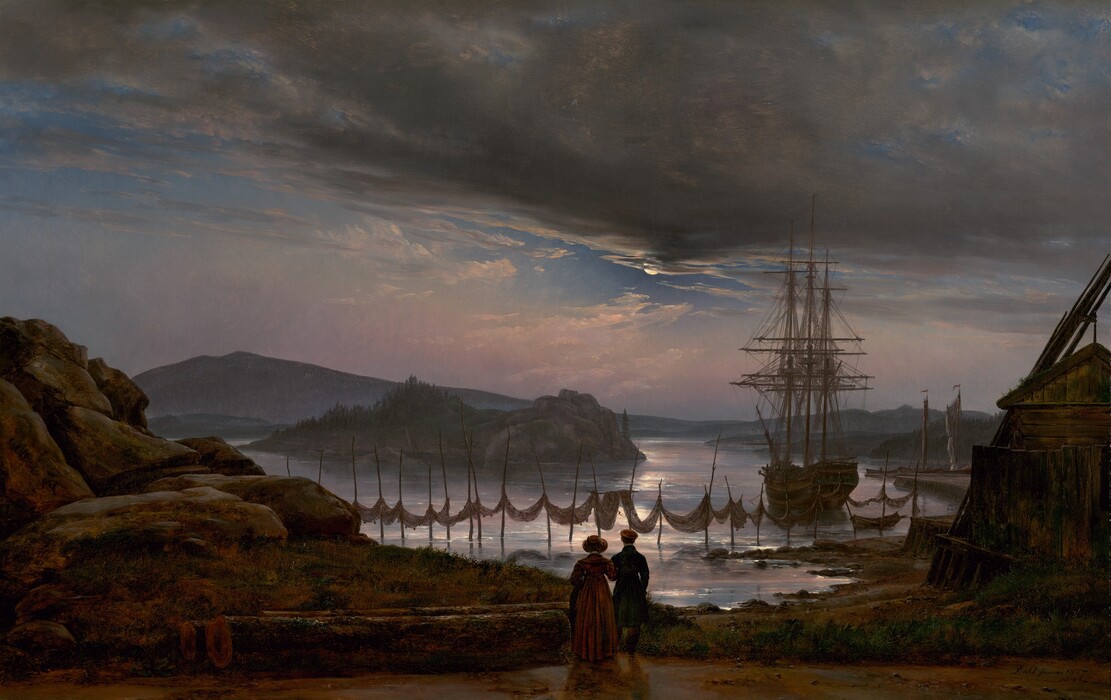
Now let's look at the painting together.
The couple gazes out at the ocean, inviting us to do the same. Anytime humans look at the sea, we’re only ever seeing a tiny part of it. Its depth, its reach, and its expanse are vast. The scale of the ocean is mysterious and powerful.
As the moon reflects on the water, we, too can reflect on our place in the world, the passage of time, and the vastness all around us. When have you felt small in relation to nature?
Vastness in the Woods
Hudson River School painter Jasper Francis Cropsey made our next landscape, Autumn—On the Hudson River. Start by taking an imaginary walk through the painting. Zoom and explore and allow your eyes to wander, amble, and meander around the work.
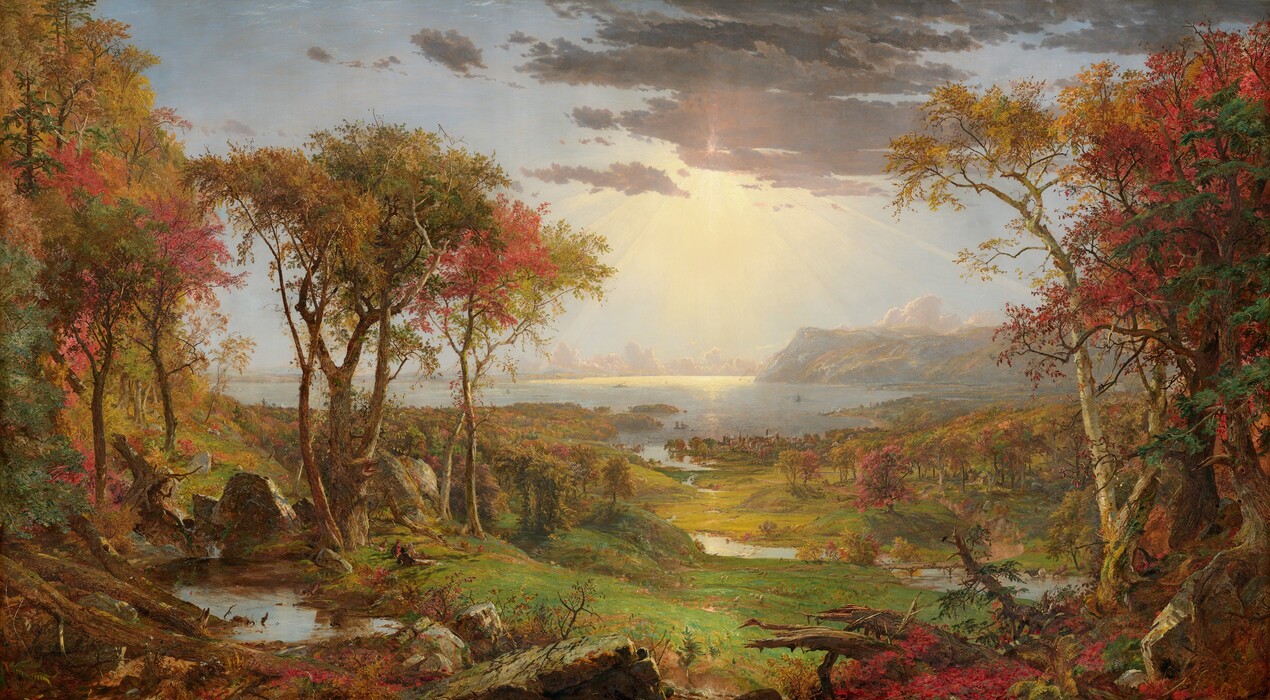
Now let's look together.
The seasons remind us that nature is constantly in flux, always changing, modeling the cycle of life.
Vastness in a Canyon
Finally we'll turn to a view that takes us far beyond what they eye can see—the Grand Canyon. How does Cherokee Nation of Oklahoma artist Kay WalkingStick convey its vastness in North Rim Temple?
As the title of the work indicates, this landscape is a spiritual place.
To Consider Vastness in Your Own Life...
Pause. Find a photo, video, or work of art with a vast perspective in it.
Reflect. Consider for a moment your small place in this big view. Consider the vastness of nature, space, and time.
Imagine. How might you move about your day with a heightened
awareness of your interconnectedness to something larger than
yourself?
Repeat this practice, or other ways to cultivate everyday awe, to help you notice, linger in, and appreciate vastness all around us.
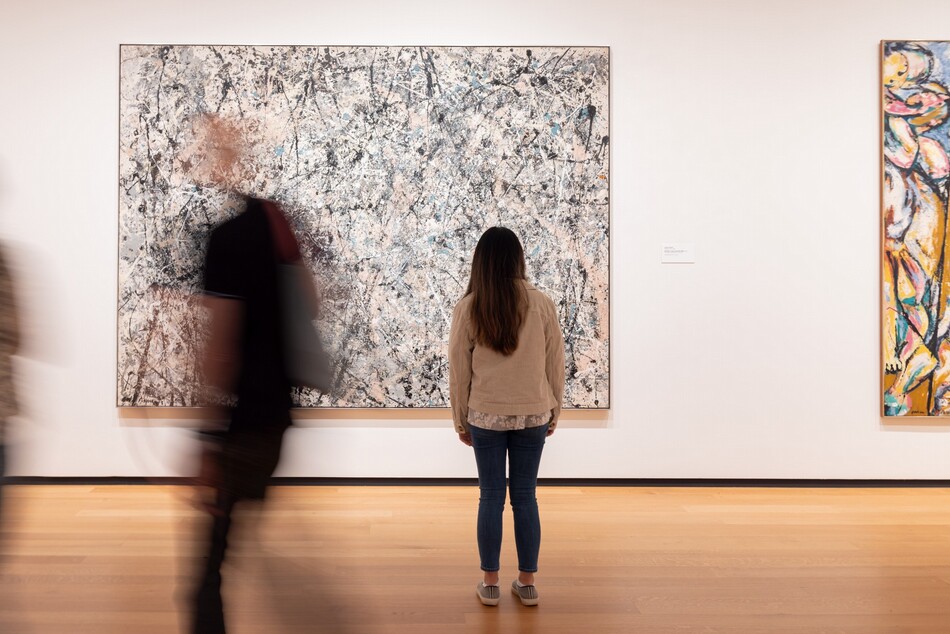
Awe at the National Gallery of Art
Come explore how to nurture an awe mindset.
You may also like
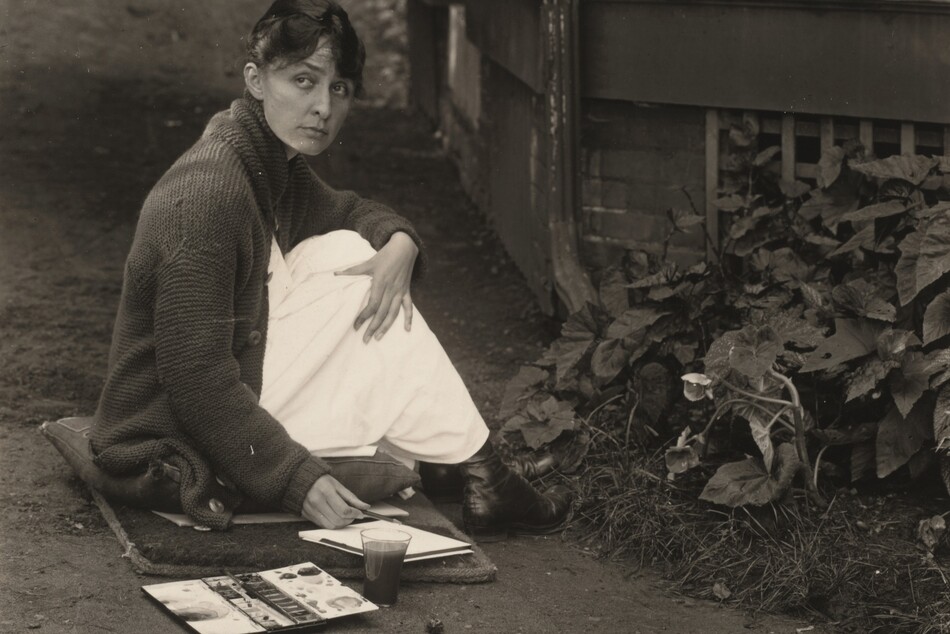
Interactive Article: Everyday Awe
Learn how the American painter Georgia O'Keeffe marveled at commonplace natural forms—and how to find the same sense of awe on your own.

Article: 10 Ways to Cultivate Everyday Awe
Our quick tips for finding awe in art and the world around you.