


Artistic Visions of Our Nation’s Nature

The dazzling colors of a sunset. The first buds on a tree in spring. The grace of a bird in flight. Does the natural world spark your creativity? The plants and animals on this continent have inspired generations of artists. As the United States was formed, artists were drawn to tall trees, brightly colored birds, and other living beings found here. This imagery shaped their artistic practices and, in turn, the identity of a fledgling nation.
The National Gallery's collection is rich with examples of the flora and fauna that inspired artists. Explore paintings, prints, photographs, and installations, all celebrating the natural beauty of the United States.
1. Jack-in-the-pulpit plants
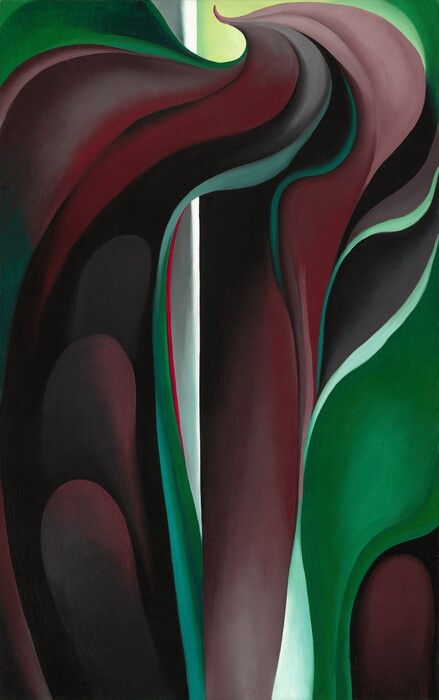
Artist Georgia O’Keeffe innovatively explored abstraction by capturing the colors and forms of the natural world in a new way. Known for her large, striking paintings of flowers, she once observed, “When you take a flower in your hand and really look at it, it’s your world for the moment.” Her deep connection to the blooms she painted inspired her unmistakable, semi-abstract style.
In 1930, O’Keeffe created six paintings of the perennial wildflower known as a jack-in-the-pulpit (Arisaema triphyllum). This uniquely shaped plant is native to the eastern United States and Canada. Jack-in-Pulpit Abstraction - No. 5 is the largest painting in this series.
The plant's rich purple and green forms swirl across the canvas, immersing the viewer in its strange beauty. Like much of O’Keeffe’s work, the painting is both recognizable and otherworldly, caught between abstraction and realism.
2. Rattlesnakes

A detail of Amalia Mesa-Bains, Venus Envy Chapter IV: The Road to Paris and Its Aftermath, Curandera's Botanica, 2008/2023, mixed media installation, Patrons' Permanent Fund and Purchased with support from the Ford Foundation 2024.1.1.
Across the varied cultures of the American West, rattlesnakes are a powerful symbol. They represent both good luck and evil, destruction and healing. Cherokee healers affixed the snake’s rattle to a gourd, using it as a medicine rattle in healing rituals, while Western films use rattlesnakes to inspire fear in viewers.
When Chicana artist Amalia Mesa-Bains created this installation, she included 400 cositas—small, meaningful objects from friends, family, and her own collections. One of these is a rattlesnake hide. It rests on a bed of moss, coiled around chicken eggs. Prayer cards, feathers, skulls, and votive candles surround the snakeskin.
Mesa-Bains’s collection of objects alludes to the work of curanderas, Indigenous and Mexican folk healers who employ natural remedies to treat patients. Mesa-Bains’s grandmother was a curandera who sprinkled snake powder over food to help heal skin ailments. This deeply personal work explores the artist’s own healing journey after a major car crash alongside histories of her family and her community.
3. Redwood trees
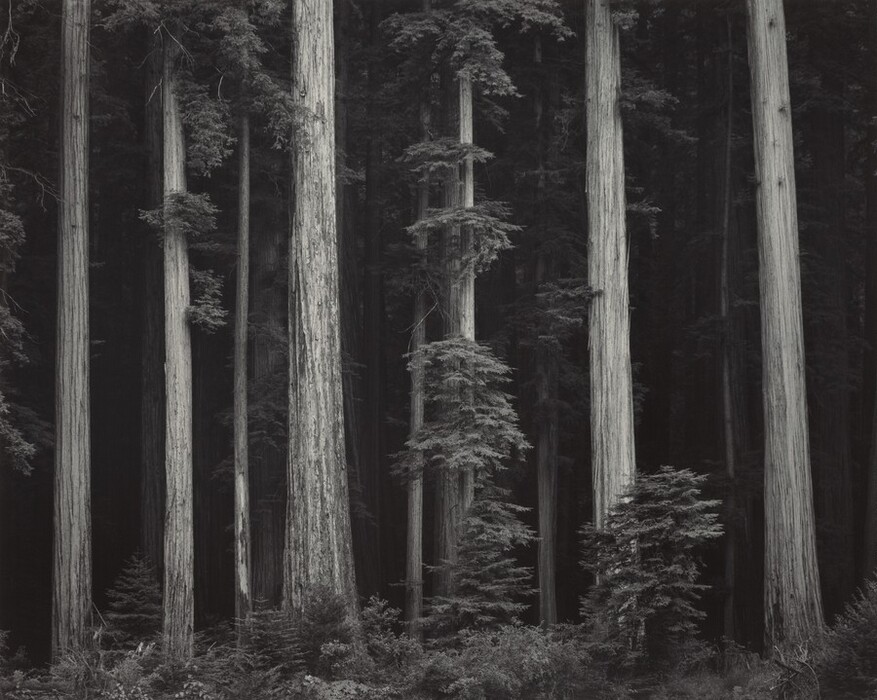
Photographer Ansel Adams was drawn to the monumental landscapes and incredible beauty of the western region of today's United States. In the early 1960s, he photographed the awe-inspiring forest at Humboldt Redwoods State Park in Northern California.
The redwood trees captured in this photograph thrive in a small section of California’s North Coast. These massive trees can grow as tall as 367 feet, about the height of a 35-story skyscraper. Many of them have been growing for hundreds of years, with some reaching 2,000 years old.
Despite their commanding size, redwoods are endangered; climate change has put their future at risk. Adams’s haunting photograph is a reminder of what we stand to lose if we do not fight to preserve them.
4. Sunflowers
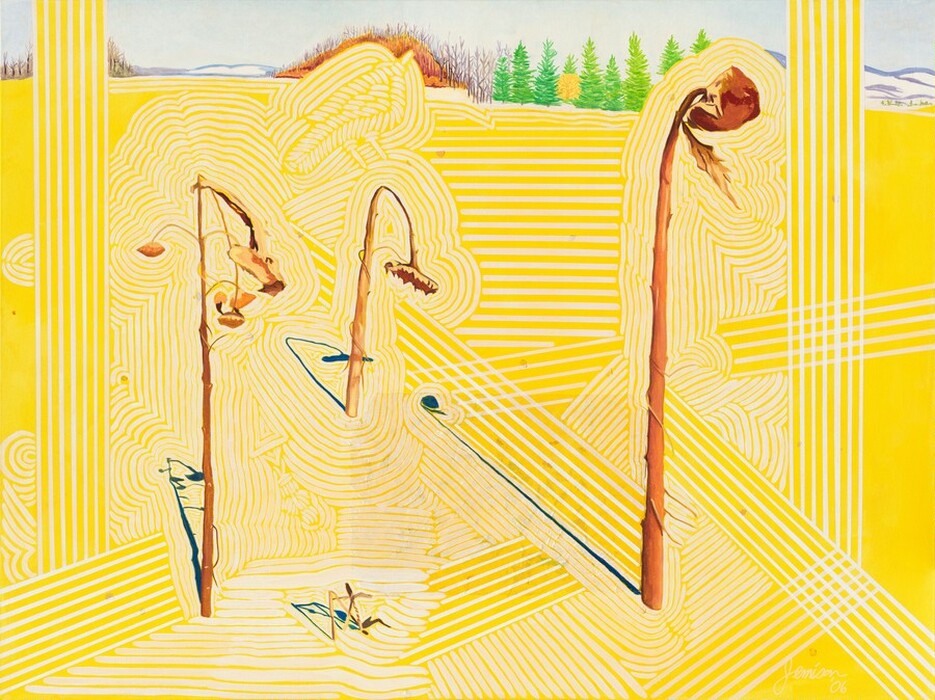
Sunflowers bloom at the height of summer. As they slowly wilt and droop, they mark the passage of seasons from summer into fall and winter. In this painting, even though snow has fallen, the dried-out sunflower stalks still stand, casting dramatic shadows over the landscape.
G. Peter Jemison’s (Seneca Nation of Indians, Heron Clan) paintings show a deep sensitivity to the cycles of the environment. Jemison understands the interconnectedness of the natural world and its processes. He uses this concept in his creative pursuits, and also as a “cultural worker,” building bridges between the art world and Indigenous communities.
His 2006 artwork—Sentinels (Large Yellow)—contrasts visions of summer sunflowers and winter snow. The yellow-and-white patterns that frame the plants echo the visual grammar of Seneca beadwork, linking Jemison’s people with the land.
5. Cows
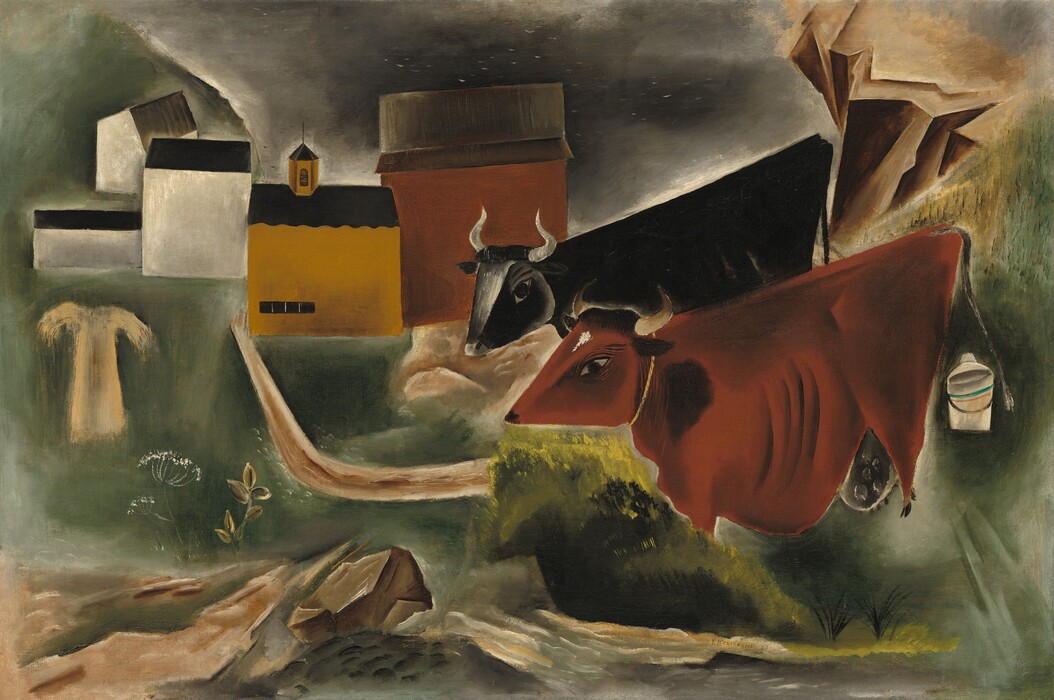
Japanese American artist Yasuo Kuniyoshi once said he “was born, judging by the Japanese calendar, in a ‘cow year.’” Because of this, he claimed his fate was “guided, more or less, by the bovine kingdom.”
The artist was fascinated by cows, animals that play a key role in the US economy and culture. Because of his choice of unlikely subject matter, critics labeled Kuniyoshi a satirist, but his interest was genuine.
Kuniyoshi’s influences were varied, geographically and stylistically. The angularity and distorted perspective of Cows in Pasture create a dreamlike scene, reminiscent of the work of European modernists such as Marc Chagall. Kuniyoshi was also fascinated by American folk art and explored this genre while at a summer art colony in Ogunquit, Maine. Synthesizing aspects of American folk art, Japanese painting and design, and European modernism, Kuniyoshi created what he considered a distinctly American art, as pluralistic as, in his words, the nation’s “conglomeration of customs and traditions of many peoples.”
6. American bison
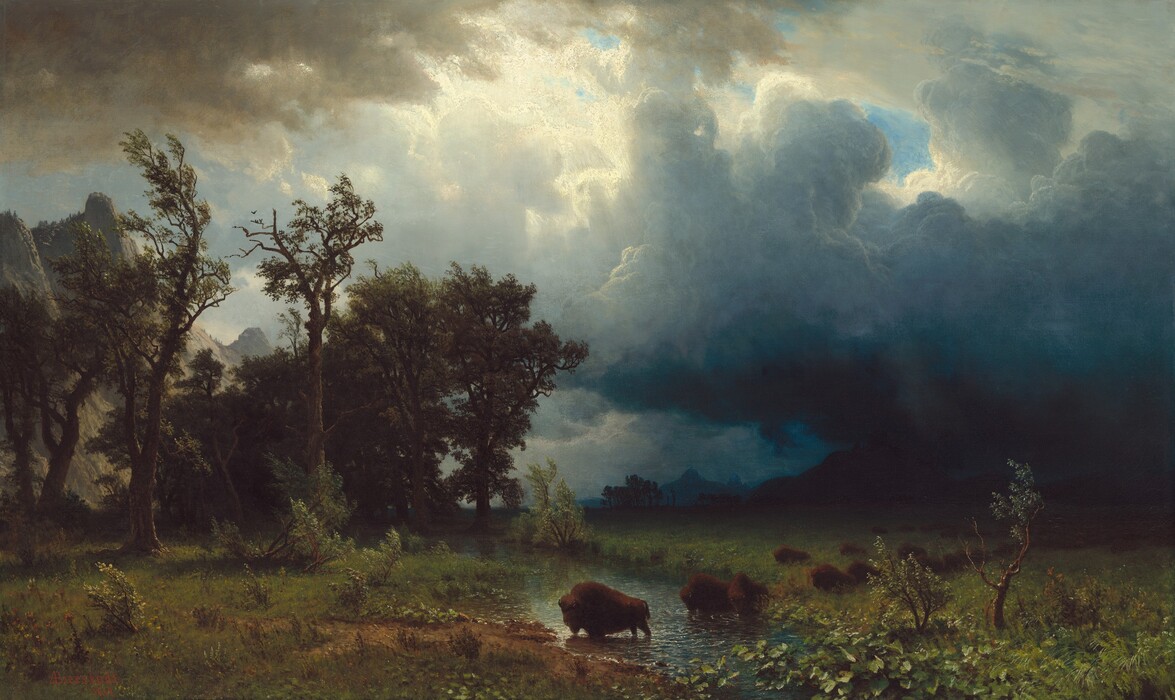
The American bison is a species unique to North America, and for millennia Indigenous peoples of the Great Plains have relied on them for clothing, food, and tools. Bison have also become a recognizable symbol in American popular culture, appearing everywhere from currency to sports teams logos.
Albert Bierstadt, a German American painter, was famous for his sweeping landscapes of the American West. He created multiple works depicting this iconic animal.
Upon seeing a bison for the first time, Bierstadt wrote that he became “so wrapped in admiration and study” that he could neither shoot the animal nor pick up his sketchbook to draw it. This scene communicates his reverence for the powerful creatures, showing them peacefully crossing a stream as storm clouds gather in the distance.
7. Palm trees
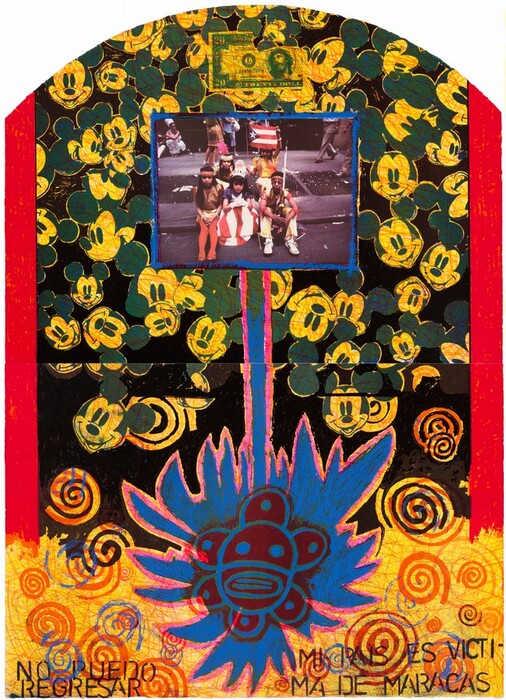
For artists like Frederic Church, South America and the Caribbean represented an Edenic paradise, and the palm tree the Tree of Life. Juan Sánchez subverted this symbolism by inverting the palm tree, calling attention to the complicated status of his native Puerto Rico. The upside-down palm bears the sun symbol of the Taíno people, the original inhabitants of the Caribbean. Emerging from the palm tree is a photograph of children at the New York City Puerto Rican parade. Images of Mickey Mouse surround the photograph.
Below, Sánchez included cascading spirals, a Taíno symbol for water and life. Text along the bottom edge of the print reads, “no puedo regresar mi pais es victima de maracas” (I cannot return my country is a victim of maracas). This phrase reminds us that while Puerto Rico is often perceived as a vacationer's paradise of palm trees and music, many must abandon it in search of a better life.
8. The Baltimore oriole
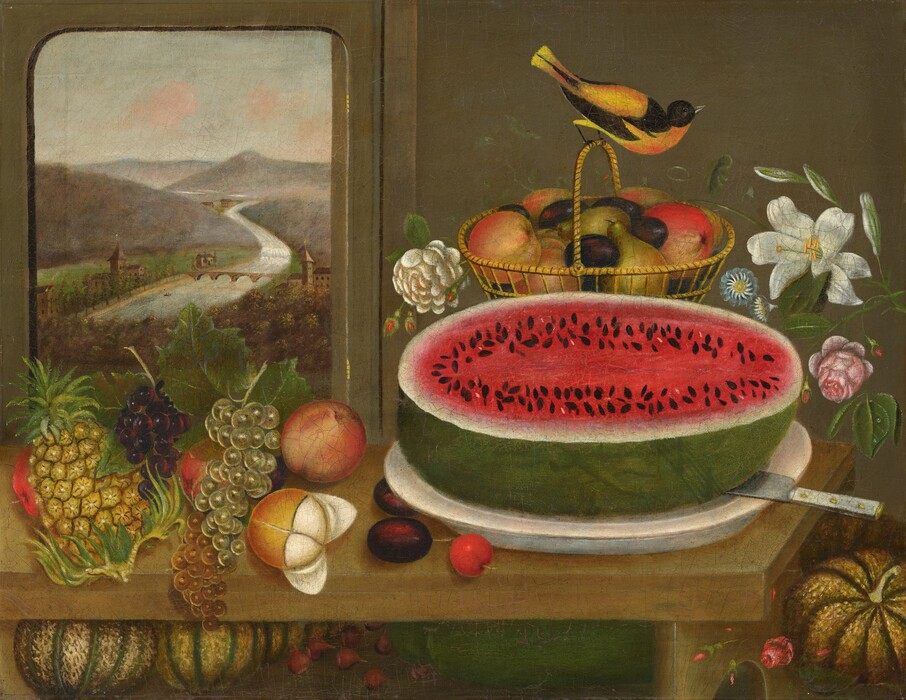
The vibrant orange-and-black plumage of the Baltimore oriole (Icterus galbula) is unmistakable in this painting. The bird is named for its colors, the same as those on the shield of Lord Baltimore of England (for whom the city of Baltimore, Maryland, was named). Today, the bird might be familiar to baseball fans; it’s the mascot for the city’s Major League Baseball team, the Orioles.
The oriole in this scene perches on the handle of a basket of fruit. Did it fly through the window from the peaceful landscape beyond? Maybe it hopes to feast on the fruit in the picture—watermelon and pineapples (which originated in Africa and South America, respectively) or squash, native to North America.
We don’t know much about the artist, only that they signed the work as “Wagguno.” But their skillful rendering of the spirited oriole, delicate flowers, and brightly colored fruits clearly communicates joy and pleasure in the act of creation.
9. Geranium

Artist Rembrandt Peale painted this portrait of his brother Rubens with a geranium, then a rare species. In fact, the geranium Rubens grasps is believed to be the first one grown in the US.
Rubens had limited eyesight (note the two pairs of glasses) and did not start out working as an artist, unlike most members of his family. Instead, he spent his early career as an avid botanist and naturalist. He and his father, Charles Willson Peale, ran a Philadelphia museum thought to be the first natural history museum in the United States. Its collection included specimens of birds, insects, reptiles, and plants, as well as a mastodon skeleton.
Charles greatly admired the work of the French naturalist Georges-Louis Leclerc, Comte de Buffon. However, Buffon once claimed that nature in North America was “weaker, less active,” and had less variety than in Europe. Through their collecting practices, the Peales sought to assert that the nation’s native creatures were just as fascinating and diverse as Europe’s.
Pairing his brother with this elegant plant, Rembrandt depicted Rubens as a naturalist. Toward the end of his life, Rubens picked up painting, making still lifes of flowers he grew on his own farm.
10. The turkey
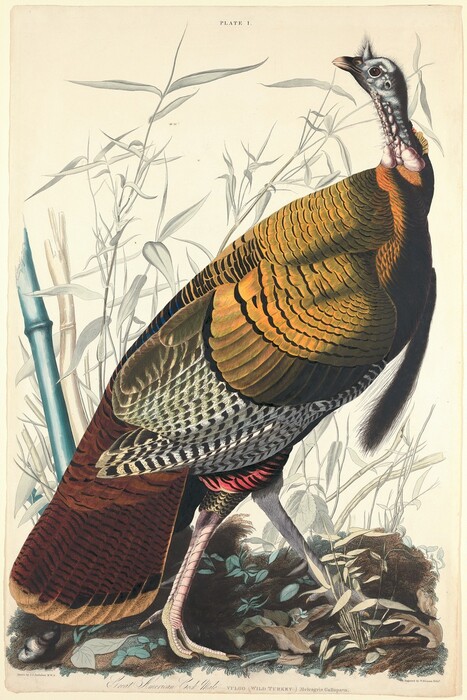
Is the turkey our nation’s favorite fowl? John James Audubon considered it one of America’s most interesting indigenous birds—so much so that he included it on his personal seal. This image took pride of place as the first plate in his Birds of America (1827–1838). The “irregularly gregarious” wild turkey (to quote Audubon) is shown at scale, posed in its natural habitat.
Audubon’s publication is a landmark of natural history illustration. To create it, he spent years traveling and making detailed drawings of birds in the United States, working from specimens both live and dead. Audubon then worked with a team of printmakers, colorists, and publishers in England to realize his subscription-based enterprise of 435 plates issued in installments.

America’s 250th
Join us as we explore 250 years of American creativity from across the nation.
You may also like

Article: Painter George A. Morton Transcends Tradition
Through sustained looking and detailed re-creations, this Atlanta-based artist studies Rembrandt and Sargent while finding new subjects that carry forward the painters’ traditions.

Article: George Washington, Pictured
For centuries, artists have depicted the military general—in paint, in print, and in plaster. These portraits continue to give us insight into Washington’s emotional life, military presence, and cultural footprint.