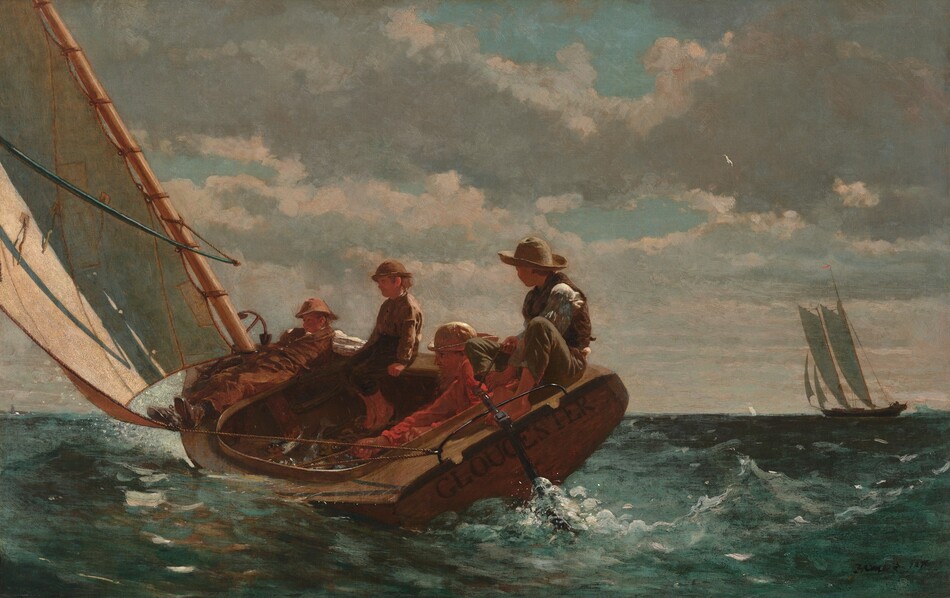
Close to us, a young man and three boys sit or recline in a small sailboat that tips to our left on a choppy dark green sea in this horizontal painting. The billowing sail extends off the top left corner of the canvas and is echoed in the background to our right by the tall sails of another ship in the distance. The horizon line comes about a third of the way up the composition, and puffy gray and white clouds sweep across the turquoise sky. The sun lights the scene from our right so the boys’ ruddy faces are in shadow under their hats. The young man and boys all face our left so they lean against and into the boat as it cants up to our right. The boy nearest the sail to our left reclines across the bow. Next to him to our right, a younger boy perches on the edge of the boat and holds on with both hands. The oldest, in a red shirt, sits on the floor of the boat as he maneuvers the sail with a rope. Closer to us and to our right, a younger boy sits with his bare feet pressed together in front of his bent knees on the back edge of the boat, gazing into the distance over his right shoulder as he handles the tiller. The artist signed and dated the painting in dark letters in the lower right corner: “HOMER 1876.”
Winslow Homer, Breezing Up (A Fair Wind), 1873-1876, oil on canvas, Gift of the W. L. and May T. Mellon Foundation, 1943.13.1

Ongoing from March 1, 2026

Celebrating American Art

Details

  • Dates

    Ongoing from March 1, 2026
  • Locations

    West Building, Main Floor
  • Ticketing Information

    Admission is always free and passes are not required

A new look at the art of our nation.

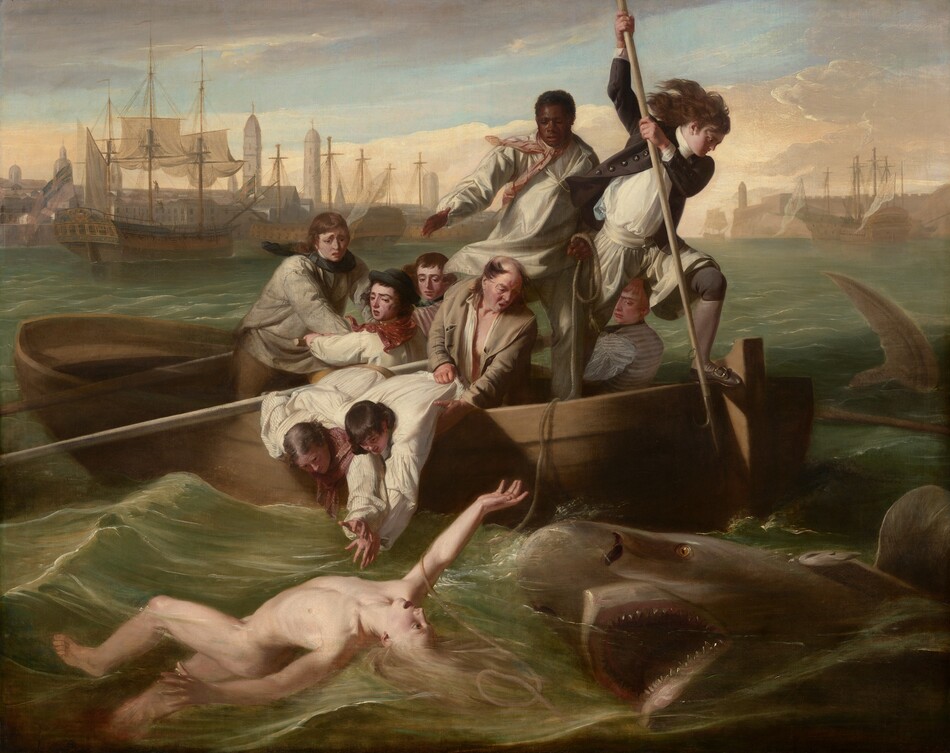
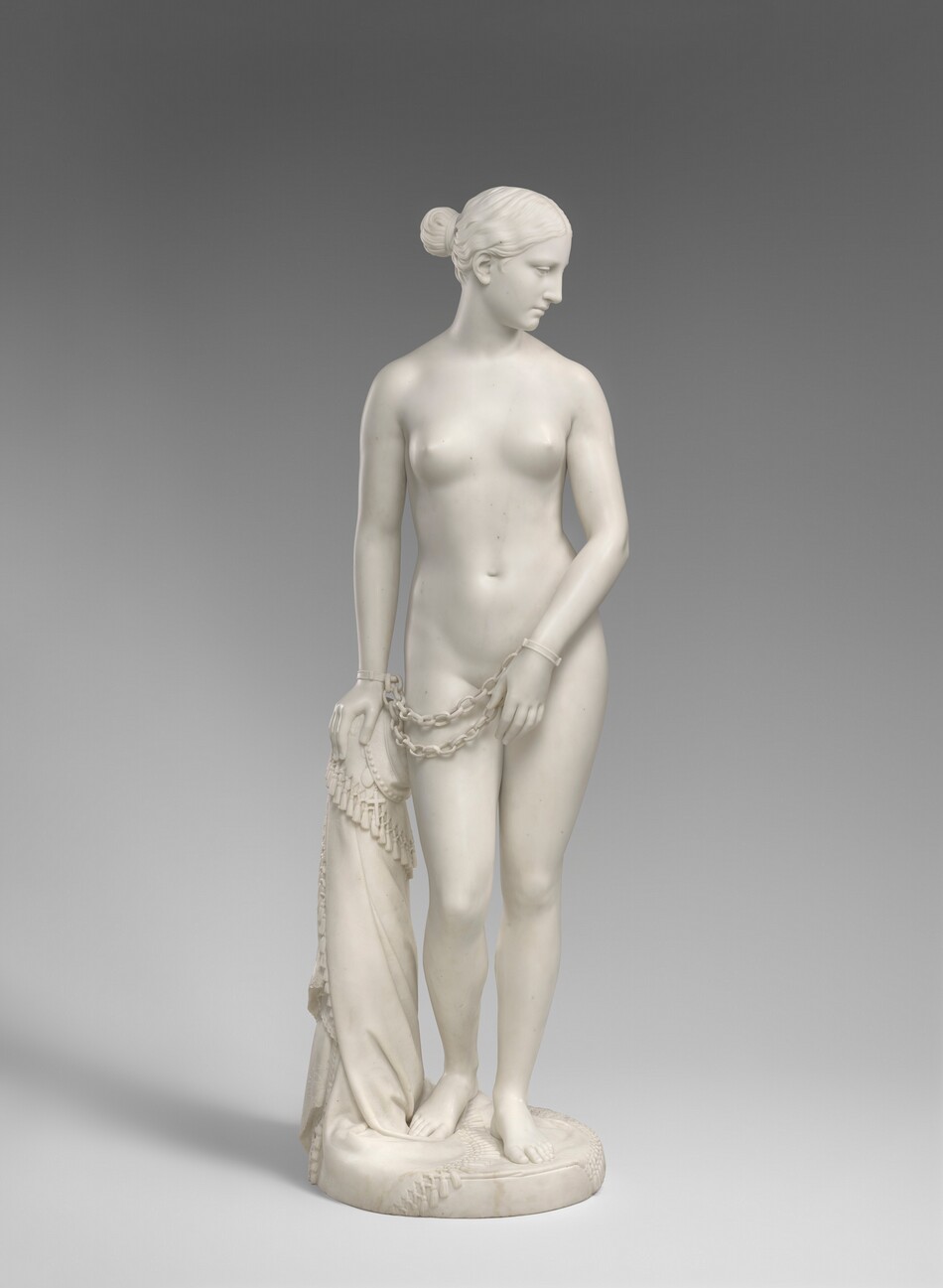
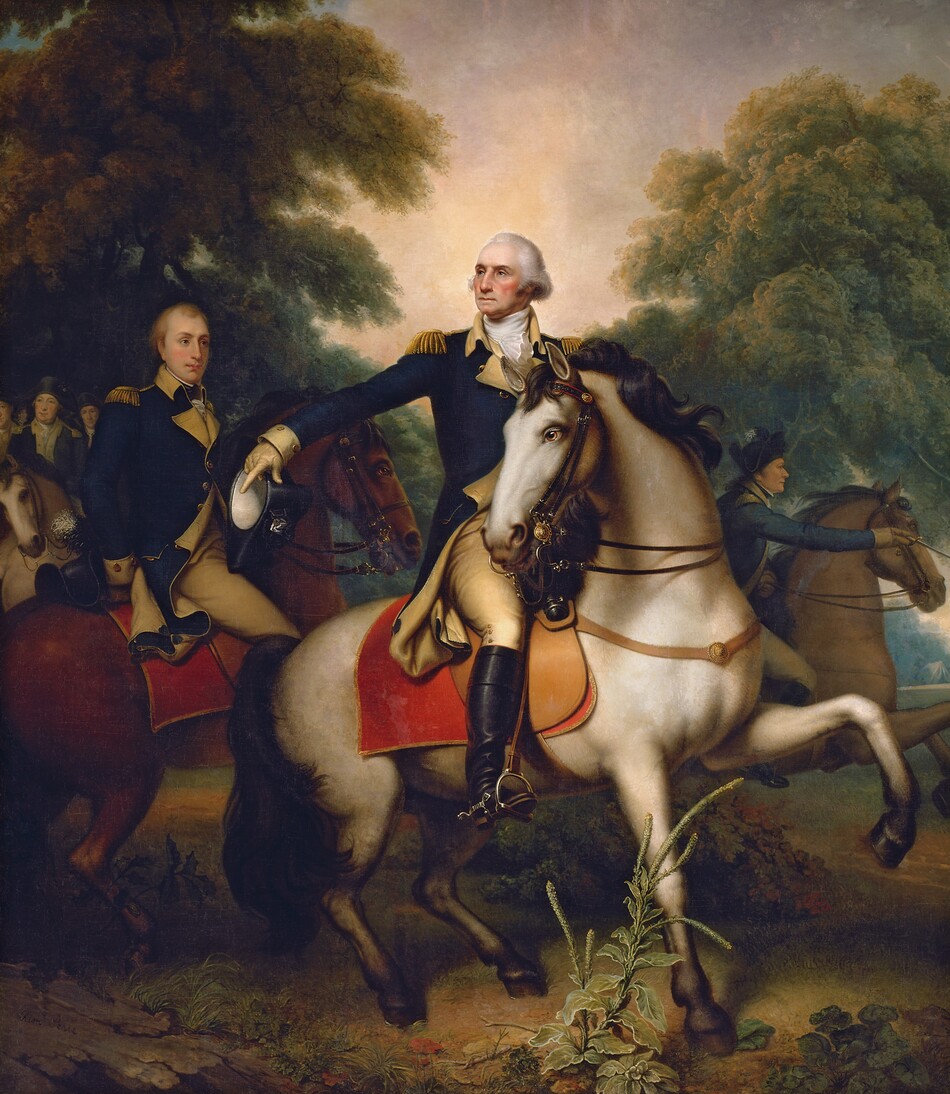
Step into a fresh take on our American art galleries. The National Gallery is home to iconic works like John Singleton Copley’s Watson and the Shark, Gilbert Stuart’s George Washington, and Thomas Cole’s series The Voyage of Life. Now see them in a new light alongside historic sculptures like Hiram Powers’ The Greek Slave and Bessie Potter Vonnoh’s Day Dreams. Reimagined galleries invite you to explore how artists told the American story from the colonial era to the 20th century. With new texts, digital tools, and hands-on activities, there’s something here for every generation to discover. 

Organization
Organized by the National Gallery of Art, Washington

Curated by Sarah Cash, associate curator of American and British Paintings

Explore selected works
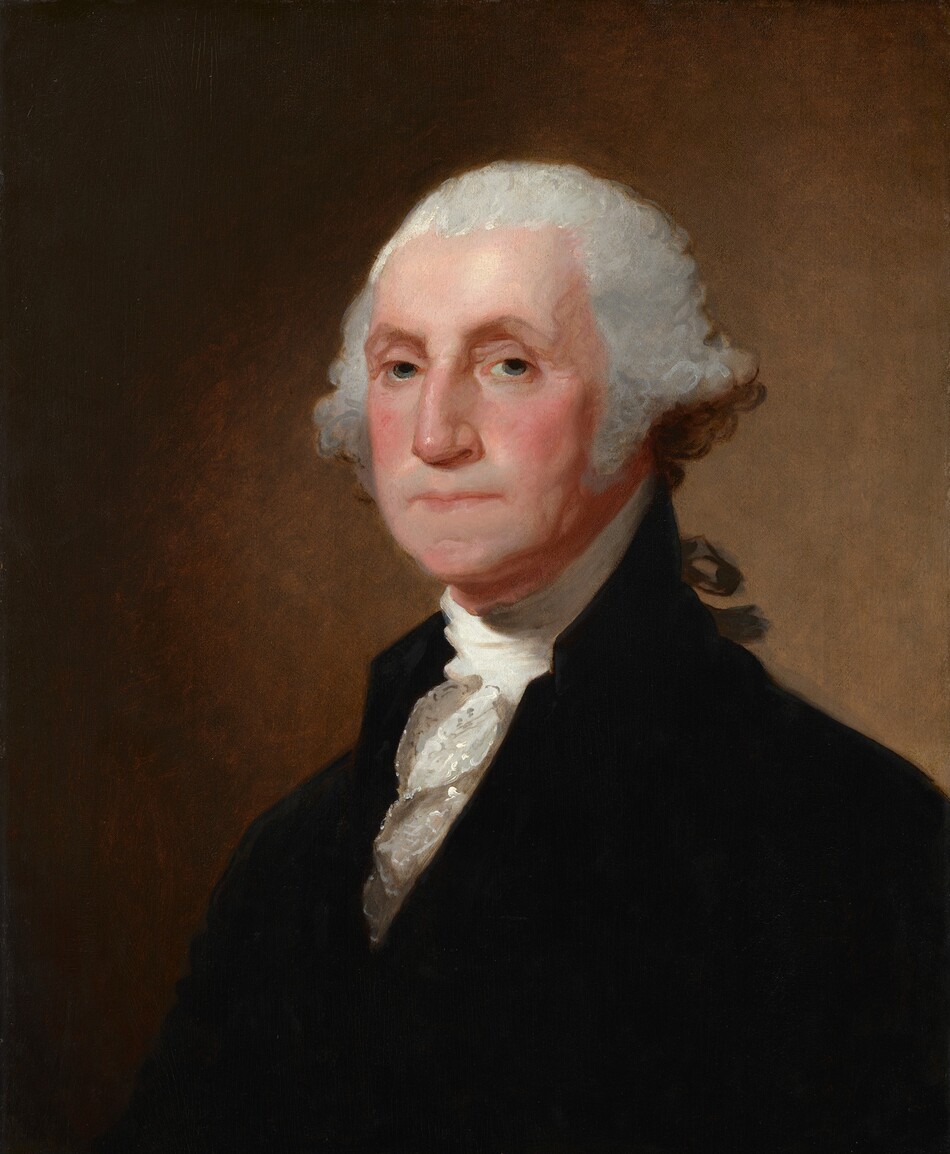
Stories

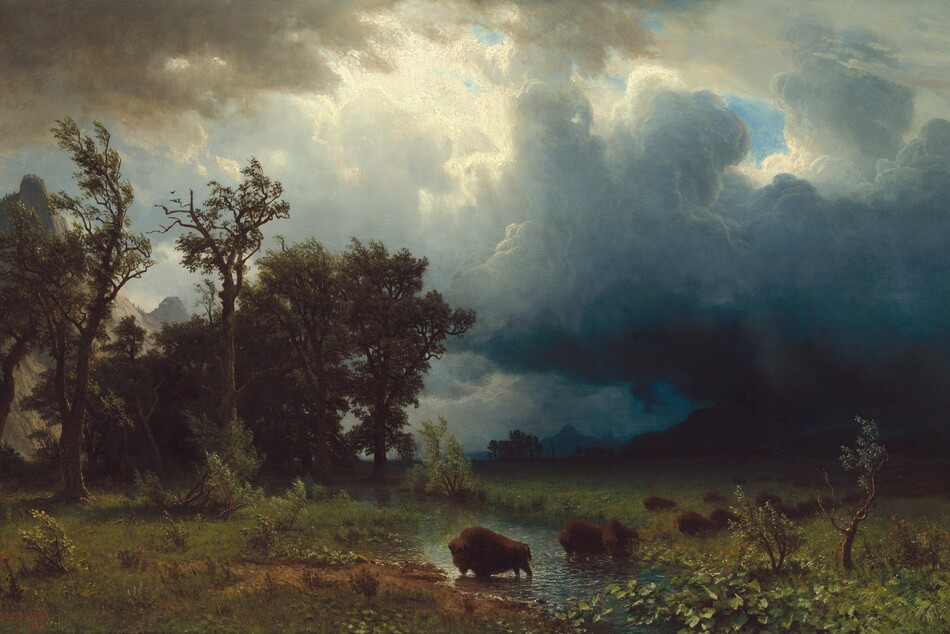
The top three-quarters of this horizontal landscape painting is filled with roiling, deeply shadowed clouds that tower over a line of buffalo crossing a grassy meadow below. Small in scale, the buffalo form a line that extends away from us at a diagonal into the distance to our right. Sunlight creates a bright reflection on the stream where the frontmost buffalo crosses, but the other animals are nearly backlit in the raking light. Trees, with branches whipping in the wind, rise along the left side of the painting, and the mountainous landscape to our right is lost in darkness under heavy clouds. The clouds above lighten from navy blue in the lower right corner of the sky to slate blue and white at the center of the painting. Small patches of blue sky are visible between a few breaks in the clouds, and sunlight falls on a cliff-like mountain face in the distance beyond the trees to our left. Another bank of parchment-colored clouds in the upper left corner, closer to us, contrasts with the glimmering light highlighting some of the clouds nearby.

Article:  Artistic Visions of Our Nation’s Nature

See how artists interpret our nation’s natural beauty—from a fluttering Baltimore oriole to a towering redwood tree. 
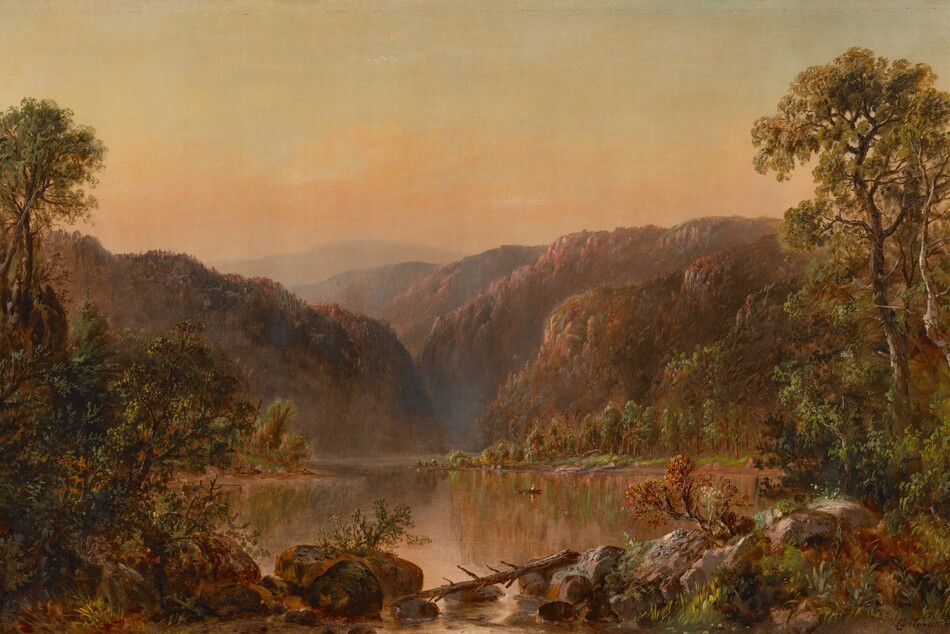
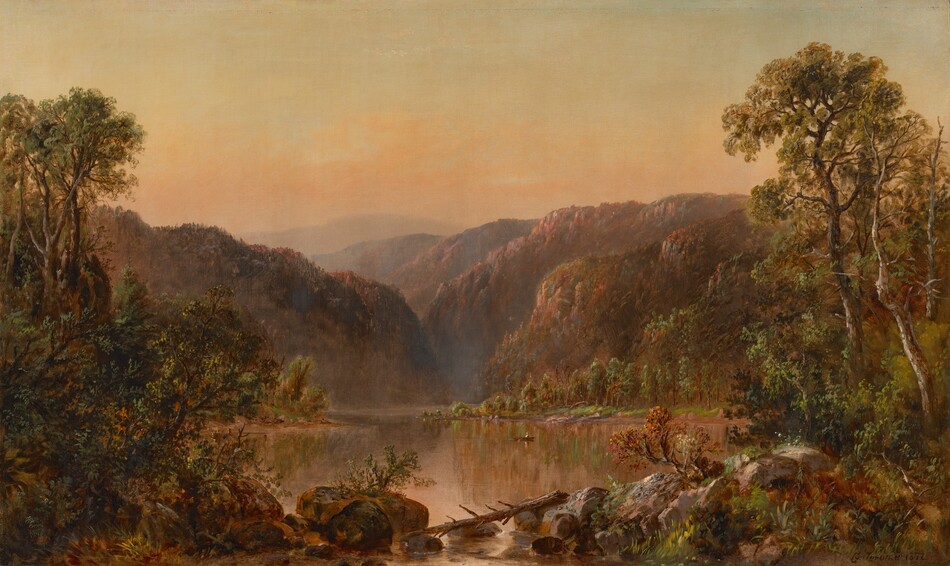
The painting features a valley with purple and brown mountains in the distance, surrounding a reflective body of water with a small rowboat floating on it. Closer to us, there are gray rocks, brown tree trunks and branches, and lush green vegetation at the edge of the water. The sky above is painted in warm shades of yellow, peach, and orange, which transition to pale greenish-blue at the top. The water below reflects these colors, as well as those of the distant mountain and surrounding trees.

Article:  Who Is Elizabeth Gilbert Jerome? 5 Things to Know

The Hudson River School painter created landscapes that captured America’s natural splendor.
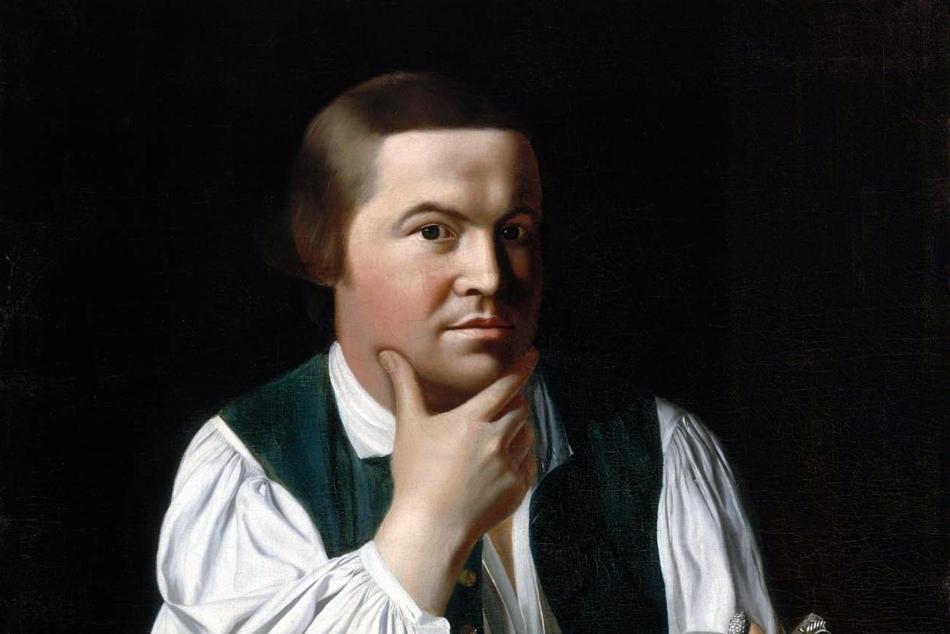
Interactive Article:  Paul Revere, Artist of the American Revolution

You’ve heard about the revolutionary’s midnight ride. But did you know Revere was a master silversmith and engraver?
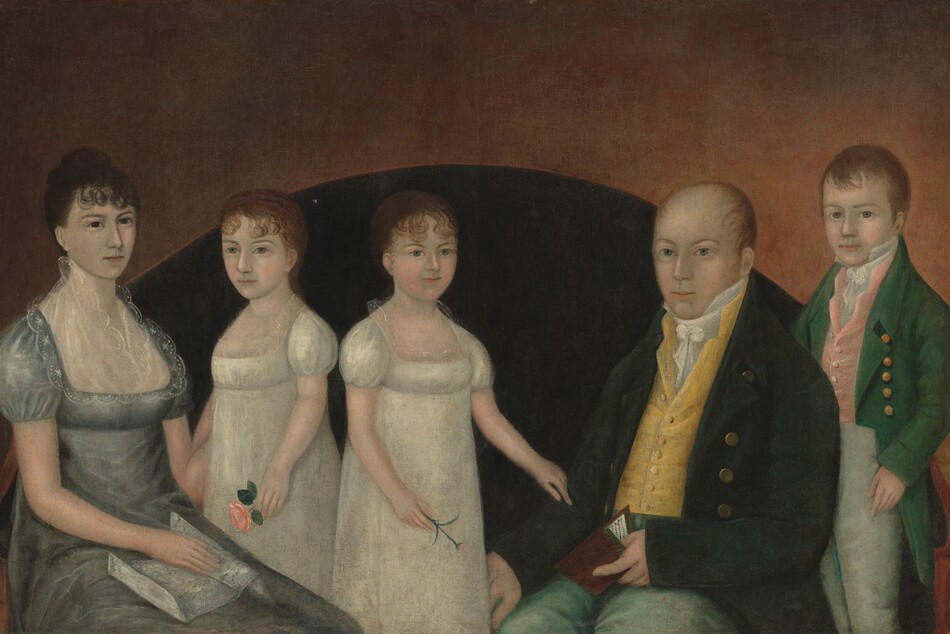
This painting looks like a family portrait with five people: two seated adults and three children. The person on the far left is a seated woman with dark hair styled up and short, curling bangs, wearing a gray dress with puffed sleeves and lace details at the neckline. She holds a folded piece of paper in her lap and has one arm around the girl next to her. On her right stand two young girls with curly reddish-brown hair tied back, both dressed in white dresses with puffed sleeves and lace around the necklines. The girl to the left holds a pink flower, while the other holds a small pink bud. On their right is a seated man with short reddish-brown hair, wearing a dark jacket over a yellow vest and a white cravat and green trousers, holding a small book partially open. Standing to the right, partially behind the man, is a young boy dressed in a green coat with gold buttons over a pink vest and white shirt. All five of the people have pale skin. Behind the family is a black semi-circle, and around that is a gradient of brown, darker at the top and lighter towards the bottom.

Article:  Who Is Joshua Johnson? 7 Things to Know

The Maryland-based artist is one of America’s earliest-documented  professional Black portraitists.

Interactive Article:  The Most Famous Sculpture of the 19th Century

This marble sculpture symbolizes everything from the Greek War of Independence to the fight for emancipation in America.

A woman with pale skin and dressed in white sits on a couch gazing into the distance to our left as she raises one arm to stroke a black cat perched on her shoulder in this vertical portrait. Shown from the lap up, the woman’s dress has voluminous, puffed, elbow-length sleeves and a high collar, and her narrow waist is cinched with a white sash. Her dark brown hair is parted down the middle and tied back, and she has pale blue eyes and pink lips. She reaches up to the cat with her left hand, on our right, and her other hand, farther from us, rests flat in her lap. The black cat looks at us with greenish-yellow eyes as it almost disappears into the dark brown background above the white couch, which is decorated with a blue pattern. The artist signed the work with dark letters in the lower left corner: “Cecilia Beaux.”

Interactive Article:  The Feminine Enigma of Cecilia Beaux’s Sita and Sarita

It’s just a picture of a woman and her cat—or is it?