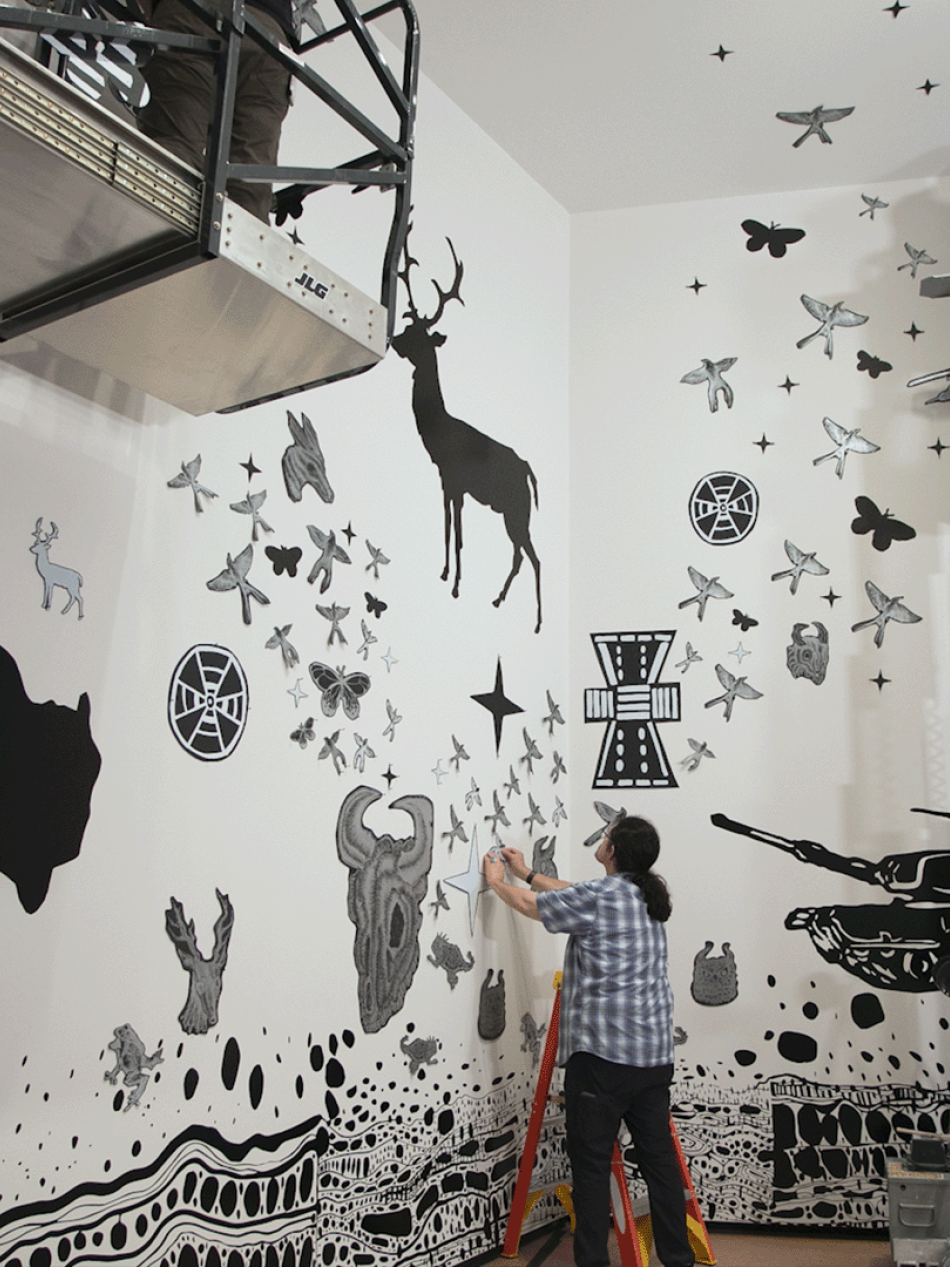
A figure in a burgundy t-shirt and black skinny leg pants with electric blue chin-length hair stands facing away from us. They are partially turned towards a large checkerboard black-and-white textile that hangs suspended between two walls. It is tied to the structure by thick red fabric, and more of the black-and-white fabric.

Stories

Read, watch, or listen to inspiring stories about art and creativity.

Editor’s picks

We look across a cavernous room with a half-domed ceiling where more than a hundred men are gathered at desks and theater-like boxes in this horizontal painting. Almost all of the men have pale, peachy skin and wear black suits with white high-pointed collars. The desks curve in a half-circle facing our left, where two candelabras sit on a dais, a canopied space with polished columns. Seven more columns lining the rounded space are also speckled with fawn brown, bronze, copper, and muted moss green. They have white capitals carved with leaves ands scrolls. Crimson-red curtains hung between the columns have been gathered up along their centers so they drape down to each side. The space is lit by a three-tiered chandelier near the center of the composition. The chandelier has been lowered and a man, backlit in silhouette, stands on a ladder and reaches for a light on the top tier. The other men sit singly or in groups at the desks or gather in small groups throughout the space. The D-shaped rows of desks are enclosed within a curving, waist-high wall. To our right, on our side of the wall, a pair of boys or men lean over an open box that is lit inside. A few people look on from a second-level balcony to our right. This includes a trio of men all wearing black. In the next bay, a man with medium-brown skin wears Pawnee attire with a tall headdress, necklaces, and what seems to be a fur-lined cloak. He looks out at us. A clock on the wall near him reads 6:14. The domed space has nested, ivory-white square or octagonal panels within gold borders. At the center of each panel is a six-petaled, gold flower. The artist signed the work as if he had written his name and date on the base of the wall to our left: “S.F.B. MORSE pinx 1822.”

Interactive Article:  The Spectacular Failure of Samuel F. B. Morse’s "House of Representatives"

This painting’s unfortunate fate set Samuel Morse on the path to become one of the world’s most famous inventors.

Article:  Sailing the Ocean State’s Shores with Edward Mitchell Bannister

The 19th-century artist painted unidealized views of Rhode Island's landscapes.

Articles

Look closer

We look across a cavernous room with a half-domed ceiling where more than a hundred men are gathered at desks and theater-like boxes in this horizontal painting. Almost all of the men have pale, peachy skin and wear black suits with white high-pointed collars. The desks curve in a half-circle facing our left, where two candelabras sit on a dais, a canopied space with polished columns. Seven more columns lining the rounded space are also speckled with fawn brown, bronze, copper, and muted moss green. They have white capitals carved with leaves ands scrolls. Crimson-red curtains hung between the columns have been gathered up along their centers so they drape down to each side. The space is lit by a three-tiered chandelier near the center of the composition. The chandelier has been lowered and a man, backlit in silhouette, stands on a ladder and reaches for a light on the top tier. The other men sit singly or in groups at the desks or gather in small groups throughout the space. The D-shaped rows of desks are enclosed within a curving, waist-high wall. To our right, on our side of the wall, a pair of boys or men lean over an open box that is lit inside. A few people look on from a second-level balcony to our right. This includes a trio of men all wearing black. In the next bay, a man with medium-brown skin wears Pawnee attire with a tall headdress, necklaces, and what seems to be a fur-lined cloak. He looks out at us. A clock on the wall near him reads 6:14. The domed space has nested, ivory-white square or octagonal panels within gold borders. At the center of each panel is a six-petaled, gold flower. The artist signed the work as if he had written his name and date on the base of the wall to our left: “S.F.B. MORSE pinx 1822.”

Interactive Article:  The Spectacular Failure of Samuel F. B. Morse’s "House of Representatives"

This painting’s unfortunate fate set Samuel Morse on the path to become one of the world’s most famous inventors.

Article:  The Nation’s Oldest Artists’ Colony Has Been Thriving for Over 100 Years

Generations of artists have been drawn to Provincetown’s distinctive light and striking seascapes. They have built an enduring creative community.

Article:  Sailing the Ocean State’s Shores with Edward Mitchell Bannister

The 19th-century artist painted unidealized views of Rhode Island's landscapes.

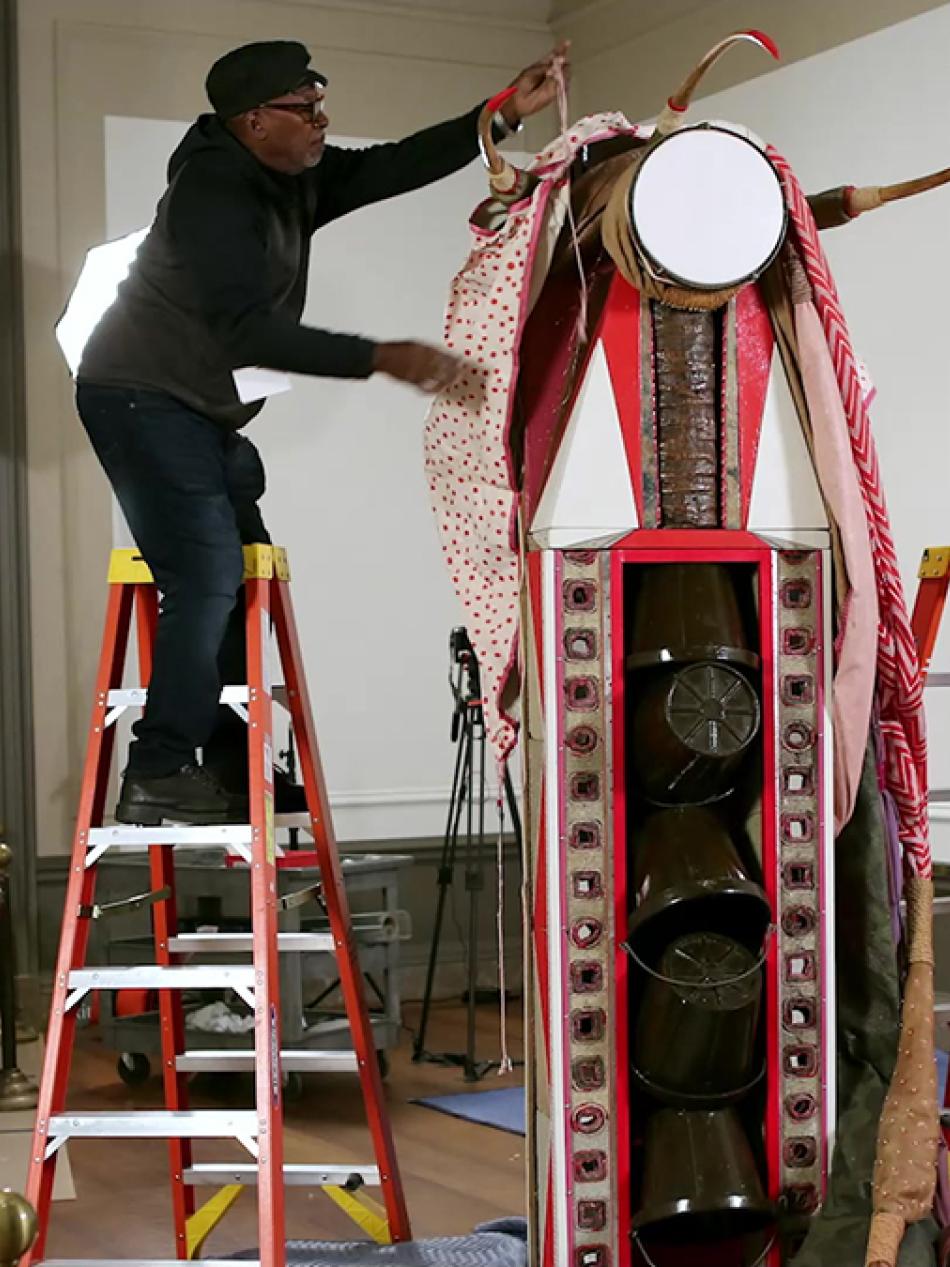
Robby Moore in his studio

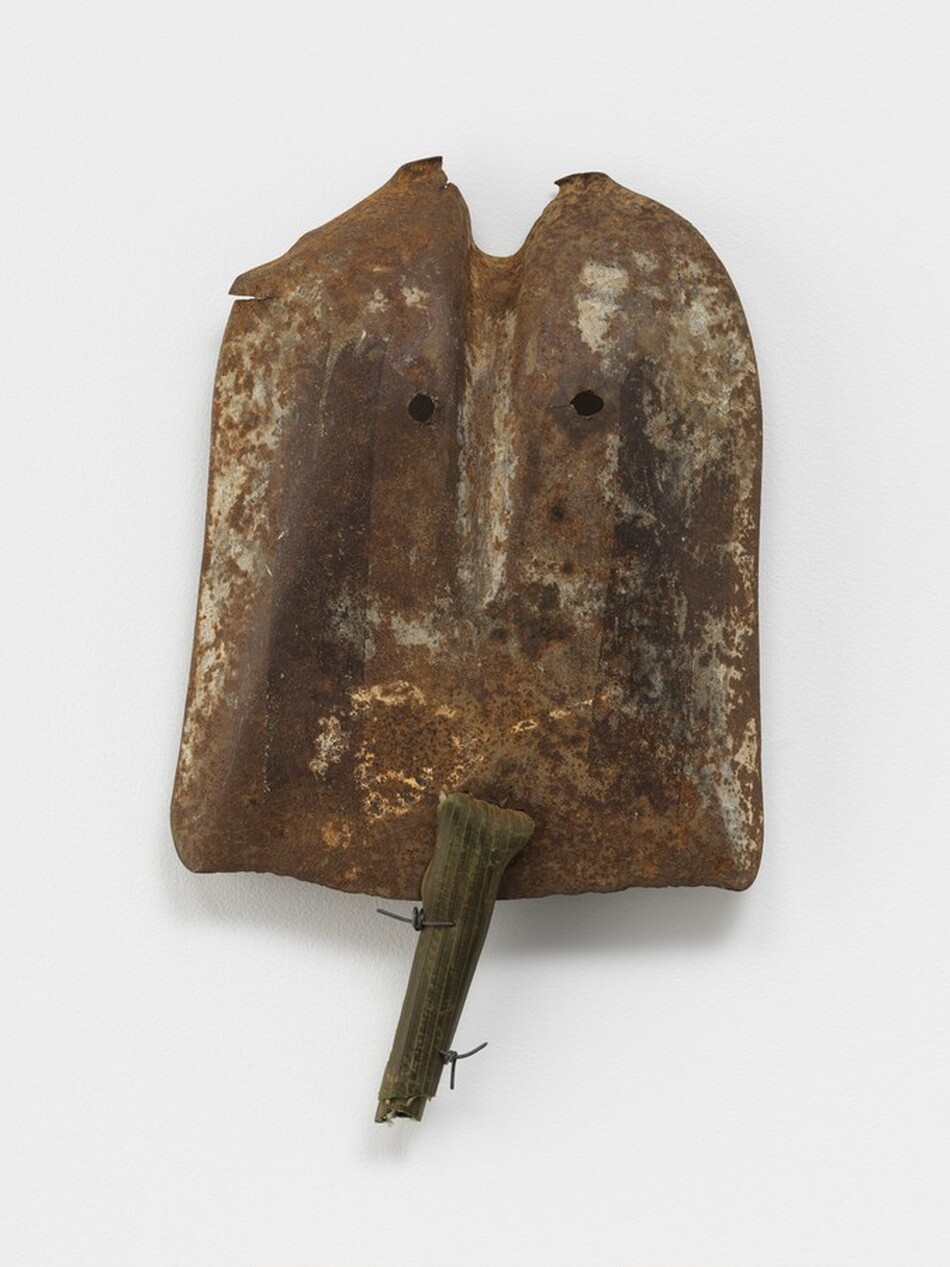
Article:  The Appalachian Artist Making His Own Opportunities

Robby Moore channels Appalachian resourcefulness to create found object assemblages and community art spaces, opening the doors for young artists in his region.

Article:  A New Way for Old Jugs: Creating the Nation’s Handmade Pottery Capital in North Carolina

For more than 100 years, descendants of country potter James Henry Owen have sustained—and innovated on—the new style of pottery he crafted with artist Jacques Busbee.

A man and woman stand look away from us toward a moonlit, rocky, coastal inlet with misty, midnight-blue mountains along the horizon in this shadowy, horizontal landscape painting. The sky fills the top two-thirds of the painting, and the people are small in scale against the landscape. Along the horizon, pearl-white clouds float against a lilac-purple and pale pink haze. The sky deepens to ultramarine blue above, and a band of nickel-gray clouds sweeps in across the top edge of the painting to partially obscure the bright white moon, to our right of center. The moonlight gleams on the water below, which winds around the rocky coastline and small islands dotted with trees. Closer to us, the land stretches across the lower edge of the composition. Hulking, rocky formations line the left edge of the painting, and a wooden structure with mossy growth along its roof sits to our right. Long poles lean against the building’s roof. At the lower center of the painting, the woman, to our left, links her arm through the man’s elbow. She wears a long, rust-brown dress and a broad brimmed bonnet, while he wears a dark, knee-length coat and a round cap. They stand near the water’s edge, silhouetted against the bright reflections of the soft purple and pink sky above. Out in the water but close to the shoreline, brown nets hang like slings from a line of twenty-three, irregularly spaced poles. A three-masted ship is anchored near the shore to our right. Two rowboats, one with a person inside, and a few more sailboats are pulled up along a dock beyond the ship. The artist signed and dated the painting in the lower right, “Dahl Januar 1827”.

Interactive Article:  How Three Artists Invite You to Contemplate the Enormity of the World

Experience the vastness of the universe, and our place within it, through awe-inspiring landscape paintings.

Videos

Catch up on our latest videos

Video:  How a Skater Used Art to Change the World

Chemi Rosado-Seijo turns skateboard tracks and abandoned pools into works of art.

Video:  What Color Is Her World?

Anne Neely pours paint over canvases to explore stories of water, nature, community, aquifers, and all that lies beneath the surface.

Video:  He Turns Hip-Hop Legends into Art

In a city crowded with monuments to the past, Roberto Lugo learned his first art lessons from hip-hop and Philadelphia’s murals of his neighbors, teachers, and local legends. 

Video:  Spirits of the Caribbean 

Edouard Duval-Carrie creates seductive and fantastical art works inspired by Vodou spirits and the Haitian diaspora. 

Video:  In Praise of Difficulty: Ambiguity, Aesthetics, and the Work of Art in Medieval Europe

The A. W. Mellon Lectures in the Fine Arts presented by Aden Kumler (2026)

Video:  Stitching Mississippi Stories

Coulter Fussell, a diner waitress turned artist, makes her kids’ Snapchat messages into art.

Audio

Series

You may also like

Artworks

Explore our collection of nearly 160,000 works spanning the history of Western art.

Fun and games

Paint your own masterpiece, learn fun facts, or take an AI-powered journey through the collection.